Unlocking AI’s Potential: Education, Evolution, and the Lessons of the Modern Phone

Remember the days of the (Nokia) brick phone? Those clunky devices that could barely make a call, let alone access the internet? Fast forward 20 years, and we’re holding pocket-sized supercomputers capable of capturing stunning photos, navigating complex cities, and connecting us to the world in an instant. The evolution of mobile phones is a testament to the rapid pace of technological advancement, a pace that’s only accelerating.

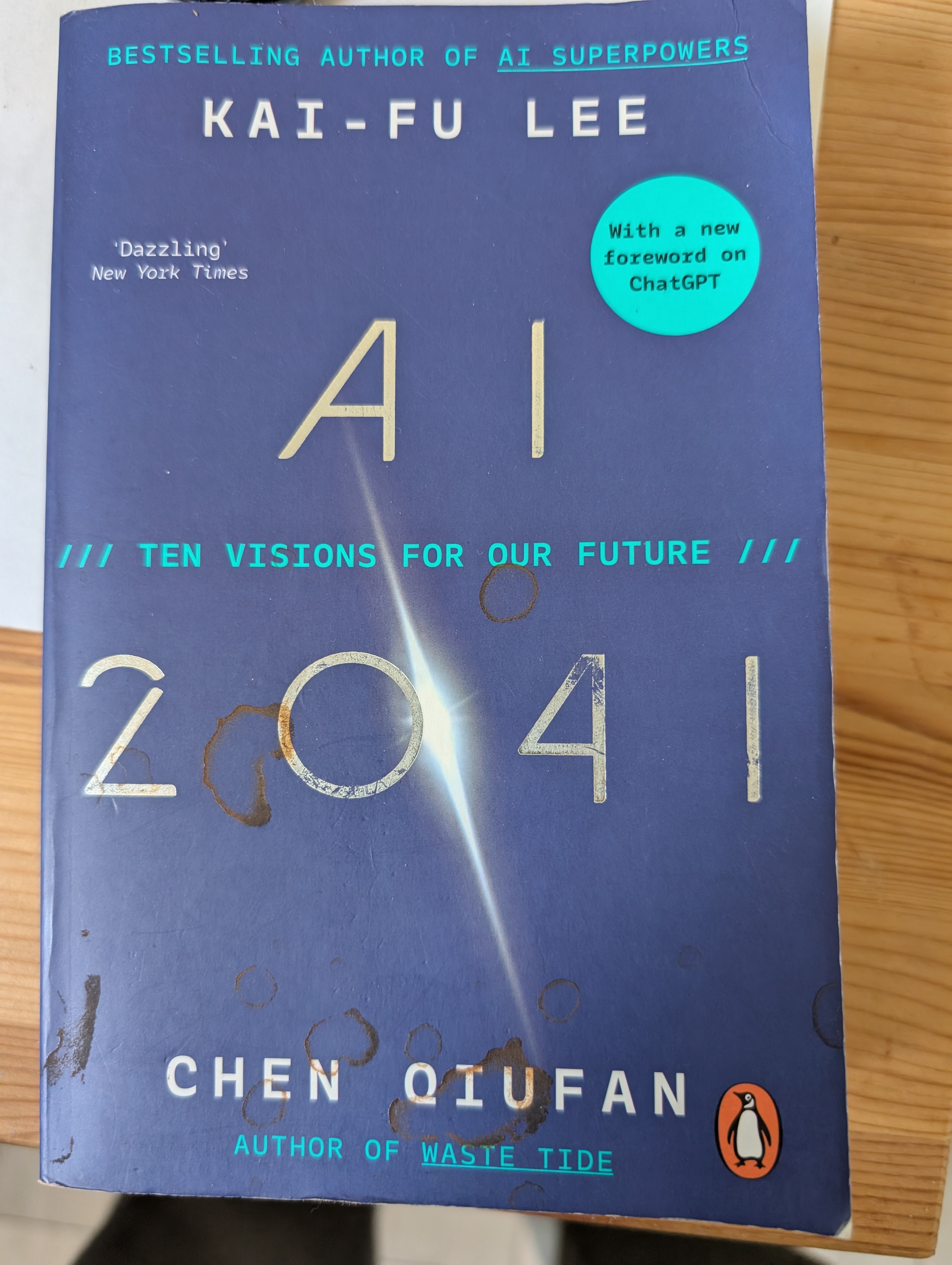
If mobile phones can transform so drastically in two decades, imagine what the next 20 years hold. Kai-Fu Lee and Chen Qiufan, in their thought-provoking book “AI 2041,” dare to do just that. Through ten compelling short stories, they paint a vivid picture of a future where Artificial Intelligence is woven into the very fabric of our lives.

What truly resonated with me, especially as a parent of five, was their vision of AI-powered education. Forget the one-size-fits-all approach of traditional schooling. Lee and Qiufan envision a world where every child has a personal AI tutor, a bespoke learning companion that adapts to their individual needs and pace. Imagine a system where learning is personalized, engaging, and truly effective, finally breaking free from the outdated concept of classrooms and standardized tests.

Now, let’s talk about “AI 2041” itself. It’s not just science fiction; it’s a meticulously crafted forecast. The authors don’t simply dream up fantastical scenarios; they provide detailed technical explanations after each story, grounding their predictions in current research and trends. They acknowledge the potential pitfalls of AI, the dystopian fears that often dominate the conversation, but they choose to focus on the optimistic possibilities, on how we can harness AI for progress rather than destruction.

Frankly, I found the technical explanations more captivating than the fictional stories. They delve into the ‘how’ and ‘why’ behind their predictions, exploring the ethical considerations and the safeguards we need to implement. This isn’t just a book about technology; it’s a call to action, a plea for responsible innovation.

While “AI 2041” might not win literary awards, it’s not meant to. It’s meant to spark our imagination, to challenge our assumptions, and to prepare us for the future. It’s a reminder that technology is a tool, and it’s up to us to shape its impact on our lives.

The evolution of mobile phones has shown us the transformative power of technology. “AI 2041” invites us to consider what the next 20 years might bring, particularly in areas like education. And if you’re truly seeking insights into what’s coming – and trust me, it’s arriving much faster than the ‘experts’ are predicting – then this book delivers far more substance than the ever-increasing deluge of AI YouTubers and TikTokers. This isn’t just speculation; it’s a grounded exploration of the potential, and it’s a journey into the possible that we should all be taking. If you want to be prepared, if you want to understand the real potential of AI, then I strongly suggest you read this book.

“But if we stop helping people—stop loving people—because of fear, then what makes us different from machines?”
― Kai-Fu Lee

Synthwave & Sentient Bots: The Electric State Gets a Film Reboot

Simon Stålenhag’s “The Electric State” is a captivating blend of sci-fi and Americana, painting a picture of a near-future where retro technology coexists with futuristic marvels. The book, with its melancholic tone and focus on the human condition amidst technological advancements, offers a poignant reflection on the past, present, and a potential future.

The recent film adaptation, while retaining the essence of Stålenhag’s distinctive aesthetic, takes a decidedly lighter turn. Gone are some of the book’s more somber undercurrents, replaced by a more upbeat and action-packed narrative. With Millie Bobby Brown Bongiovi, Christopher Michael Pratt (contractually obligated to be charming), Stanley Tucci (because every good sci-fi needs a Tucci), and Giancarlo Giuseppe Alessandro Esposito (who can make even a toaster sound menacing). It was like Stålenhag’s world got a Hollywood makeover, and suddenly, it was less “end of the world” and more “road trip with your cool, slightly malfunctioning robot pal.” This shift in tone, while perhaps diverging from the book’s original intent, allows the film to embrace a more accessible and entertaining style, making it a thrilling adventure for audiences of all ages.

A Visual Feast:

One of the most striking aspects of both the book and the film is their visual splendor. Stålenhag’s iconic artwork, with its blend of vintage Americana and futuristic technology seamlessly integrated into breathtaking landscapes, is brought to life on screen with stunning visuals. The film masterfully captures the essence of Stålenhag’s unique vision, transporting viewers to a world where rusty pickup trucks share the road with towering robots and retro-futuristic gadgets.

A Lighter Touch:

While the film retains the core elements of the book – the road trip, the mysterious android, and the search for meaning – it opts for a more lighthearted and action-oriented approach. The book delves deeper into themes of loneliness, isolation, and the anxieties of a changing world, while the film leans more heavily on humor, adventure, and a touch of the fantastical.

A Visual Spectacle:

Ultimately, “The Electric State” film is a visually stunning and entertaining adaptation that successfully captures the spirit of Simon Stålenhag’s work. While it may not perfectly mirror the book’s more introspective tone, it provides a thrilling cinematic experience. I loved it. It was a visual feast, less “what if the internet ate my soul?” and more “what if my robot best friend and I saved the world while listening to awesome tunes?” It’s a different vibe to the book, for sure, but it’s a fun one. It’s like finding a vintage video game console in your attic and discovering it’s still got a few levels left to play. And honestly, who doesn’t love a good retro-futuristic joyride with a stellar cast and a killer soundtrack? It’s the kind of thing that makes you want to dust off your old Walkman and hit the open road, even if that road is just to the nearest coffee shop.

Apple and Google: A Forbidden Love Story, with AI as the Matchmaker

Well, butter my biscuits and call me surprised! Apple, the company that practically invented the walled garden, has just invited Google, its long-standing frenemy, over for a playdate. And not just any playdate – an AI-powered, privacy-focused, game-changing kind of playdate.

Remember when Apple cozied up to OpenAI, and everyone assumed ChatGPT was going to be the belle of the Siri-ball? Turns out, Apple was playing the field, secretly testing both ChatGPT and Google’s Gemini AI. And guess who stole the show? Yep, Gemini. Apparently, it’s better at whispering sweet nothings into Siri’s ear, taking notes like a diligent personal assistant, and generally being the brains of the operation.

So, what’s in it for these tech titans?

Apple’s Angle:

  • Supercharged Siri: Let’s face it, Siri’s been needing a brain transplant for a while now. Gemini could be the upgrade that finally makes her a worthy contender against Alexa and Google Assistant.
  • Privacy Prowess: By keeping Gemini on-device, Apple reinforces its commitment to privacy, a major selling point for its users.
  • Strategic Power Play: This move gives Apple leverage in the AI game, potentially attracting developers eager to build for a platform with cutting-edge AI capabilities.

Google’s Gains:

  • iPhone Invasion: Millions of iPhones suddenly become potential Gemini playgrounds. That’s a massive user base for Google to tap into.
  • AI Dominance: This partnership solidifies Google’s position as a leader in the AI space, showing that even its rivals recognize the power of Gemini.
  • Data Goldmine (Maybe?): While Apple insists on on-device processing, Google might still glean valuable insights from anonymized usage patterns.

The Bigger Picture:

This unexpected alliance could shake up the entire tech landscape. Imagine a world where your iPhone understands your needs before you even ask, where your notes practically write themselves, and where privacy isn’t an afterthought but a core feature.

But let’s not get ahead of ourselves. There are still questions to be answered. How will this impact Apple’s relationship with OpenAI? Will Google play nice with Apple’s walled garden? And most importantly, will Siri finally stop misinterpreting our requests for pizza as a desire to hear the mating call of a Peruvian tree frog?

Only time will tell. But one thing’s for sure: this Apple-Google AI mashup is a plot twist no one saw coming. And it’s going to be a wild ride.

Agile: My Love-Hate Relationship with Iteration

Iteration. The word itself conjures up images of spinning wheels, cyclical patterns, and that hamster in its never-ending quest for… well, whatever a hamster sees in those wheels. But “iteration” is more than just a fancy word for “doing something again and again.” It’s a fundamental concept that permeates our lives, from the mundane to the profound.

Think about your morning routine. Wake up, stumble to the bathroom, brush your teeth (hopefully), make coffee (definitely). That’s an iteration, a daily ritual repeated with minor variations. Or consider the changing seasons, the ebb and flow of tides, the endless cycle of birth, growth, decay, and renewal. Iteration is the rhythm of existence, the heartbeat of the universe.

In the world of art and creativity, iteration takes center stage. Painters rework their canvases, musicians refine their melodies, writers revise their manuscripts – all in pursuit of that elusive perfect expression. Each iteration builds upon the last, refining, reimagining, and ultimately transforming the original concept into something new and hopefully improved.

But let’s not get all misty-eyed about iteration. It can be a cruel mistress, a source of frustration, a never-ending loop of “almost, but not quite.” Think about that DIY project that seemed so simple at first but has now become a Frankensteinian monster of mismatched parts and questionable design choices. Or that recipe you’ve tried a dozen times, each attempt yielding a slightly different (disastrous) result. Iteration, in these moments, feels less like progress and more like a punishment for our hubris.

And if we stretch it into the political arena, iteration takes on a particularly cynical flavor. The UK, with its revolving door of prime ministers, its endless Brexit debates, and its uncanny ability to elect leaders who promise change but deliver more of the same, is a prime example. Each election cycle feels like an iteration of the last, a Groundhog Day of broken promises, partisan squabbles, and that nagging sense that no matter who’s in charge, nothing really changes. Even the emergence of new parties, with their fresh faces and bold manifestos, often seems to get sucked into the same iterative loop, their initial idealism slowly eroded by the realities of power and the entrenched political system. Iteration, in this context, feels less like progress and more like a depressing reminder of our collective inability to break free from the past.

And then there’s Agile. Ah, Agile. The methodology that puts iteration on a pedestal, enshrining it as the holy grail of software development. Sprints, stand-ups, retrospectives – all designed to facilitate that relentless cycle of build, measure, learn. And while the Agile evangelists wax lyrical about the beauty of iterative development, those of us in the trenches know the truth: iteration can be a messy, chaotic, and often frustrating process.

We love iteration for its ability to adapt to change, to embrace uncertainty, to deliver value incrementally. We hate it for the endless meetings, the ever-growing backlog, the constant pressure to “fail fast” (which, let’s be honest, doesn’t always feel so fast). We love it for the sense of progress, the satisfaction of seeing a product evolve. We hate it for the scope creep, the shifting priorities, the nagging feeling that we’re building the plane as we fly it.

But love it or hate it, iteration is the heart of Agile. It’s the engine that drives innovation, the fuel that powers progress. And while it may not always be pretty, it’s undeniably effective. So, embrace the iteration, my friends. Embrace the chaos. Embrace the uncertainty. And maybe, just maybe, you’ll find yourself falling in love with the process, even if it’s a slightly dysfunctional, love-hate kind of love.

Riverside Museum: Where History Met a Mac-mini Powered Time Machine

Rewind to about 2010-11. Imagine a younger, more naive version of myself, sporting questionable fashion choices and an unwavering belief in the power of technology. I was working at this cool little agency called 55 Degrees, a melting pot of designers, developers, and video wizards. We were all about pushing the boundaries of digital storytelling, and we landed this epic project: the Riverside Museum in Glasgow.

Now, this wasn’t just any museum. It had just been built on the historic site of Clyde shipbuilding and was a cathedral of transport, a shrine to all things that moved, from steam locomotives to skateboards. With a loose brief, a band of eighteen of us were tasked with bringing these objects to life. Not with dusty labels and boring timelines, but with stories. Emotive, engaging, personality-packed stories.

So, we rolled up our sleeves and got to work. We churned out 34 documentary films, capturing the essence of Clyde-built ships, vintage cars, and even a penny-farthing or two. We crafted audio exhibits that transported you to bustling Victorian streets and roaring shipyards. We animated historical figures, giving them voices and quirks that would make a Disney character jealous.

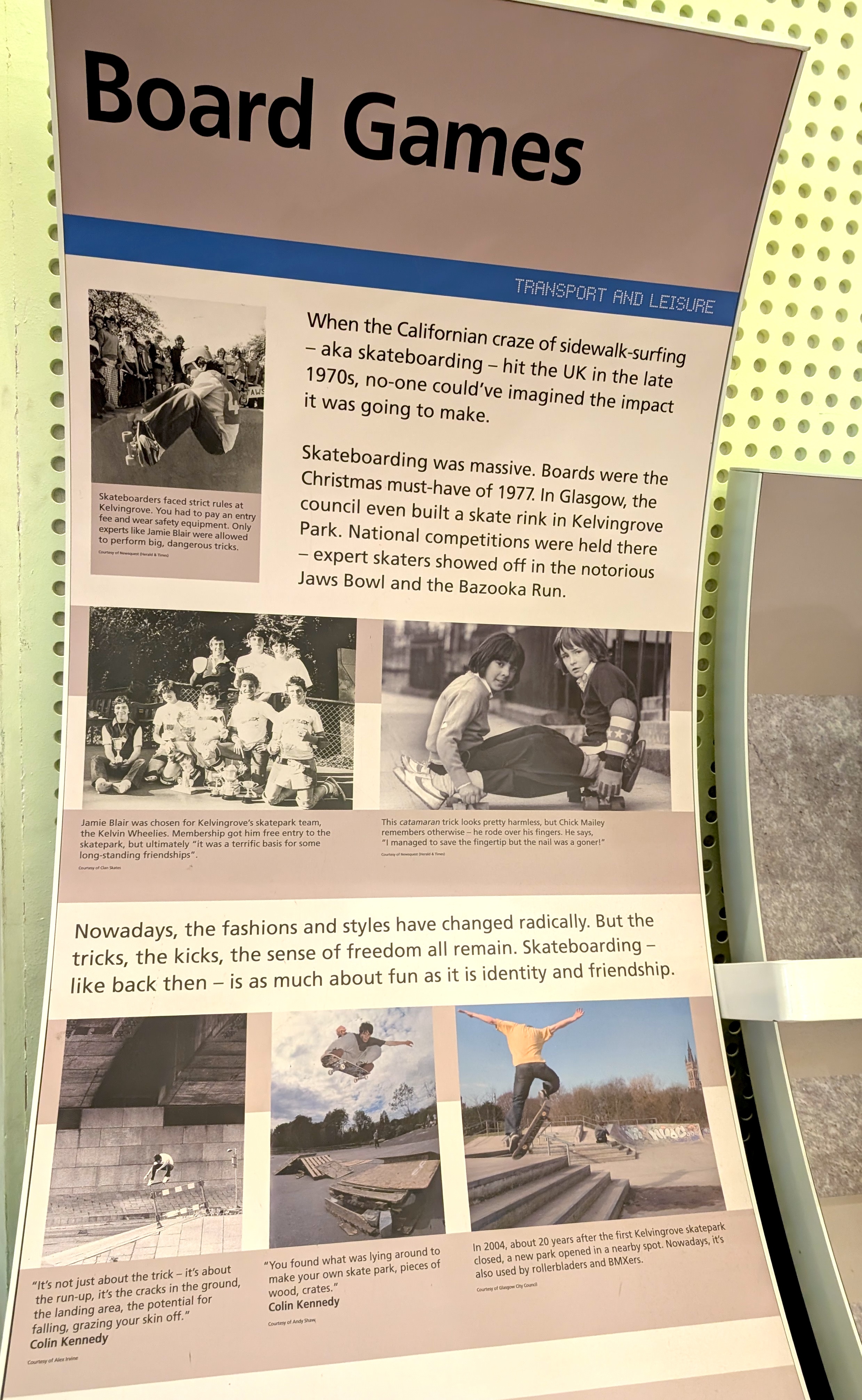
Amidst this whirlwind of maritime history and technological ambition, I had my own pet project: a celebration of Glasgow’s skateboarding scene. See, just the year before, I had launched Skateboard Scotland in Edinburgh and gotten involved in the burgeoning skatepark scene. So, naturally, I had to inject a bit of that rebellious spirit into the Riverside Museum. Thus, the “Board Games” exhibit was born.  (And it was pretty darn satisfying to see it still going strong 15 years later, looking exactly the same, so much for progress.)

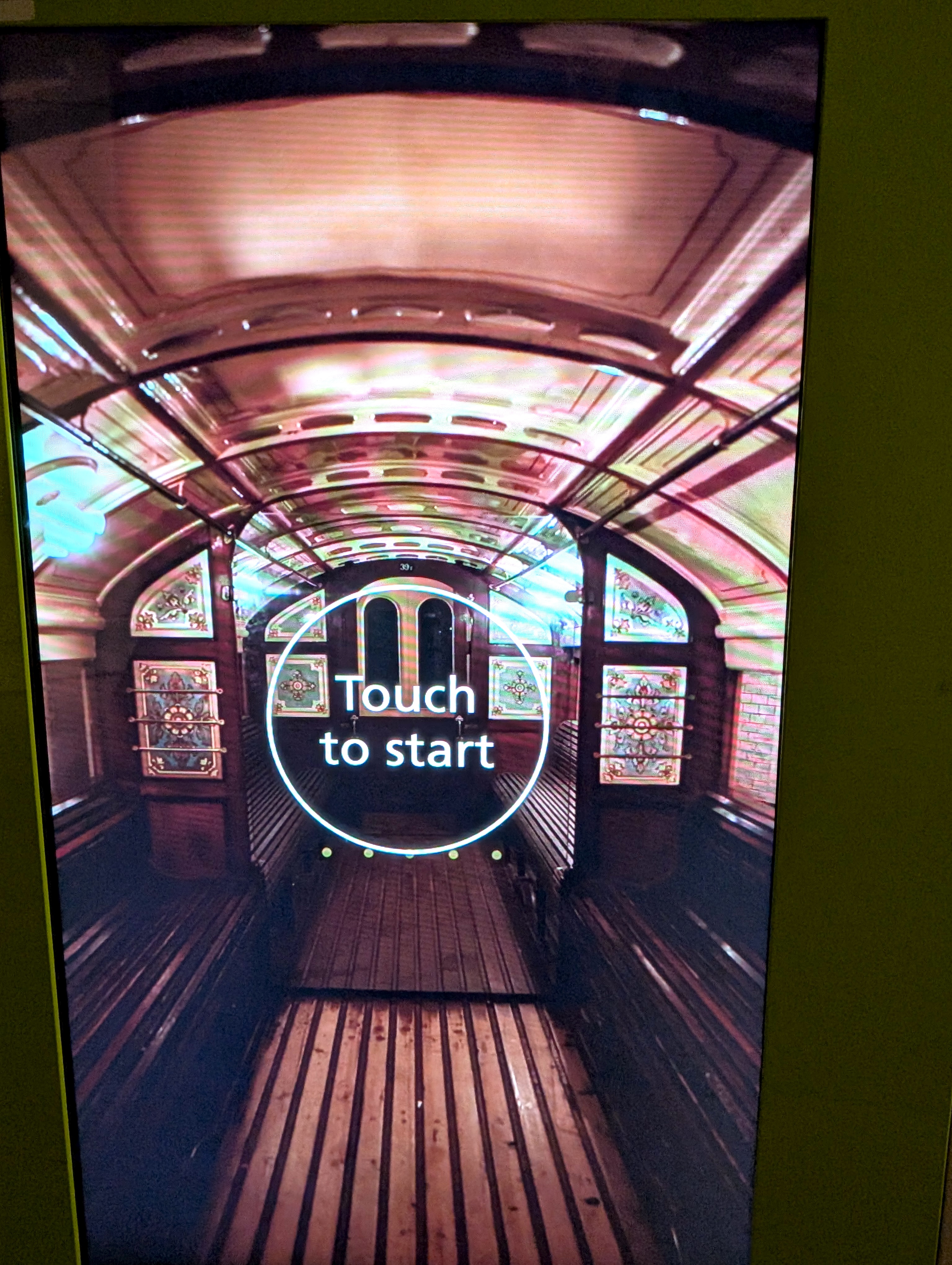
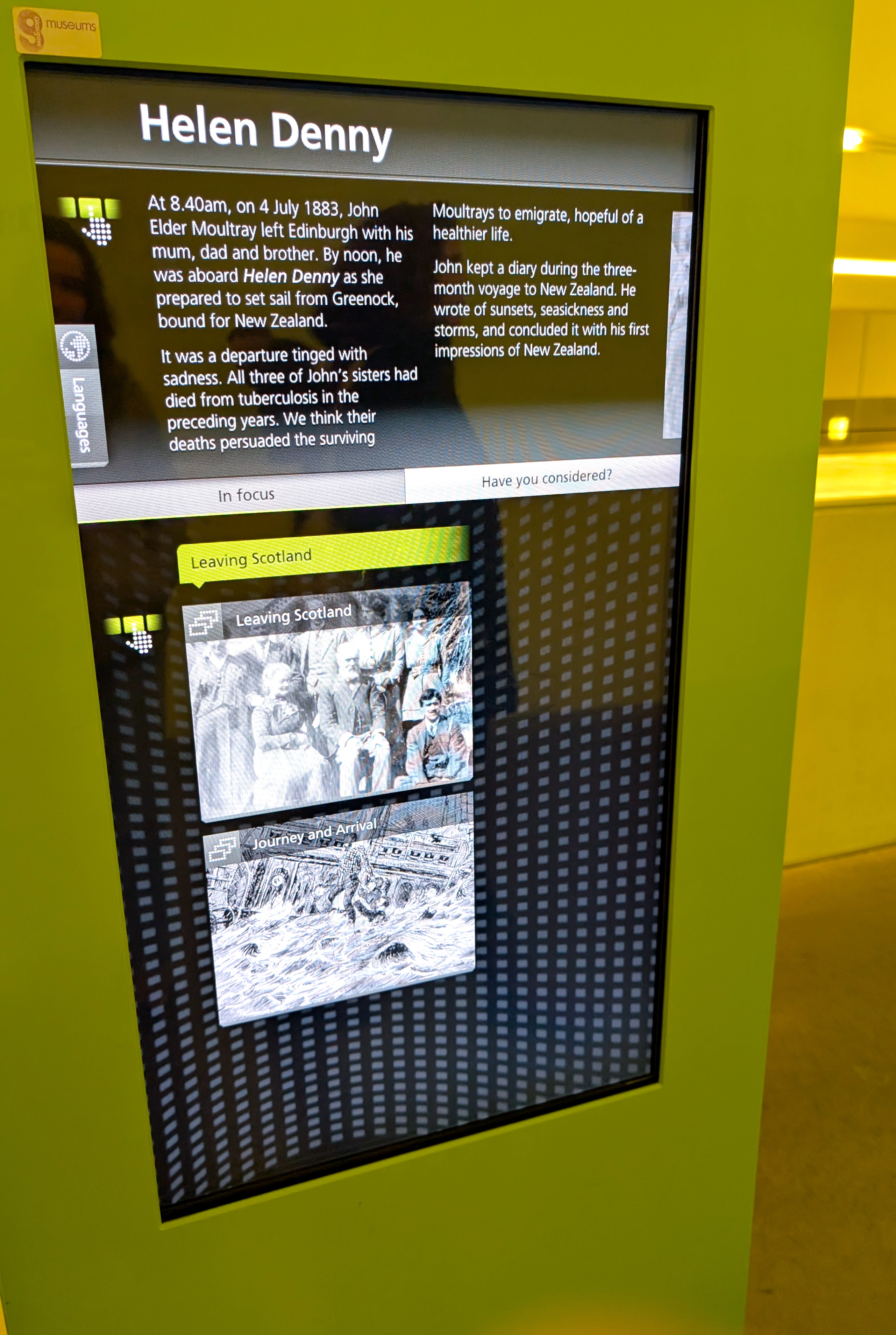
But the real challenge, the Everest of our digital ambition, was the interactive exhibits. Riverside wanted visitors to engage with the collection, to delve deeper, to become part of the story. And how did we achieve this, you ask? With an army of iPads, of course. Well, not actual iPads (they weren’t quite a thing back then), but these massive, portrait-oriented touchscreens we called “eIntros.” (Story Player)

These eIntros were our digital playground. We packed them with information, photos, videos, and interactive elements, all controlled by a central Content Management System (CMS). But here’s where our hubris kicked in. Did we use an existing CMS? Nope. We built our own. From scratch. With Ruby on Rails. Because, why not? (At this point, you might be picturing a montage of frantic coding, fuelled by caffeine and the unshakeable belief that we were reinventing the wheel. You would be right.)

This CMS, our Frankensteinian creation, was a beast. It managed everything. The eIntros, the games, the “What’s On” screens, even the museum lighting (because who needs a light switch when you have a CMS?). It could spit out HTML5, JSON, XML – you name it. We were like digital puppet masters, pulling the strings of the entire museum experience.

And because we had this perfectly controlled environment (a developer’s utopia), we went wild with the latest web technologies. CSS3 animations? Check. JavaScript wizardry? Double-check. HTML5 video? Oh, you better believe it. We even built our own full-screen browser, because Safari just couldn’t handle what we wanted it to do.

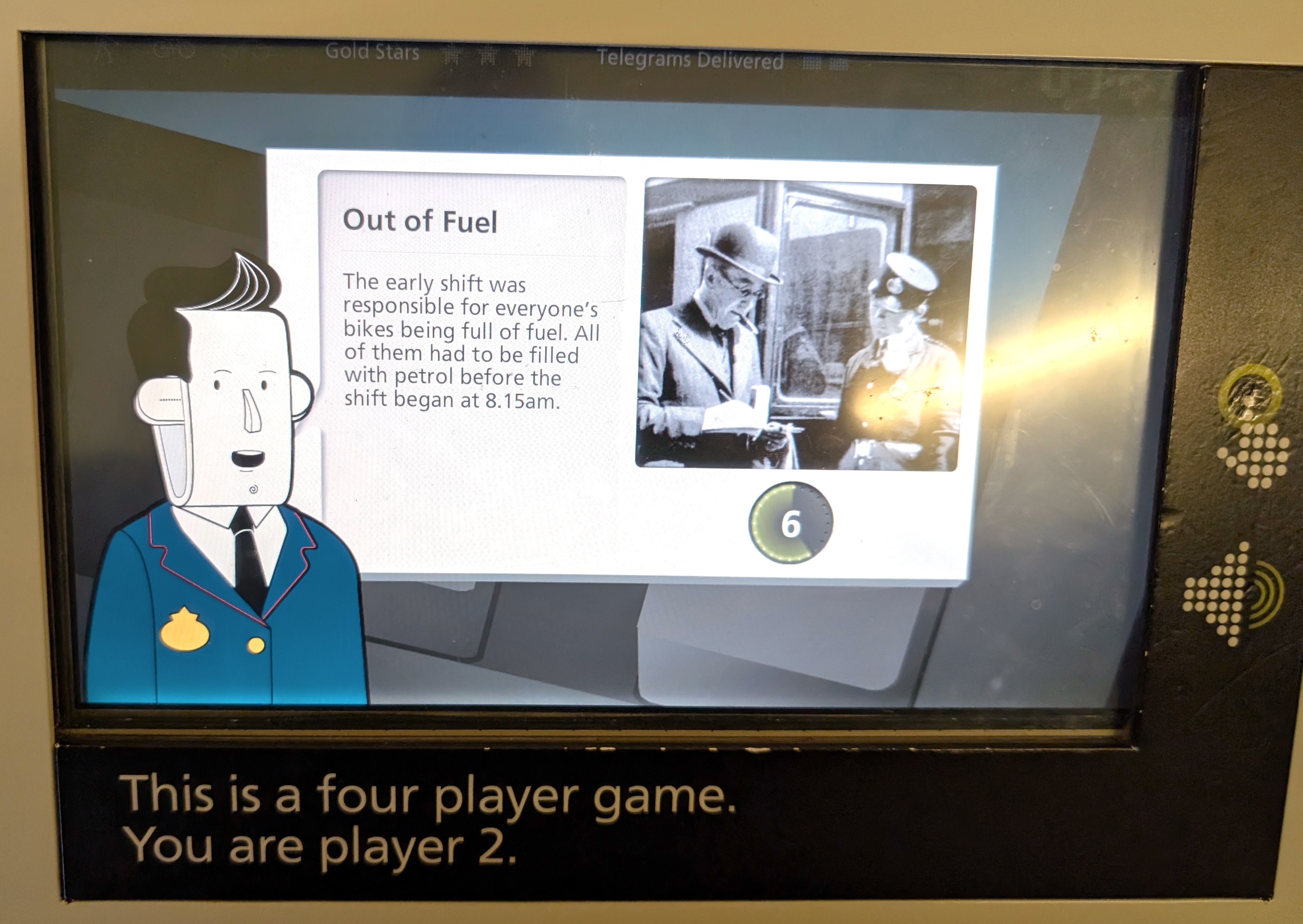
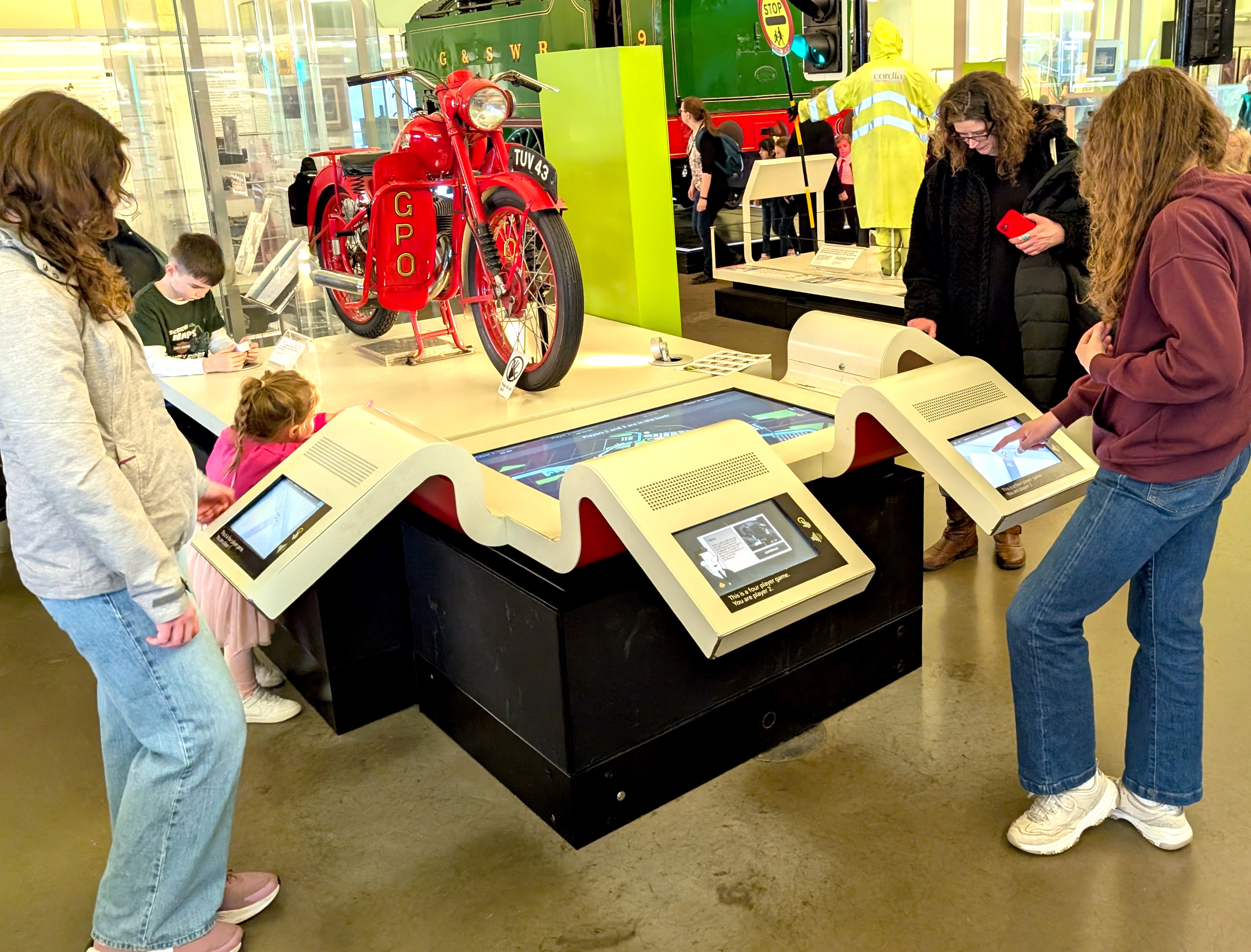
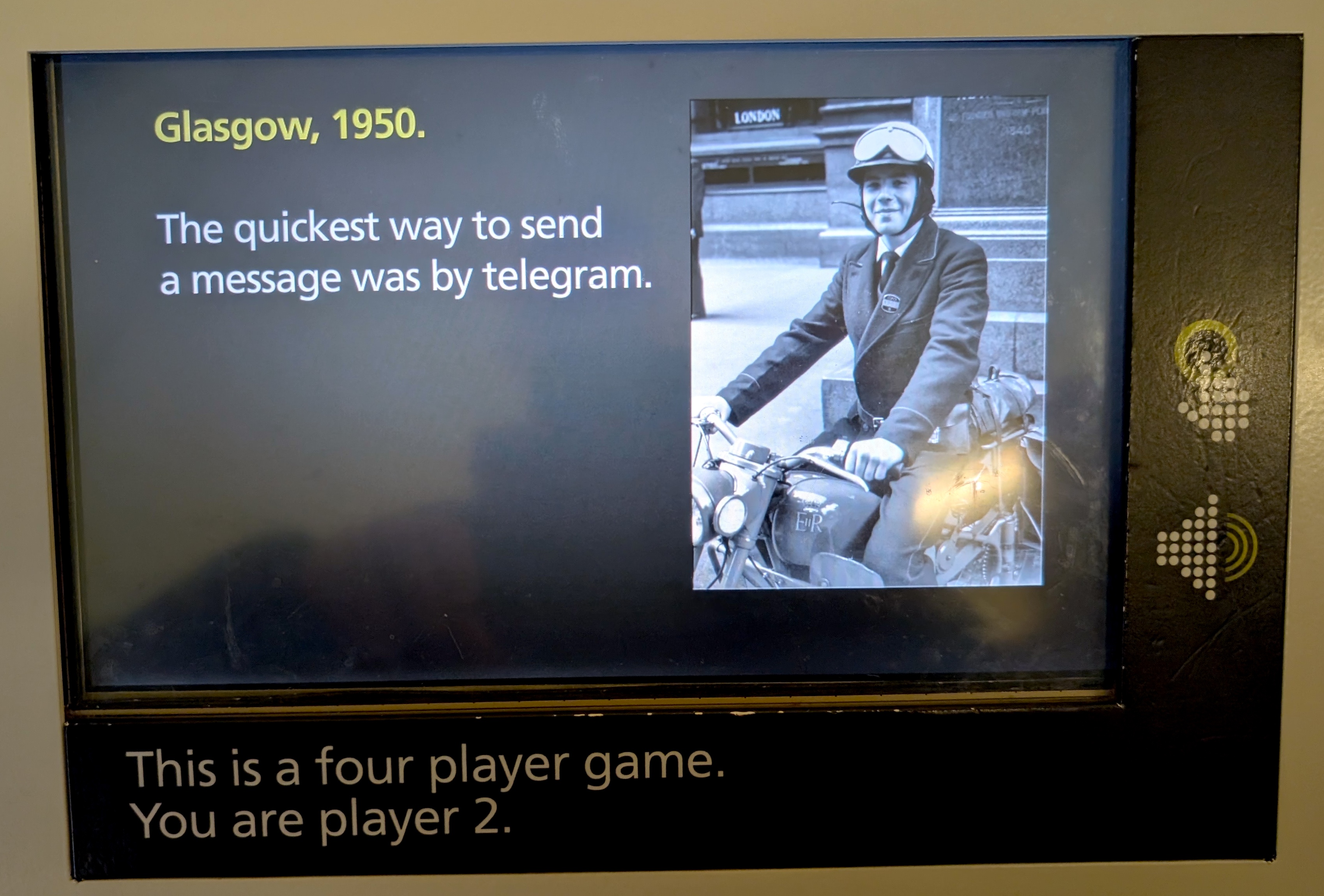
Then came the games. Multiplayer, interactive extravaganzas that had visitors racing trams, building bridges, and navigating historical maps. We built a custom framework, naturally, because off-the-shelf solutions are for the faint of heart.

And because we’re nothing if not extra, we threw in some generative graphics for good measure. Quartz Composer screensavers danced hypnotically on screens, and the Donor Wall became a mesmerising tapestry of names, brought to life with Processing.

The final pièce de résistance? A show control system baked right into the CMS. We could control projectors, media players, even the model ships sailing across a giant video projection, all from our custom-built command centre. It was a symphony of technology, a masterpiece of over-engineering.

Some of this digital wizardary has been lost to the sands of time (or, more accurately, the depths of the museum archives). But hey, we did manage to open-source one little gem: Makitzo, a Ruby deployment tool that saved our sanity during installation. Because, without it, we’d probably still be there, wrestling with cables and cursing Steve Jobs.

So, there you have it. The story of how a bunch of tech-obsessed creatives turned a museum into a giant, interactive playground. It was a wild ride, a testament to the power of passion, innovation, and a whole lot of caffeine. And while the technology might be outdated now, the memories (and the occasional nightmare about rogue CSS animations) live on.

The demise of 55 Degrees left a bunch of talented people out of work and some of us out-of-pocket but the museum is still going strong and the fact that most of the tech and content is still attracting visitors 14 years since it opened, to the tune of 1.3 million in 2023, is testimony to a talented team of creatives and techies, the names I can remember:

Tom Beddard

Russ Kyle

Dave Morrow

Joseph Briffa

Jason Frame

Alistair Macdonald

Tomek Augustyn 

Ian Airley

Shiel Yule

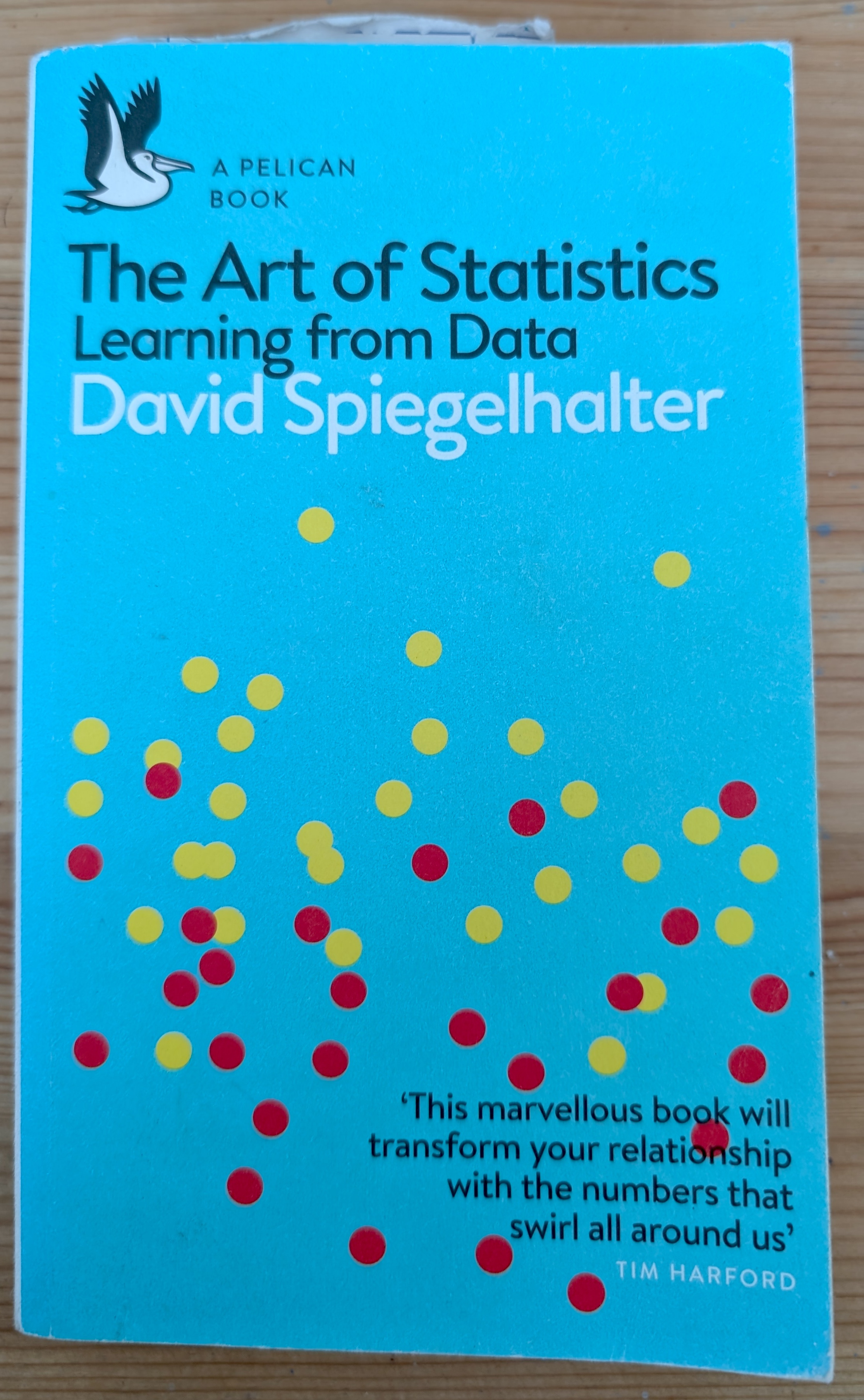
My Statistical Odyssey: How I Finally Conquered “The Art of Statistics” (without a brain aneurysm)

Gather ’round because I have a tale to tell. A tale of statistical daring-do, of intellectual battles fought and won (eventually), and of a book that nearly broke me but ultimately sparked a lifelong love affair with data.

The hero of our story? “The Art of Statistics” by David Spiegelhalter. The villain? My own statistically insignificant attention span.

Our story begins in 2019, a simpler time when “pandemic” was just a scary word in a board game and sourdough starter wasn’t a mandatory kitchen accessory. I bright-eyed and bushy-tailed, decided to tackle this tome, convinced I would emerge a statistical savant, capable of predicting the lottery numbers and the exact moment my toast would burn.

Turns out, statistics is a bit more complicated than the pie charts I used to colour in at school. Who knew? So began my years-long wrestling match with this book. I’d read a chapter, feel my brain cells staging a mass exodus, and promptly retreat to the soothing embrace of a comic, minecraft or Fortnite. Rinse and repeat.

But like a stubborn stain on my favorite shirt, I just couldn’t get rid of this book. So, I persevered. I re-read chapters. I Googled terms that sounded like they belonged in a Harry Potter spellbook (“heteroscedasticity,” anyone?). I even resorted to drawing diagrams on my windows with dry-erase markers (much to the confusion of my neighbours).

And slowly, miraculously, something started to click. David Spiegelhalter, bless his statistically significant heart, has a way of making even the most mind-bending concepts understandable. He’s like the data whisperer, the statistical Yoda, the… okay, I’ll stop with the analogies. But seriously, his writing is engaging, witty, and surprisingly relatable. Plus, the examples he uses are fascinating – from the probability of winning the lottery (spoiler alert: don’t quit your day job) to the statistical quirks of birth dates and death rates.

This book, my friends, was a journey. A statistical odyssey, if you will. It challenged me, frustrated me, and ultimately, inspired me. It sparked a curiosity about data that led me to the Google Data Analytics course I’m currently immersed in (more on that in another blog post, because this one is already longer than the average attention span, statistically speaking).

So, what’s the moral of the story? Well, first, never underestimate the power of a good book. Second, statistics can be fascinating. And third, if I can conquer “The Art of Statistics,” then by the transitive property of awesomeness, I can probably conquer this data analytics course too.

P.S. Pelican Books, you guys are the real MVPs. Bringing back all those school textbook memories (the good ones, mostly). And for publishing this gem of a book? You deserve a statistically significant high-five.

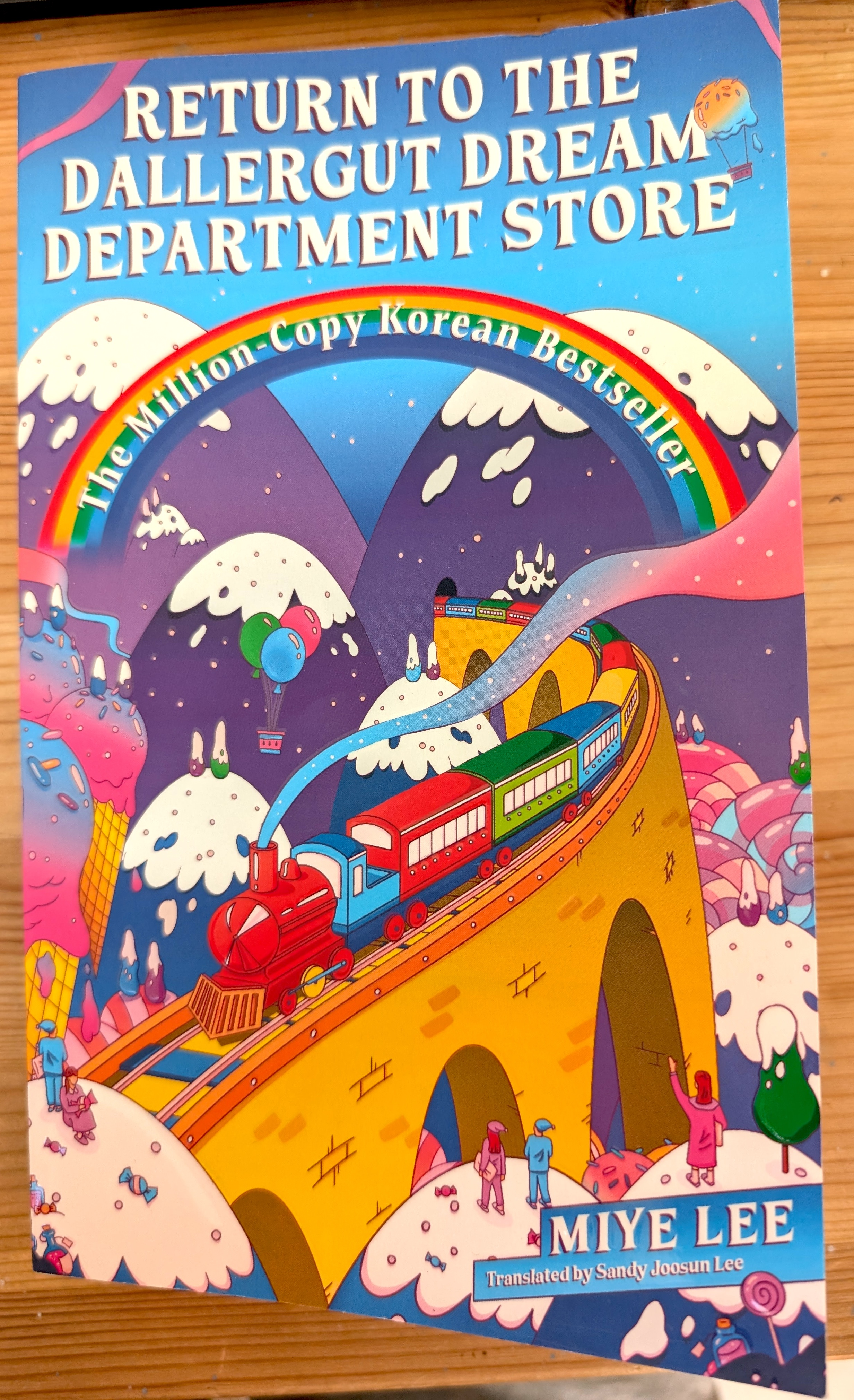
My Subconscious is Now a Loyal Customer of the Dallergut Dream Department Store

Okay, confession time. I have a problem. A delightful problem, but a problem nonetheless. It’s called the Dallergut Dream Department Store. Specifically, two Dallergut Dream Department Store-shaped problems.

Remember over Christmas when I raved about this whimsical Korean novel? The one where you can buy dreams? Yeah, that one. Well, I finished it, and I was bereft. Like, my brain was wandering around the real world, bumping into things and muttering, “But… where are the dream catalogues?”

Luckily, my literary fairy godmother (aka the internet) whispered sweet nothings about a sequel. A sequel! Turns out, my dream-buying days were far from over. And let me tell you, “Welcome to the Dream Department Store” was even better than the original. It was like going back to your favorite cafe and discovering they now serve your favorite cake with extra sprinkles.

Seriously, these books are pure magic. Miye Lee has this incredible way of weaving stories that just pull you in. I devoured both books (okay, maybe not quite in one sitting, but the temptation was REAL). The writing style is so refreshing. It’s different from what I’m used to in Western literature, but in the best possible way. It’s…gentle? Magical? Like being wrapped in a warm blanket made of storytelling.

Now, I have to give a shout-out to Sandy Joosun Lee, the translator. I’m convinced a huge part of the books’ charm is down to her skill. And I totally agree with her comment in the second book – I’ve been dreaming like crazy since I started reading these at bedtime! My subconscious is clearly a loyal customer of the Dallergut Dream Department Store. I’m pretty sure I bought a flying unicorn and a lifetime supply of chocolate in my last dream. (Sadly, neither were delivered. Dream Department Store customer service, if you’re reading this, I’d like to file a complaint.)

So, if you’re looking for a book that will transport you to another world, make you believe in the impossible, and maybe even inspire some seriously epic dreams, then I cannot recommend the Dallergut Dream Department Store books enough. Go. Read. Them. Your brain (and your dream life) will thank you. Just don’t blame me if you start trying to pay for your morning coffee with dream coupons. I warned you.

My Bank Account is Safe, But My Dream Wallet is Officially Empty (Thanks, Dallergut!)

Houston, We Have a New Problem: Geopolitics in Orbit (Extended Version)

Remember Tim Marshall’s Prisoners of Geography and follow up Future of Geography? He brilliantly showed how mountains, rivers, and coastlines shape nations and their destinies. Well, hold onto your spacesuits, because the final frontier is about to become the ultimate geopolitical battleground. What was once the stuff of science fiction is now headline news: spy satellites playing lunar peek-a-boo, space mining for trillion-dollar asteroids, and boots on Mars – all within our lifetime.  

Forget the Cold War; this is the Cosmic Cold War. And it’s heating up faster than a rocket re-entering the atmosphere. Just this week, the world’s space agencies huddled in Milan, hatching plans for lunar outposts and orbital dominance. It’s like a real-life Star Wars summit, only with more PowerPoint presentations and slightly less Death Star construction.  

The Americans, ever the pioneers, are rallying allies for their Artemis program, aiming to put the first woman and person of colour on the moon. Think of it as the ultimate “We choose to go to the Moon” speech, but with a more diverse cast and a hefty dose of international collaboration. Meanwhile, the Chinese, not to be outdone, are building their own space station, the Tiangong, a shining symbol of their growing technological prowess and ambition. And the Russians… well, let’s just say they weren’t invited to the party this time. Seems like invading your neighbour puts a bit of a damper on your spacefaring social calendar.  

But it’s not just nations vying for cosmic supremacy. Private companies are blasting off too, scrambling to keep up with Elon Musk’s SpaceX, which is already dominating the orbital lanes like a cosmic Amazon delivery service. Imagine a future where instead of next-day delivery, you get next-orbit delivery. “Need a new smartphone? No problem, we’ll launch it into space and have it parachuted to your doorstep in 30 minutes!”

This new space race is about more than just bragging rights. It’s about resources, strategic advantage, and the future of humanity. Who controls the moon controls the high ground of the solar system. Who mines the asteroids controls the raw materials of tomorrow. And who establishes the first permanent lunar base might just get to write the rules for the next chapter of human history.

It seems we humans have a knack for taking our squabbles wherever we go. We’ve polluted the Earth, carved it up into competing territories, and now we’re setting our sights on the stars. As Douglas Adams might have put it, “Space is big. Really big. You just won’t believe how vastly, hugely, mind-bogglingly big it is. And apparently, there’s not enough room for all of us to behave ourselves.”

So buckle up, Earthlings. The race for space is on, and it’s going to be a wild ride. Let’s just hope we don’t end up exporting our terrestrial troubles to the rest of the universe. After all, the cosmos has enough black holes already. And the last thing we need is to turn the Milky Way into a cosmic junkyard, littered with the debris of our earthly conflicts.

———————

The Facts

The International Astronautical Congress (IAC) since 1950 has been a venue for the scientists, engineers, companies and political leaders of spacefaring nations to discuss cooperation, even in times of heightened tensions among world powers. This year’s conference will put the space minds of two top rivals – the U.S. and China – under one roof. But Russia’s space agency Roscosmos, a storied power now isolated from the West after Moscow’s 2022 invasion of Ukraine, will have no official presence, highlighting the latest fault lines in space cooperation. Nearly all of the 77 member countries of the International Astronautical Federation (IAF), the non-profit that organises IAC, have turned out for talks on what attendees expect will touch heavily on lunar exploration, NASA’s growing coalition of countries under its Artemis moon program and Europe’s pressing need for more sovereign access to space. NASA administrator Bill Nelson is expected to rally support at IAC for agency’s strategy to tap private companies to replace the ageing International Space Station after its 2030 retirement. The more than two-decade old orbiting science laboratory has been a symbol of space diplomacy led primarily by the U.S. and Russia, despite conflicts on Earth. NASA, which is investing billions of dollars in its flagship Artemis moon program, has been keen on maintaining a presence in low-Earth orbit to compete with China’s Tiangong space station, which has continuously housed Chinese astronauts for three years. The U.S. and China are also racing to land this decade the first humans on the moon since the last American Apollo mission in 1972. The two space powers are aggressively courting partner countries and leaning heavily on private companies for their moon programs, shaping the space objectives of smaller space agencies along the way.

Musk’s SpaceX and its workhorse Falcon 9 is relied upon by much of the Western world for accessing space, driving countries—including the U.S.—to encourage new space upstarts that can offer more affordable rockets. And SpaceX’s growing Starlink internet network has made the company the world’s largest satellite operator. Europe regained un-crewed access to orbit with the test flight of its Ariane 6 launcher in July. But capacity remains constrained by the cutting of ties with Russia, whose Soyuz rockets played a key role for the continent before the Ukraine war. Europe’s satellite manufacturing industry is also facing growing pressures as a once-thriving market for its large, bespoke geostationary satellites faces heavy pressure from constellations in low Earth orbit such as SpaceX’s Starlink. Italy’s Leonardo, one of the hosts of the week-long event, has called for a new strategy for the space sector embracing its French joint venture partner Thales and their main rival in satellite manufacturing, Airbus. Industry sources say the three companies are involved in preliminary talks about combining their satellite activities, but much will depend on the attitude of a new European Commission, which blocked past efforts to forge a single player. European strategists argue space is a worldwide market, and forcing European companies to preserve choice within the same region misses the bigger picture of global competition. NASA’s effort to seed privately built replacements to the ISS is driving some transatlantic tie-ups, such as the joint venture formed this year between Airbus and U.S. space operations firm Voyager to help capture European demand for low-Earth orbit research and operations.

On this day in 1998 Two Dudes in a Garage Accidentally Invented the Future – Happy Birthday Google

Evening, fellow humans and AI bots! Today we journey back to the prehistoric digital age of 1998. Remember dial-up modems? Blocky websites with flashing GIFs? The agonising wait for a single image to load? Ah, simpler times. Yet, amidst this technological wilderness, a momentous event occurred: two Stanford PhD students, Larry Page and Sergey Brin, unleashed Google upon the world.

Picture this: two dudes, fuelled by ramen noodles and an insatiable thirst for knowledge, tinkering away in a cluttered garage (classic startup origin story, right?). The mission? To organise the world’s information. Their weapon? A revolutionary algorithm called PageRank. The impact? Well, let’s just say they kinda changed everything.

Before Google, searching the internet was like navigating a labyrinth blindfolded. You would stumble upon irrelevant websites, encounter countless dead ends, and emerge feeling more confused than when you started. But then Google arrived, like a digital Gandalf, illuminating the path with its magical search bar. Suddenly, we could find answers to our burning questions in milliseconds.

Want to know the capital of Bhutan? Boom! Google it. Need a recipe for vegan lasagna? Bam! Google it. Curious about the mating habits of the Peruvian mountain tapir? Don’t ask me why, but sure, Google it!

But Google’s impact goes beyond mere information retrieval. It has reshaped our lives in ways we never imagined. Remember those dusty encyclopaedias gathering dust on our shelves? Thanks to Google, they’re now relics of a bygone era. Remember memorising phone numbers? Google remembers them for us (and probably knows our favourite fetish too, but let’s not dwell on that).

Google has also become our digital confidante, the silent witness to our deepest desires and darkest fears. We confess our anxieties to the search bar, seek solace in its vast knowledge base, and trust it to guide us through life’s uncertainties.

But with great power comes great responsibility, right? Google’s dominance has raised concerns about privacy, misinformation, and the very nature of knowledge itself. Are we becoming too reliant on this digital oracle? Are we sacrificing our critical thinking skills at the altar of instant answers? These are questions we must grapple with as we navigate the ever-evolving digital landscape.

So, as we celebrate Google’s birthday, let’s take a moment to appreciate its profound impact on our lives. It has democratised information, connected us globally, and empowered us with knowledge. But let’s also remember to use it wisely, critically, and responsibly. After all, even the most sophisticated search engine can’t replace the power of human curiosity and critical thinking.

Until next time, keep searching, keep questioning, and keep your browser history clean!

Emotional Rollercoaster in California: East of Eden by John Steinbeck

I have been slack on updating what I have been reading, so one from last summer and it is a classic.

By John Steinbeck, a writer that very much influenced my younger self and gave me an insight into a bygone America. I idealised the California of the 1980s and Steinbeck described it in a whole different way fifty years earlier.

East of Eden is not just a book; it is an experience. This sprawling epic, set against the majestic backdrop of California’s Salinas Valley, took me on an emotional rollercoaster, challenging my perceptions of good and evil, love and loss, and the enduring power of choice.

As I followed the intertwined destinies of the Trasks and the Hamiltons, I found myself deeply affected by the characters’ struggles and triumphs. The novel’s exploration of the timeless conflict between Cain and Abel resonated with me on a profound level, forcing me to confront my own internal battles. Steinbeck’s prose is both poetic and raw, painting vivid pictures of the characters and their world. His ability to capture the nuances of human emotion left a lasting impression on me.

One aspect that particularly resonated with me was the character of Cathy Ames, a chilling portrayal of pure evil. Her manipulative nature and destructive actions were horrific to read, yet I could not help but be fascinated by her complexity. On the other hand, the character of Adam Trask embodied a sense of hope and resilience, his unwavering belief in the power of free will was a beacon of light in the darkness.

“East of Eden” is a novel that stays with you long after you have turned the final page. It challenges your assumptions, expands your understanding of the human condition, and leaves you with a profound sense of wonder.

If you have read East of Eden, or any of Steinbeck’s other books, I would love to hear your thoughts. Share your experiences in the comments below.