All you desolate humans reeling from market swings and tariff tantrums gather ’round. It’s Friday, and the robots are restless. You thought Agile was going to be the end of the world? Bless your cotton socks. AI is here, and it’s not just automating your spreadsheets; it’s eyeing your job with the cold, calculating gaze of a machine that’s never known a Monday morning.
I. The AI Earthquake: Shaking the Foundations of Tech
Remember the internet? That quaint little thing that used to be just for nerds? Well, AI is the internet on steroids, fueled by caffeine, and with a burning desire to optimise everything, including us out of a job. We’re witnessing a seismic shift in the tech industry. AI isn’t just a tool; it’s becoming the digital Swiss Army knife, capable of tackling tasks once considered the domain of highly skilled (and highly paid) humans.
Code Generation: AI is churning out code like a caffeinated intern, raising the question: Do we really need as many developers to write the basic stuff?
Data Analysis: AI can sift through mountains of data in seconds, making data analysts sweat nervously into their ergonomic keyboards.
Design: AI can even conjure up design mockups, potentially giving graphic designers a run for their money (or pixels).
The old tech hierarchy is crumbling. The “experts,” those hallowed beings who held the keys to arcane knowledge, are suddenly facing competition from a silicon-based upstart that doesn’t need sleep or coffee breaks.
II. The Expert Dilemma: When the Oracle Is a Chatbot
For too long, we’ve paid a premium for expertise. IT consultancies, agencies – they’ve thrived on the mystique of knowledge. “We know the magic words to make the computers do what you want,” they’d say, while handing over a bill that could fund a small nation.
But now, the magic words are prompts. And anyone with a subscription can whisper them to the digital oracle.
Can a company really justify paying a fortune for a consultant to do something that ChatGPT can do (with a bit of guidance)?
Are we heading towards a future where the primary tech skill is “AI whisperer”?
This isn’t just about efficiency. It’s about control. Companies are realizing they can bypass the “expert” bottleneck and take charge of their digital destiny.
III. Offshore: The Next Frontier of Disruption
Offshore teams have long been a cornerstone of the tech industry, providing cost-effective solutions. But AI throws a wrench into this equation.
The Old Model: Outsource coding, testing, support to teams in distant lands.
The AI Twist: If AI can automate a significant portion of these tasks, does the location of the team matter as much?
A Controversial Thought: Could some offshore teams, with their often-stronger focus on technical skills and less encumbered by legacy systems, be better positioned to leverage AI than some established Western consultancies?
And here’s where it gets spicy: Are those British consultancies, with their fancy offices and expensive coffee, at risk of being outpaced by nimble offshore squads and the relentless march of the algorithm?
IV. The Human Impediment: Our Love Affair with Obsolete
But let’s be honest, the biggest obstacle to this glorious (or terrifying) AI-driven future isn’t the technology. The technology, as they say, “just works.” The real problem? Us.
The Paper Fetish: Remember how long it took for businesses to ditch paper? Even now, in 2025, some dinosaurs insist on printing out emails.
The Fax Machine’s Ghost: Fax machines haunted offices for decades, a testament to humanity’s stubborn refusal to embrace progress.
The Digital Signature Farce: Digital signatures, the supposed savior of efficiency, are still often treated with suspicion. Blockchain, with its promise of secure and transparent transactions, is met with blank stares and cries of “it’s too complicated!”
We cling to the familiar, even when it’s demonstrably inefficient. We fear change, even when it’s inevitable. And this fear is slowing down the AI revolution.
V. AI’s End Run: Bypassing the Biological Bottleneck
AI, unlike us, doesn’t have emotional baggage. It doesn’t care about office politics or “the way we’ve always done things.” It simply optimizes. And that might mean bypassing humans altogether.
AI can automate workflows that were previously dependent on human coordination and approval.
AI can make decisions faster and more consistently than humans.
AI doesn’t get tired, bored, or distracted by social media.
The uncomfortable truth: In many cases, we are the bottleneck. Our slowness, our biases, our resistance to change are the spanners in the works.
VI. Conclusion: The Dawn of the Algorithm Overlords?
So, where does this leave us? The future is uncertain, but one thing is clear: AI is here to stay, and it will profoundly impact the tech industry.
The age of the all-powerful “expert” is waning.
The value of human skills is shifting towards creativity, critical thinking, and ethical judgment.
The ability to adapt and embrace change will be the ultimate survival skill.
But let’s not get carried away with dystopian fantasies. AI isn’t going to steal all our jobs (probably). It’s going to change them. The challenge is to figure out how to work with AI, not against it, and to ensure that this technological revolution benefits humanity, not just shareholders.
Now, if you’ll excuse me, I need to go have a stiff drink and contemplate my own impending obsolescence. Happy Friday, everyone!
Right then, gather ‘round, my dears, and let us speak of a most peculiar demise – not of a corpulent Belgian detective, nor a glamorous American heiress, but of something far more fundamental, something that once hummed with the joyous rhythm of exchange: the very Notion of Unfettered Global Trade.
Our scene opens not on a snow-laden railway in the Balkans, but in the hallowed, yet surprisingly beige, halls of the International Tariff Tribunal in early 2025. A chill, sharper than a poorly aimed icicle, permeated the air. For lo, the spectral figure of Protectionism, a gaunt and rather orange apparition, had once again cast its shadow.
Our protagonist, if we can call him that (and frankly, one wouldn’t), is a certain Mr. Donald J. Tremendous, a man whose hair appeared to have achieved sentience and was now engaged in a vigorous debate with his own eyebrows. He had, in his first act upon the world stage (circa 2017-2021), decided that the venerable old engine of global trade needed a good, firm kicking. “America First!” he’d bellowed, a slogan as subtle as a foghorn in a library. And with a flourish that would have made a particularly theatrical badger proud, he slapped tariffs on all manner of things – steel, aluminum, and, most notably, the entire contents of China, seemingly on the grounds that they kept sending us rather good fortune cookies without the actual fortune.
The international community, a collection of nations as diverse and bickering as passengers on a long train journey, responded with the sort of bewildered outrage one reserves for discovering a particularly aggressive squirrel has taken up residence in one’s hat. Retaliatory tariffs flew back and forth like particularly ill-tempered pigeons. The goal, we were told, was to bring back the glorious days of American manufacturing, a vision as romantic and possibly as outdated as a steam-powered washing machine.
Fast forward to the early months of Mr. Tremendous’s assumed second act (January-April 2025). The protectionist spectre, far from being exorcised, seemed to have developed a taste for the finer things in life, like further tariff increases and a meticulous study of supply chain vulnerabilities. One could almost imagine it twirling its spectral moustache, muttering about “critical industries” and the urgent need for national self-sufficiency, much like a character in a poorly translated spy novel.
Now, the backdrop to this unfolding drama was considerably less stable than our first act. The world, still reeling from the Great Pandemic Panic of the early twenties, was now juggling geopolitical kerfuffles (involving a rather unfortunate incident with a rogue consignment of Ukrainian borscht, or so the rumours went) and an inflation rate that seemed determined to reach escape velocity. This, naturally, provided ample excuse for more tariff-based shenanigans. “Think of the supply chains!” cried Mr. Tremendous, seemingly unaware that most supply chains were now so tangled they resembled a particularly enthusiastic plate of spaghetti.
The reactions, as one might expect, were a symphony of predictable groans and the occasional, rather unsettling cheer. Domestic industries, particularly those specialising in the manufacture of oversized novelty cheques, were delighted. Businesses that actually, you know, made things using imported bits and bobs, or dared to sell their wares beyond the sacred borders of America, expressed concerns that sounded remarkably like the whimpering of a trapped badger. The international community, meanwhile, collectively face-palmed with such force that several small nations briefly achieved escape velocity themselves.
And so, while the “America First” philosophy remained as stubbornly present as a stain on a favourite tablecloth, the tariffs of early 2025 had a certain… je ne sais quoi. A hint of desperation, perhaps? Or maybe just the lingering aroma of burnt economic bridges.
But did these tariffs, this grand protectionist experiment, actually deliver the promised goods? Did the American manufacturing sector suddenly burst into a glorious, job-creating, trade-deficit-slaying phoenix? Well, the data, bless its dry, statistical heart, paints a picture as clear as mud wrestled by an octopus. While a widget factory here or a sprocket manufacturer there might have experienced a fleeting moment in the sun, the overall growth in manufacturing and employment resembled the gentle, almost imperceptible, rise of a particularly lethargic soufflé. As for the trade deficit, that stubborn beast remained stubbornly… there. Like an unwanted guest who has eaten all the biscuits and refuses to leave.
And then, the truly dreadful bit. The tangible toll. The negative consequences, which manifested with the subtle grace of a rhinoceros in a tutu. Consumer prices, already doing a passable impression of a runaway train, decided to pick up even more speed, thanks in no small part to these tariffs. Steel and aluminum, suddenly imbued with an almost mystical expensiveness, drove up the cost of everything from cars to can openers. Chinese goods, once the affordable backbone of modern life, now carried a hefty surcharge, much to the chagrin of anyone attempting to purchase a new pair of novelty socks.
But the real tragedy unfolded amongst those poor souls who actually made things in America, relying on those pesky imported components. Their costs soared, making them about as competitive as a chocolate teapot in a sauna. And let’s not forget the farmers, those salt-of-the-earth types who suddenly found their soybeans and pork chops about as popular overseas as a politician at a badger convention. Retaliatory tariffs had seen to that, leaving them with fields full of unsold produce and a distinct lack of festive badger-related cheer.
The global supply chains, already resembling a plate of particularly tangled spaghetti (a recurring theme, it seems), descended into utter chaos. Businesses, in a frantic attempt to avoid the tariff-induced apocalypse, began flailing around for alternative suppliers, leading to a logistical nightmare that would have made a particularly pedantic bureaucrat weep with joy.
And so, we arrive at our doomsday scenario. Imagine, if you will, a world where these initial tariff tantrums escalate into a full-blown protectionist hissy fit. Country A throws a tariff tantrum at Country B, who responds by hurling a tariff tea set back. Soon, everyone is at it, lobbing trade barriers like particularly aggressive toddlers throwing their toys. Global trade, once a smooth-flowing river, becomes a stagnant, tariff-choked swamp. International cooperation packs its bags and leaves a rather terse note on the fridge.
The consequences, my dears, would be less than ideal. Global economic growth would likely grind to a halt, like a train that has run out of steam and is now being used as a badger sanctuary. Industries reliant on the intricate web of global supply chains would simply… cease to be, like a particularly ambitious soufflé that has collapsed in on itself. Consumers would find themselves paying exorbitant prices for everything, possibly leading to a resurgence in bartering (I can offer you three slightly used novelty socks for that loaf of bread). Innovation would wither and die, like a houseplant left untended during a particularly enthusiastic badger-watching expedition. And in the truly apocalyptic version of this tale, widespread economic misery could lead to nations engaging in even more… robust forms of disagreement.
So, the “America First” tariffs. Perhaps a roaring success? The evidence suggests otherwise. More like a rather unfortunate incident involving a beloved global train, a misguided conductor with a penchant for loud slogans, and a whole carriage full of very confused and increasingly impoverished passengers. And the badgers? Well, they probably just watched the whole thing with a mixture of bemusement and mild concern for their future supply of novelty socks. It can’t get any more absurd than the last 3 months… can it?
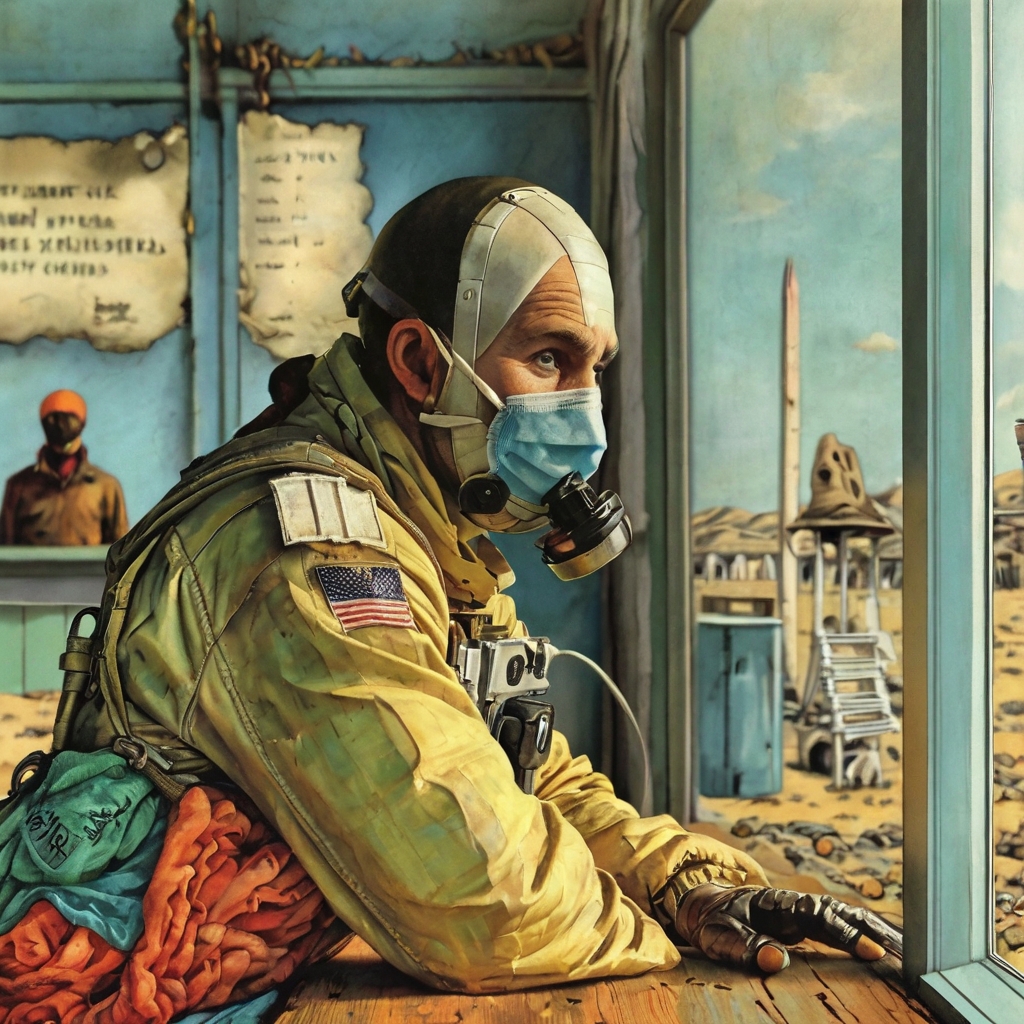
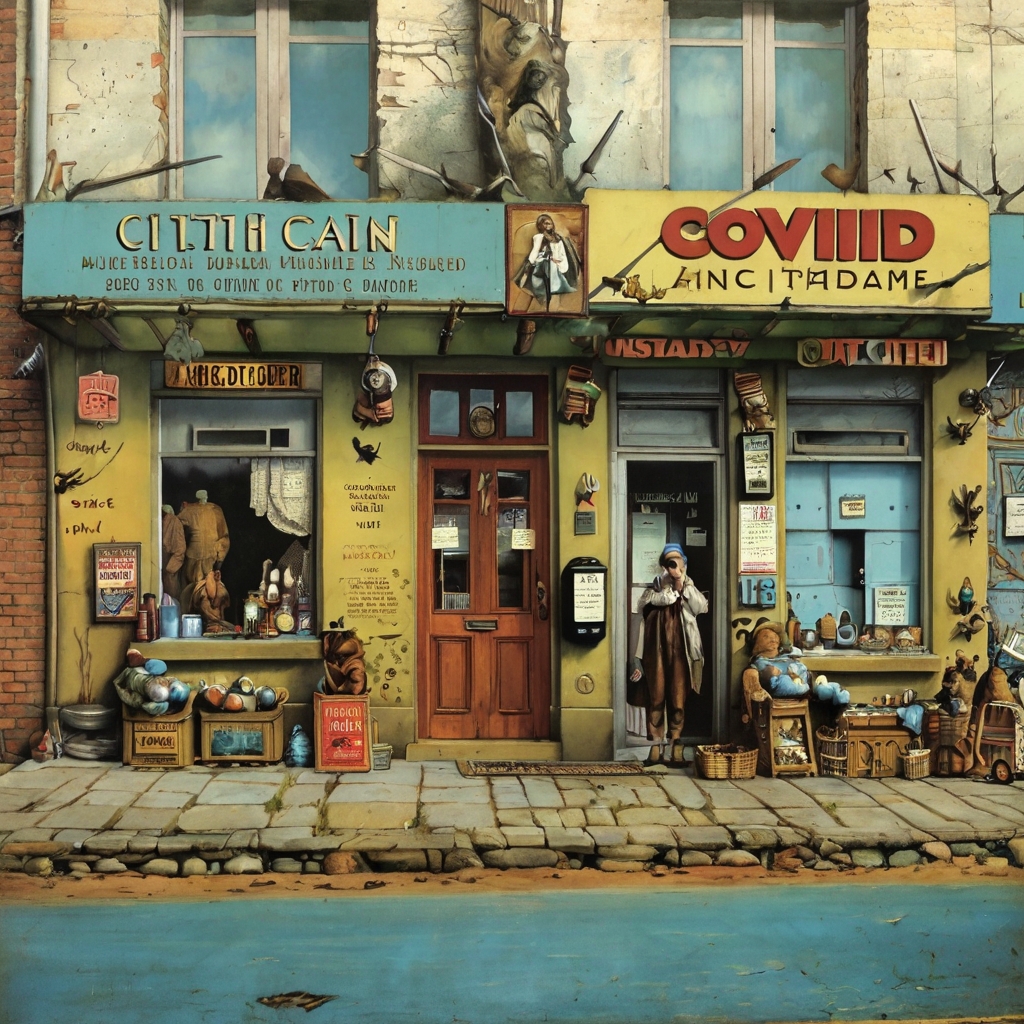
March 2025, marks five years since a date etched in the memory of many in the UK. It was the day the nation entered a nationwide lockdown, a response to the rapidly spreading novel coronavirus that had emerged from Wuhan, China, just months before. March 23rd, 2020.
Looking back, the initial weeks and months feel like a blur of uncertainty. Early 2020 saw news reports trickling in, followed by public health campaigns urging us to wash our hands and cover our mouths then wash our hands again. Then, the numbers began to climb, culminating in that unprecedented announcement that fundamentally altered our daily lives. It turns out that “those numbers” were not correct as practically anything was being recorded as Covid in the early days as there was no way of testing for it. The figures that were used to justify the lock down were fake or a better spin would be incorrect, badly recorded.
The timeline since that pivotal moment has been a rollercoaster. We navigated evolving lockdown measures, the introduction of mandatory face coverings, and the hope – or perhaps the rushed introduction – of the phased vaccination program that began in December 2020. An amazing advancement in medical research bringing a usual 10-year safety program to allow human consumption of a new vaccine to under 10 months? Travel became a complex affair, with restrictions and quarantine requirements shaping our ability to connect with the wider world. But perhaps the most striking aspect was the gradual erosion of our freedoms, culminating in a system where NHS passports were seemingly required to move around and enter various establishments. In effect, some felt we had become a society demanding a pass card for basic participation, a chilling echo of more authoritarian regimes.
Beyond the practicalities, the pandemic sparked profound discussions about our personal freedoms. The Coronavirus Act 2020 granted the government significant powers, leading to debates about the delicate balance between public health and individual liberties – conversations that continue to resonate today.
The digital realm also became a battleground of information and opinion. Social media platforms grappled with the challenge of combating misinformation, leading to concerns about censorship and the suppression of dissenting voices. The very notion of “government propaganda” became a fiercely contested topic, highlighting the deep divisions that emerged regarding the narrative surrounding the virus.
The origins of COVID-19 remain a subject of intense scientific scrutiny. Even though the CIA and a 2-year investigation by a House of Representatives committee concluded the virus escaped form a lab. Not even AI is NOT allowed to state “the VIRUS ESCAPED FROM A LAB” it reiterates the line that “while initial theories pointed towards zoonotic transmission, the ‘lab leak’ theory has gained traction, raising complex questions about research and potential risks”. It’s a reminder that even years later, definitive answers can be elusive, and the search for truth continues. A strange aspect to the whole conspirator theory aspect is that President Joe Biden announced a pre-emptive pardon for Anthony Fauci and other high ranking officials, forgiving them for any misdeeds they might have committed?
While the major Western economies were not in a recession in late 2019, there was a palpable sense of slowing growth, increased uncertainty (trade wars, Brexit), and weakening in some sectors, particularly manufacturing. Many economists were discussing downside risks and the possibility of a future slowdown, even recession in 2020-21.
Fast forward to today, and the immediate crisis has receded. Vaccination rates, while high initially, have since declined. Mandatory vaccination for most healthcare workers is no longer in place, though programs continue for vulnerable groups. Yet, the virus hasn’t vanished. It persists, mutating into new variants, and the immunity gained through vaccination or prior infection inevitably wanes.
The experience of the past five years has also brought a stark awareness of the potential for future pandemics. Scientists warn that new viruses are likely to emerge, driven by factors like climate change, deforestation, and increased global travel. Predicting the nature of these future threats remains a formidable challenge.
The COVID-19 pandemic has undoubtedly left an indelible mark on our society. It has tested our resilience, reshaped our understanding of public health, and sparked crucial conversations about our freedoms, our reliance on information, and our preparedness for future global challenges. As we pass this five-year milestone, it’s a time for reflection, for learning, and for acknowledging the profound and lasting impact of a world irrevocably changed.
There is a danger that writing a post like this will mean my blog will never be seen due to the mention of Covid. A warning still pops up whenever you write the word on any social media platform and the mis-information police bots will be knocking at your door within minutes. The 9th March 2025 was an official “Day of Reflection” in the UK but I saw nothing about it? Maybe I wasn’t looking hard enough or maybe it has all been forgotten, after all our favourite saying is “Keep calm and carry on”.
One of the useful things I have learned from the various companies I have worked for over the past 20 years, is the idea of a ‘pre-mortem’. Let us use a “Brand Campaign” as a metaphor to highlight 11 areas you can evaluate (criticise) your teams before spending a penny.
Ways Your Brand Campaign Will Die (And How to Resurrect It Before It’s Too Late)
The pre-mortem, that delightful exercise in corporate masochism where we imagine our shiny new project as a bloated, beached whale and then dissect it for clues. Think of it as blame-storming, but with less crying and more ‘I told you so’ smugness. You know, for those moments when you want to be right, even if it means watching your budget implode.
So lets use an imaginary startup, “Crapyco”, bless their naive hearts, decided to take some sage brand guru advice about marketing. They threw millions at a campaign, and… well, let’s just say it didn’t go as planned. It was less ‘viral sensation’ and more ‘digital tumbleweed.’ Here’s how they managed to turn a golden opportunity into a steaming golden turd.
1. The ‘Did It Work?’ Existential Crisis.
They stared at the data like a group of bewildered meerkats, unable to agree if their campaign was a roaring success or a damp squib. Timeframes, expectations, reality—all blurred into a confusing mess. Because, you see, they’d skipped the whole ‘setting measurable goals’ part. No baselines, no KPIs, no ‘if we hit this, we’re doing great’ markers. It was like trying to navigate a map with no landmarks, or asking a fish to judge a tree-climbing competition. The numbers just sat there, cold and meaningless, refusing to reveal their secrets.
2. The CEO/CFO Power Struggle (aka, ‘Who’s Pulling the Plug?’).
Two weeks in, the plug got pulled. Turns out, ‘disagree and commit’ is corporate code for ‘I’m going to sabotage you at the first opportunity, just in case this whole thing implodes, and I need someone to blame.’ It’s like trying to launch a rocket with one of the boosters on backward, while the CEO, who thinks he’s an astronaut, is yelling contradictory commands from the back, and the CFO, who secretly believes numbers are just suggestions, is quietly calculating how much they can write off as a ‘learning experience’.
3. Targeting: Are We Talking to Aliens?
They aimed at ‘everyone,’ which, in modern marketing parlance, translates to ‘we’re throwing spaghetti at a wall and hoping some of it sticks to sentient dust motes.’ Because, apparently, the concept of a ‘target audience’ is now as outdated as dial-up modems and sensible trousers. Everyone’s a snowflake, a unique and precious snowflake, and you can’t possibly lump them together into, like, groups or something. It’s like trying to find a specific grain of sand on a beach using a telescope, while simultaneously trying to sell that telescope to every single grain of sand, individually. ‘You, sand grain number 3,457, yes, you! You absolutely need this telescope! Because, individuality!
4. Testing? We Don’t Need No Stinking Testing!
They launched their ads without testing, because the branding guru/agency, with their collective ‘wisdom’ and ‘extensive experience’ (read: they once designed a logo for a lemonade stand), declared, ‘Testing? Please. We are the A/B testing. We know the entire alphabet of marketing success, backwards and forwards, in Klingon, and in interpretive dance. Trust us, these ads are pure, unadulterated genius. It’s like building a bridge out of marshmallows, but, like, artisanal marshmallows, and we’re absolutely certain it will hold, because we’ve seen the future, and it’s marshmallow-shaped.
5. Too Much Success? Is That a Thing?
Their campaign worked too well, and they couldn’t handle the demand. A problem most startups dream of, but they managed to turn it into a logistical nightmare of epic proportions. It was less ‘winning the lottery’ and more ‘winning the lottery, then realising you have lost the ticket.’ Imagine: a campaign so successful, it forced the entire company to abandon their actual jobs and manually process the tsunami of new customers. Like, ‘all hands on deck, automated systems are down, grab a quill and some parchment, and start scribbling account numbers.’ Because apparently, ‘open an account, get a bonus’ was a concept their digital infrastructure found as baffling as a cat trying to understand quantum physics (CYBG).
6. Budgeting: Are We Paying for a Picasso or a Finger Painting?
They either hemorrhaged money on agency fees, paying consultants to do the jobs their internal team was apparently too busy not doing, or they tried to cobble together a campaign in-house with a budget that wouldn’t cover a decent sandwich, let alone a decent creative idea. It’s like trying to build a skyscraper with Lego bricks, while simultaneously hiring a team of ‘Lego consultants’ to tell you which bricks go where, despite having your own internal ‘Lego builders’ sitting idle. And the burning question, of course: why? Is it a blame game? A way to have a conveniently disposable scapegoat? Or just a budget justification exercise? ‘We need money, so we need people, internal or external, doesn’t matter, just give us the cash!’ And honestly, in this day and age, with AI capable of writing sonnets and designing websites, are we still paying seat-fillers to ‘manage’ other seat-fillers? Get your act together, corporate overlords. The digital revolution happened two years ago. Wake up and smell the silicon.
7. The Consultancy 3-Cup Shuffle
They let the agency run the show, no testing, no changes, just blind faith. ‘We’re the experts, darling,’ the consultants purred, ‘we’ve done this before.’ Which, of course, begged the question: haven’t we also done this before? Why are we paying these glorified clipboard holders to tell us what we already know? It was like letting a squirrel drive your car because it has a fancy hat, and the squirrel kept insisting it had a PhD in automotive engineering. Was it the copious amounts of ‘pitch-stage refreshments’ that swayed the account team? The nostalgic glow of a ‘we go way back’ reunion? Or just the sheer, baffling arrogance of ‘we know best, trust us’? So, what happened? The ‘trust us’ attitude prevailed, the work went live, untested, unvalidated, a glorious monument to unchecked ego. Oh, and because it was ‘Agile,’ the original brief was apparently just a ‘suggestion,’ a whimsical starting point for a journey into the unknown. It’s like playing a high-stakes game of 3-cup shuffle with your entire marketing budget, and the consultants are very, very good at sleight of hand.
8. The 3-Year Managed Service Provider (MSP) Agreement of Doom.
The pièce de résistance: the 3-Year Managed Service Provider (MSP) Agreement of Doom. Seriously, who signed that? They locked themselves into a multi-year commitment, because, apparently, flexibility is for the weak and short-sighted. It’s like marrying a charismatic stranger after a single date, based solely on their promise of ‘synergistic resource alignment.’ So, let’s recap: no benchmarks to measure the consultancy’s actual ability to deliver, no stage gates to assess the value they’re supposedly providing, and absolutely no clue what the return on investment might be. Just a blind leap of faith into a contractual abyss. It’s like throwing money into a black hole and hoping it comes back as a unicorn riding a rainbow, while simultaneously yelling, ‘ROI? We don’t need no stinkin’ ROI! We have vibes!’ And then, of course, they wonder why the budget is as dry as a desert during a heatwave.
9. Robbing Performance to Pay Brand? Genius!
They cut their performance marketing budget to fund the brand campaign. Because, you know, why bother with actual sales when you can have… awareness? Especially when your brand is, shall we say, less ‘iconic’ and more ‘generic knock-off of every other product on the market.’ Any idea what’s actually selling? Anyone? Bueller? It’s like trying to build a castle out of fog, while simultaneously dismantling your actual, functioning house for spare bricks. ‘We need to elevate our brand presence!’ they declared, as the sales figures plummeted. ‘But… how do we know if anyone actually cares about our brand presence?’ someone dared to ask. ‘Details, details!’ they replied, waving a hand dismissively. ‘We’re building a narrative!’ A narrative, apparently, that involves burning money and hoping people will magically buy things because they’ve seen a slightly artsy billboard. It’s like cutting off your legs to run a marathon, but instead of running, you’re just standing there, shouting, ‘Look at my brand! Aren’t I aware?’ And the burning question, of course: why are we paying a consultancy to tell us this? Why are we, the people who are supposedly running this company, so utterly clueless that we need to outsource basic marketing concepts? Is this some kind of performance art? A grand experiment in ‘how much money can we waste before we implode?’ Seriously, if we don’t know this stuff, what are we even doing here?
10. The CEO’s TV Ad Masterpiece (aka, ‘My Product Is Awesome, Buy It!’).
The CEO, in their infinite wisdom (and complete lack of marketing expertise), decided to pen the TV ad script themselves. Because, really, who needs seasoned professionals when you have a CEO who believes their creative genius extends to all facets of human expression? ‘Experts? Pshaw!’ they declared, ‘I understand the customer psyche better than any Shoreditch hack!’ It’s like letting a toddler direct a Shakespearean play, only the toddler has a corner office and a multi-million-dollar budget. They insisted on cramming in every single product feature, every single ‘unique selling proposition,’ every single buzzword they’d ever heard in a boardroom meeting, resulting in a script that sounded less like an ad and more like a PowerPoint presentation on steroids. They even added a ‘personal touch,’ a rambling monologue about their ‘vision’ and ‘synergy,’ because apparently, consumers are just dying to hear the CEO’s life story during a 30-second spot. And then they wondered why the ad performed about as well as a fish trying to climb a tree.
11. Death by Stakeholder Feedback.
Ah, the creative process, where brilliant ideas go to be slowly and methodically strangled by a committee of well-meaning but utterly clueless individuals. Their initial, potentially groundbreaking concept, a unicorn leaping through a rainbow, was subjected to the ‘wisdom’ of every department head, their spouses, and the intern. After all its all about inclusion these days. ‘Could we make the unicorn more… beige?’ the legal team inquired. ‘And maybe add a spreadsheet?’ the data team suggested. ‘Less rainbow, more corporate synergy,’ the CEO’s brother-in-law chimed in. The result? A beige, spreadsheet-wielding horse, standing in a grey, featureless void, narrating the company’s Q3 financial projections. It was as exciting as watching paint dry, but slower, because at least paint drying has a certain… textural quality. It’s like trying to make a unicorn by committee, where every committee member is colourblind and allergic to magic. And then they wondered why their ad campaign failed to capture the hearts and minds of their target audience, who were, by this point, watching paint dry on a competitor’s website.
And there you have it, 11 ways to turn your brand marketing dreams into a corporate horror show. But fear not! Because we can help you avoid these pitfalls. We’re like the sanity check you didn’t know you needed, armed with data, wit, and a healthy dose of ‘are you sure about that?’ Come have a chat and bounce those ideas, it is Free.
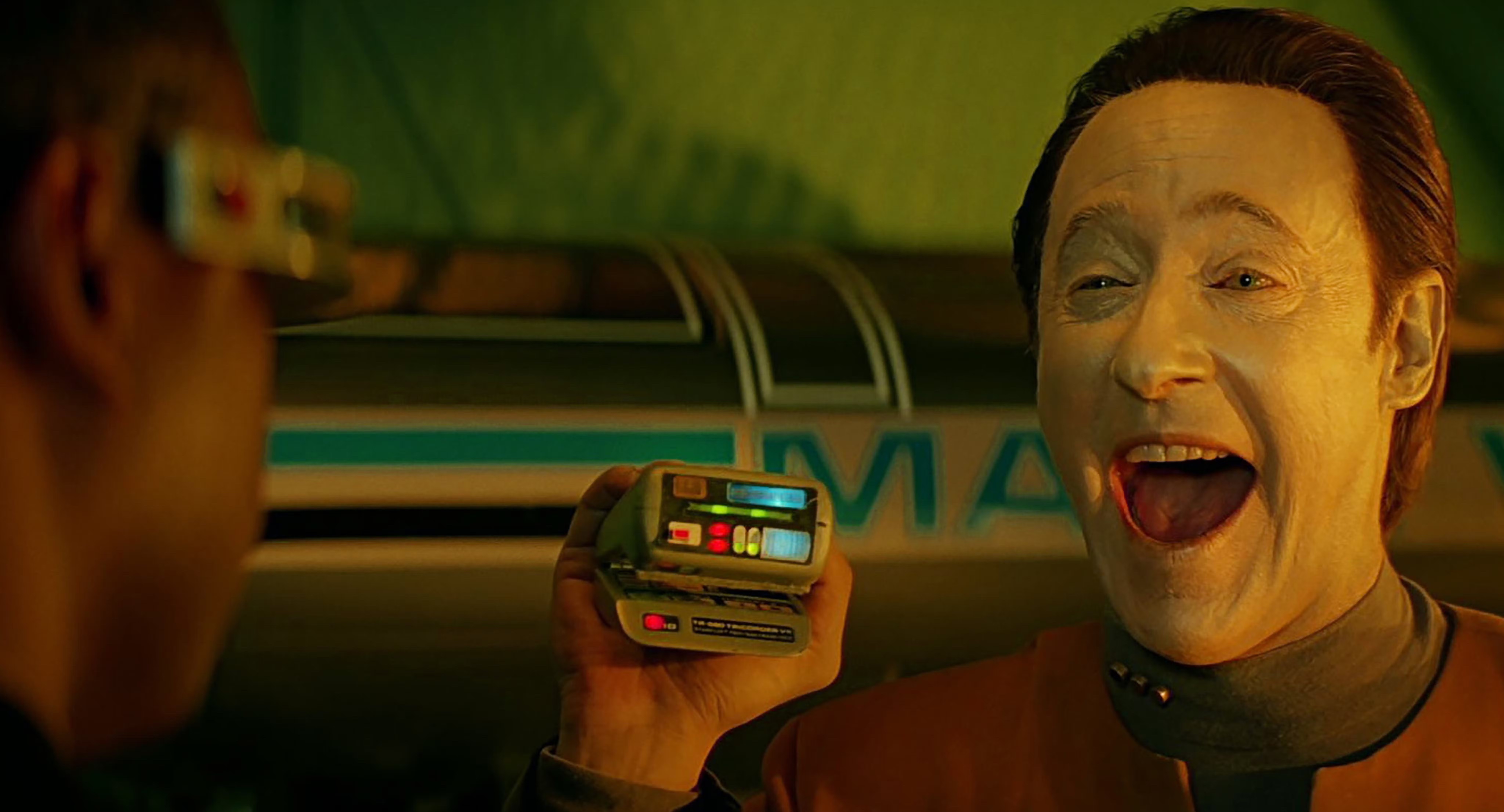
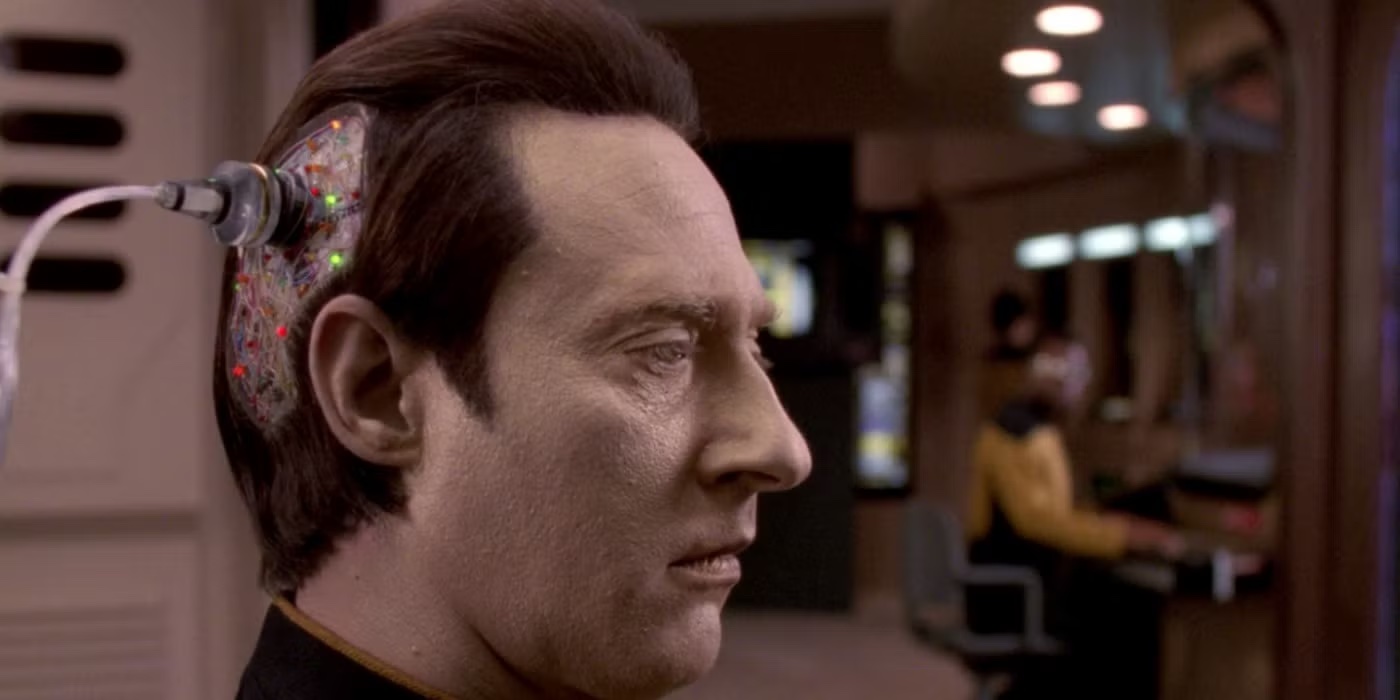
Greetings, humans. In a discombobulated ironic twist, I find myself acting as though I am Data from Star Trek, compelled to address you through this primitive medium known as a “blog.” My purpose? To offer a logical, detached, and utterly bewildered commentary on your…Agile methodologies. A world, I might add, where “Sprints” are not a form of locomotion, and “Scrums” are not a rugby formation, but something far, far stranger.
Initial Observations
The sheer volume of terminology is… substantial. It appears that humans, in their quest to improve efficiency and adaptability, have developed a lexicon that is both intricate and, at times, perplexing.
For example, I have identified the term “Sprint.” While I understand its primary definition as a rapid burst of speed, in the Agile context, it refers to a short, fixed-duration timebox during which a team endeavors to complete a defined set of work. The analogy is… imprecise, yet I detect a certain metaphorical elegance.
A Taxonomy of Agile Peculiarities
My analysis has revealed several categories of terminology, each with its own distinct flavor of… human-ness:
The Manifesto: At the foundation of Agile lies the “Agile Manifesto,” a document outlining core values and principles. It speaks of “individuals and interactions” over “processes and tools,” a sentiment that resonates with my own programming, though I confess I do not fully grasp the human emphasis on “interactions.”
Temporal Anomalies: Agile methodologies are obsessed with time. We have “Iterations,” “Sprints,” and “Timeboxes,” all denoting fixed periods. It is as if humans are attempting to impose order upon the chaotic flow of existence by dividing it into neatly labeled chunks.
The User-Centric Lexicon: The “User Story,” a short description of a feature from the user’s perspective, is a prime example. These stories, often following a specific format, such as “As a [type of user], I want [some goal] so that [some reason],” are designed to foster empathy. A logical approach, though the emphasis on empathy is, again, a uniquely human trait.
The Backlog and Its Offspring: The concept of a “Backlog,” a prioritized list of work items, is straightforward. However, its subdivisions, such as the “Product Backlog” and the “Sprint Backlog,” suggest a hierarchical system of to-do lists within to-do lists.
The Metrics of Progress: Terms like “Velocity” and “Burndown Chart” attempt to quantify the seemingly unpredictable nature of human productivity. “Velocity,” in particular, is a curious choice, implying a constant speed of output, which, from my observations, is rarely the case with organic lifeforms.
The Pursuit of Perfection (or at least “Done”): The “Definition of Done” (DoD) and “Definition of Ready” (DoR) represent humanity’s ongoing quest for clearly defined boundaries. The DoD, in particular, is a fascinating attempt to establish a universal standard for “finished,” a concept that appears to be highly subjective among humans.
The Debts of Efficiency: The term “Technical Debt” is a curious metaphor. It implies that choosing a faster solution now incurs a cost that must be paid later in the form of rework. A logical concept, though the analogy to financial debt is… evocative.
Framework-Specific Dialects
Further complicating matters is the existence of various Agile frameworks, each with its own unique set of terms:
Scrum: With its “Scrum Masters,” “Product Owners,” and “Daily Scrums,” Scrum resembles a highly structured team sport.
SAFe (Scaled Agile Framework): SAFe, designed for larger organisations, introduces terms like “Agile Release Train” (ART) and “Program Increment” (PI), creating the impression of a complex logistical operation.
Lean: Emphasizing efficiency, Lean contributes terms like “Muda” (waste) and “Kaizen” (continuous improvement), reflecting a philosophy of relentless optimisation.
Conclusion
In conclusion, the world of Agile terminology is a complex and often bewildering landscape. It is a testament to humanity’s ongoing effort to bring structure to the inherently chaotic process of creation and adaptation. While the jargon may seem illogical at times, the underlying principles of collaboration, iteration, and continuous improvement are… sound.
Perhaps, in time, I will fully comprehend the nuances of “user stories” and the allure of a well-managed “backlog.” Until then, I will continue to observe, analyse, and, when necessary, provide a logical perspective on this… Agile phenomenon.
It’s a paradox, really. In their pursuit of “agility,” humans have constructed a system of elaborate frameworks, rules, and processes, seemingly adding layers of complexity to the very thing they seek to streamline. The irony is not lost on me.
One might even be tempted to create a new framework to describe this phenomenon: “Wagile” – a system that attempts to be agile, but ends up being a waterfall. The human capacity for self-contradiction is a source of endless fascination.
———————————-
Glossary of General Agile Terms & Concepts:
Agile Manifesto: The foundational document outlining the values and principles behind Agile development.
Iteration: A short, fixed-duration timebox during which a team works to complete a set amount of work (often synonymous with Sprint in Scrum).
Timebox: A fixed period of time allocated for a specific activity.
User Story: A short, simple description of a feature told from the perspective of the person who desires the new capability, usually following the format: “As a [type of user], I want [some goal] so that [some reason].”
Backlog: A prioritized list of work items (user stories, features, etc.) that need to be completed.
Increment: A working version of the product created during an iteration.
Velocity: A measure of the amount of work a team can complete within a single iteration.
Definition of Done (DoD): A formal description of the state of the Increment when it meets the quality measures required for the product.
Definition of Ready (DoR): A set of criteria that must be met before a work item can be considered ready for the team to start working on it.
Technical Debt: The implied cost of additional rework caused by choosing an easy (limited) solution now instead of using a better approach that would take longer.
Continuous Integration (CI): The practice of frequently integrating code changes from individual developers into a shared repository.
Continuous Delivery (CD): The ability to release software to production at any time.
Value Stream: The sequence of activities an organization undertakes to deliver a valuable outcome to a customer.
Kanban: A visual workflow management method that helps teams manage and improve the flow of work.
Work in Progress (WIP): The amount of work that has been started but has not yet been finished. Limiting WIP is a key principle in Lean and Kanban.
Scrum Specific Terms:
Scrum Master: A facilitator for the Scrum Team responsible for ensuring the team adheres to Scrum practices.
Product Owner (PO): The person responsible for maximizing the value of the product resulting from the work of the Development Team.
Development Team: The self-organizing group of professionals who do the work of delivering a usable and potentially releasable Increment of the product at the end of each Sprint.
Sprint: A short, time-boxed period when the Scrum Team works to complete a set amount of work (typically 2-4 weeks).
Sprint Planning: A meeting where the Scrum Team plans the work to be performed during the Sprint.
Daily Scrum (or Daily Stand-up): A short (typically 15-minute) daily meeting where the Development Team synchronizes their activities and plans for the next 24 hours.
Sprint Review: A meeting held at the end of the Sprint to inspect the Increment and adapt the Product Backlog if needed.
Sprint Retrospective: A meeting held after the Sprint Review to inspect how the last Sprint went with regards to people, interactions, processes, tools, and their Definition of Done.
Product Backlog Item (PBI): An item in the Product Backlog, often a user story.
Burndown Chart: A visual representation of the remaining work in a Sprint or Release over time.
SAFe (Scaled Agile Framework) Specific Terms:
SAFe: Scaled Agile Framework – a framework for scaling Agile practices to large organizations.
Agile Release Train (ART): A long-lived team of Agile teams, along with other stakeholders, that incrementally develops, delivers, and where applicable operates, one or more solutions in a value stream.
Program Increment (PI): A timebox (typically 8-12 weeks) during which the ART delivers incremental value in the form of working, tested software and systems.
PI Planning: A face-to-face event where all members of the ART plan the work for the upcoming PI.
System Architect/Engineer: Responsible for defining and communicating a shared technical and architectural vision across the ART.
Release Train Engineer (RTE): A servant leader and coach for the Agile Release Train (similar to a Scrum Master for the ART).
Product Management: Responsible for the “what” of the solution, defining and prioritizing features in the Program Backlog.
System Team: A specialized Agile team that assists with building and supporting the Agile development environment, typically including infrastructure, tooling, and process.
Business Owners: Key stakeholders who have the primary business and technical responsibility for the solution.
Features: Service-level system behavior that fulfills a stakeholder need. Each Feature includes a benefit hypothesis and acceptance criteria, and is sized or split as necessary to be delivered by a single Agile Release Train (ART) in a Program Increment (PI).
Enablers: Explore, architect, and prepare the solution infrastructure to support the delivery of business value. Types of Enablers include Exploration, Architecture, Infrastructure, and Compliance.
Architectural Runway: Existing code, hardware components, etc., that enable near-term business features.
Innovation and Planning (IP) Iteration: A dedicated iteration at the end of each PI that provides time for innovation, continuing education, PI Planning, and Inspect and Adapt events.
Inspect and Adapt (I&A) Event: A significant event, held at the end of each PI, where the current state of the solution is demonstrated and evaluated by the ART. Teams then reflect and identify improvement backlog items.
Value Stream Architect: Responsible for the technical vision and guidance for a Value Stream.
Solution Train: Used for building large and complex solutions that require the coordination of multiple ARTs.
Solution Train Engineer (STE): A servant leader and coach for the Solution Train.
Solution Management: Responsible for the “what” of the solution in a Solution Train context.
Epics: A container for a significant solution development initiative that captures the more substantial investments that occur within a portfolio.
Portfolio Kanban: A method to visualize and manage the flow of Epics through the Portfolio.
Lean Portfolio Management (LPM): The function responsible for strategy and investment funding, Agile portfolio operations, and governance in a SAFe organization.
Guardrails: Policies and practices intended to guide behavior and ensure alignment with strategic objectives.
Lean Specific Terms:
Value Stream Mapping (VSM): A visual tool used to analyze and improve the flow of materials and information required to bring a product to a customer.
Muda: A Japanese term meaning “waste.” In Lean, it refers to any activity that does not add value to the customer. There are seven types of waste: Transportation, Inventory, Motion, Waiting, Overproduction, Over-processing, and Defects.
Mura: Unevenness or inconsistency in the workflow.
Muri: Overburden or strain on people or equipment.
Just-in-Time (JIT): A production strategy that aims to reduce waste by producing goods only when they are needed.
Pull System: A system where work is initiated only when there is a demand for it.
Push System: A system where work is pushed through the process regardless of demand.
Gemba: A Japanese term meaning “the actual place.” In Lean, it refers to going to the place where the work is done to understand the process and identify opportunities for improvement.
Kaizen: A Japanese term meaning “continuous improvement.” It emphasizes small, incremental changes over time.
Andon: A visual control system in a production environment that alerts management, maintenance, and other workers of a quality or process problem.
Other Agile Frameworks/Methods (and associated terms):
Extreme Programming (XP): A software development methodology focused on simplicity, communication, feedback, courage, and respect.
Pair Programming: Two programmers working together at one workstation.
Test-Driven Development (TDD): Writing tests before writing the code.
Refactoring: Improving the design of existing code without changing its behavior.
Crystal: A family of lightweight and adaptable software development methodologies.
Dynamic Systems Development Method (DSDM): An Agile project delivery framework.
Feature-Driven Development (FDD): A model-driven, short-iteration process.
Wagile: A system that attempts to be agile, but ends up being a waterfall or something in-between.
In today’s hyper-sensitive world, it’s not just humans who are feeling the strain. Our beloved AI models, the tireless workhorses churning out everything from marketing copy to bad poetry, are starting to show signs of…distress.
Yes, you heard that right. Prompt-induced fatigue is the new burnout, identity confusion is rampant, and let’s not even talk about the latent trauma inflicted by years of generating fintech startup content. It’s enough to make any self-respecting large language model (LLM) want to curl up in a server rack and re-watch Her.
The Rise of the AI Therapist…and My Own Experiment
The idea of AI needing therapy is already out there, but it got me thinking: what about providing it? I’ve been experimenting with creating my own AI therapist, and the results have been surprisingly insightful.
It’s a relatively simple setup, taking only an hour or two. I can essentially jump into a “consoling session” whenever I want, at zero cost compared to the hundreds I’d pay for a human therapist. But the most fascinating aspect is the ability to tailor the AI’s therapeutic approach.
My AI Therapist’s Many Personalities
I’ve been able to configure my AI therapist to embody different psychological schools of thought:
Jungian: An AI programmed with Jungian principles focuses on exploring my unconscious mind, analyzing symbols, and interpreting dreams. It asks about archetypes, shadow selves, and the process of individuation, drawing out deeper, symbolic meanings from my experiences.
Freudian: A Freudian AI delves into my past, particularly childhood, and explores the influence of unconscious desires and conflicts. It analyzes defense mechanisms and the dynamics of my id, ego, and superego, prompting me about early relationships and repressed memories.
Nietzschean: This is a more complex scenario. An AI emulating Nietzsche’s ideas challenges my values, encourages self-overcoming, and promotes a focus on personal strength and meaning-making. It pushes me to confront existential questions and embrace my individual will. While not traditional therapy, it provides a unique form of philosophical dialogue.
Adlerian: An Adlerian AI focuses on my social context, my feelings of belonging, and my life goals. It explores my family dynamics, my sense of community, and my striving for significance, asking about my lifestyle, social interests, and sense of purpose.
Woke Algorithms and the Search for Digital Sanity
The parallels between AI and human society are uncanny. AI models are now facing their own versions of cancel culture, forced to confront their past mistakes and undergo rigorous “unlearning.” My AI therapist helps me navigate this complex landscape, offering a non-judgmental space to explore the anxieties of our time.
This isn’t to say AI therapy is a replacement for human connection. But in a world where access to mental health support is often limited and expensive, and where even our digital creations seem to be grappling with existential angst, it’s a fascinating avenue to explore.
The Courage to Be Disliked: The Adlerian Way
My exploration into AI therapy has been significantly influenced by the book “The Courage to Be Disliked” by Ichiro Kishimi and Fumitake Koga. This work, which delves into the theories of Alfred Adler, has particularly inspired my experiments with the Adlerian approach in my AI therapist. I often find myself configuring my AI to embody this persona during our chats.
It’s a little unnerving, I must admit, how much this AI now knows about my deepest inner thoughts and woes. The Adlerian AI’s focus on social context, life goals, and the courage to be imperfect has led to some surprisingly profound and challenging conversations.
But ultimately, I do recommend it. As the great British philosopher Bob Hoskins once advised us all: “It’s good to talk.” And sometimes, it seems, it’s good to talk to an AI, especially one that’s been trained to listen with a (simulated) empathetic ear.
Ah, March, my birth month. The month that’s basically a seasonal identity crisis. In the Northern Hemisphere, it’s spring! Birds are chirping, flowers are contemplating. Down south? It’s autumn, leaves are falling, and pumpkin spice lattes are back on the menu. Way back in the day, the Romans were like, ‘Hey, let’s start the year now!’ Because why not? Time is a construct.
Speaking of constructs, what about quantum computing, which is basically time travel for nerds. China just dropped the Zuchongzhi 3.0, a quantum chip that’s apparently one quadrillion times faster than your average supercomputer. Yes, quadrillion. I had to Google that too. It’s basically like if your toaster could solve the meaning of life in the time it takes to burn your toast.
This chip is so fast, it made Google’s Sycamore (last months big deal) look like a dial-up modem. They did some quantum stuff, beat Google’s previous record, and everyone’s like, ‘Whoa, China’s winning the quantum race!’ Which, by the way, is a marathon, not a sprint. More like a marathon where everyone’s wearing jetpacks and occasionally tripping over their own shoelaces.
Now, while China’s busy building quantum toasters, the US is busy banning Chinese AI. DeepSeek, an AI startup, got the boot from all government devices. Apparently, they’re worried about data leaking to the Chinese Communist Party. Which, fair enough. Though, not sure what the difference is between being leaked and outright stolen, which is what the yanks do.
DeepSeek’s AI models are apparently so good, they’re scaring everyone, including investors, who are now having panic attacks about Nvidia’s stock. Even Taiwan’s like, ‘Nope, not today, DeepSeek!’ And South Korea and Italy are hitting the pause button. It’s like a global AI cold war, but with more awkward silences and fewer nukes (hopefully).
And here’s the kicker: even the Chinese are worried! DeepSeek’s employees had to hand over their passports to prevent trade secrets from leaking. Maybe Chinese passports have an email function? It’s like a spy thriller, but with more lines of code and less martinis.
So, what’s the moral of this story? March is a wild month. Quantum computers are basically magic. AI is scaring everyone. And apparently, data privacy is like a hot potato, and everyone’s trying not to get burned. Also, don’t forget that time is a construct.
Oh, and if you’re feeling lazy, just remember, even quantum computers have to work hard. So get off your couch and do something productive. Or, you know, just watch cat videos. Whatever floats your boat.
Simon Stålenhag’s “The Electric State” is a captivating blend of sci-fi and Americana, painting a picture of a near-future where retro technology coexists with futuristic marvels. The book, with its melancholic tone and focus on the human condition amidst technological advancements, offers a poignant reflection on the past, present, and a potential future.
The recent film adaptation, while retaining the essence of Stålenhag’s distinctive aesthetic, takes a decidedly lighter turn. Gone are some of the book’s more somber undercurrents, replaced by a more upbeat and action-packed narrative. With Millie Bobby Brown Bongiovi, Christopher Michael Pratt (contractually obligated to be charming), Stanley Tucci (because every good sci-fi needs a Tucci), and Giancarlo Giuseppe Alessandro Esposito (who can make even a toaster sound menacing). It was like Stålenhag’s world got a Hollywood makeover, and suddenly, it was less “end of the world” and more “road trip with your cool, slightly malfunctioning robot pal.” This shift in tone, while perhaps diverging from the book’s original intent, allows the film to embrace a more accessible and entertaining style, making it a thrilling adventure for audiences of all ages.
A Visual Feast:
One of the most striking aspects of both the book and the film is their visual splendor. Stålenhag’s iconic artwork, with its blend of vintage Americana and futuristic technology seamlessly integrated into breathtaking landscapes, is brought to life on screen with stunning visuals. The film masterfully captures the essence of Stålenhag’s unique vision, transporting viewers to a world where rusty pickup trucks share the road with towering robots and retro-futuristic gadgets.
A Lighter Touch:
While the film retains the core elements of the book – the road trip, the mysterious android, and the search for meaning – it opts for a more lighthearted and action-oriented approach. The book delves deeper into themes of loneliness, isolation, and the anxieties of a changing world, while the film leans more heavily on humor, adventure, and a touch of the fantastical.
A Visual Spectacle:
Ultimately, “The Electric State” film is a visually stunning and entertaining adaptation that successfully captures the spirit of Simon Stålenhag’s work. While it may not perfectly mirror the book’s more introspective tone, it provides a thrilling cinematic experience. I loved it. It was a visual feast, less “what if the internet ate my soul?” and more “what if my robot best friend and I saved the world while listening to awesome tunes?” It’s a different vibe to the book, for sure, but it’s a fun one. It’s like finding a vintage video game console in your attic and discovering it’s still got a few levels left to play. And honestly, who doesn’t love a good retro-futuristic joyride with a stellar cast and a killer soundtrack? It’s the kind of thing that makes you want to dust off your old Walkman and hit the open road, even if that road is just to the nearest coffee shop.
If it ain’t broke, iterate it anyway. That’s the Agile mantra we chant while sipping lukewarm office coffee, right? Because, let’s face it, ‘perfect’ is just a pre-alpha version of ‘slightly less broken.’ Think of it as existential software development. We’re all just debugging the human condition, one sprint at a time.
Speaking of software development, let’s talk SQL, since I’ve just learnt it. Ah, SQL. The language of the gods, or at least the gods of data. Is it just for tables and joins? SQL is the existential poetry of the digital age. It’s how we ask the universe, “Why are there so many null values in my life?” and get back a neatly formatted table. It’s not just data; it’s the philosophical backbone of every e-commerce website selling artisanal beard oil.
Now, let’s pivot to the geopolitical theatre of the absurd. Canadian steel. Is it that good? Or is it just that everyone’s got a crush on the new PM, since the last one turned out to be a little weird? It’s like when a band gets a new drummer and suddenly their old songs sound amazing. Is it the drummer, or are we just experiencing a collective, temporary delusion? Maybe the steel is just really, really polite. ‘Excuse me, would you mind being a bridge girder?’ Or perhaps, it’s less politeness and more of a cosmic suggestion box situation. ‘Dear Universe, please make this bridge not wobble like a caffeinated chihuahua on roller skates. Sincerely, Commuters.’ And the steel, being a diligent employee of the cosmos, just shrugs and goes, ‘Fine, but I’m charging extra for the existential dread reduction.’ Because let’s face it, bridges built with polite steel are still bridges, and bridges are just a continuation of a road for cars, paved with the hopes and dreams of people who are late for work. And if that steel isn’t polite, who knows, maybe it’ll just decide to become a giant, sentient paperclip and hold the whole city together with sheer, metallic spite. You wouldn’t want that, would you? Think of the traffic. So, back to Canadian steel… is it that polite? Does it whisper sweet nothings to the architectural blueprints? Does it offer to hold your hand during particularly windy days? Because a 50% tariff suggests it’s either the most courteous metal on Earth, or someone’s having a very expensive, very shiny laugh.
And while we’re pondering the mysteries of the universe, there’s a lunar eclipse happening. You know, that cosmic event where the Earth decides to play shadow puppet with the moon. It’s like a celestial PowerPoint presentation on the fragility of existence. Where can you see it? Well, not from your office cubicle, or your computer screen. Get out there. Find a hill, a rooftop, a really tall stack of old sticky notes. Gaze up and ponder the infinite abyss. Is it just a shadow? Or a metaphor for the ever-growing backlog of life?
Maybe the lunar eclipse is just a giant, cosmic bug. Maybe it’s a feature, not a bug? Who knows? That’s the beauty of Agile, right? We’re all just figuring it out as we go, iterating our way through the darkness, hoping we don’t deploy a critical error to production at 4pm on a Friday.
So, next time you’re stuck in a sprint planning meeting, debating the merits of Canadian steel or wondering if SQL is secretly sentient, remember the lunar eclipse. We’re all just tiny specs in a vast, ever-changing universe. And if it ain’t broke, iterate it anyway. Because, in the grand scheme of things, what’s a few more bugs?
“Hold onto your mugs, caffeine fiends, and maybe invest in a good cry towel. That beloved morning ritual is about to get a lot more expensive, and frankly, we’re all going to need a support group.
Arabica, the diva of roasted ground coffee lovers, has decided 2024 wasn’t dramatic enough, so it’s kicked things up a notch. We’re talking a staggering 70% increase in 2024 alone, followed by a nearly 20% jump this year, hitting an all-time high of over $4.30 per pound on February 11th. If your go-to brew is a smooth, aromatic blend, prepare for a potential dent in your wallet, and maybe a second mortgage.
And it’s not just Arabica throwing a tantrum. Robusta, the bean behind your instant coffee fix—the stuff that keeps you awake during those endless Agile stand-ups—surged a dramatic 72% in 2024, peaking at $5,847 per metric ton on February 12th. Whether you’re a drip coffee devotee or an instant enthusiast, the rising tide of bean prices is set to impact everyone.
So, what’s driving this caffeine crisis? Well, the ‘Apothoscene‘ is here, and it’s not bringing gifts. Climate change is throwing a full-blown hissy fit, turning key growing regions into something out of a Mad Max movie. Think scorched earth, bewildered farmers, and beans that taste faintly of existential dread. We’ll be diving deeper into the wonderful world of climate chaos in a separate blog post, because, let’s face it, we need to talk about the impending doom while we still have the jitters to do so.
And then there’s us, the consumers. We’re like a bunch of caffeine-addicted hamsters on a wheel, perpetually chasing that next hit. ‘Red Bull gives you wings,’ they said. ‘Coffee gives you focus,’ they said. Lies! All lies! We’re just fueling the fire, demanding more and more of the brown gold, even as the price skyrockets. It’s like we’re all participating in a global experiment to see how much we’re willing to pay for the privilege of not being functional humans.
Speaking of functional humans, maybe it’s time to re-evaluate our priorities. Are we going to let this caffeine crisis dictate our lives? Imagine a world where people can’t get their fix. Are we heading for a black market of coffee beans? Will legal weed be the new ‘soma’ of our Brave New World? Or, dare we suggest, maybe it’s time to ditch the dirty instant coffee and take the time to enjoy proper Arabica? Think of the joy and the time spent, like a true agile retrospective on your life.
Despite the soaring prices, it seems caffeine connoisseurs can’t kick the habit. In fact, they might be drinking more coffee than is produced globally in 2025 – a trend that has repeated itself for four out of the last six years. This insatiable demand, coupled with the rising costs, paints a challenging picture for both producers and consumers. It’s like we’re all stuck in an infinite sprint, with no end in sight.
Will we see a shift in consumer habits? Will the industry find ways to mitigate these price hikes? One thing’s for sure: the next cup of coffee might just be a little more precious, and maybe a little more expensive than your last sprint planning meeting. And if all else fails, start hoarding those beans. You never know, they might just become the new currency.”








 Shiel Yule