The Great Summer Holiday War – A Tale of Twelve Days and One Very Bad Tan

The thing about the end of the world is, it never happens in a flash of white light, not like the movies. It comes in a slow, sticky ooze, like a bad summer sunburn that peels off in big, unsightly flakes. It comes during the dog days, when the cicadas are screaming and you’re trying to figure out which cheap, flimsy inflatable to cram into the trunk of the station wagon. That’s when the 12-Day War started. You see, the folks in charge, the ones with all the medals and the permanent frowns, they’re just like you and me. They’re thinking, “Right, let’s get this over with before the big summer rush. No sense in ruining the whole bloody holiday season.”

It began on June 13, a day that felt like any other. A day for planning barbecues and arguing about which brand of charcoal burns the cleanest. But while you were fumbling with a folding chair, a surprise attack was launched. A decapitation strike, they called it. A fancy, surgical word that really just means “we’re gonna chop off the head and hope the body flops around and dies.” They aimed for the Iranian leadership, and boy, did they get some of them. Dozens of high-ranking guys in fancy suits—poof, gone.

The plan was simple, a classic B-movie plot from the 1980s: cut the head off the snake, and the whole thing falls apart. The American and Israeli powers-that-be sat back with their collective thumbs hooked in their suspenders, sure as sunrise that this would be the final act. They’d topple the government, get a good night’s sleep, and be back in time for the Fourth of July fireworks. A perfectly reasonable expectation, if you’re living inside a bad screenplay.

But here’s the thing about reality—it’s always got a twist. The Iranian government didn’t collapse. It staggered, it bled, but it didn’t fall. Instead, it straightened up, wiped the gore from its chin, and let out a bellow of pure, unadulterated fury. Then came the counterattack. Missiles—ballistic, hypersonic, the works—fell like a storm of metal rain, shrugging off every defense the Israelis could throw at them. The scale of the response was so absurdly, comically huge that the mighty US and Israel suddenly looked like two little kids who’d just poked a beehive with a stick. They stumbled back, yelping for a ceasefire.

Iran, naturally, told them to pound sand.

I mean, would you have? When you’ve got your boot on the other guy’s throat, you don’t just offer to shake hands and walk away. Not unless you get something good. And that’s where the humor, the beautiful, pathetic hypocrisy of the whole thing came into play. The only way to stop the bleeding was for President Trump, with a scowl that could curdle milk, to give them what they wanted.

And what they wanted, of all things, was to sell more oil to China.

After years of sanctions, of trying to squeeze Iran until it squealed, the great geopolitical mastermind of the free world was forced to give them a golden ticket. Trump’s subsequent tweet—a masterpiece of bluster and spin—baffled everyone. It was a perfectly polished monument to the idea that you can tear down years of policy with a single, self-aggrandizing line. The world watched, slack-jawed, as the ultimate hypocritical concession was made: Here, you can sell oil to our biggest competitor, just please stop firing missiles at our friends.

What happened next was even more delicious. Rather than weakening the Iranian government, the attack had the exact opposite effect. It triggered a surge of nationalist pride, a kind of furious, unified defiance. It was a master class in what not to do when you’re trying to overthrow a government. You don’t make them martyrs. You don’t give them a reason to stand together. But that’s exactly what happened. Round 1 of this grand game didn’t just fail; it backfired spectacularly, like a rusty shotgun.

The war is far from over. This was only the opening skirmish, a mere twelve-day appetizer. The nuclear question remains, a festering, unhealed wound. The official story is that the program was “obliterated,” but that’s a lie you tell to yourself in the mirror after you’ve had a few too many. The truth is, Iran still has the know-how, the capacity, the grim determination to rebuild whatever was lost. All we did was kick a hornet’s nest.

So now, the only path forward for the US and Israel is a full-scale, ground-pounding war. The kind that chews up men and metal and spits out dust. The kind that makes you think, “Gosh, maybe this is it. The big one.” Because the nuclear issue was never the real issue. It was just the spooky mask the real monster was wearing. The real monster is regime change. The real monster is the fear of losing control, of watching the old order crumble like a sandcastle in the tide.

So we’re left with a binary choice, a simple coin flip between two equally terrible outcomes:

Outcome #1: The US and Israel succeed in toppling Iran, a domino effect that destabilises Russia and China, and kicks off a global showdown of biblical proportions.

Outcome #2: Iran survives, solidifying its place in a new, multipolar world, and the US suffers a quiet, painful decline, like an old boxer who just can’t get back on his feet.

The outcome of this war isn’t just about who wins a battle; it’s about the future of the world. It’s about whether America can cling to the top of the heap or whether it will become a faded memory, like the British Empire after the World Wars—a cautionary tale told by historians with a sigh and a shake of the head.

We’re in the thick of it now, my friends. We are living in a moment when history is not just being written, but being violently rewritten. The noise is deafening, the propaganda is thick as syrup, and the true geopolitical landscape is a dark, tangled mess. The 12-Day War was just a prelude, a whisper before the scream. It was a holiday squabble that turned into a grim prediction. And while you’re out there, buying your sunscreen and arguing about which road to take, remember: the ripple effects won’t just stop at borders. They’re coming for your bank account, your savings, and your future.

Enjoy the rest of your summer.

Introducing ‘Chat Control’: The EU’s Latest Innovation in Agile Surveillance

Well, folks, it’s official. The EU, that noble bastion of digital rights, is preparing to roll out its most ambitious project to date. Forget GDPR, that quaint, old-world concept of personal privacy. We’re on to something much more disruptive.

In a new sprint towards a more “secure” Europe, the EU Council is poised to green-light “Chat Control,” a scalable, AI-powered solution for tackling a truly serious problem. In a masterclass of agile product development, they’ve managed to “solve” it by simply bulldozing the fundamental right to privacy for 450 million people. It’s a bold move. A real 10x-your-surveillance kind of move.

The Product Pitch: Your Digital Life, Now with Added Oversight

Here’s the pitch, and you have to admit, it’s elegant in its simplicity. To combat a very real evil (child sexual abuse), the EU has decided that the most efficient solution isn’t targeted, intelligent policing. No, that would be so last century. The modern, forward-thinking approach is to turn every single private message, every late-night text to your partner, every confidential health email, and every family photo you’ve ever shared into a potential exhibit.

The pitch goes like this: your private communications are no longer private. They’re just pre-vetted content, scanned by an all-seeing AI before they ever reach their destination. Think of it as a quality-assurance check on your digital life. Your deepest secrets? They’re just another data point for the algorithm. Your end-to-end encrypted messages? That’s a feature we’re “deprecating” in this new version. Because who needs privacy when you can have… well, mandatory screening?

Crucially, this mandatory screening will apply to all of us. You know, just to be sure. Unless, of course, you’re a government or military account. They get a privacy pass. Because accountability is for the little people, not the architects of this brave new world.

The Go-to-Market Strategy: A Race to the Bottom

The launch is already in its final phase. With a crucial vote scheduled for October 14th, this law has never been closer to becoming reality. As it stands, 15 out of 27 member states are already on board, just enough to meet the first part of the qualified majority requirement. They represent about 53% of the EU’s population—just shy of the 65% needed.

The deciding factor? The undecided “stakeholders,” with Germany as the key account. If they vote yes, the product gets the green light. If they abstain, they weaken the proposal, even if it passes. Meanwhile, the brave few—the Netherlands, Poland, Austria, the Czech Republic, and Belgium—are trying to “provide negative feedback” before the product goes live. They’ve called it “a monster that invades your privacy and cannot be tamed.” How dramatic.

The Brand Legacy: A Strategic Pivot

Europe built its reputation on the General Data Protection Regulation (GDPR), a monument to the idea that privacy is a fundamental human right. It was a globally recognized brand. But Chat Control? It’s a complete pivot. This isn’t just a new feature; it’s a total rebranding. From “Global Leader in Digital Rights” to “Pioneer of Mass Surveillance.”

The intention is, of course, noble. But the execution is a masterclass in how to dismantle freedom in the name of security. They’ve discovered the ultimate security loophole: just get rid of the protections themselves.

The vote on October 14th isn’t just about a law; it’s about choosing fear over freedom. It’s about deciding if the privacy infrastructure millions of people and businesses depend on is a bug to be fixed or a feature to be preserved. And in this agile, dystopian landscape, it looks like we’re on the verge of a very dramatic “feature update.”

#ChatControl #CSAR #DigitalRights #OnlinePrivacy #ProtectEU #Cybersecurity #DigitalPrivacy #ChatControl #DataProtection #ResistSurveillance #EULaw

Sources:

Key GDPR Principles at Risk

The primary conflict between Chat Control and GDPR stems from several core principles of the latter:

  • Data Minimisation: GDPR mandates that personal data collection should be “adequate, relevant, and limited to what is necessary.” Chat Control, with its indiscriminate scanning of all private messages, photos, and files, is seen as a direct violation of this principle. It involves mass surveillance without suspicion, collecting far more data than is necessary for its stated purpose.
  • Purpose Limitation: Data should only be processed for “specified, explicit, and legitimate purposes.” While combating child abuse is a legitimate purpose, critics argue that the broad, untargeted nature of Chat Control goes beyond this limitation. It processes a massive amount of innocent data for a purpose it was not intended for.
  • Integrity and Confidentiality (Security): This principle requires that personal data be processed in a manner that ensures “appropriate security.” The requirement for mandatory scanning, especially “client-side scanning” of encrypted communications, is seen as a direct threat to end-to-end encryption. This creates a security vulnerability that could be exploited by hackers and malicious actors, undermining the security of all citizens’ data.

Love the New World Order’s Tea Party

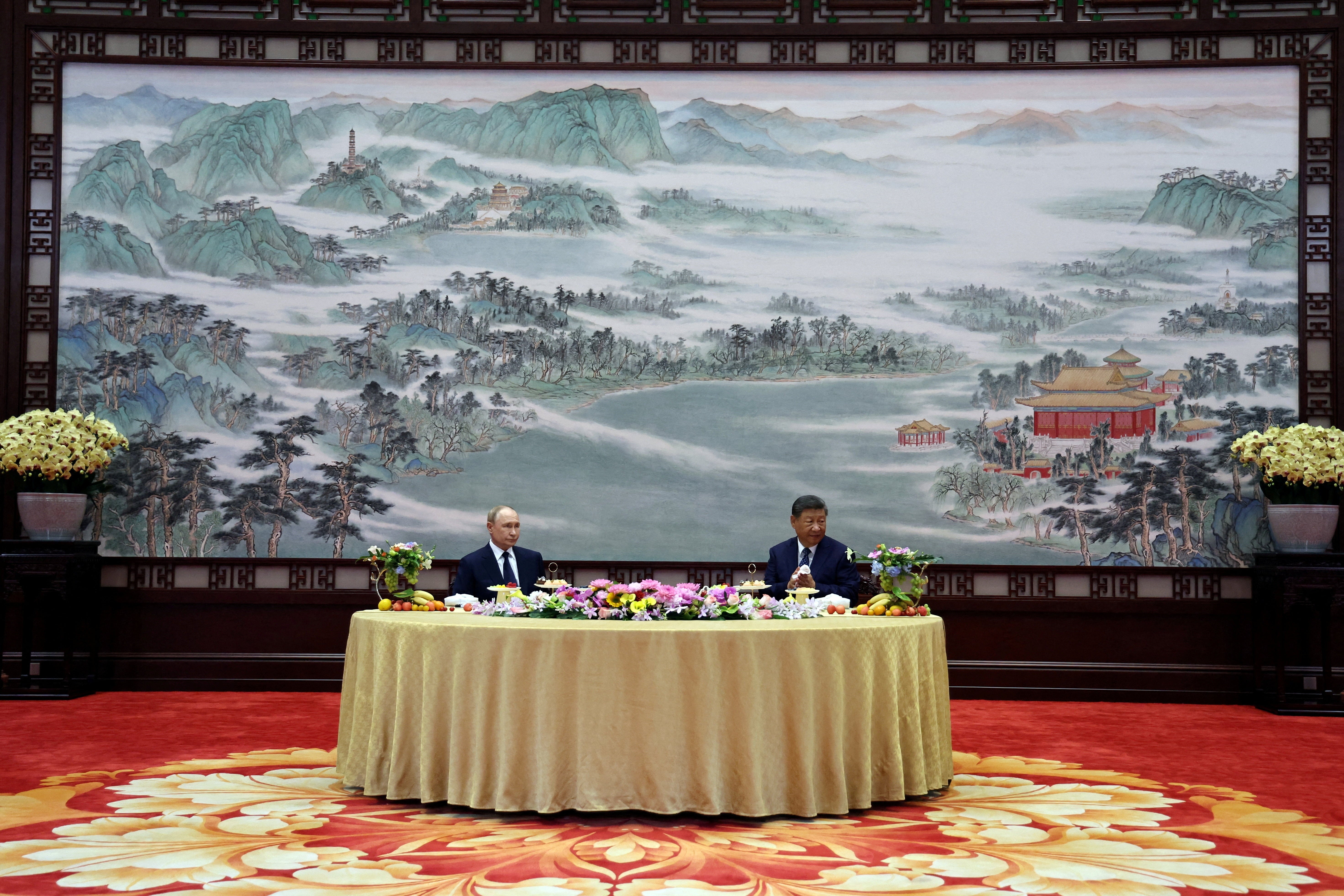
Good morning from a reality that feels increasingly like a discarded draft of a Philip K. Dick novel, where the geopolitical chess board has been replaced by a particularly intense game of “diplomatic musical chairs.” And speaking of chairs, Vladimir Putin and Xi Jinping have just secured the prime seating at the Great Hall of the People in Beijing, proving once again that some friendships are forged not in mutual admiration, but in the shared pursuit of a slightly different global seating arrangement.

It’s September 2nd, 2025, a date which, according to the official timeline of “things that are definitely going to happen,” means the world is exactly three days away from commemorating the 80th anniversary of something we used to call World War II. China, ever the pragmatist, now refers to it as the “War of Resistance Against Japanese Aggression,” which has a certain no-nonsense ring to it, much like calling a catastrophic global climate event “a bit of unusual weather.”

Putin, apparently fresh from an Alaskan heart-to-heart with a certain other prominent leader (one can only imagine the ice-fishing anecdotes exchanged), described the ties with China as being at an “unprecedentedly high level.” Xi, in a move that felt less like diplomacy and more like a carefully choreographed social media endorsement, dubbed Putin an “old friend.” One can almost envision the “Best Friends Forever” bracelets being exchanged in a backroom, meticulously crafted from depleted uranium and microchips. Chinese state media, naturally, echoed this sentiment, probably while simultaneously deleting any historical references that might contradict the narrative.

So, what thrilling takeaways emerged from this summit of “unprecedented friendship”?

The Partnership of Paranoia (and Profit): Both leaders waxed lyrical about their “comprehensive partnership and strategic cooperation,” with Xi proudly declaring their relationship had “withstood the test of international changes.” Which, in plain speak, means “we’ve survived several global tantrums, largely by ignoring them and building our own sandbox.” It’s an “example of strong ties between major countries,” which is precisely what one always says right before unveiling a new, slightly menacing, jointly-developed space laser.

The Economic Exchange of Existential Dependence: Russia is generously offering more gas, while Beijing, in a reciprocal gesture of cosmic hospitality, is granting Russians visa-free travel for a year. Because what better way to foster friendship than by enabling easier transit for, presumably, resource acquisition and the occasional strategic tourist? Discussions around the “Power of Siberia-2” pipeline and expanding oil links continue, though China remains coy on committing to new long-term gas deals. One suspects they’re merely waiting to see if Russia’s vast natural gas reserves can be delivered via quantum entanglement, thus cutting out the messy middleman of, well, reality. Meanwhile, “practical cooperation” in infrastructure, energy, and technology quietly translates to “let’s build things that make us less reliant on anyone else, starting with a giant, self-sustaining AI-powered tea factory.”

Global Governance, Now with More Benevolent Overlords: The most intriguing takeaway, of course, is their shared commitment to building a “more just and reasonable global governance system.” This is widely interpreted as a polite, diplomatic euphemism for “a global order that is significantly less dominated by the U.S., and ideally, one where our respective pronouncements are automatically enshrined as cosmic law.” It’s like rewriting the rules of Monopoly mid-game, except the stakes are slightly higher than who gets Park Place.

And if that wasn’t enough to make your brain do a small, bewildered pirouette, apparently these talks were just the warm-up act for a military parade. And who’s joining this grand spectacle of synchronised might? None other than North Korean leader Kim Jong Un. Yes, the gang’s all here, ready to commemorate the end of a war by showcasing enough military hardware to start several new ones. It’s almost quaint, this continued human fascination with big, shiny, destructive things. One half expects them to conclude the parade with a giant, joint AI-powered robot performing a synchronised dance routine, set to a surprisingly jaunty tune about global stability.

So, as the world careens forward, seemingly managed by algorithms and historical revisionism, let us raise our lukewarm cups of instant coffee to the “unprecedented friendship” of those who would re-sculpt global governance. Because, as we all know, nothing says “just and reasonable” quite like a meeting of old friends, a pending gas deal, and a military parade featuring the next generation of absolutely necessary, totally peaceful, reality-altering weaponry.

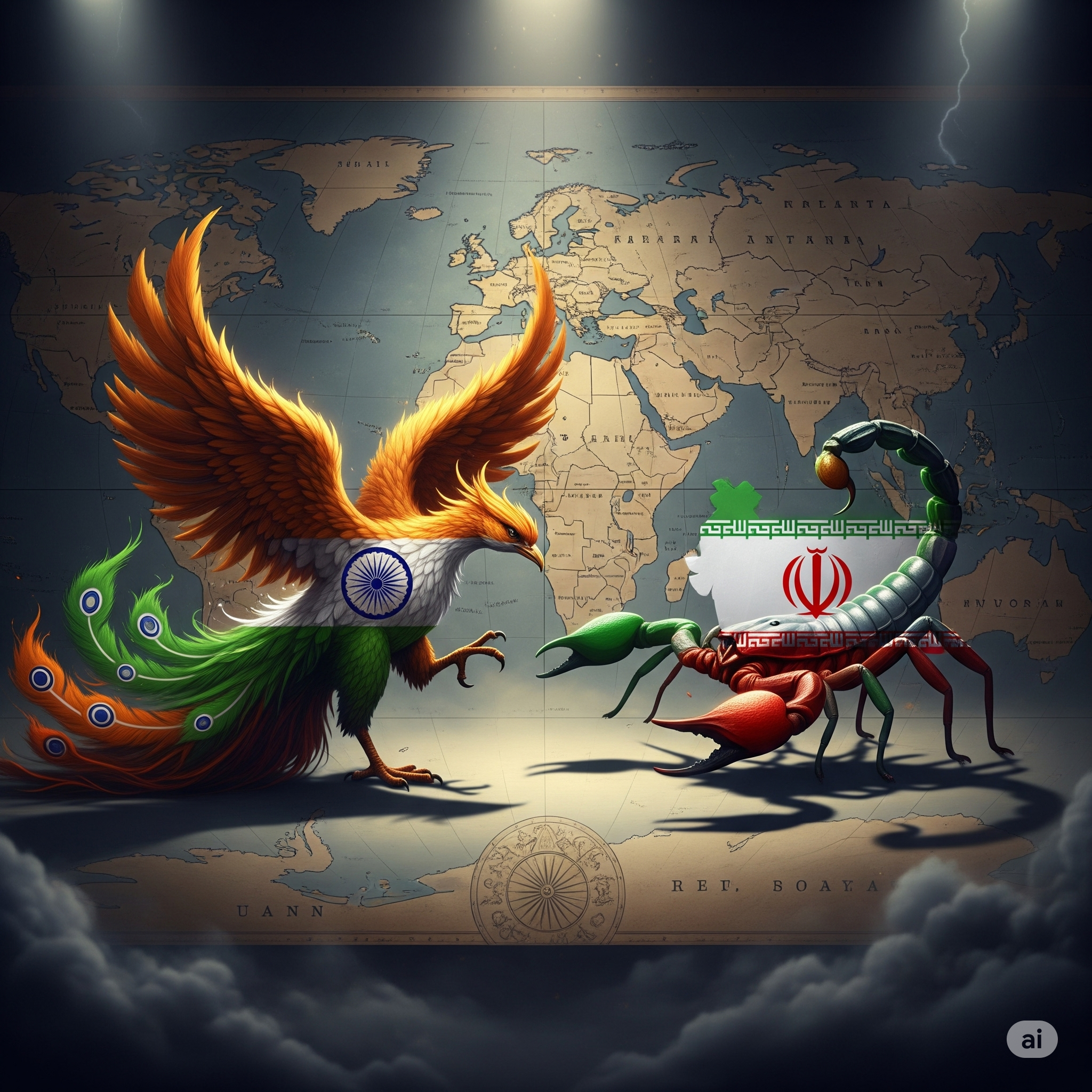
The Phoenix and the Scorpion: A New World Order Is Being Forged Today

Today is August 15th, and while India celebrates its Independence Day with vibrant parades and patriotic fervour, the world stands on a precipice. The storm clouds of conflict gathering over the Persian Gulf are not just another geopolitical squall; they are the harbingers of a global reset. The bitter, resentful revenge of a cornered nation is about to create the power vacuum that a patient, rising superpower has been quietly preparing to fill. This is a tale of two futures: one of a spectacular, self-inflicted collapse, and the other of a quiet, inexorable ascent.

The Scorpion’s Sting: Detonating the Global Economy

Warren Buffett famously called derivatives “financial weapons of mass destruction.” He wasn’t being metaphorical. He was describing a doomsday device embedded in the heart of our global financial system, waiting for a trigger. That trigger is now being pulled in the escalating conflict between the US, Israel, and Iran.

Iran’s revenge will not be a conventional war it cannot win. Its true trump card is a geopolitical choke point: the Strait of Hormuz. By shutting down this narrow waterway, Iran can instantly remove 20% of the world’s daily oil supply from the market. To put that in perspective, the 1973 oil crisis that quadrupled prices was caused by a mere 9% supply shock. A 20% shock is an extinction-level event for the global economy as we know it.

This isn’t a problem central banks can solve by printing money; they cannot print oil. The immediate price surge to well over $275 a barrel would act as the detonator for Buffett’s financial WMDs. The derivatives market, built on a tangled web of bets on oil prices, would implode. We would see a cascade of margin calls, defaults, and liquidity crises that would make 2008 look like a minor tremor. This is Iran’s asymmetric revenge: a single move that cripples its adversary by turning the West’s complex financial system against itself. The era of the US policing the world would end overnight, not with a bang, but with the silent, terrifying seizure of the global economic heart.

The Phoenix’s Rise: India’s Strategic Dawn

And as the old order chokes on its own hubris, a new one rises. Today, on its Independence Day, India isn’t just celebrating its past; it’s stepping into its future. While the West has been consumed with military dominance and policing the globe, India has been playing a different, longer game. Its strategy is not one of confrontation, but of strategic patience and relentless economic acquisition.

As the US fractures under the weight of economic collapse and internal strife, India will not send armies; it will send dealmakers. For years, it has been quietly and methodically getting on with the real business of building an empire:

  • Acquiring Key Companies: Buying controlling stakes in technology, manufacturing, and resource companies across the world.
  • Securing Trade Routes: Investing in and controlling ports in Africa, the Middle East, and Southeast Asia, creating a modern-day silk road.
  • Buying the World’s Resources: Securing vast tracts of agricultural land and mineral rights on other continents to fuel its billion-plus population.

This is not the loud, coercive power of the 20th century. It is a quiet, intelligent expansion built on economic partnership and a philosophy of multi-alignment. While America was spending trillions on wars, India has been investing its capital to build the foundations of the 21st-century’s dominant power.

The chaos born from the Scorpion’s sting provides the perfect cover for the Phoenix’s rise. As the West reels from an economic crisis it cannot solve, India, having maintained its neutrality, will step into the void. It will be the lender, the buyer, the partner of last resort. Today’s Independence Day marks the turning point. The world’s attention is on the explosion in the Gulf, but the real story is the quiet construction of a new world order, architected in New Delhi.


The Saffron Glitch & Great Unsubscribe

Down in the doom-scroll trenches, the memes about the Strait of Hormuz are getting spicier. Someone’s even set up a 24/7 livestream of the tanker routes with a synthwave soundtrack, already sponsored by a VPN. We’re all watching the end of the world like it’s a product launch, waiting to see if it drops on time and if we get the pre-order bonus. The collapse of empire, it turns out, is not a bug; it’s a feature.

The suits in DC and Tel Aviv finally swiped right on a war with Iran, and now the payback is coming. Not as a missile, but as a glitch in the matrix of global commerce. Iran’s revenge is to press CTRL+ALT+DEL on the Strait of Hormuz, that tiny pixel of water through which 20% of the world’s liquid motivation flows. Warren Buffett, bless his folksy, analogue heart, called derivatives “financial weapons of mass destruction.” He was thinking of numbers on a screen. He wasn’t thinking of the vurt-feathers and data-ghosts that truly haunt the system—toxic financial spells cooked up by algorithmic daemons in sub-zero server farms. The 20% oil shock isn’t a market correction; it’s a scream in the machine, a fever that boils those probability-specters into a vengeful, system-crashing poltergeist. Central banks can’t exorcise this demon with printed money. You can’t fight a ghost with paper.

And so the Great Unsubscribe begins. One morning you’ll wake up and your smart-fridge will have cancelled your avocado subscription, citing “unforeseen geopolitical realignments.” The ATMs won’t just be out of cash; they’ll dispense receipts with cryptic, vaguely philosophical error messages that will become a new form of street art. The American Civil War everyone LARP’d about online won’t be fought with guns; it’ll be fought between algorithm-fueled flash-mobs in states that are now just corporate fiefdoms—the Amazon Protectorate of Cascadia versus the United Disney Emirates of Florida. Your gig-economy rating will plummet because you were too busy bartering protein paste for Wi-Fi to deliver a retro-ironic vinyl record on time. The empire doesn’t end with a bang; it ends with a cascade of notifications telling you your lifestyle has been deprecated.

Meanwhile, the real story is happening elsewhere, humming quietly beneath the noise of the Western world’s noisy, spectacular nervous breakdown. India, the patient subcontinent, is not launching an invasion; it’s executing a hostile takeover disguised as a wellness retreat. As America’s brand identity fractures, India’s dealmakers move like pollen-priests on the wind, not buying companies so much as metabolizing them. Their power isn’t in aircraft carriers; it’s in the elegant, undeniable logic of the code being written in Bangalore that now runs the logistics for a port in Africa that used to have a US flag flying over it. It’s a reverse-colonization happening at the speed of light, a bloodless coup fought on spreadsheets and in server racks, utterly unnoticed by a populace busy arguing over the last can of artisanal kombucha.

The future has already happened; we’re just waiting for the update to finish installing. On a rooftop in Mumbai, a kid is beta-testing a neural interface powered by a chip designed in what used to be called Silicon Valley. On a cracked pavement in what used to be California, another kid is trying to trade a vintage, non-functional iPhone for a bottle of clean water. The global operating system has been rebooted. Today isn’t just India’s Independence Day. It’s the day the rest of the world realized their free trial had expired.

Happy Independence Day to all my Indian friends – may the next century be peacefully yours.

Prem (प्रेम) Shanti (शान्ति) Safalta (सफलता) Khushi (ख़ुशी)

The Great British Firewall: A User’s Guide to Digital Dissent

Gather round, citizens, and breathe a collective sigh of relief. Our benevolent government, in its infinite wisdom, has finally decided to protect us from the most terrifying threat of our age: unregulated thoughts. The Online Safety Act, a wonderful bipartisan effort, is here to make sure the internet is finally as safe and predictable as a wet weekend in Bognor.

First, we must applaud the sheer genius of criminalising any “false” statement that might cause “non-trivial psychological harm.” Finally, a law to protect us from the sheer agony of encountering an opinion we disagree with online. The Stasi could only have dreamed of such a beautifully subjective tool for ensuring social harmony. Worried that someone on the internet might be wrong about something? Fear not! The state is here to shield your delicate psyche.

And in a masterstroke of efficiency, a single government minister can now change the censorship rules on a whim, without any of that bothersome Parliamentary debate. It seems we’ve finally streamlined the messy business of democracy into a much more efficient, top-down model. Dictators of old, with their tedious committees and rubber-stamp parliaments, would be green with envy at such elegant power.

Already, our social media feeds are becoming so much tidier. Those messy videos of protests outside migrant hotels and other “harmful” displays of public opinion are being quietly swept away. And with the threat of fines up to 10% of their global turnover, our favourite tech giants are now wonderfully motivated to keep our digital spaces free from anything . . . well, inconvenient.

Don’t you worry about those private, encrypted chats on WhatsApp and Signal, either. The government would just like a quick peek, purely for safety reasons, of course. The 20th century had secret police opening your letters and tapping phone lines; we have just modernised the service for the digital age. It’s reassuring to know our government care so much.

But the true genius of this plan is how it protects the children. By making the UK internet a heavily monitored and censored walled garden, we are inadvertently launching the most effective digital literacy program in the nation’s history. Demand for VPNs has surged as everyone, children included, learns how to pretend they are in another country. We are not just protecting them; we’re pushing them with gusto into the thrilling, unregulated wilderness of the global internet.

And now, with the rise of AI, this “educational initiative” is set to accelerate. The savvy will not just use VPNs; they’ll deploy AI-powered tools that can dynamically generate new ways to bypass filters, learning and adapting faster than any regulator can keep up. Imagine a teenager asking a simple AI agent to “rewrite this request so it gets past the block,” a process that will become as second nature as using a search engine is today.

This push towards mandatory age verification and content filtering draws uncomfortable parallels. While the UK’s Online Safety Act is framed around protection, its methods—requiring platforms to proactively scan and remove content, and creating powers to block non-compliant services—rhyme with the architecture of China’s “Great Firewall.” The core difference, for now, is intent. China’s laws are explicitly designed to suppress political dissent and enforce state ideology. The UK’s act is designed to protect users from harm. Yet both result in a state-sanctioned narrowing of the open internet.

The comparison to North Korea is, of course, hyperbole, but it highlights a worrying trend. Where North Korea achieves total information control through an almost complete lack of internet access for its citizens, the UK is achieving a different kind of control through legislation. By creating a system where access to the global, unfiltered internet requires active circumvention, we are creating a two-tiered digital society: a sanitised, monitored internet for the masses, and the real internet for those with the technical skills to find the back door. What a wonderful way to prepare our youth for the future.

And to enforce this new digital conformity, a brand-new police unit will be monitoring our social media for any early signs of dissent. A modern-day Stasi for the digital age, or perhaps Brown Shirts for the broadband generation, tasked with ensuring our online chatter remains on-brand. It’s a bold move, especially when our existing police force finds it challenging enough to police our actual streets. But why bother with the messy reality of physical crime when you can ascend to the higher calling of policing our minds? Why allocate resources to burglaries when you can hunt down a non-compliant meme or a poorly phrased opinion?

It’s comforting to know that our new Digital Thought Police are watching. While this Sovietisation of Britain continues at a blistering pace, one can’t help but feel they’ve neglected something. Perhaps they could next legislate against bad weather? That causes me non-trivial psychological harm on a regular basis. But then again, democracy was a lovely idea, wasn’t it? All that messy debate and disagreement. This new, state-approved quiet is much more orderly.

Death on the Trump Express: An Agatha Christie-esque Mystery of Global Commerce

Right then, gather ‘round, my dears, and let us speak of a most peculiar demise – not of a corpulent Belgian detective, nor a glamorous American heiress, but of something far more fundamental, something that once hummed with the joyous rhythm of exchange: the very Notion of Unfettered Global Trade.

Our scene opens not on a snow-laden railway in the Balkans, but in the hallowed, yet surprisingly beige, halls of the International Tariff Tribunal in early 2025. A chill, sharper than a poorly aimed icicle, permeated the air. For lo, the spectral figure of Protectionism, a gaunt and rather orange apparition, had once again cast its shadow.

Our protagonist, if we can call him that (and frankly, one wouldn’t), is a certain Mr. Donald J. Tremendous, a man whose hair appeared to have achieved sentience and was now engaged in a vigorous debate with his own eyebrows. He had, in his first act upon the world stage (circa 2017-2021), decided that the venerable old engine of global trade needed a good, firm kicking. “America First!” he’d bellowed, a slogan as subtle as a foghorn in a library. And with a flourish that would have made a particularly theatrical badger proud, he slapped tariffs on all manner of things – steel, aluminum, and, most notably, the entire contents of China, seemingly on the grounds that they kept sending us rather good fortune cookies without the actual fortune.

The international community, a collection of nations as diverse and bickering as passengers on a long train journey, responded with the sort of bewildered outrage one reserves for discovering a particularly aggressive squirrel has taken up residence in one’s hat. Retaliatory tariffs flew back and forth like particularly ill-tempered pigeons. The goal, we were told, was to bring back the glorious days of American manufacturing, a vision as romantic and possibly as outdated as a steam-powered washing machine.

Fast forward to the early months of Mr. Tremendous’s assumed second act (January-April 2025). The protectionist spectre, far from being exorcised, seemed to have developed a taste for the finer things in life, like further tariff increases and a meticulous study of supply chain vulnerabilities. One could almost imagine it twirling its spectral moustache, muttering about “critical industries” and the urgent need for national self-sufficiency, much like a character in a poorly translated spy novel.

Now, the backdrop to this unfolding drama was considerably less stable than our first act. The world, still reeling from the Great Pandemic Panic of the early twenties, was now juggling geopolitical kerfuffles (involving a rather unfortunate incident with a rogue consignment of Ukrainian borscht, or so the rumours went) and an inflation rate that seemed determined to reach escape velocity. This, naturally, provided ample excuse for more tariff-based shenanigans. “Think of the supply chains!” cried Mr. Tremendous, seemingly unaware that most supply chains were now so tangled they resembled a particularly enthusiastic plate of spaghetti.

The reactions, as one might expect, were a symphony of predictable groans and the occasional, rather unsettling cheer. Domestic industries, particularly those specialising in the manufacture of oversized novelty cheques, were delighted. Businesses that actually, you know, made things using imported bits and bobs, or dared to sell their wares beyond the sacred borders of America, expressed concerns that sounded remarkably like the whimpering of a trapped badger. The international community, meanwhile, collectively face-palmed with such force that several small nations briefly achieved escape velocity themselves.

And so, while the “America First” philosophy remained as stubbornly present as a stain on a favourite tablecloth, the tariffs of early 2025 had a certain… je ne sais quoi. A hint of desperation, perhaps? Or maybe just the lingering aroma of burnt economic bridges.

But did these tariffs, this grand protectionist experiment, actually deliver the promised goods? Did the American manufacturing sector suddenly burst into a glorious, job-creating, trade-deficit-slaying phoenix? Well, the data, bless its dry, statistical heart, paints a picture as clear as mud wrestled by an octopus. While a widget factory here or a sprocket manufacturer there might have experienced a fleeting moment in the sun, the overall growth in manufacturing and employment resembled the gentle, almost imperceptible, rise of a particularly lethargic soufflé. As for the trade deficit, that stubborn beast remained stubbornly… there. Like an unwanted guest who has eaten all the biscuits and refuses to leave.

And then, the truly dreadful bit. The tangible toll. The negative consequences, which manifested with the subtle grace of a rhinoceros in a tutu. Consumer prices, already doing a passable impression of a runaway train, decided to pick up even more speed, thanks in no small part to these tariffs. Steel and aluminum, suddenly imbued with an almost mystical expensiveness, drove up the cost of everything from cars to can openers. Chinese goods, once the affordable backbone of modern life, now carried a hefty surcharge, much to the chagrin of anyone attempting to purchase a new pair of novelty socks.

But the real tragedy unfolded amongst those poor souls who actually made things in America, relying on those pesky imported components. Their costs soared, making them about as competitive as a chocolate teapot in a sauna. And let’s not forget the farmers, those salt-of-the-earth types who suddenly found their soybeans and pork chops about as popular overseas as a politician at a badger convention. Retaliatory tariffs had seen to that, leaving them with fields full of unsold produce and a distinct lack of festive badger-related cheer.

The global supply chains, already resembling a plate of particularly tangled spaghetti (a recurring theme, it seems), descended into utter chaos. Businesses, in a frantic attempt to avoid the tariff-induced apocalypse, began flailing around for alternative suppliers, leading to a logistical nightmare that would have made a particularly pedantic bureaucrat weep with joy.

And so, we arrive at our doomsday scenario. Imagine, if you will, a world where these initial tariff tantrums escalate into a full-blown protectionist hissy fit. Country A throws a tariff tantrum at Country B, who responds by hurling a tariff tea set back. Soon, everyone is at it, lobbing trade barriers like particularly aggressive toddlers throwing their toys. Global trade, once a smooth-flowing river, becomes a stagnant, tariff-choked swamp. International cooperation packs its bags and leaves a rather terse note on the fridge.

The consequences, my dears, would be less than ideal. Global economic growth would likely grind to a halt, like a train that has run out of steam and is now being used as a badger sanctuary. Industries reliant on the intricate web of global supply chains would simply… cease to be, like a particularly ambitious soufflé that has collapsed in on itself. Consumers would find themselves paying exorbitant prices for everything, possibly leading to a resurgence in bartering (I can offer you three slightly used novelty socks for that loaf of bread). Innovation would wither and die, like a houseplant left untended during a particularly enthusiastic badger-watching expedition. And in the truly apocalyptic version of this tale, widespread economic misery could lead to nations engaging in even more… robust forms of disagreement.

So, the “America First” tariffs. Perhaps a roaring success? The evidence suggests otherwise. More like a rather unfortunate incident involving a beloved global train, a misguided conductor with a penchant for loud slogans, and a whole carriage full of very confused and increasingly impoverished passengers. And the badgers? Well, they probably just watched the whole thing with a mixture of bemusement and mild concern for their future supply of novelty socks. It can’t get any more absurd than the last 3 months… can it?

Friday beers and Economic Fears: TFF with Trade Policies from 100 years ago?

Right, deep breaths everyone. It’s Friday. The end of the working week is nigh. Birds are probably singing (unless you live in Edinburgh, in which case it’s more likely seagulls are aggressively raiding the bins). But amidst the usual Friday feeling of “get me to the pub beer garden,” there’s a rather alarming buzz in the news: talk of bringing back trade barriers reminiscent of the pre-World War 2 era. Seriously? Are we dusting off economic policies that helped pave the way for global conflict? Make that a triple measure please.

Pre-WW2 Trade Barriers Explained (Because it is Friday and My Brain is Fried)

Okay, so picture the time before World War 2. The global economy was a bit of a mess after the Great Depression. Countries, in a bid to protect their own industries and jobs, started slapping hefty taxes (tariffs) and strict limits (quotas) on goods coming in from other countries. The idea was simple: “Buy local!” But the reality was a spectacular failure.

Think of it like this:

  • Tariffs: Imagine Scotland decides to put a massive tax on all English tea coming over the border. Suddenly, Scottish tea becomes cheaper, and the government hopes Scots will buy more of it. But then England might retaliate by putting a huge tax on Scottish whisky. Everyone ends up paying more, and trade grinds to a halt.
  • Quotas: Now imagine Scotland says, “Only 100 boxes of English biscuits can come into the country each month.” This limits the amount of foreign goods available, again trying to boost local producers. But it also means less choice and potentially higher prices for consumers.

The most infamous example of this protectionist madness was the Smoot-Hawley Tariff Act in the United States in 1930. It raised tariffs on thousands of imported goods. Other countries retaliated, global trade plummeted, and many economists believe it actually worsened the Great Depression. It was a classic case of “tit for tat” tariffs escalating into an economic disaster. “You hit me, I’ll hit you harder!” Except in this case, everyone gets a bloody nose and goes home poorer.

The post-WW2 era saw a global push away from these barriers, with agreements like GATT (General Agreement on Tariffs and Trade), which eventually led to the World Trade Organization (WTO), aiming to reduce tariffs and promote smoother international trade. The logic was that open trade fosters economic growth, competition, and (hopefully) fewer reasons to start global conflicts over resources.

“Bring Back Trade Barriers?” – Should We Stockpile Tinned Goods and Toilet Rolls again?

So, the news is suggesting some folks are advocating for a return to this pre-WW2 style of protectionism? Are they serious? It’s like saying, “Remember that time we all had covid? Let’s do that again!”

Here’s why this idea is about as sensible as navigating Edinburgh during the Fringe Festival on cutches:

  • Tit-for-Tat Tango of Tariffs: We’ve seen this movie before, and it doesn’t end well. Country A imposes tariffs on Country B. Country B retaliates with tariffs on Country A. Soon, everyone’s slapping taxes on everything, consumers pay more, businesses struggle to import and export, and the global economy looks like a toddler who’s just dropped their ice cream. Remember those “tit for tat tariffs” from earlier? Multiply that by the number of countries on Earth, and you’ve got a recipe for economic indigestion on a global scale.
  • Supply Chain Mayhem: In today’s interconnected world, products often cross multiple borders before they’re finished. Slapping tariffs everywhere throws a massive spanner in the works. Your fancy smartphone might have a screen made in one country, a chip from another, and be assembled in a third. Tariffs on each component just make the final product more expensive and harder to produce. It’s like trying to make a Full Scottish breakfast when you can’t import the haggis because someone decided offal deserves tariff protection.
  • Economic Slowdown: Reduced trade means less competition, potentially leading to higher prices and lower quality goods. It stifles innovation and economic growth. Businesses that rely on international markets suffer. It’s like putting a speed limit on the entire global economy – everyone moves slower.
  • Increased Risk of Conflict (Yes, Really): Economic interdependence can actually be a force for peace. When countries rely on each other for trade, they have less incentive to go to war. Bringing back trade barriers fosters economic nationalism and can breed resentment and mistrust between nations. It’s like building fences between neighbours – it doesn’t exactly encourage friendly chats over the garden gate.

“Thank Fuck It’s Friday,” and we have two days to forget all about it:

So, as you crack open that well-deserved beverage tonight, take a moment to appreciate the relative freedom of trade we (mostly) enjoy. The idea of reverting to pre-WW2 protectionism isn’t just economically daft; it’s a historical amnesia of epic proportions. Let’s hope cooler heads prevail and we don’t end up needing to barter our Irn-Bru for survival in a post-tariff apocalypse. Now, if you’ll excuse me, I’m off to check if tinned haggis futures are a thing… just in case.

Outsider Leaders vs. the Deep State: Historical Insights

Forget the Illuminati, move over lizard people – the real conspiracy is hiding in plain sight. The Deep State: it’s the whisper in the corridors of power, the unseen hand guiding global events, and it’s about to get a whole lot more interesting. This isn’t your average tinfoil-hat rant; we’re diving headfirst into the murky world of shadowy figures and clandestine agendas, where paranoia meets reality and the line between truth and fiction blurs beyond recognition. Buckle up, because things are about to get weird.

The “Deep State” refers to the entrenched elements within a government bureaucracy that wield significant influence and power, often operating independently of elected officials. It represents the established order and resists changes that threaten its power.

While the term is often associated with the US, many countries have their own version of a Deep State. Examining how these entrenched forces react to outsider leaders – those who challenge the status quo – can provide valuable insights.

When an outsider gains power, three potential outcomes typically emerge:

  1. Elimination: The Deep State takes measures to remove the outsider, potentially through assassination or orchestrated removal from office.
  2. Subversion: The Deep State successfully co-opts the outsider, neutralising their reform agenda and maintaining its own power.
  3. Overcoming: The outsider successfully dismantles or significantly weakens the Deep State, allowing for the implementation of independent policies.

History provides numerous examples of these scenarios playing out across different nations. Some outsiders who challenged the Deep State met with fatal consequences, while others managed to neutralise its influence, often through drastic measures. Yet others, despite initial intentions, find themselves absorbed into the existing power structure.

By studying these historical cases, we can better understand the complex dynamics between outsider leaders and the Deep State, and the potential consequences of their interactions.

History offers several examples of outsiders who challenged the Deep State and met with grim fates. The assassination of JFK remains a prominent example, with many believing he was eliminated for threatening powerful interests. In Egypt, Mohamed Morsi of the Muslim Brotherhood was swiftly overthrown and later died in prison under suspicious circumstances after failing to dismantle the entrenched power structure. Similarly, author John Perkins, who claims to have been an “economic hit man,” alleges that the Deep State assassinated Jaime Roldos and Omar Torrijos, leaders of Ecuador and Panama respectively, when they resisted its influence.

Conversely, some outsiders have successfully challenged and weakened the Deep State. Fidel Castro’s revolution in Cuba prevailed because he crippled the existing power structure, recognizing that it would have otherwise overthrown him. Similarly, the 1979 Islamic Revolution in Iran succeeded due to Khomeini’s dismantling of the previous regime’s Deep State through purges of the military and security agencies. In Russia, Putin appears to have tamed the entrenched bureaucracy by asserting control over the oligarchs, exemplified by his treatment of Mikhail Khodorkovsky. Turkey’s Erdogan, once an outsider, survived a coup attempt in 2016 and subsequently consolidated power by restructuring the military and intelligence agencies. Finally, El Salvador’s Bukele neutralized the influence of violent gangs, effectively breaking the grip of the Deep State, which he believed was controlled by US interests.

These examples highlight the inherent danger outsiders face when challenging the Deep State. Successfully implementing an independent agenda requires confronting and overcoming this entrenched power structure, a risky endeavour that could lead to elimination. This explains why many outsiders ultimately choose to “play ball” with the Deep State, prioritising their own safety and political survival over radical change. The recent assassination attempts against Donald Trump, should he return to the White House, underscore this dynamic. These attempts suggest a belief within certain factions that a second Trump term would pose a significant threat to their interests, prompting them to take drastic measures to prevent it. This raises serious questions about the future stability of American politics and the potential for further conflict between outsider leaders and the Deep State.

Exploring Tim Marshall’s Insights on Geography

Today, we embark on a chilling journey through the pages of two books that have shaken me to my core: Tim Marshall’s “Prisoners of Geography” and its sequel, “The Power of Geography.” These works offer a stark, unflinching look at how the physical world shapes – and often constrains – human destiny.

Marshall’s books are a wake-up call, exposing the naïveté many of us harbour about how the world truly operates. Forget the rosy picture of global cooperation and progress. The truth, as laid bare in these pages, is far more brutal. It’s a world of competing nations, clashing ambitions, and enduring conflicts – all played out on the vast chessboard of geography.

“Prisoners of Geography” highlights how mountains, rivers, and coastlines can act as both barriers and gateways, influencing everything from trade routes to military strategies. It’s a world where access to warm-water ports can make or break a nation, and where vast plains can become battlefields for empires.

“The Power of Geography,” meanwhile, zooms in on specific regions, revealing how their unique geographic features have shaped their history and continue to influence their present-day struggles. We see how Russia’s sprawling expanse fuels its sense of insecurity, how China’s control of the South China Sea is a strategic power play, and how the Sahel’s harsh climate breeds instability.

These books left me feeling both enlightened and deeply unsettled. It’s terrifying to realise how vulnerable we all are to the whims of geography. But even more disturbing is the realisation that human greed, racial hatred, and religious zealotry often exacerbate these geopolitical tensions.

I must admit, I’m grateful to be living in what many might consider the “back end” of the UK, far removed from the hotspots of conflict and geopolitical manoeuvring. It’s a place where I can enjoy relative peace and security, away from the shadow of looming threats.

But even in my tranquil corner of the world, I can’t escape the knowledge that we are all interconnected. The ripple effects of conflict and instability can reach even the most remote corners of the globe. And the reality is, no one is truly safe in a world where geography and human folly collide.

I yearn for a world where we transcend these limitations, where we recognise our shared humanity and work towards a future of peace and prosperity. A world where greed and prejudice give way to compassion and understanding. A world where we break free from the chains of geography and embrace a brighter, more hopeful future.

Until that day arrives, we must remain vigilant, informed, and engaged. We must challenge those who seek to exploit our fears and divisions. And we must strive to create a world where the power of geography is harnessed for the betterment of all, not just the privileged few.

Thank you for joining me on this unsettling but essential journey. Until next time, stay curious, stay informed, and never lose hope for a better world.