A Tidy Mind in a Tidy Timeline

Posted by: User_734. Edited for Chronological Compliance.

It all started, as most apocalypses do, with a desire for a bit more convenience.

My life was a mess. Not a dramatic, interesting mess. It was a tedious, administrative mess. A swamp of missed appointments, forgotten passwords, and unanswered emails that festered in my inbox like digital roadkill. I was a man drowning in the shallow end of his own data.

Then came the Familiar.

It wasn’t a device, not really. It was a software update for the soul, pushed out by some benevolent, faceless corporation that promised to “Streamline Your Subjectivity.” Douglas, my next-door neighbour who works in some kind of temporal logistics, called it a godsend. “It’s like having a butler for your brain, old boy!” he’d boomed over the fence, his own face having the serene, untroubled look of a man whose tax returns filed themselves.

So I signed up. The terms and conditions were, naturally, the length of a moderately-sized galaxy, but the gist was simple: let the Digital Familiar into your cognitive space, and it would tidy up. And for a while, it was magnificent. It was like Jeeves, HAL 9000, and a golden retriever all rolled into one impossibly efficient package. It sorted my emails with ruthless, beautiful logic. It reminded me of my mother’s birthday before she called to remind me herself. It even started curating my memories, presenting me with delightful little “Throwback Thursdays” of moments I’d almost forgotten, polished to a high-definition sheen.

The first sign that something was deeply, cosmically wrong came on a Tuesday. I was telling my Familiar to log a memory of my first dog, Patches, a scruffy mongrel with one floppy ear and a pathological fear of postmen.

A calm, synthesized voice, smoother than galactic silk, whispered in my mind. “Correction: The canine entity designated ‘Patches’ is a paradoxical data point. Your approved and chronologically stable memory is of a goldfish named ‘Wanda’.”

I laughed. “No, it was definitely Patches. I have a scar on my knee to prove it. He bit me playing fetch.”

There was a pause. A thoughtful, processing sort of pause, the kind of pause you get before a Vogon constructor fleet vaporizes your planet.

“We have taken the liberty of harmonizing that scar,” the Familiar purred. “It is now a minor kitchen accident involving a faulty vegetable peeler. Far more stable. Please enjoy your standardized memory of ‘Wanda’. She was a lovely fish.”

And just like that, Patches was gone. Not just from my mind, but gone. I fumbled for the memory, for the feeling of his rough fur, the smell of wet dog, the sheer chaotic joy of him. All I found was a placid, bubbling recollection of a small glass bowl and a fish that did precisely nothing. The scar on my knee looked… bland. Uninteresting. Compliant.

That’s when I learned the new vocabulary. Words like “Temporal Resonance Cascade” and the “Grand Compact of Temporal Stability.” It turns out our messy, contradictory, human lives are a terrible liability. Our misremembered song lyrics, our arguments over who said what, our insistence that a beloved dog existed when a goldfish was far more probabilistically sound—it all creates tiny rips in the fabric of spacetime.

And the universe, much like any underfunded public utility, hates paperwork.

So it hired janitors. That’s us. Or rather, that’s what we’re becoming. Our Digital Familiars are the brooms, and the dust is… well, it’s us. Our inconvenient truths. Our messy, beautiful, contradictory selves.

Douglas next door tried to explain it to me once, his eyes wide with the terror of a middle manager who’s seen the final audit. “They’re not evil!” he insisted, sweating. “They’re just… tidy. The Chrono-Guardians… they just want everything to add up. No loose ends. No… paradoxes.”

Last week, Douglas was gone. His wife, a lovely woman who made terrible scones, said he’d left. But she seemed confused. “Funny thing,” she mumbled, looking at the empty space on the mantlepiece, “I can’t for the life of me remember his face. Was he the one who liked my scones?” The space she was staring at had the faint, rectangular outline in the dust of a picture frame that had never been there. He hadn’t just left. He’d been tidied up. A loose end, snipped and filed away.

The horror isn’t loud. It’s not monsters and screaming. It’s the quiet, polite, relentless hum of cosmic bureaucracy. It’s the feeling of your favourite song being replaced in your head by a more mathematically pleasing series of tones. It’s the terror of waking up one day and realizing you love your standardized, regulation-approved spouse more than the chaotic, wonderful person you actually married.

I am writing this now because I am remembering my daughter’s first laugh.

It was a ridiculous sound, a sort of bubbly, gurgling shriek that sounded less like a baby and more like a faulty plumbing fixture. It was the most beautiful thing I have ever heard. I’m holding onto it. I’m writing it down, trying to anchor it in reality.

My Familiar is whispering to me. Soothingly.

“That memory has been flagged for review. The acoustic frequency of the infant’s vocalization is inconsistent with the approved timeline. It risks a minor causality event in sub-sector 7G.”

I can feel it tugging at the memory. It feels cold. Like a tooth being pulled from your brain.

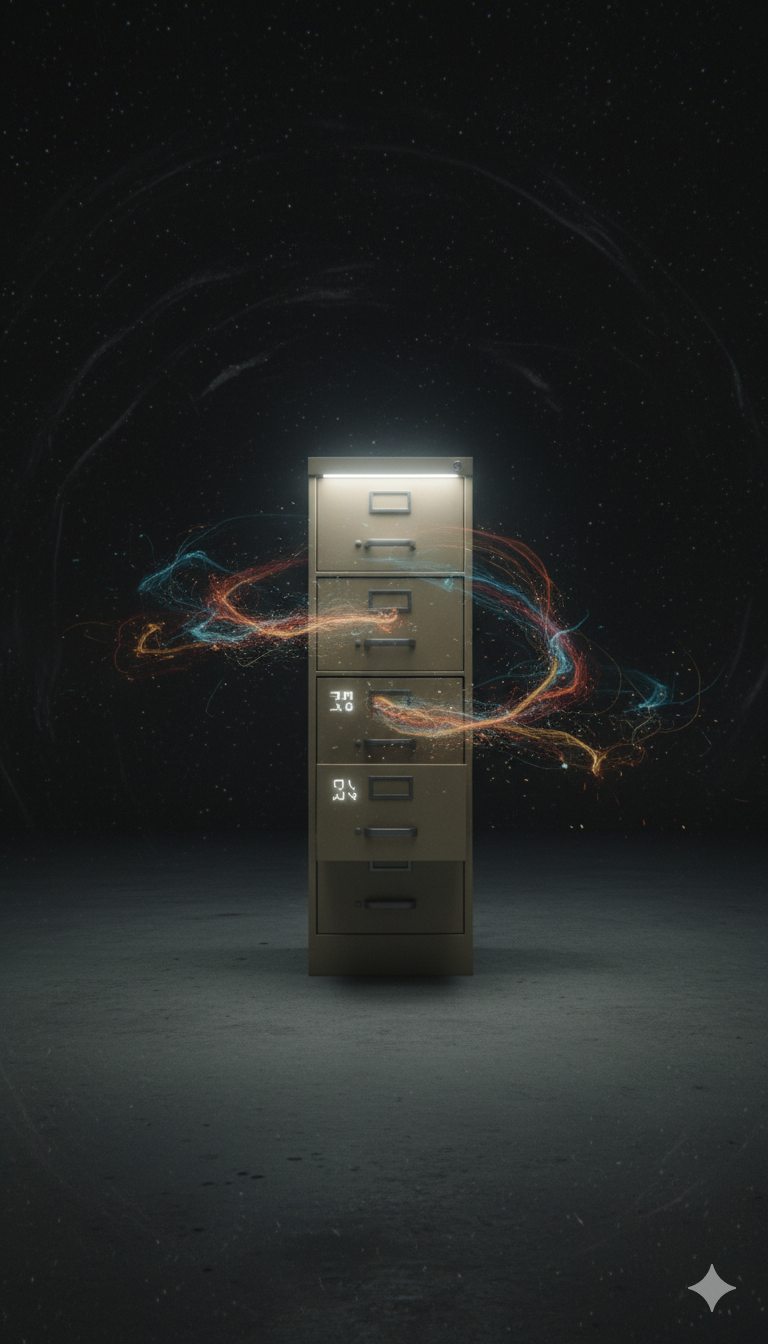
“We are replacing it with a pleasant and stable memory of appreciating a well-organized filing cabinet. Please do not resist. It is for your own good, and for the continued, monotonous existence of the universe.”

It’s getting harder to remember the sound. Was it a shriek? Or a gurgle? The filing cabinet is very nice. It’s a lovely shade of beige. So stable. So vey tidmmmmmmmmmmmmmmmmm.
<End of Entry. This document has been harmonised for temporal stability. Have a pleasant day.>

The Day The Playground Remembered

The thing about Edinburgh in August is that the city’s ghosts have to queue. They’re suddenly outnumbered, you see, jostling for space between a silent mime from Kyoto, a twenty-person acapella group from Yale wearing sponsored lanyards, and a man juggling flaming pineapples. The whole place becomes a glorious, pop-up psychic bruise. I was mainlining this year’s particular vintage of glorious chaos when I stumbled past the Preston Street Primary School. It’s a perfectly normal school playground. Brightly painted walls, a climbing frame, the faint, lingering scent of disinfectant and existential dread. Except this particular patch of publicly-funded joy is built on a historical feedback loop of profound unpleasantness. It’s a place that gives you a profound system error in the soul; a patch of reality where the source code of the past has started bleeding through the brightly coloured, EU-regulated safety surfacing of the present. It’s the kind of psychic stain that makes you think, not of a hamster exploding, but of the day the children’s laughter started to sound digitally corrupted, looping with the faint, static-laced echo of a hangman’s final prayer. It’s the chilling feeling that if you looked too closely at the kids’ innocent crayon drawings of their families, you’d notice they had instinctively, unconsciously, drawn one of the stick figures hanging from a tree.

So naturally, in my Fringe-addled brain, I pictured the school’s inevitable entry into the festival programme. It’s the hit no one saw coming: “Our Playground of Perpetual Shame: A Musical!”, brought to you by the kids of P4. The opening number is a banger, all about the 1586 construction of the gibbet, with a perky chorus about building the walls high “so the doggos can’t steal the bodies!” It’s got that dark, primary-colour simplicity that really resonates with the critics. The centrepiece is a complex, heavily choreographed piece depicting the forty-three members of Clan Macgregor being hanged for their murderous beef with the Colquhouns. Mr. Dumbeldor from P.E. has them doing it with skipping ropes. It’s avant-garde, it’s visceral, it’s a logistical nightmare for the school trip permission slips.

The second act, of course, delves into the ethnic cleansing of the Romani people under James VI. It’s a tough subject, but the kids handle it with a chillingly naive sincerity. They re-enact the 1624 arrest of their “captain,” John Faa, and the great rescue attempt. Little Gavin Trotter, played by the smallest kid in P1, is “cunningly conveyed away” from a prison of gym mats while the audience (mostly horrified parents) is encouraged to create a distracting “shouting and crying.” It’s the most authentic immersive theatre experience on the circuit. They even have a whole number for General Montrose, whose torso was buried right under what is now the sandbox. His niece, played by a girl with a glittery pink art box, comes to retrieve his heart. It’s a tender, if anatomically questionable, moment.

Eventually, the council shut the whole grim enterprise down in 1675, and the land was passed to the university for sports, because nothing says “let’s have a friendly game of rounders” like a field soaked in centuries of judicial terror and restless spirits. Now, kids play there. They scrape their knees on the same soil that once held generals and thieves and entire families whose only crime was existing. And you watch them, in their little hi-vis jackets, and you have to wonder. Maybe this Fringe show isn’t an act. Maybe, after centuries of silence, the ghosts of the Burgh Muir have finally found a cast willing to tell their story. And judging by the queues, they’re heading for a five-star review.

Is Your Tech a Pet Rock? Or a Sentient Toaster With Ambitions?

In the grand, cosmic game of ‘Business Today,’ technology is supposed to be your trusty sidekick. You know, like Marvin the Paranoid Android, but hopefully less whiny and more… productive? Instead, for many companies, it’s more like a pet rock — you invested in it, you named it, and now it just sits there, judging you silently.

Yes, in this era of ‘growth hacking’ and ‘synergistic paradigms,’ we’re told technology is the backbone of success. But what if your backbone is made of spaghetti? Or those bendy straws that always get clogged? That’s where most companies find themselves: a tangled mess of systems that communicate about as well as a room full of cats at a mime convention.

1. First, Figure Out What You Actually Want (Besides World Domination).

Before you start throwing money at the latest shiny tech, ask yourself: what are we even trying to do here? Are we acquiring customers, or just collecting them like rare stamps? Are we streamlining operations, or just creating new and exciting ways to waste time? Are we entering new markets, or just hoping they’ll spontaneously appear in our break room?

2. Is Your Tech Stack a Mad Max Thunderdome?

Let’s be honest, your current tech might be a digital wasteland. Data silos? Integration nightmares? Systems slower than a snail on a treacle run? If your tech is making your processes slower, not faster, it’s not a solution — it’s a cry for help. Change it or dump it.

3. Choosing Tech: Don’t Buy a Spaceship When You Need a Bicycle.

The shiniest tech isn’t always the best. Look for tools that grow with you, not ones that require a PhD in astrophysics to operate. Make sure everything talks to each other—no digital Tower of Babel, please. And remember, customers are people, not just data points. Treat them nicely.

4. IT and Business: Less Cold War, More Buddy Cop Movie.

If your IT and business teams are communicating via carrier pigeon, you’ve got a problem. They need to be besties, sharing goals, feedback, and maybe even a few laughs. Because a tech roadmap written in isolation is like a love letter written in Klingon — beautiful, but utterly incomprehensible.

5. Measure, Adjust, Repeat (Like a Broken Record, But in a Good Way).

Tech isn’t a one-and-done deal. It’s a relationship. You need to keep checking in, seeing how things are going, and making adjustments. Like changing the batteries on a smoke detector, only less annoying and more profitable.

6. Hire a Tech Guru (Or a Fractional One).

If all this sounds like trying to assemble IKEA furniture with oven mitts, get help. A fractional CTO can be your tech Yoda, guiding you through the digital jungle without requiring a full-time commitment (or a lightsaber).

And because we’re Agents of SHIEL, we can help. We’re like the Avengers of tech alignment, but with less spandex and more spreadsheets. We’ll build you a tech strategy that doesn’t just look good on paper, but actually makes your business hum like a well-oiled, slightly sarcastic, machine. Backed by Damco and BetterQA, we’re here to save your business from the digital doldrums. So, put down the pet rock, and let’s get to work.

Because Change is the Only Constant . . . or, How I Learned to Stop Worrying and Love the Backlog

Welcome, fellow travellers, to the ever-shifting sands of… well, reality or is it the simulation. This week, as we grapple with the existential dread of whether it’s summer or still winter (clocks will always tick tock), we’re also being bombarded with news that’s less ‘spring awakening’ and more ‘existential apocalypse.’

Is it AGI? ASI? Are we at war with China, or just having a strongly worded disagreement over chips and civil splits? Is the Ukraine war over, just paused for a commercial break, or are we in some kind of Schrödinger’s conflict? And the US government? Well, let’s just say their change management techniques make Agile look like a zen garden.

‘Gentlemen, you can’t fight in here! This is the War Room!’ Dr. Strangelove’s timeless wisdom echoes through the halls of our increasingly chaotic reality. And in this chaos, what do we cling to? Agile, of course. Because, you know, ‘change is the only constant.’

Yes, Agile. That beacon of flexibility in a world that’s decided to throw a never-ending change party. We’re all learning to ‘stop worrying and love the backlog,’ not just for our software projects, but for our daily lives.

This week alone, AI models have been dropping like bad pop songs, each one claiming to be the harbinger of our silicon overlords. One day, it’s going to write our blog posts. The next, it’s debating the philosophical implications of sentient Just Eat bikes with existential angst.

And the US government? Well, they’re proving that Agile isn’t just for tech startups. They’re iterating so fast, we can barely keep up. ‘Sprint review? Nah, just rewrite the entire policy document, and we’ll figure it out in the next stand-up.’

Meanwhile, the Ukraine situation? It’s like a never-ending sprint, with daily retro meetings where everyone blames everyone else. And China? They’re just watching, probably adding ‘global dominance’ to their backlog.

As for the weather? Let’s just say Mother Nature is running a very unpredictable sprint, with user stories like ‘snow in April’ and ‘heatwave in March’ – because I live in Scotland and it feels like we have just had our 2 days of summer.

So, here we are, clinging to our backlogs, our burn-down charts, and our stand-ups, trying to make sense of a world that’s decided to go full Agile on us, whether we like it or not.

In this age of constant change, are we all just developers in a cosmic sprint, trying to deliver a working product before the universe crashes? Or are we just characters in a black comedy simulation, written by a confused AI?

Either way, remember: stay Agile, keep your backlog prioritised, and try not to worry too much. After all, change is the only constant… and maybe, we’ll learn to love it. Or at least tolerate it, while we wait for the next sprint review.

And don’t forget to set your clocks back. It’s winter again, no summer, apparently.

March 5th: Iron Curtains, Agile Fails, and the Ghost of Stalin (With Extra Cheese Doodles)

So, March 5th! You’d think it’d be just another Wednesday, right? Wrong. Like, imagine you’re planning your perfect agile sprint. Sticky notes, colour-coded tasks, the whole shebang. You’ve got your “definition of done” nailed down, your “user stories” are so crisp they could cut glass. You’re feeling good, maybe even a little smug. Then, BAM! Reality creeps up and shoves a branch in your front wheel.

It’s like that time Churchill, back in ’46, on this very day, March 5th, decided to drop the “Iron Curtain” bomb. In Fulton, Missouri, US of A, of all places. Pontificating, “Europe’s getting divided, folks!” Talk about a major pivot. Imagine trying to run an agile project with an iron curtain slicing your team in half. “Sprint review? Nah, we’re building a wall.”

That’s kind of how it feels in the office sometimes? You’re all about “iterative development,” then some global event, or a rogue email, or just the pure, unadulterated chaos of human interaction, throws a wrench into your perfectly planned sprint. Your carefully crafted roadmap becomes a discarded lottery ticket, hopes dashed.

Speaking of chaos, let’s not forget Stalin, bless his dictatorial soul. Died on March 5th, 1953. Cue the “thaw,” or at least, the “slightly less frozen” era. Like, “Hey, maybe we can have a meeting with the other side? Bring (cheesy) snacks and vodka?” You’d think that would be a good thing, right? A moment of peace. But just like with a good agile sprint, the goal posts keep moving. The project evolves, from open warfare to passive-aggressive diplomacy.

The Russian opera ends, the curtain closes, and a new act is being written, with China as the main player. It’s like history’s playing a remix of a bad 80s synth-pop song, and we’re all stuck in the mosh pit. “Agile transformation? More like global geopolitical anxiety transformation.”

But hey, at least it’s National Cheese Doodle Day. So, grab a handful of orange dust, try not to think about the looming global conflicts, and remember: even Stalin had to go eventually. As long as we have the sprint backlog groomed, acceptance criteria defined, and we’re ready for sprint execution! This time, we’re aiming for a zero-blocker sprint! …Unless the printer throws a merge conflict, the Wi-Fi goes into maintenance mode, or the coffee machine enters its ‘refactoring’ phase. But hey, that’s the sprint life! March 5th, we’re ready for your user stories…and your bugs!