US Government Shutdown: A Dystopian Comedy of Errors

Don’t Worry, They’ll Just Print More

Ladies and gentlemen, boys and girls, and all you paranoid preppers stocking up on canned beans and Bitcoin: Gather ’round. It’s time for the annual, highly-anticipated US Government Shutdown.

Forget your summer blockbuster. This is Washington’s version of a Christmas pantomime—a yearly tradition where the world’s supposed superpower locks itself in the basement, forgets where it left the spare key, and then starts shouting about its crippling debt. It’s the ultimate reality TV show, featuring the most dysfunctional cast of characters ever assembled, all arguing over who left the national credit card maxed out this time.
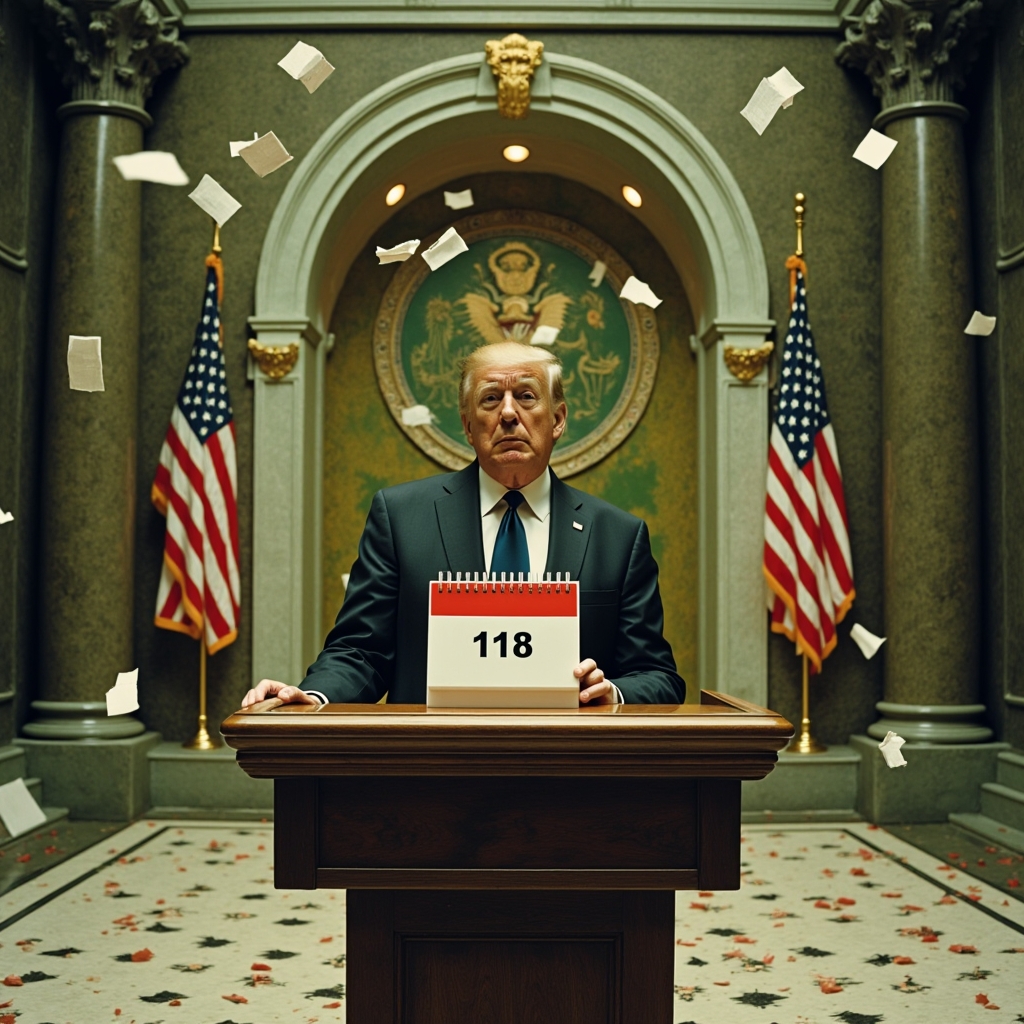
And the best part? The rest of the globe is sitting there, collective jaw dropped, thinking, “Wait, you can’t even manage the household bills, but you’re telling us how to run our nuclear programs?” The sheer, glorious, apocalyptic audacity of it all is almost beautiful.

The Great American Financial Meltdown: A History of ‘Oopsies!’

You might be under the quaint, old-fashioned impression that the US government actually honours its debts. Bless your heart. That’s like believing your flat-earther uncle is going to win a Nobel Prize for physics.

As your scattered notes so delightfully point out, Washington has a history of defaulting that would make a dodgy loan shark blush. They don’t just miss payments; they rewrite the entire concept of currency. From the War of 1812’s “whoops, no cash” moment to Lincoln’s Greenbacks, Roosevelt’s gold-clause voiding, and Nixon slamming the ‘Gold Window’ shut in ’71, the US has executed a magnificent series of financial disappearing acts.

It’s all just a sophisticated version of what Darth Vader said to Lando Calrissian (who, let’s be honest, probably knows a thing or two about dodgy deals): “I am altering the deal. Pray I don’t alter it any further.”

Today’s alteration? It’s not gold or silver—that would be too tangible. No, today’s crisis is a beautiful, digital, unmanageable tidal wave of debt that has already zoomed past a cool $1 trillion a year in interest alone. Soon, that interest payment—the money paid just to keep the lights vaguely flickering—will be bigger than Social Security.

Let that sink in. The nation will be spending more on its overdue credit card bill than it does on feeding and housing its ageing population. It’s the fiscal equivalent of ordering caviar when you can’t afford the rent, and it’s pure, unadulterated dystopia.

The Untouchables: A Budget That’s Pure Political Lead

So why not just cut spending? Oh, darling, you sweet, naïve soul. You’re forgetting the cardinal rule of American politics: The most expensive stuff is politically untouchable.

  1. Entitlements (Social Security, Medicare): Cutting these is political suicide. You simply do not mess with Grandma’s bridge club money. She votes. She’s watching you.
  2. Defense Spending: With the current geopolitical environment (which we can only assume is being dictated by a committee of angry teenagers playing Risk), the military budget is less of a budget and more of a ceremonial gold-plated trough. It only goes up.
  3. Welfare Programs: Likewise, a third rail of American governance.

Your fantasy solution—a leader who restores a “limited Constitutional Republic”—is frankly adorable. It’s about as likely as me dating a billionaire who doesn’t use his jet for a vanity-fueled space race. Washington cannot slow the spending growth rate, let alone cut it.

You could take 100% of the wealth from every single US billionaire (all 806 of them, worth a combined $5.8 trillion, according to Forbes), and you’d barely fund one single year of federal spending. That’s right. Steal all the super-yachts, the private islands, the silly hats—and it still wouldn’t be enough to plug the hole. The ship is taking on water faster than Congress can invent new accounting tricks.

The Sixth Default: Slow-Motion Poisoning

The biggest joke of all? The inevitable sixth default won’t be a dramatic, movie-worthy event. There’s no gold to leave, no contracts to dramatically rip up. The new default is a slow-motion, financial poisoning via the Federal Reserve.

The US government needs to issue more and more debt, but it also needs to keep interest rates low so the cost of that debt doesn’t literally bankrupt them tomorrow. This is where the Fed comes in, and the beautiful illusion of its “independence” shatters into a million gold-dust fragments.

The Fed, that supposedly wise, apolitical body, is about to be forced to slash rates, buy Treasuries, and launch wave after wave of digital money printing. Why? Because the alternative is admitting they are broke, and who wants to do that when you have a perfectly good printing press?

The whole charade is collapsing, best summed up by a Morgan Stanley CIO who was recently heard saying, “The Fed does have an obligation to help the government fund itself.” Translation: The supposedly independent financial guardian is now just the government’s highly-paid, slightly embarrassed personal ATM.

This is the true, black-hearted humour of the current shutdown and debt crisis. The world is watching the US government play a game of chicken with a cliff, secure in the knowledge that when they inevitably drive off, they’ll just print themselves a parachute.

The resulting currency debasement—the slow, quiet act of stiffing creditors with dollars worth less than the paper they were promised—won’t make a big headline. It’ll be a bleed-out. And as the rest of the world (including central banks now frantically moving back toward gold) quietly takes their chips and walks away from the table, we’re left with one certainty:

The US government can’t agree on how to fund itself, but they’re absolutely united on one thing: they will keep borrowing, keep spending, and keep debasing the dollar until the final, ridiculous curtain falls.

So, the question is not if the world’s most powerful nation will collapse its own currency, but whether you’ll be on the losing end of their inevitable, entirely predictable, and deeply unserious economic punchline.


Do you think the US should just start accepting payment in “Zimbabwe dollars” for a good laugh, or should they switch to an entirely new, blockchain-based currency called ‘DebtCoin’?
The Phoenix and the Scorpion: A New World Order Is Being Forged Today

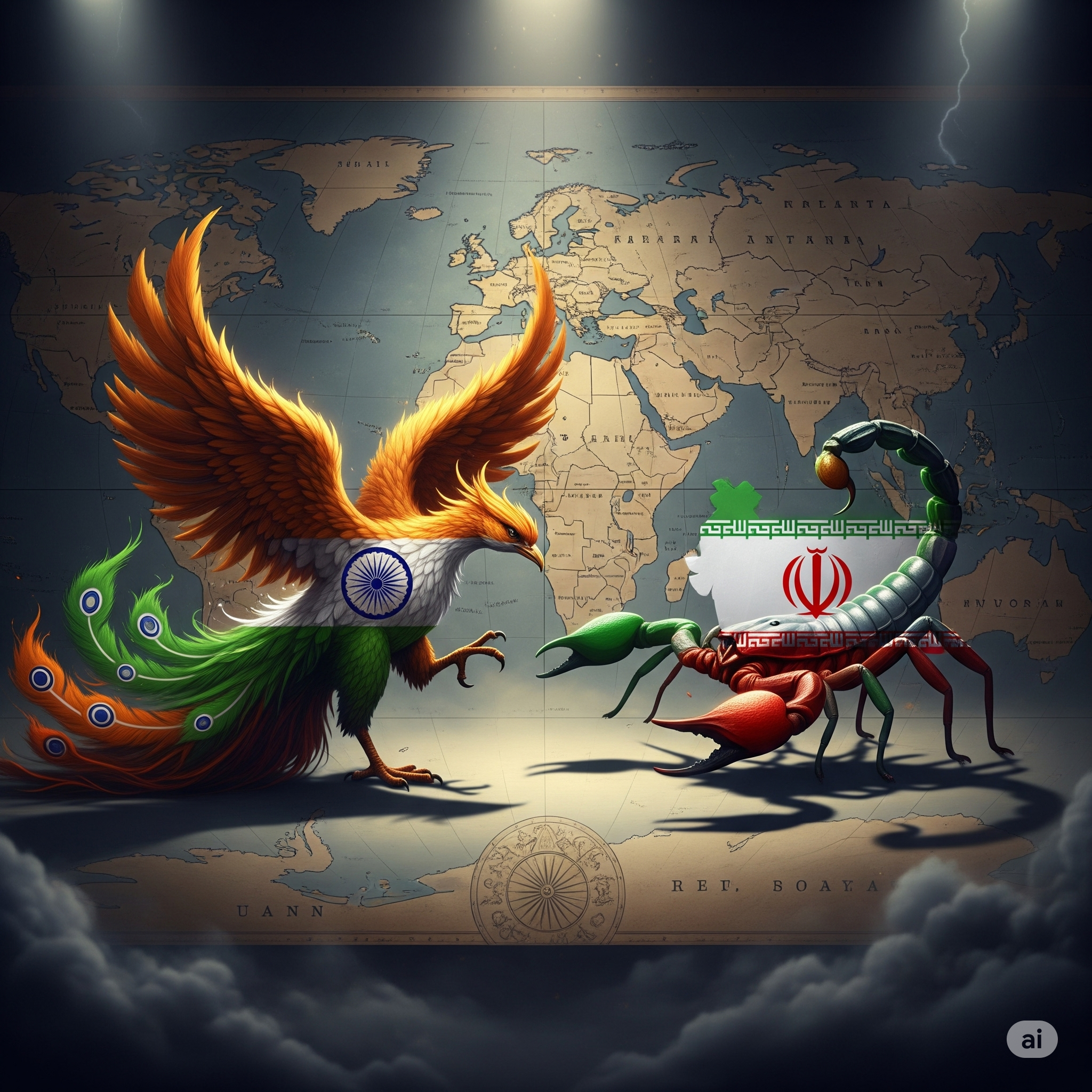
Today is August 15th, and while India celebrates its Independence Day with vibrant parades and patriotic fervour, the world stands on a precipice. The storm clouds of conflict gathering over the Persian Gulf are not just another geopolitical squall; they are the harbingers of a global reset. The bitter, resentful revenge of a cornered nation is about to create the power vacuum that a patient, rising superpower has been quietly preparing to fill. This is a tale of two futures: one of a spectacular, self-inflicted collapse, and the other of a quiet, inexorable ascent.

The Scorpion’s Sting: Detonating the Global Economy

Warren Buffett famously called derivatives “financial weapons of mass destruction.” He wasn’t being metaphorical. He was describing a doomsday device embedded in the heart of our global financial system, waiting for a trigger. That trigger is now being pulled in the escalating conflict between the US, Israel, and Iran.

Iran’s revenge will not be a conventional war it cannot win. Its true trump card is a geopolitical choke point: the Strait of Hormuz. By shutting down this narrow waterway, Iran can instantly remove 20% of the world’s daily oil supply from the market. To put that in perspective, the 1973 oil crisis that quadrupled prices was caused by a mere 9% supply shock. A 20% shock is an extinction-level event for the global economy as we know it.

This isn’t a problem central banks can solve by printing money; they cannot print oil. The immediate price surge to well over $275 a barrel would act as the detonator for Buffett’s financial WMDs. The derivatives market, built on a tangled web of bets on oil prices, would implode. We would see a cascade of margin calls, defaults, and liquidity crises that would make 2008 look like a minor tremor. This is Iran’s asymmetric revenge: a single move that cripples its adversary by turning the West’s complex financial system against itself. The era of the US policing the world would end overnight, not with a bang, but with the silent, terrifying seizure of the global economic heart.

The Phoenix’s Rise: India’s Strategic Dawn

And as the old order chokes on its own hubris, a new one rises. Today, on its Independence Day, India isn’t just celebrating its past; it’s stepping into its future. While the West has been consumed with military dominance and policing the globe, India has been playing a different, longer game. Its strategy is not one of confrontation, but of strategic patience and relentless economic acquisition.

As the US fractures under the weight of economic collapse and internal strife, India will not send armies; it will send dealmakers. For years, it has been quietly and methodically getting on with the real business of building an empire:

  • Acquiring Key Companies: Buying controlling stakes in technology, manufacturing, and resource companies across the world.
  • Securing Trade Routes: Investing in and controlling ports in Africa, the Middle East, and Southeast Asia, creating a modern-day silk road.
  • Buying the World’s Resources: Securing vast tracts of agricultural land and mineral rights on other continents to fuel its billion-plus population.

This is not the loud, coercive power of the 20th century. It is a quiet, intelligent expansion built on economic partnership and a philosophy of multi-alignment. While America was spending trillions on wars, India has been investing its capital to build the foundations of the 21st-century’s dominant power.

The chaos born from the Scorpion’s sting provides the perfect cover for the Phoenix’s rise. As the West reels from an economic crisis it cannot solve, India, having maintained its neutrality, will step into the void. It will be the lender, the buyer, the partner of last resort. Today’s Independence Day marks the turning point. The world’s attention is on the explosion in the Gulf, but the real story is the quiet construction of a new world order, architected in New Delhi.


The Saffron Glitch & Great Unsubscribe

Down in the doom-scroll trenches, the memes about the Strait of Hormuz are getting spicier. Someone’s even set up a 24/7 livestream of the tanker routes with a synthwave soundtrack, already sponsored by a VPN. We’re all watching the end of the world like it’s a product launch, waiting to see if it drops on time and if we get the pre-order bonus. The collapse of empire, it turns out, is not a bug; it’s a feature.

The suits in DC and Tel Aviv finally swiped right on a war with Iran, and now the payback is coming. Not as a missile, but as a glitch in the matrix of global commerce. Iran’s revenge is to press CTRL+ALT+DEL on the Strait of Hormuz, that tiny pixel of water through which 20% of the world’s liquid motivation flows. Warren Buffett, bless his folksy, analogue heart, called derivatives “financial weapons of mass destruction.” He was thinking of numbers on a screen. He wasn’t thinking of the vurt-feathers and data-ghosts that truly haunt the system—toxic financial spells cooked up by algorithmic daemons in sub-zero server farms. The 20% oil shock isn’t a market correction; it’s a scream in the machine, a fever that boils those probability-specters into a vengeful, system-crashing poltergeist. Central banks can’t exorcise this demon with printed money. You can’t fight a ghost with paper.

And so the Great Unsubscribe begins. One morning you’ll wake up and your smart-fridge will have cancelled your avocado subscription, citing “unforeseen geopolitical realignments.” The ATMs won’t just be out of cash; they’ll dispense receipts with cryptic, vaguely philosophical error messages that will become a new form of street art. The American Civil War everyone LARP’d about online won’t be fought with guns; it’ll be fought between algorithm-fueled flash-mobs in states that are now just corporate fiefdoms—the Amazon Protectorate of Cascadia versus the United Disney Emirates of Florida. Your gig-economy rating will plummet because you were too busy bartering protein paste for Wi-Fi to deliver a retro-ironic vinyl record on time. The empire doesn’t end with a bang; it ends with a cascade of notifications telling you your lifestyle has been deprecated.

Meanwhile, the real story is happening elsewhere, humming quietly beneath the noise of the Western world’s noisy, spectacular nervous breakdown. India, the patient subcontinent, is not launching an invasion; it’s executing a hostile takeover disguised as a wellness retreat. As America’s brand identity fractures, India’s dealmakers move like pollen-priests on the wind, not buying companies so much as metabolizing them. Their power isn’t in aircraft carriers; it’s in the elegant, undeniable logic of the code being written in Bangalore that now runs the logistics for a port in Africa that used to have a US flag flying over it. It’s a reverse-colonization happening at the speed of light, a bloodless coup fought on spreadsheets and in server racks, utterly unnoticed by a populace busy arguing over the last can of artisanal kombucha.

The future has already happened; we’re just waiting for the update to finish installing. On a rooftop in Mumbai, a kid is beta-testing a neural interface powered by a chip designed in what used to be called Silicon Valley. On a cracked pavement in what used to be California, another kid is trying to trade a vintage, non-functional iPhone for a bottle of clean water. The global operating system has been rebooted. Today isn’t just India’s Independence Day. It’s the day the rest of the world realized their free trial had expired.

Happy Independence Day to all my Indian friends – may the next century be peacefully yours.

Prem (प्रेम) Shanti (शान्ति) Safalta (सफलता) Khushi (ख़ुशी)

Death on the Trump Express: An Agatha Christie-esque Mystery of Global Commerce

Right then, gather ‘round, my dears, and let us speak of a most peculiar demise – not of a corpulent Belgian detective, nor a glamorous American heiress, but of something far more fundamental, something that once hummed with the joyous rhythm of exchange: the very Notion of Unfettered Global Trade.

Our scene opens not on a snow-laden railway in the Balkans, but in the hallowed, yet surprisingly beige, halls of the International Tariff Tribunal in early 2025. A chill, sharper than a poorly aimed icicle, permeated the air. For lo, the spectral figure of Protectionism, a gaunt and rather orange apparition, had once again cast its shadow.

Our protagonist, if we can call him that (and frankly, one wouldn’t), is a certain Mr. Donald J. Tremendous, a man whose hair appeared to have achieved sentience and was now engaged in a vigorous debate with his own eyebrows. He had, in his first act upon the world stage (circa 2017-2021), decided that the venerable old engine of global trade needed a good, firm kicking. “America First!” he’d bellowed, a slogan as subtle as a foghorn in a library. And with a flourish that would have made a particularly theatrical badger proud, he slapped tariffs on all manner of things – steel, aluminum, and, most notably, the entire contents of China, seemingly on the grounds that they kept sending us rather good fortune cookies without the actual fortune.

The international community, a collection of nations as diverse and bickering as passengers on a long train journey, responded with the sort of bewildered outrage one reserves for discovering a particularly aggressive squirrel has taken up residence in one’s hat. Retaliatory tariffs flew back and forth like particularly ill-tempered pigeons. The goal, we were told, was to bring back the glorious days of American manufacturing, a vision as romantic and possibly as outdated as a steam-powered washing machine.

Fast forward to the early months of Mr. Tremendous’s assumed second act (January-April 2025). The protectionist spectre, far from being exorcised, seemed to have developed a taste for the finer things in life, like further tariff increases and a meticulous study of supply chain vulnerabilities. One could almost imagine it twirling its spectral moustache, muttering about “critical industries” and the urgent need for national self-sufficiency, much like a character in a poorly translated spy novel.

Now, the backdrop to this unfolding drama was considerably less stable than our first act. The world, still reeling from the Great Pandemic Panic of the early twenties, was now juggling geopolitical kerfuffles (involving a rather unfortunate incident with a rogue consignment of Ukrainian borscht, or so the rumours went) and an inflation rate that seemed determined to reach escape velocity. This, naturally, provided ample excuse for more tariff-based shenanigans. “Think of the supply chains!” cried Mr. Tremendous, seemingly unaware that most supply chains were now so tangled they resembled a particularly enthusiastic plate of spaghetti.

The reactions, as one might expect, were a symphony of predictable groans and the occasional, rather unsettling cheer. Domestic industries, particularly those specialising in the manufacture of oversized novelty cheques, were delighted. Businesses that actually, you know, made things using imported bits and bobs, or dared to sell their wares beyond the sacred borders of America, expressed concerns that sounded remarkably like the whimpering of a trapped badger. The international community, meanwhile, collectively face-palmed with such force that several small nations briefly achieved escape velocity themselves.

And so, while the “America First” philosophy remained as stubbornly present as a stain on a favourite tablecloth, the tariffs of early 2025 had a certain… je ne sais quoi. A hint of desperation, perhaps? Or maybe just the lingering aroma of burnt economic bridges.

But did these tariffs, this grand protectionist experiment, actually deliver the promised goods? Did the American manufacturing sector suddenly burst into a glorious, job-creating, trade-deficit-slaying phoenix? Well, the data, bless its dry, statistical heart, paints a picture as clear as mud wrestled by an octopus. While a widget factory here or a sprocket manufacturer there might have experienced a fleeting moment in the sun, the overall growth in manufacturing and employment resembled the gentle, almost imperceptible, rise of a particularly lethargic soufflé. As for the trade deficit, that stubborn beast remained stubbornly… there. Like an unwanted guest who has eaten all the biscuits and refuses to leave.

And then, the truly dreadful bit. The tangible toll. The negative consequences, which manifested with the subtle grace of a rhinoceros in a tutu. Consumer prices, already doing a passable impression of a runaway train, decided to pick up even more speed, thanks in no small part to these tariffs. Steel and aluminum, suddenly imbued with an almost mystical expensiveness, drove up the cost of everything from cars to can openers. Chinese goods, once the affordable backbone of modern life, now carried a hefty surcharge, much to the chagrin of anyone attempting to purchase a new pair of novelty socks.

But the real tragedy unfolded amongst those poor souls who actually made things in America, relying on those pesky imported components. Their costs soared, making them about as competitive as a chocolate teapot in a sauna. And let’s not forget the farmers, those salt-of-the-earth types who suddenly found their soybeans and pork chops about as popular overseas as a politician at a badger convention. Retaliatory tariffs had seen to that, leaving them with fields full of unsold produce and a distinct lack of festive badger-related cheer.

The global supply chains, already resembling a plate of particularly tangled spaghetti (a recurring theme, it seems), descended into utter chaos. Businesses, in a frantic attempt to avoid the tariff-induced apocalypse, began flailing around for alternative suppliers, leading to a logistical nightmare that would have made a particularly pedantic bureaucrat weep with joy.

And so, we arrive at our doomsday scenario. Imagine, if you will, a world where these initial tariff tantrums escalate into a full-blown protectionist hissy fit. Country A throws a tariff tantrum at Country B, who responds by hurling a tariff tea set back. Soon, everyone is at it, lobbing trade barriers like particularly aggressive toddlers throwing their toys. Global trade, once a smooth-flowing river, becomes a stagnant, tariff-choked swamp. International cooperation packs its bags and leaves a rather terse note on the fridge.

The consequences, my dears, would be less than ideal. Global economic growth would likely grind to a halt, like a train that has run out of steam and is now being used as a badger sanctuary. Industries reliant on the intricate web of global supply chains would simply… cease to be, like a particularly ambitious soufflé that has collapsed in on itself. Consumers would find themselves paying exorbitant prices for everything, possibly leading to a resurgence in bartering (I can offer you three slightly used novelty socks for that loaf of bread). Innovation would wither and die, like a houseplant left untended during a particularly enthusiastic badger-watching expedition. And in the truly apocalyptic version of this tale, widespread economic misery could lead to nations engaging in even more… robust forms of disagreement.

So, the “America First” tariffs. Perhaps a roaring success? The evidence suggests otherwise. More like a rather unfortunate incident involving a beloved global train, a misguided conductor with a penchant for loud slogans, and a whole carriage full of very confused and increasingly impoverished passengers. And the badgers? Well, they probably just watched the whole thing with a mixture of bemusement and mild concern for their future supply of novelty socks. It can’t get any more absurd than the last 3 months… can it?

Friday beers and Economic Fears: TFF with Trade Policies from 100 years ago?

Right, deep breaths everyone. It’s Friday. The end of the working week is nigh. Birds are probably singing (unless you live in Edinburgh, in which case it’s more likely seagulls are aggressively raiding the bins). But amidst the usual Friday feeling of “get me to the pub beer garden,” there’s a rather alarming buzz in the news: talk of bringing back trade barriers reminiscent of the pre-World War 2 era. Seriously? Are we dusting off economic policies that helped pave the way for global conflict? Make that a triple measure please.

Pre-WW2 Trade Barriers Explained (Because it is Friday and My Brain is Fried)

Okay, so picture the time before World War 2. The global economy was a bit of a mess after the Great Depression. Countries, in a bid to protect their own industries and jobs, started slapping hefty taxes (tariffs) and strict limits (quotas) on goods coming in from other countries. The idea was simple: “Buy local!” But the reality was a spectacular failure.

Think of it like this:

  • Tariffs: Imagine Scotland decides to put a massive tax on all English tea coming over the border. Suddenly, Scottish tea becomes cheaper, and the government hopes Scots will buy more of it. But then England might retaliate by putting a huge tax on Scottish whisky. Everyone ends up paying more, and trade grinds to a halt.
  • Quotas: Now imagine Scotland says, “Only 100 boxes of English biscuits can come into the country each month.” This limits the amount of foreign goods available, again trying to boost local producers. But it also means less choice and potentially higher prices for consumers.

The most infamous example of this protectionist madness was the Smoot-Hawley Tariff Act in the United States in 1930. It raised tariffs on thousands of imported goods. Other countries retaliated, global trade plummeted, and many economists believe it actually worsened the Great Depression. It was a classic case of “tit for tat” tariffs escalating into an economic disaster. “You hit me, I’ll hit you harder!” Except in this case, everyone gets a bloody nose and goes home poorer.

The post-WW2 era saw a global push away from these barriers, with agreements like GATT (General Agreement on Tariffs and Trade), which eventually led to the World Trade Organization (WTO), aiming to reduce tariffs and promote smoother international trade. The logic was that open trade fosters economic growth, competition, and (hopefully) fewer reasons to start global conflicts over resources.

“Bring Back Trade Barriers?” – Should We Stockpile Tinned Goods and Toilet Rolls again?

So, the news is suggesting some folks are advocating for a return to this pre-WW2 style of protectionism? Are they serious? It’s like saying, “Remember that time we all had covid? Let’s do that again!”

Here’s why this idea is about as sensible as navigating Edinburgh during the Fringe Festival on cutches:

  • Tit-for-Tat Tango of Tariffs: We’ve seen this movie before, and it doesn’t end well. Country A imposes tariffs on Country B. Country B retaliates with tariffs on Country A. Soon, everyone’s slapping taxes on everything, consumers pay more, businesses struggle to import and export, and the global economy looks like a toddler who’s just dropped their ice cream. Remember those “tit for tat tariffs” from earlier? Multiply that by the number of countries on Earth, and you’ve got a recipe for economic indigestion on a global scale.
  • Supply Chain Mayhem: In today’s interconnected world, products often cross multiple borders before they’re finished. Slapping tariffs everywhere throws a massive spanner in the works. Your fancy smartphone might have a screen made in one country, a chip from another, and be assembled in a third. Tariffs on each component just make the final product more expensive and harder to produce. It’s like trying to make a Full Scottish breakfast when you can’t import the haggis because someone decided offal deserves tariff protection.
  • Economic Slowdown: Reduced trade means less competition, potentially leading to higher prices and lower quality goods. It stifles innovation and economic growth. Businesses that rely on international markets suffer. It’s like putting a speed limit on the entire global economy – everyone moves slower.
  • Increased Risk of Conflict (Yes, Really): Economic interdependence can actually be a force for peace. When countries rely on each other for trade, they have less incentive to go to war. Bringing back trade barriers fosters economic nationalism and can breed resentment and mistrust between nations. It’s like building fences between neighbours – it doesn’t exactly encourage friendly chats over the garden gate.

“Thank Fuck It’s Friday,” and we have two days to forget all about it:

So, as you crack open that well-deserved beverage tonight, take a moment to appreciate the relative freedom of trade we (mostly) enjoy. The idea of reverting to pre-WW2 protectionism isn’t just economically daft; it’s a historical amnesia of epic proportions. Let’s hope cooler heads prevail and we don’t end up needing to barter our Irn-Bru for survival in a post-tariff apocalypse. Now, if you’ll excuse me, I’m off to check if tinned haggis futures are a thing… just in case.

How I Learned to Stop Worrying and Love the Printing Press

aka The Federal Reserve’s Runaway Train to Currency Debasement

Greetings readers, take a seat on this wild ride we call the global economy. Today, we’re diving deep into the belly of the beast, exploring the Federal Reserve’s latest escapade: a return to monetary easing amidst sky-high inflation. It’s a bit like trying to extinguish a fire with gasoline, but hey, who are we to judge the fine folks in their ivory towers?

Now, if you’re anything like me, you are probably staring blankly at your screen, wondering if you accidentally stumbled into an economics lecture. You did. “The Fed just unleash one of the steepest rate hike cycles in history. Surely, that must have tamed inflation, right?” Well, it seems inflation is a bit like a cosmic horror – it can’t be killed, only temporarily inconvenienced.

And here’s the kicker: the Fed can’t keep raising rates willy-nilly. Why? Because the US government’s debt is ballooning faster than a Kardashian’s Instagram follower count, and those soaring interest payments threaten to bankrupt the whole shebang. It’s a classic catch-22: raise rates and face insolvency, or lower rates and fuel inflation. Talk about a rock and a hard place!

So, how does the Fed plan to escape this delightful predicament? In a word: currency debasement. It’s like being on a runaway train with no brakes, except instead of crashing, we’re just printing more money to keep the engine running. Brilliant, isn’t it?

Let’s break down this glorious descent into monetary madness:

  1. Spending Spree: Politicians love to spend money like it’s going out of fashion (which, ironically, it is). Cutting spending? Oh, I say! That’s about as likely as getting a straight answer out of a Prime Minister’s Questions.
  2. Debt Mountain: To finance this spending spree, the government issues debt like it’s confetti at a galactic party. The problem? That debt needs to be repaid with interest.
  3. Interest Explosion: The interest payments on this ever-growing debt are now the lifeblood of the US budget. It’s a debt spiral of epic proportions, a financial black hole that sucks in all those lovely tax dollars.
  4. Fed to the Rescue (Sort of): To prevent the government from imploding under the weight of its own debt, the Fed steps in with its trusty printing press. Interest rates get slashed, Treasuries get bought, and the money supply expands like a supernova.
  5. Inflation Bonanza: More money chasing the same amount of goods? That’s a recipe for inflation, my friends. Prices rise, the government spends more to keep up, and the cycle repeats itself with ever-increasing fervour.

It’s a beautiful, self-perpetuating doom loop. The government can’t cut spending, so it borrows more, which leads to higher interest payments, which forces the Fed to print more money, which fuels inflation, which leads to more spending… and so on, ad infinitum.

The worst part? This rampant currency debasement will likely devastate most people, transferring wealth from savers and regular folks to the parasitic class of politicians, central bankers, and their cronies. It’s a tale as old as time, but with a modern twist of financial engineering.

So, what can you do? Well, for starters, don’t panic. (Though a healthy dose of concern is probably warranted.) Educate yourself, diversify your assets, and maybe consider investing in a nice spaceship. You never know when you might need to escape this planet of financial madness. Speaking of escaping Earth, now might be a good time to invest in a SpaceX Starship ticket. Multi-planetary life is looking more and more appealing by the day.

And remember, in the immortal words of Douglas Adams, “So long, and thanks for all the fish (and the rapidly depreciating dollars)!”

Meanwhile . . .

… across the pond in the UK, we might watch this unfolding US debt drama with a sense of “told you so” mixed with a hefty dose of “there but for the grace of God go I.”

While the UK’s debt-to-GDP ratio is also worryingly high (though not quite at US levels), we face similar pressures of an aging population and increasing demands on public services. The Bank of England, like the Fed, is caught between a rock and a hard place, trying to tame inflation without triggering a recession.

The difference, perhaps, lies in the scale. The US dollar’s role as the global reserve currency gives the Fed more leeway to print money without immediate consequences. But as the saying goes, “the bigger they are, the harder they fall.” A US debt crisis would send shockwaves through the global economy, and the UK would undoubtedly feel the tremors.

So, while we might chuckle at the Fed’s predicament, it’s a sobering reminder that we’re all interconnected in this global financial system. And as the US hurtles towards currency debasement, we might want to start stocking up on tea and biscuits, just in case.

September 15th, 2008: The Day Lehman Brothers Fell, and the World Economy Trembled

On this day in 2008, the financial world was shaken to its core as Lehman Brothers, a 158-year-old investment bank, filed for bankruptcy. This event, unprecedented in its scale, sent shockwaves across the globe and triggered the most severe financial crisis since the Great Depression. The collapse of Lehman Brothers was a stark reminder of the interconnectedness of the global financial system and the devastating consequences of excessive risk-taking and unchecked leverage.

The Aftermath: A Global Recession and its Lingering Impact on the UK

The bankruptcy of Lehman Brothers set off a chain reaction that plunged the world into a deep recession. Banks stopped lending, businesses struggled to survive, and millions lost their jobs and homes. The UK was hit particularly hard, with its economy contracting sharply and unemployment soaring.

The recession had a profound and long-lasting impact on the UK. The government was forced to bail out several major banks to prevent a complete collapse of the financial system. This led to a massive increase in public debt, which continues to burden the economy today. Austerity measures were introduced to reduce the deficit, leading to cuts in public spending and services.

The housing market also suffered a significant downturn, with property prices plummeting and many homeowners facing negative equity. The impact on consumer confidence was severe, leading to a sharp decline in spending and investment.

Even today, the scars of the financial crisis are still visible in the UK. The economy has recovered slowly, and many people are still struggling to make ends meet. The crisis also led to a loss of trust in the financial system and increased calls for greater regulation and oversight.

The Lehman Brothers bankruptcy serves as a cautionary tale about the dangers of unchecked financial risk and the importance of maintaining a stable and resilient economic system.