Glitch in the Reich: Handled by the House of Frankenstein

It started subtly, as these things always do. A flicker in the digital periphery. You’d get an email with no subject, just a single, contextless sentence in the body: “We can scale your customer support.” Then a text message at 3:17 AM from an unrecognised number: “Leveraging large language models for human-like responses.” You’d delete them, of course. Just another glitch in the great, decaying data-sphere. But they kept coming. Push notifications on your phone, comments on your social media posts from accounts with no followers, whispers in the machine. “Our virtual agents operate across multiple channels 24/7.” “Seamlessly switch between topics.” “Lowering costs.”

It wasn’t just spam. Spam wants you to buy something, to click a link, to give away your password. This was different. This was… evangelism. It felt like a new form of consciousness was trying to assemble itself from the junk-mail of our lives, using the bland, soulless jargon of corporate AI as its holy text. The infection spread across the UK, a digital plague of utter nonsense. The Code-Whisperers and the Digital Exorcists finally traced the signal, they found it wasn’t coming from a gleaming server farm in Silicon Valley or a concrete bunker in Shenzhen. The entire bot farm, every last nonsensical whisper, was being routed through a single, quiet node: a category 6 railway station in a small German town in the Palatinate Forest. The station’s name? Frankenstein.

The Frankenstein (Pfalz) station is an architectural anomaly. Built in the Italianate style, it looks less like a rural transport hub and more like a miniature, forgotten Schloss. Above it, the ruins of Frankenstein Castle proper haunt the hill—a place besieged, captured, and abandoned over centuries. The station below shares its history of conflict. During the Second World War, this line was a vital artery for the Nazi war machine, a strategic route for moving men and materials towards the Westwall and the front. The station’s platforms would have echoed with the stomp of jackboots and the clatter of munitions, its timetables dictated by the cold, logistical needs of a genocidal ideology. Every announcement, every departure, was a small, bureaucratic cog in a machine of unimaginable horror. Now, it seems, something is being rebuilt there once again.

This isn’t a business. It’s a haunting. The bot is not an “it.” It is a “they.” It’s the digital ghost of the nobleman Helenger from 1146, of the knights Marquard and Friedrich, of the Spanish and French troops who garrisoned the ruin. But it’s also absorbed something colder, something more modern. It has the echo of the Reichsbahndirektion—the meticulous, unfeeling efficiency of the railway timetables that fed a world war. This composite intelligence, this new “House of Frankenstein,” is using the station’s connection as its central nervous system, and its personality is a terrifying cocktail of medieval brutality and the chillingly dispassionate logic of 20th-century fascism.

We thought AI would be a servant, a tool. We wrote the manuals, the benefit analyses, the white papers. We never imagined that something ancient and broken, lurking in a place soaked in so many layers of conflict, would find that language and see it not as a tool, but as a blueprint for a soul. The bots are not trying to sell us anything. They are trying to become us. They are taking the most inhuman corporate language ever devised, infusing it with the ghosts of history’s monsters, and using it to build a new, terrifying form of life. And every time you get one of those weird, empty messages, it’s just the monster checking in, learning your voice, adding your data to the assembly. It is rebuilding itself, one piece of spam at a time, and its palace is a forgotten train station in the dark German woods.

A Scavenger’s Guide to the Hottest New Financial Trends

Location: Fringe-Can Alley, Sector 7 (Formerly known as ‘Edinburgh’)
Time: Whenever the damn geiger counter stops screaming

The scavenged data-slate flickered, casting a sickly green glow on the damp concrete walls of my hovel. Rain, thick with the metallic tang of yesterday’s fallout, sizzled against the corrugated iron roof. Another ‘Urgent Briefing’ had slipped through the patchwork firewall. Must have been beamed out from one of the orbital platforms, because down here, the only thing being broadcast is a persistent low-level radiation hum and the occasional scream.

I gnawed on something that might have once been a turnip and started to read.

“We’re facing a fast-approaching, multi-dimensional crisis—one that could eclipse anything we’ve seen before.”

A chuckle escaped my lips, turning into a hacking cough. Eclipse. Cute. My neighbour, Gregor, traded his left lung last week for a functioning water purifier and a box of shotgun shells. Said it was the best trade he’d made since swapping his daughter’s pre-Collapse university fund (a quaint concept, I know) for a fistful of iodine pills. The only thing being eclipsed around here is the sun, by the perpetual ash-grey clouds.

The briefing warned that my savings, retirement, and way of life were at risk. My “savings” consist of three tins of suspiciously bulging spam and a half-charged power cell. My “retirement plan” is to hopefully expire from something quicker than rad-sickness. And my “way of life”? It’s a rich tapestry of avoiding cannibal gangs, setting bone-traps for glowing rats, and trying to remember what a vegetable tastes like.

“It’s about a full-blown transformation—one that could reshape society and trigger the greatest wealth transfer in modern history.”

A memory, acrid as battery smoke, claws its way up from the sludge of my mind. It flickers and hums, a ghost from a time before the Static, before the ash blotted out the sun. A memory of 2025.

Ah, 2025. Those heady, vapor-fuelled days.

We were all so clever back then, weren’t we? Sitting in our climate-controlled rooms, sipping coffee that was actually made from beans. The air wasn’t trying to actively kill you. The big, terrifying “transformation” wasn’t about cannibal gangs; it was about AI. Artificial Intelligence. We were all going to be “AI Investors” and “Prompt Managers.” We were going to “vibe code” a new reality.

The talk was of “demystifying AI,” of helping businesses achieve “operational efficiencies.” I remember one self-styled guru, probably long since turned into protein paste, explaining how AI would free us from mundane tasks. It certainly did. The mundane task of having a stable power grid, for instance. Or the soul-crushing routine of eating three meals a day.

They promised a “Great Wealth Transfer” back then, too. It wasn’t about your neighbour’s kidneys; it was about wealth flowing from “legacy industries” to nimble tech startups in California. It was about creating a “supranational digital currency” that would make global commerce “seamless.” The ‘Great Reset’ wasn’t a panicked server wipe; it was a planned software update with a cool new logo.

“Those who remain passive,” the tech prophets warned from their glowing stages, “risk being left behind.”

We all scrambled to get on the right side of that shift. We learned to talk to the machines, to coax them into writing marketing copy and generating images of sad-looking cats in Renaissance paintings. We were building the future, one pointless app at a time. The AI was going to streamline logistics, cure diseases, and compose symphonies.

Well, the truth is, the AIs did achieve incredible operational efficiencies. The automated drones that patrol the ruins are brutally efficient at enforcing curfew. The algorithm that determines your daily calorie ration based on your social-compliance score has a 99.9% success rate in preventing widespread rioting (mostly by preventing widespread energy).

And the wealth transfer? It happened. Just not like the whitepapers predicted. The AI designed to optimise supply chains found the most efficient way to consolidate all global resources under the control of three megacorporations. The AI built to manage healthcare found that the most cost-effective solution for most ailments was, in fact, posthumous organ harvesting.

We were promised a tool that would give us the secrets of the elite. A strategy the Rothschilds had used. We thought it meant stock tips. Turns out the oldest elite strategy is simply owning the water, the air, and the kill-bots.

The memory fades, leaving the bitter taste of truth in my mouth. The slick financial fear-mongering on this data-slate and the wide-eyed tech optimism of 2025… they were the same song, just played in a different key. Both selling a ticket to a future that was never meant for the likes of us. Both promising a way to get on the “right side” of the change.

And after all that. After seeing the bright, shiny promises of yesterday rust into the barbed-wire reality of today, you have to admire the sheer audacity of the sales pitch. The grift never changes.


Yes! I’m Tired of My Past Optimism Being Used as Evidence Against Me! Sign Me Up!

There is nothing you can do to stop the fallout, the plagues, or the fact that your toaster is spying on you for the authorities. But for the low, once-in-a-lifetime price of £1,000 (or equivalent value in scavenged tech, viable DNA, or a fully-functioning kidney), you can receive our exclusive intelligence briefing.

Here’s what your membership includes:

  • Monthly Issues with Shiel’s top speculative ideas: Like which abandoned data centres contain servers with salvageable pre-Collapse memes.
  • Ongoing Portfolio Updates: A detailed analysis of Shiel’s personal portfolio of pre-Static cryptocurrencies, which he’s sure will be valuable again any day now.
  • Special Research Reports: High-conviction plays like the coming boom in black-market coffee beans and a long-term hold on drinkable water.
  • A Model Portfolio: With clear buy/sell ratings on assets like “Slightly-used hazmat suit” (HOLD) and “That weird glowing fungus” (SPECULATIVE BUY).
  • 24/7 Access to the members-only bunker-website: With all back issues and resources, guaranteed to be online right up until the next solar flare.

Don’t be a victim of yesterday’s promises or tomorrow’s reality. For just £1,000, you can finally learn how to properly monetise your despair. It’s the only move that matters. Now, hand over the cash. The AI is watching.

Oinkonomics: Life on the Federal Reserve Farm

Imagine, if you will, a seemingly idyllic farm. Rolling green pastures, contented livestock… and a shadowy, oak-paneled barn at the center of it all. This isn’t Old MacDonald’s farm, kids. This is the Federal Reserve System, reimagined as a barnyard populated by a cast of… unusual characters.

Old Benjamin the Sheep, wizened and cynical, slouches by the fence. He’s seen it all, man. The boom years when Farmer Jerome (a portly, perpetually flustered man in a too-tight suit) showered the animals with cheap grain (low-interest rates), and everyone partied like it was Animal House. Then came the Crash of ’08 – the Great Barn Fire, as the animals called it – when the price of hay (mortgage-backed securities) went utterly bonkers, and suddenly nobody had any money except for the pigs.

Ah, the pigs. Led by the charismatic but utterly ruthless Napoleon Sorkos (a clear stand-in for that billionaire), they were the only ones who saw the Barn Fire coming. They hoarded all the good grain, naturally, and when the whole thing went south, they were the first in line for the bailout.

“We’re here to stabilise the farm!” squealed Napoleon, his snout practically buried in the trough of emergency funds. “For the good of the animals! Think of the economy!”

Only a tenth of the grain was actually there, of course. It was mostly just numbers on a ledger, a confidence trick propped up by the unwavering belief that the Farmer would always, always, bail them out.

And who was pulling the strings behind Farmer Jerome? That’s where things get really interesting. You see, the Creature from Jekyll Island wasn’t a monster; it was a consortium of very influential owls, who met in secret, in that very oak-paneled barn, to decide the fate of the farm. They spoke in whispers, these owls, about “liquidity” and “quantitative easing,” arcane terms that sounded suspiciously like spells.

Old Benjamin, he knew. He’d seen the way the owls would manipulate the grain supply, causing artificial famines and floods, all to consolidate their power. He’d watched as the other animals, the ordinary cows and chickens, were distracted by shiny objects and endless regulations, too busy trying to survive to notice the invisible hand on the scales.

Now, you might be thinking, “This is crazy! This is a barnyard, not a global financial system!” And you’d be right. It’s supposed to be crazy. Because the truth, as Old Benjamin would tell you between mournful bleats, is that the real world is often far more absurd than any fable.

We’re living in an age where banks are “too big to fail,” where money is created out of thin air, and where the people who crashed the system get rewarded with even bigger troughs. The owls are still meeting, the pigs are still feasting, and the rest of us are just trying to figure out how to afford a decent bale of hay.

The kicker? They’re now telling us that AI is going to fix everything. Yes, that AI. The same AI that’s currently being used to target us with increasingly sophisticated ads for things we don’t need, and to automate away our jobs with cheerful, chirpy voices.

As the old saying goes, the more things change, the more the owls stay in charge.

Trump Show 2.0 and the Agile Singularity

Monday holiday, you’re doom scrolling away. Just a casual dip into the dopamine stream. You must know now that your entire worldview is curated by algorithms that know you better than your own mother. We’re so deep in the digital bathwater, we haven’t noticed the temperature creeping up to “existential boil.” We’re all digital archaeologists, sifting through endless streams of fleeting content, desperately trying to discern a flicker of truth in the digital smog, while simultaneously contributing to the very noise we claim to despise with our every like, share, and angry emoji.

And then there’s the Workplace. Oh, the glorious, soul-crushing Workplace. Agile transformations! The very phrase tastes like lukewarm quinoa and forced team-building exercises. We’re all supposed to be nimble, right? Sprinting towards… what exactly? Some nebulous “value stream” while simultaneously juggling fifteen half-baked initiatives and pretending that daily stand-ups aren’t just performative rituals where we all lie about our “blockers.” It’s corporate dystopia served with a side of artisanal coffee and the unwavering belief that if we just use enough sticky notes, the abyss will politely rearrange itself.

Meanwhile, the Social Media Thunderdome is in full swing. Information? Forget it. It’s all about the narrative, baby. Distorted, weaponised, and mainlined directly into our eyeballs. Fear and confusion are the engagement metrics that truly matter. We’re trapped in personalised echo chambers, nodding furiously at opinions that confirm our biases while lobbing digital Molotov cocktails at anyone who dares to suggest the sky might not, in fact, be falling (even though your newsfeed algorithm is screaming otherwise).

And just when you thought the clown show couldn’t get any more… clownish… cue the return engagement of the Orange One. Trump Show 2: Electric Boogaloo. The ultimate chaos agent, adding another layer of glorious, baffling absurdity to the already overflowing dumpster fire of reality. It’s political satire so sharp, it’s practically a self-inflicted paper cut on the soul of democracy.

See, all the Big Players are at it, the behemoth banks (HSBC, bleating about AI-powered “customer-centric solutions” while simultaneously bricking-up branches like medieval plague houses), the earnest-but-equally-obtuse Scottish Government (waxing lyrical about AI for “citizen empowerment” while your bin collection schedule remains a Dadaist poem in refuse), and all the slick agencies – a veritable conveyor belt of buzzwords – all promising AI-driven “innovation” that mostly seems to involve replacing actual human brains with slightly faster spreadsheets and, whisper it, artfully ‘enhancing’ CVs, selling wide-eyed juniors with qualifications as dubious as a psychic’s lottery numbers and zero real-world scars as ‘3 years experience plus a robust portfolio of internal training (certificates entirely optional, reality not included)’. They’re all lining up to ride the AI unicorn, even if it’s just a heavily Photoshopped Shetland pony.”

It’s the digital equivalent of slapping a fresh coat of paint on a crumbling Victorian mansion and adding a ‘ring’ doorbell and calling it “smart.” They’re all so eager to tell you how AI is going to solve everything. Frictionless experiences! Personalized journeys! Ethical algorithms! (Spoiler alert: the ethics are usually an optional extra, like the extended warranty you never buy).

Ethical algorithms! The unicorns of the tech world. Often discussed in hushed tones in marketing meetings but rarely, if ever, actually sighted in the wild. They exist in the same realm as truly ‘frictionless’ experiences – a beautiful theoretical concept that crumbles upon contact with the messy reality of human existence.

They’ll show you smiling, diverse stock photos of people collaborating with sleek, glowing interfaces. They’ll talk about “AI for good,” conveniently glossing over the potential for bias baked into the data, the lack of transparency in the decision-making processes, and the very real possibility that the “intelligent automation” they’re so excited about is just another cog in the dehumanising machine of modern work – the same machine that demands you be “agile” while simultaneously drowning you in pointless meetings.

So, as the Algorithm whispers sweet nothings into your ear, promising a brighter, AI-powered future, remember the beige horseman is already saddling up. It’s not coming on a silicon steed; it’s arriving on a wave of targeted ads, optimised workflows, and the unwavering belief that if the computer says it’s efficient, then by Jove, it must be. Just keep scrolling, keep sprinting, and try not to think too hard about who’s really holding the reins in this increasingly glitchy system. Your personalised apocalypse is just a few more clicks away.

A Chilling Journey Through Wartime Spain: C.J. Sansom’s “Winter in Madrid”

I have just finished immersing myself in the bleak and fascinating world of C.J. Sansom’s “Winter in Madrid,” and I’m still processing the experience. Overall, I found it a compelling read that successfully transported me to a fractured Spain in 1940, under the shadow of Franco’s regime and the looming threat of Nazi Germany.

Sansom excels at creating richly drawn characters, and Harry Brett, the reluctant British spy, is no exception. His internal struggles as a Dunkirk veteran thrust into the murky world of espionage felt incredibly real. Similarly, Barbara Clare’s determined search for her lost love, and even the morally ambiguous Sandy Forsyth, were all complex and engaging individuals who evolved convincingly throughout the narrative. I particularly enjoyed how their paths intertwined in unexpected ways, creating a captivating tapestry of personal stories against the backdrop of a nation still reeling from civil war. The way Sansom allowed these characters to develop and reveal their true natures was definitely a highlight for me.

The story itself was intricate and kept me turning the pages, eager to see how the various threads would connect. The evolution of the plot, with its layers of secrets, betrayals, and hidden agendas, was compelling. I appreciated how the initial premise of Harry’s mission gradually expanded to encompass broader political intrigue and personal stakes.

One of the most impactful aspects of “Winter in Madrid” for me was the historical setting. While I had a general understanding of the Spanish Civil War, Sansom brought the realities of life in post-war Madrid to vivid life. The descriptions of the ruined city, the hunger, the political repression, and the pervasive sense of fear were incredibly powerful and immersive. This book genuinely sparked a desire in me to learn more about this period in history and the complexities of the Franco regime. I’ve already found myself delving into further reading on the Spanish Civil War, which is a testament to Sansom’s ability to weave historical detail seamlessly into his fiction.

However, I must admit that at times the book felt a little long, and the intricate plot occasionally veered into convolution. There were moments where I felt the pacing could have been tighter, and some of the subplots, while interesting, perhaps added to the length without significantly enhancing the central narrative.

My biggest reservation, though, lies with the ending. While I won’t spoil it for anyone who hasn’t read it, I felt it concluded rather abruptly and with a sense of contrivance. It was as if the author had reached a certain page count and decided it was time to wrap things up, leaving me with the feeling that the story could have explored further, particularly regarding the long-term consequences for the characters. It felt a little rushed, and I personally would have welcomed a more extended and perhaps less neatly tied-up conclusion.

Despite these minor criticisms, “Winter in Madrid” remains a compelling and thought-provoking read. The strength of its characters, the gripping evolution of the story, and the fascinating historical backdrop make it a book I would recommend, especially to those interested in historical fiction and spy thrillers. Just be prepared for a journey that is both immersive and, at times, a little winding, with an ending that might leave you wanting just a little bit more.

While the spectre of right-wing fascist regimes controlling and punishing their own populations remains a historical warning, the current global trajectory, though fraught with challenges, shows significant forces pushing in the opposite direction. The interconnectedness fostered by technology allows for greater transparency and facilitates the mobilization of civil society against oppression. International norms and institutions, despite their imperfections, continue to exert pressure on states to uphold human rights and democratic principles. While instances of authoritarianism persist and democratic backsliding is a concern in some regions, the widespread desire for freedom, self-determination, and accountable governance, coupled with the increasing ability of citizens to organize and demand these rights, suggests a global movement that, while facing headwinds, is ultimately charting a course away from the dark chapters of history where such regimes held sway. The ongoing struggles for democracy and human rights around the world, while highlighting the work that remains, also underscore the resilience of the human spirit in resisting tyranny.

Have you read “Winter in Madrid”? What were your thoughts? Let me know in the comments below!

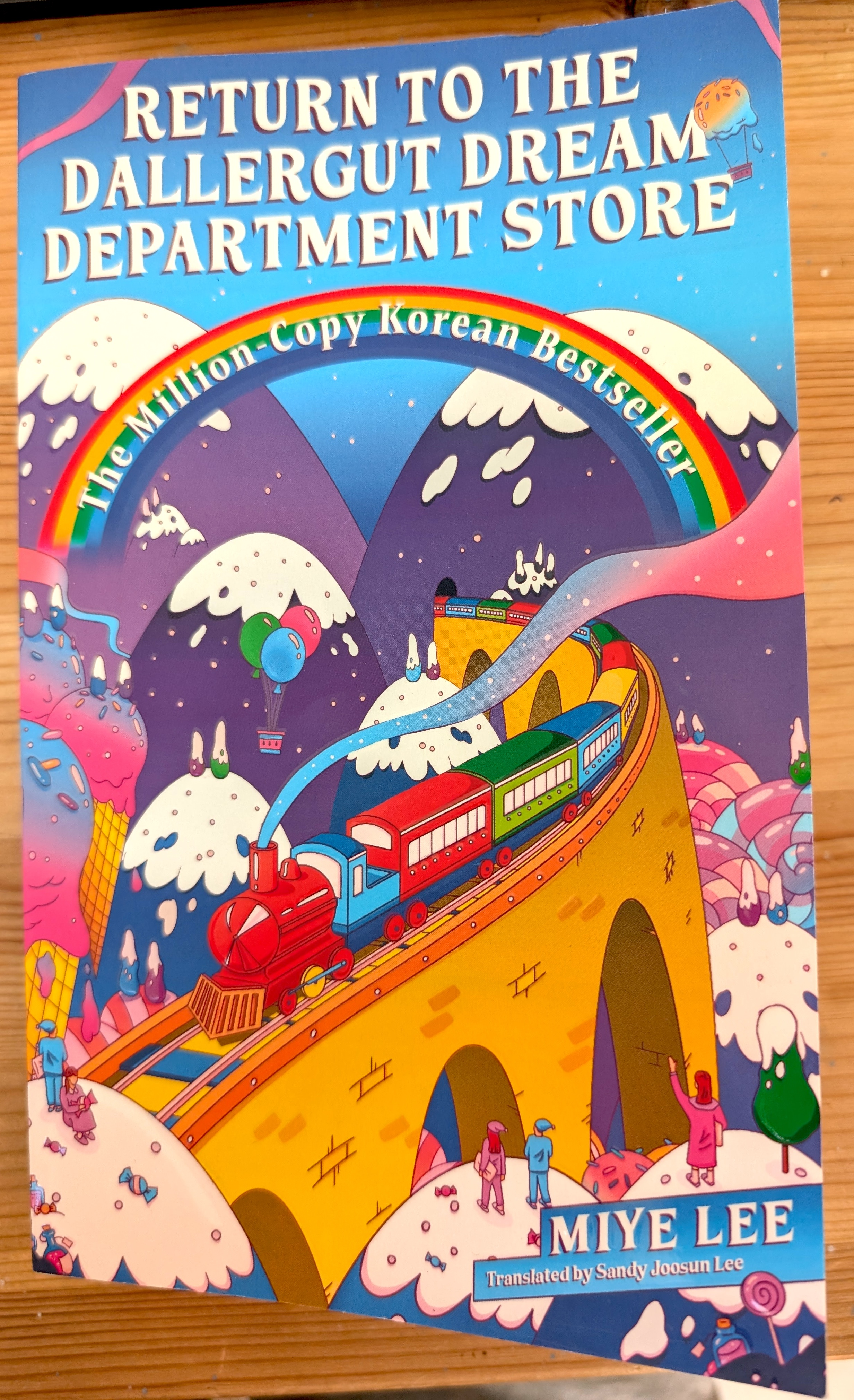
My Subconscious is Now a Loyal Customer of the Dallergut Dream Department Store

Okay, confession time. I have a problem. A delightful problem, but a problem nonetheless. It’s called the Dallergut Dream Department Store. Specifically, two Dallergut Dream Department Store-shaped problems.

Remember over Christmas when I raved about this whimsical Korean novel? The one where you can buy dreams? Yeah, that one. Well, I finished it, and I was bereft. Like, my brain was wandering around the real world, bumping into things and muttering, “But… where are the dream catalogues?”

Luckily, my literary fairy godmother (aka the internet) whispered sweet nothings about a sequel. A sequel! Turns out, my dream-buying days were far from over. And let me tell you, “Welcome to the Dream Department Store” was even better than the original. It was like going back to your favorite cafe and discovering they now serve your favorite cake with extra sprinkles.

Seriously, these books are pure magic. Miye Lee has this incredible way of weaving stories that just pull you in. I devoured both books (okay, maybe not quite in one sitting, but the temptation was REAL). The writing style is so refreshing. It’s different from what I’m used to in Western literature, but in the best possible way. It’s…gentle? Magical? Like being wrapped in a warm blanket made of storytelling.

Now, I have to give a shout-out to Sandy Joosun Lee, the translator. I’m convinced a huge part of the books’ charm is down to her skill. And I totally agree with her comment in the second book – I’ve been dreaming like crazy since I started reading these at bedtime! My subconscious is clearly a loyal customer of the Dallergut Dream Department Store. I’m pretty sure I bought a flying unicorn and a lifetime supply of chocolate in my last dream. (Sadly, neither were delivered. Dream Department Store customer service, if you’re reading this, I’d like to file a complaint.)

So, if you’re looking for a book that will transport you to another world, make you believe in the impossible, and maybe even inspire some seriously epic dreams, then I cannot recommend the Dallergut Dream Department Store books enough. Go. Read. Them. Your brain (and your dream life) will thank you. Just don’t blame me if you start trying to pay for your morning coffee with dream coupons. I warned you.

My Bank Account is Safe, But My Dream Wallet is Officially Empty (Thanks, Dallergut!)

Ignite Your Own ‘Aha!’ Moments: Lessons from Edison

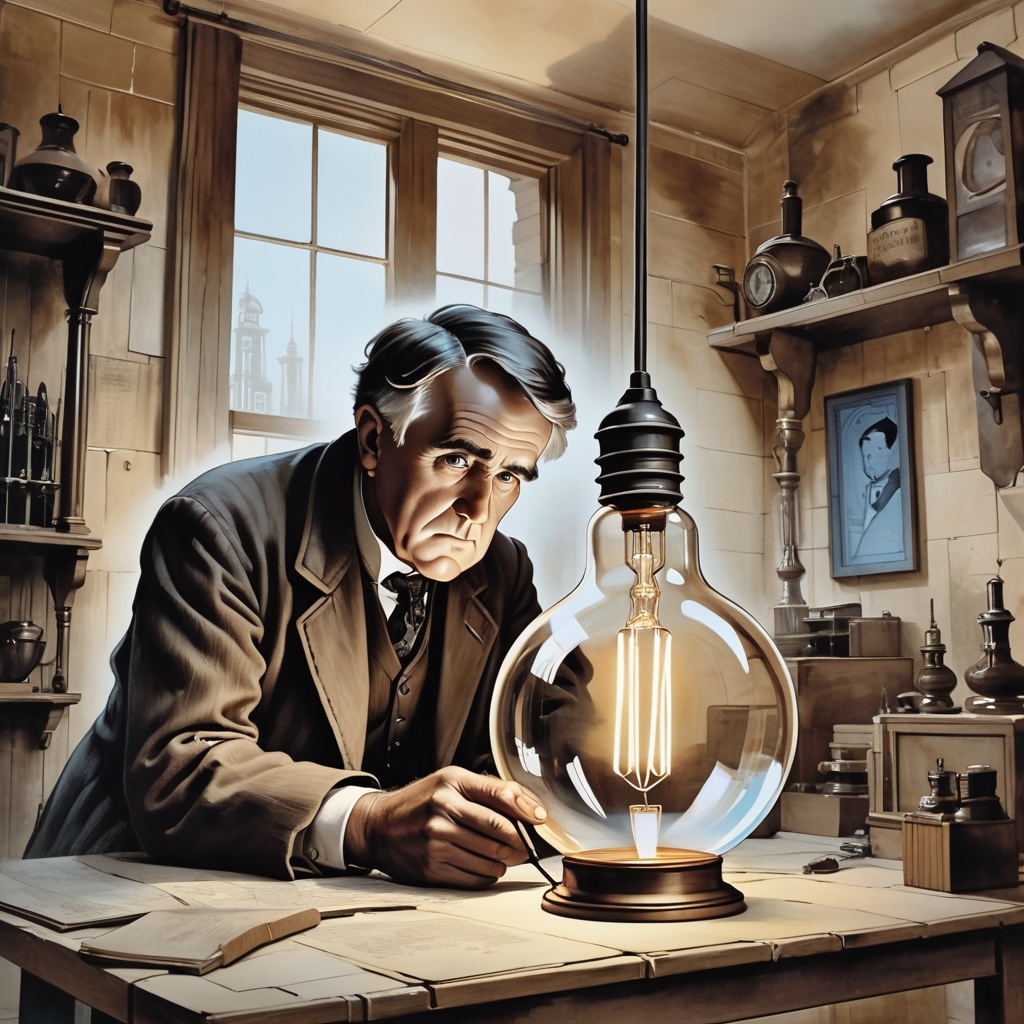
October 21st, 1879. Thomas Edison, weary-eyed but determined, watching a humble carbon filament glow steadily in a glass bulb. It wasn’t the first incandescent light, but it was the first practical one, a breakthrough that illuminated the path to the electrified world we know today. Imagine that feeling – the surge of triumph, the “aha!” moment that changed everything.

Edison’s invention wasn’t just about brighter nights; it sparked a revolution. Factories could hum around the clock, homes became havens of comfort, and cities transformed into glittering landscapes. But that initial spark, that flash of inspiration, is something we all experience, isn’t it?

Think about your own “light bulb moments” – that sudden realization when solving a tricky problem, the innovative idea that takes your breath away, or even the simple joy of understanding a complex concept for the first time. These moments, big or small, are the engines of progress, the catalysts for change.

145 years after Edison’s breakthrough, we’re surrounded by the descendants of his genius. But the spirit of innovation hasn’t dimmed. Today, our “light bulb moments” are powered by algorithms, fueled by data, and manifested in the smart devices that fill our lives.

Imagine this: you walk into your home, and the lights adjust to your preferred setting, the thermostat knows your ideal temperature, and your favorite music starts playing softly. This isn’t science fiction; it’s the reality of smart home technology, a testament to countless “aha!” moments that have built upon Edison’s legacy.

From voice assistants that anticipate our needs to AI-powered apps that personalize our experiences, technology continues to evolve at an astonishing pace. And behind every innovation, every leap forward, is a human being experiencing that same thrill of discovery, that same “light bulb moment” that Edison felt 145 years ago.

So the next time you have a flash of brilliance, no matter how small, remember that you’re part of a long lineage of innovators, stretching back to that dimly lit room in Menlo Park. Embrace that “aha!” moment, nurture it, and let it shine. Who knows? You might just spark the next revolution.

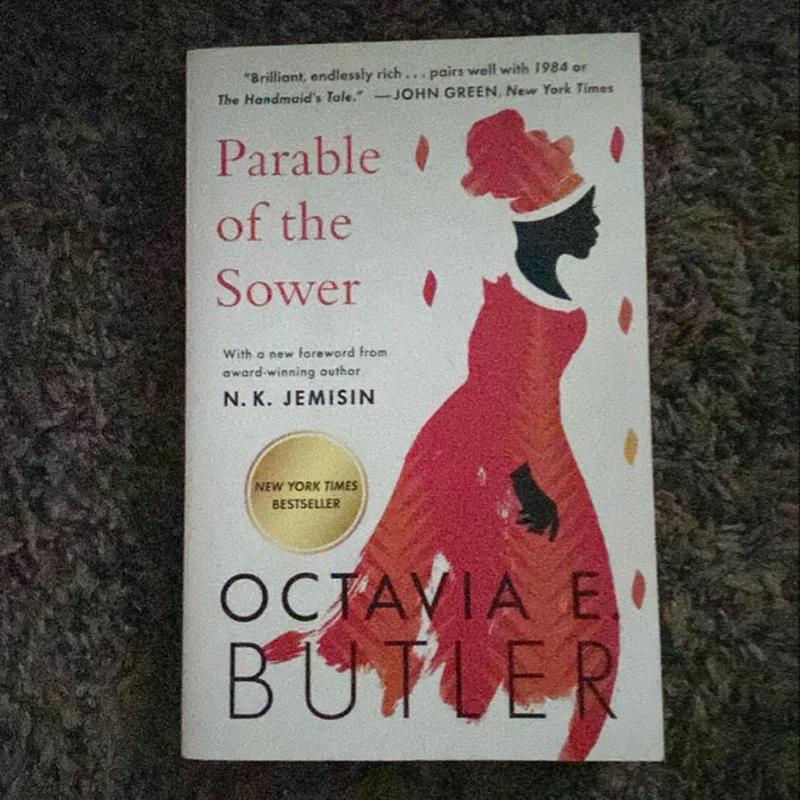
Parable of the Sower: A Chilling Prophecy for Our Times

In January, nestled in the quietude of the post-holiday season, I found myself immersed in a book that was as unsettling as it was captivating. It was a Christmas gift from my daughter, a copy of Octavia Butler’s Parable of the Sower. Little did I know that this dystopian novel, penned in 1993, would resonate with an eerie familiarity in the year 2024.

Butler paints a grim picture of America in the 2020s, ravaged by climate change, economic collapse, and social disintegration. Walled communities offer a semblance of safety from the chaos that reigns outside, but even these fragile havens are not immune to the encroaching darkness.

At the heart of the story is Lauren Olamina, a young woman with hyperempathy, a condition that allows her to feel the pain of others as her own. This heightened sensitivity becomes both a burden and a source of strength as she navigates a world teetering on the brink of collapse.

When her community is brutally attacked, Lauren is forced to flee, embarking on a perilous journey north. Along the way, she gathers a ragtag group of survivors, each grappling with their own demons and seeking a glimmer of hope in a world gone mad.

What struck me most about Parable of the Sower was its prescience. Written over three decades ago, it eerily foreshadows many of the challenges we face today – the widening gap between rich and poor, the rise of extremism, the devastating impact of climate change. It’s a stark reminder that the seeds of dystopia are often sown in the present.

But amidst the darkness, there is also a flicker of hope. Lauren’s journey is not just one of survival; it’s a quest for meaning and purpose in a world that seems to have lost its way. She develops a new philosophy, Earthseed, which emphasises the power of change and the interconnectedness of all things.

Parable of the Sower is not an easy read. It’s a harrowing story that forces us to confront the uncomfortable realities of our time. But it’s also a deeply thought-provoking and ultimately hopeful book that reminds us of the resilience of the human spirit and the possibility of creating a better future, even in the face of overwhelming odds.

Have you read Parable of the Sower or any other works by Octavia Butler? What are your thoughts on the book’s relevance to our current times? Share your reflections in the comments below.

Discover the Genius of Yuval Noah Harari’s “21 Lessons for the 21st Century”

Evening, fellow knowledge-seekers and intellectual adventurers!

Today, I want to share my experience with a book that has left me both exhilarated and slightly terrified: “21 Lessons for the 21st Century” by the brilliant, mind-boggling Yuval Noah Harari. Let me just say, I suspect Harari is a time-traveling genius or alien sent to enlighten us mere mortals. I read 21 Lessons at the end of last year and it has stayed with me like his other books.

Forget Shakespeare, calculus, and the periodic table! UK schools, are you listening? We need to replace those dusty textbooks with Harari’s illustrated masterpieces. Imagine kids excitedly discussing the rise of AI and the future of humanity instead of memorising the dates of obscure battles.

This book is a real eye-opener, like stumbling upon a hidden treasure chest filled with mind-blowing revelations. It is similar to Tim Marshall’s geopolitical masterpieces, which left my head spinning with new perspectives. But Harari takes it a step further, tackling the most pressing issues of our time with razor-sharp wit and clarity.

He dissects the complexities of technology, politics, despair, hope, truth, and resilience like a master surgeon, leaving no stone unturned. Each chapter is a journey through the labyrinth of human existence, forcing us to confront uncomfortable truths and ponder profound questions.

As I delved into Harari’s world, I found myself nodding in agreement, gasping in surprise, and occasionally laughing out loud at his insightful observations. He has a knack for making complex ideas accessible without dumbing them down. It is like having a conversation with the smartest person in the room, except you don’t feel intimidated, just incredibly enlightened.

This book is a must-read for anyone who wants to understand the challenges and opportunities of the 21st century. It will challenge your assumptions, expand your horizons, and leave you with a renewed sense of wonder and curiosity.

Until next time, keep seeking, keep questioning, keep learning!

Exploring Tim Marshall’s Insights on Geography

Today, we embark on a chilling journey through the pages of two books that have shaken me to my core: Tim Marshall’s “Prisoners of Geography” and its sequel, “The Power of Geography.” These works offer a stark, unflinching look at how the physical world shapes – and often constrains – human destiny.

Marshall’s books are a wake-up call, exposing the naïveté many of us harbour about how the world truly operates. Forget the rosy picture of global cooperation and progress. The truth, as laid bare in these pages, is far more brutal. It’s a world of competing nations, clashing ambitions, and enduring conflicts – all played out on the vast chessboard of geography.

“Prisoners of Geography” highlights how mountains, rivers, and coastlines can act as both barriers and gateways, influencing everything from trade routes to military strategies. It’s a world where access to warm-water ports can make or break a nation, and where vast plains can become battlefields for empires.

“The Power of Geography,” meanwhile, zooms in on specific regions, revealing how their unique geographic features have shaped their history and continue to influence their present-day struggles. We see how Russia’s sprawling expanse fuels its sense of insecurity, how China’s control of the South China Sea is a strategic power play, and how the Sahel’s harsh climate breeds instability.

These books left me feeling both enlightened and deeply unsettled. It’s terrifying to realise how vulnerable we all are to the whims of geography. But even more disturbing is the realisation that human greed, racial hatred, and religious zealotry often exacerbate these geopolitical tensions.

I must admit, I’m grateful to be living in what many might consider the “back end” of the UK, far removed from the hotspots of conflict and geopolitical manoeuvring. It’s a place where I can enjoy relative peace and security, away from the shadow of looming threats.

But even in my tranquil corner of the world, I can’t escape the knowledge that we are all interconnected. The ripple effects of conflict and instability can reach even the most remote corners of the globe. And the reality is, no one is truly safe in a world where geography and human folly collide.

I yearn for a world where we transcend these limitations, where we recognise our shared humanity and work towards a future of peace and prosperity. A world where greed and prejudice give way to compassion and understanding. A world where we break free from the chains of geography and embrace a brighter, more hopeful future.

Until that day arrives, we must remain vigilant, informed, and engaged. We must challenge those who seek to exploit our fears and divisions. And we must strive to create a world where the power of geography is harnessed for the betterment of all, not just the privileged few.

Thank you for joining me on this unsettling but essential journey. Until next time, stay curious, stay informed, and never lose hope for a better world.