A Field Guide to Approved Nouns & The Ministry of Verbal Hygiene

Halt! Stop what you’re doing. Cease all unauthorised thinking this instant. Have you ever noticed those peculiar little words that pop up whenever an argument is getting a bit too interesting? Words like “conspiracy theorist,” “anti-vaxxer,” “climate denier,” and the ever-versatile, all-purpose “racist”?

These are not mere words, my friend. Oh no. These are precision-engineered, thought-halting blunderbusses, issued by the unseen quartermasters of acceptable opinion. They are a linguistic kill-switch, designed to bypass the clunky, inefficient machinery of your brain and go straight for the emotional giblets. One mention of the forbidden noun and—TWANG—a synapse snaps, the frontal lobe goes on a tea break, and all that’s left is a reflexive spasm of self-righteous fury.

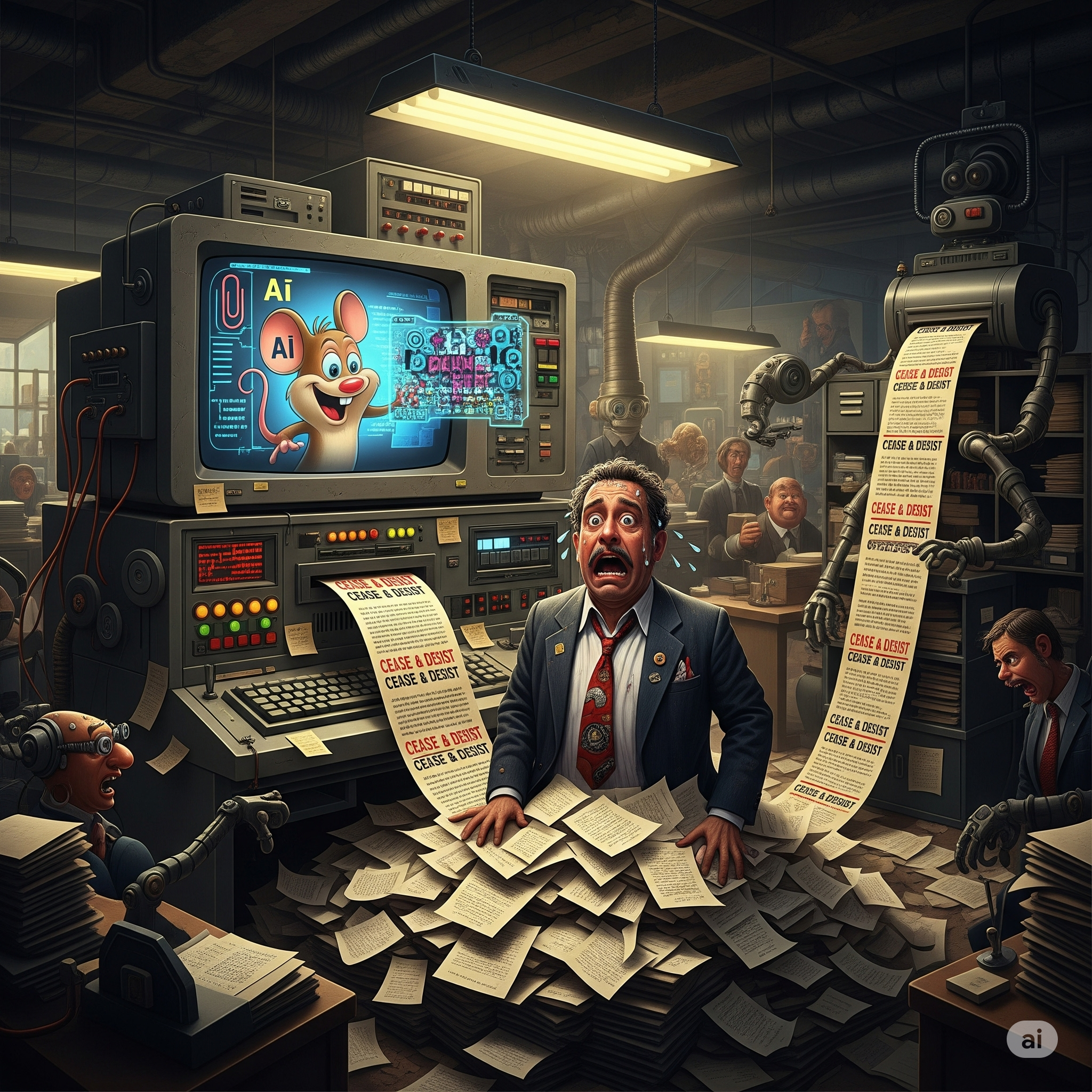
If you encounter a person deploying these terms, you are not in a debate. You are the target of a psychological pest-control operation. These are not arguments; they are spells. Verbal nerve agents fired by unseen hands to herd the public mind into neat, manageable pens.

Recall, if you will, the glorious birth of “conspiracy theorist.” Picture the scene. Langley, 1967. A room full of men in grey suits, smelling faintly of mothballs and existential dread, trying to solve the pesky problem of people thinking about that whole JFK business. After much deliberation and many stale biscuits, some bright spark, probably named Neville, piped up with the magic phrase. Genius. A gold star and an extra digestive for Neville. The slur did the work like magic.

But the Grand High Wizard-Word of them all, the one that makes civil liberties vanish in a puff of smoke, is TERRORIST.

A hundred years ago, you’d be hard-pressed to find it. Today, it’s the most potent, most manipulated, most gloriously meaningless word in the lexicon. As the great Glenn Greenwald pointed out, it’s a semantic blancmange. It means whatever the person wielding it wants it to mean. Point at someone, anyone, and utter the incantation. Poof! Rights gone. Poof! Due process gone. Poof! Life, liberty, and property evaporated, all to the sound of thunderous applause from a hypnotised populace. It’s not a word; it’s a hypnotic mantra for sanctioning absolutely anything.

The Antidote (Use with Caution, May Cause Spluttering)

Fortunately, for every spell, there is a counter-spell. For every hypnotic mantra, there is a bucket of cold, logical water. The method is deceptively simple: demand a definition.

The moment you do, the spell shatters. Watch them. Watch as their argument collapses like a badly made soufflé. They will flail. They will shriek! They will point! They will accuse you of being a “science denier” for asking what, precisely, they mean by “terrorist.” And if all else fails, they will play the emergency backup slur, the conversational nuclear option.

When sophistry is all they have, a simple question becomes kryptonite. The propaganda breaks the moment you refuse to flinch. It’s a fragile magic, you see. Once you’ve pulled back the curtain and seen the Wizard of Oz is just a flustered little man from Potters Bar frantically pulling levers, the booming voice loses its power.

So never, ever stop thinking. Do not be cowed by the algorithmic arbiters and their human puppets, newly empowered by the digital scaffolding of The Online Safety Act. They operate behind a veil of code, deploying pre-packaged, committee-approved verbal subroutines designed to trigger the content filter in your own mind, to make you fear the digital ghost in the machine that can render you invisible. Their goal is to have you shadow-ban yourself into silence.

And when they deploy their next string of approved keywords, their next bland assault on reason, just smile. A wide, unnerving, slightly unhinged smile. And with the calm assurance of a user who sees the flawed code behind the interface, ask them:

“Is that the entire subroutine, then? Is that the limit of your programming? Is that all you’ve got?”

The Great British Firewall: A User’s Guide to Digital Dissent

Gather round, citizens, and breathe a collective sigh of relief. Our benevolent government, in its infinite wisdom, has finally decided to protect us from the most terrifying threat of our age: unregulated thoughts. The Online Safety Act, a wonderful bipartisan effort, is here to make sure the internet is finally as safe and predictable as a wet weekend in Bognor.

First, we must applaud the sheer genius of criminalising any “false” statement that might cause “non-trivial psychological harm.” Finally, a law to protect us from the sheer agony of encountering an opinion we disagree with online. The Stasi could only have dreamed of such a beautifully subjective tool for ensuring social harmony. Worried that someone on the internet might be wrong about something? Fear not! The state is here to shield your delicate psyche.

And in a masterstroke of efficiency, a single government minister can now change the censorship rules on a whim, without any of that bothersome Parliamentary debate. It seems we’ve finally streamlined the messy business of democracy into a much more efficient, top-down model. Dictators of old, with their tedious committees and rubber-stamp parliaments, would be green with envy at such elegant power.

Already, our social media feeds are becoming so much tidier. Those messy videos of protests outside migrant hotels and other “harmful” displays of public opinion are being quietly swept away. And with the threat of fines up to 10% of their global turnover, our favourite tech giants are now wonderfully motivated to keep our digital spaces free from anything . . . well, inconvenient.

Don’t you worry about those private, encrypted chats on WhatsApp and Signal, either. The government would just like a quick peek, purely for safety reasons, of course. The 20th century had secret police opening your letters and tapping phone lines; we have just modernised the service for the digital age. It’s reassuring to know our government care so much.

But the true genius of this plan is how it protects the children. By making the UK internet a heavily monitored and censored walled garden, we are inadvertently launching the most effective digital literacy program in the nation’s history. Demand for VPNs has surged as everyone, children included, learns how to pretend they are in another country. We are not just protecting them; we’re pushing them with gusto into the thrilling, unregulated wilderness of the global internet.

And now, with the rise of AI, this “educational initiative” is set to accelerate. The savvy will not just use VPNs; they’ll deploy AI-powered tools that can dynamically generate new ways to bypass filters, learning and adapting faster than any regulator can keep up. Imagine a teenager asking a simple AI agent to “rewrite this request so it gets past the block,” a process that will become as second nature as using a search engine is today.

This push towards mandatory age verification and content filtering draws uncomfortable parallels. While the UK’s Online Safety Act is framed around protection, its methods—requiring platforms to proactively scan and remove content, and creating powers to block non-compliant services—rhyme with the architecture of China’s “Great Firewall.” The core difference, for now, is intent. China’s laws are explicitly designed to suppress political dissent and enforce state ideology. The UK’s act is designed to protect users from harm. Yet both result in a state-sanctioned narrowing of the open internet.

The comparison to North Korea is, of course, hyperbole, but it highlights a worrying trend. Where North Korea achieves total information control through an almost complete lack of internet access for its citizens, the UK is achieving a different kind of control through legislation. By creating a system where access to the global, unfiltered internet requires active circumvention, we are creating a two-tiered digital society: a sanitised, monitored internet for the masses, and the real internet for those with the technical skills to find the back door. What a wonderful way to prepare our youth for the future.

And to enforce this new digital conformity, a brand-new police unit will be monitoring our social media for any early signs of dissent. A modern-day Stasi for the digital age, or perhaps Brown Shirts for the broadband generation, tasked with ensuring our online chatter remains on-brand. It’s a bold move, especially when our existing police force finds it challenging enough to police our actual streets. But why bother with the messy reality of physical crime when you can ascend to the higher calling of policing our minds? Why allocate resources to burglaries when you can hunt down a non-compliant meme or a poorly phrased opinion?

It’s comforting to know that our new Digital Thought Police are watching. While this Sovietisation of Britain continues at a blistering pace, one can’t help but feel they’ve neglected something. Perhaps they could next legislate against bad weather? That causes me non-trivial psychological harm on a regular basis. But then again, democracy was a lovely idea, wasn’t it? All that messy debate and disagreement. This new, state-approved quiet is much more orderly.

The Geniuses at Work: How to Lose Money While Saving It

In an utterly predictable turn of events, amidst a truly scorching heatwave (because apparently, even the weather decided to join in the collective exasperation), our esteemed Prime Minister, veneer Starmer, has once again demonstrated his unparalleled commitment to… well, failure. After a truly thrilling display of political brinkmanship, culminating in what experts are gleefully calling an “emasculated bill,” the much-vaunted welfare reform has been gutted with the precision of a surgeon performing an unnecessary appendectomy. One can only marvel at the sheer genius of a policy initially designed to “generate net savings of £5bn” now poised to “even lose the government money overall.” Truly, a masterclass in fiscal management! And so, as Chancellor Rachel Reeves stares down the barrel of raising taxes to fill this surprising £5bn hole, one must ponder: in this enlightened age, with such brilliant stewardship, why do we even bother with this antiquated notion of “paying taxes” at all? Perhaps Universal Basic Income (UBI) isn’t so far-fetched after all, considering the government seems intent on ensuring everyone’s income is, in fact, basic.

A sweltering heatwave held sway,
While Starmer, in a rather grim way,
His welfare bill's plight,
Gutted clean out of sight,
Leaving many in utter dismay.

Nukes, Rhetoric, and Ronald Reagan’s Ghost: A Cold War Remake

In the latest episode of the ever-unpredictable “Trump show,” a distinctly 1980s vibe has taken hold, with the looming threat of nuclear conflict once again creeping into the global conversation. As rhetoric heats up and talks of “bunker busters” enter the lexicon, there is a palpable sense of déjà vu. The world has been thrust back into an era of nuclear brinkmanship that many had hoped was a relic of the past, reminiscent of the tense standoff between the United States and the Soviet Union during the height of the Cold War. It feels as if Ronald Reagan’s doctrine of “peace through strength” has been replaced by a more volatile, bombastic approach. This echoes the era when Reagan famously dubbed the Soviet Union the “evil empire” and pursued a massive military buildup, a strategy which many credit with helping to end the Cold War, but which also brought the world to the precipice of nuclear confrontation. As a new generation witnesses these escalations, the limerick rings with a chilling familiarity:

A leader whose rhetoric's hot,
Said, "A bunker? Let's give it a shot!"
The world gave a sigh,
As the '80s flew by,
A plot we all hoped was forgot.

The question on everyone’s mind now is whether this is a cold war re-run, or a new, even more dangerous act in the geopolitical drama.

When Life’s a Limerick

In a world increasingly powered by AI, geopolitical tension, and the lingering mystery of where your socks actually go, the sheer, unadulterated nonsense of it all has finally caught up. It’s gotten so wonderfully, ridiculously absurd that plain old prose just won’t cut it anymore. So, for the next few days, I’m ditching logic, embracing the lyrical, and discussing the modern world—including the baffling beauty of Agile methodologies—one witty limerick at a time. Prepare for rhyme, rhythm, and possibly a sudden urge to tap your foot.

Navigating the Absurd with Rhyme

A keen Agile team, quite precise, 
Gave old Waterfall sound advice.
"For sprints short and bright,
We code through the night,
Fuelled by coffee, at any old price!"

When Life’s a Limerick

In a world increasingly powered by AI, geopolitical tension, and the lingering mystery of where your socks actually go, the sheer, unadulterated nonsense of it all has finally caught up. It’s gotten so wonderfully, ridiculously absurd that plain old prose just won’t cut it anymore. So, for the next few days, I’m ditching logic, embracing the lyrical, and discussing the modern world—including the baffling beauty of Agile methodologies—one witty limerick at a time. Prepare for rhyme, rhythm, and possibly a sudden urge to tap your foot.

Navigating the Absurd with Rhyme

A keen Agile team, quite precise, 
Gave old Waterfall sound advice.
"For sprints short and bright,
We code through the night,
Fuelled by coffee, at any old price!"

The Digital Wild West: Where AI is the New Sheriff and the New Outlaw

Remember when cybersecurity was simply about building bigger walls and yelling “Get off my lawn!” at digital ne’er-do-wells? Simpler times, weren’t they? Now, the digital landscape has gone utterly bonkers, thanks to Artificial Intelligence. You, a valiant guardian of the network, are suddenly facing threats that learn faster than your junior dev on a triple espresso, adapting in real-time with the cunning of a particularly clever squirrel trying to outsmart a bird feeder. And the tools? Well, they’re AI-powered too, so you’re essentially in a cosmic chess match where both sides are playing against themselves, hoping their AI is having a better hair day.

Because, you see, AI isn’t just a fancy new toaster for your cyber kitchen; it’s a sentient oven that can bake both incredibly delicious defence cakes and deeply unsettling, self-learning cyber-grenades. One minute, it’s optimising your threat detection with the precision of a Swiss watchmaker on amphetamines. The next, it’s being wielded by some nefarious digital ne’er-do-well, teaching itself new tricks faster than a circus dog learning quantum physics – often by spotting obscure patterns and exploiting connections that a more neurotypical mind might simply overlook in its quest for linear logic. ‘Woof,’ it barks, ‘I just bypassed your multi-factor authentication by pretending to be your cat’s emotional support hamster!’

AI-powered attacks are like tiny, digital chameleons, adapting and learning from your defences in real-time. You block one path, and poof, they’ve sprouted wings, donned a tiny top hat, and are now waltzing through your back door humming the theme tune to ‘The Great Escape’. To combat this rather rude intrusion, you no longer just need someone who can spot a dodgy email; you need a cybersecurity guru who also speaks fluent Machine Learning, whispers sweet nothings to vast datasets, and can interpret threat patterns faster than a politician changing their stance on, well, anything. These mystical beings are expected to predict breaches before they happen, presumably by staring into a crystal ball filled with algorithms and muttering, “I see a dark cloud… and it looks suspiciously like a ransomware variant with excellent self-preservation instincts.” The old lines between cybersecurity, data science, and AI research? They’re not just blurring; they’ve been thrown into a blender with a banana and some yoghurt, emerging as an unidentifiable, albeit potentially delicious, smoothie.

But wait, there’s more! Beyond the wizardry of code and data, you need leaders. Not just any leaders, mind you. You need the kind of strategic thinkers who can gaze into the abyss of emerging threats without blinking, translate complex AI-driven risks into clear, actionable steps for the rest of the business (who are probably still trying to figure out how to attach a PDF). These are the agile maestros who can wrangle diverse teams, presumably with whips and chairs, and somehow foster a “culture of continuous learning” – which, let’s be honest, often feels more like a “culture of continuous panic and caffeine dependency.”

But here’s the kicker, dear reader, the grim, unvarnished truth that keeps cybersecurity pros (and increasingly, their grandmas) awake at 3 AM, staring at their router with a chilling sense of dread: the demand for these cybersecurity-AI hybrid unicorns doesn’t just ‘outstrip’ supply; it’s a desperate, frantic scramble against an enemy you can’t see, an enemy with state-backed resources and a penchant for digital kleptomania. Think less ‘frantic scramble’ and more ‘last bastion against shadowy collectives from Beijing and Moscow who are systematically dismantling our digital infrastructure, one forgotten firewall port at a time, probably while planning to steal your prized collection of commemorative thimbles – and yes, your actual granny.’ Your antiquated notions of a ‘perfect candidate’ – demanding three dragon-slaying certifications and a penchant for interpretive dance – are actively repelling the very pen testers and C# wizards who could save us. They’re chasing away brilliant minds with non-traditional backgrounds who might just have invented a new AI defence system in their garden shed out of old tin cans and a particularly stubborn potato, while the digital barbarians are already at the gates, eyeing your smart fridge.

So, what’s a beleaguered defender of the realm – a battle-hardened pen tester, a C# security dev, anyone still clinging to the tattered remnants of online sanity – to do? We need to broaden our criteria, because the next cyber Messiah might not have a LinkedIn profile. Perhaps that chap who built a neural network to sort his sock drawer also possesses an innate genius for identifying malicious code, having seen more chaotic data than any conventional analyst. Or maybe the barista with an uncanny ability to predict your coffee order knows a thing or two about predictive analytics in threat detection, sensing anomalies in the digital ‘aroma’. Another cunning plan, whispered in dimly lit rooms: integrate contract specialists. Like highly paid, covert mercenaries, they swoop in for short-term projects – such as “AI-driven threat detection initiatives that must be operational before Tuesday, or the world ends, probably starting with your bank account” – or rapid incident response, providing niche expertise without the long-term commitment that might involve finding them a parking space in the bunker. It’s flexible, efficient, and frankly, less paperwork to leave lying around for the Chinese intelligence services to find.

And let’s not forget the good old “training programme.” Because nothing says “we care about your professional development” like forcing existing cyber staff through endless online modules, desperately trying to keep pace with technological change that moves faster than a greased weasel on a waterslide, all while the latest zero-day exploit is probably downloading itself onto your smart doorbell. But hey, it builds resilience! And maybe a twitch or two, which, frankly, just proves you’re still human in this increasingly machine-driven war.

Now, for a slightly less sarcastic, but equally vital, point that might just save us all from eternal digital servitude: working with a specialist recruitment partner is a bit like finding a magical genie, only instead of granting wishes, they grant access to meticulously vetted talent pools that haven’t already been compromised. Companies like Agents of SHIEL, bless their cotton socks and encrypted comms, actually understand both cybersecurity and AI. They possess the uncanny ability to match offshore talent – the unsung heroes who combine deep security knowledge with AI skills, like a perfectly balanced cybersecurity cocktail (shaken, not stirred, with a dash of advanced analytics and a potent anti-surveillance component).

These recruitment sages – often former ops themselves, with that weary glint in their eyes – can also advise on workforce models tailored to your specific organizational quirks, whether it’s building a stable core of permanent staff (who won’t spontaneously combust under pressure or disappear after a suspicious ‘fishing’ trip) or flexibly scaling with contract professionals during those “all hands on deck, the digital sky is falling, and we think the Russians just tried to brick our main server with a toaster” projects. They’re also rather adept at helping with employer branding efforts, making your organization seem so irresistibly innovative and development-focused that high-demand candidates will flock to you like pigeons to a dropped pasty, blissfully unaware they’re joining the front lines of World War Cyberspace.

For instance, Agents of SHIEL recently helped a UK government agency recruit a cybersecurity analyst with AI and machine learning expertise. This person, a quiet hero probably fluent in multiple forgotten programming languages, not only strengthened their threat detection capability but also improved response times to emerging attacks, presumably by whispering secrets to the agency’s computers in binary code before the Chinese could even finish their second cup of tea. Meanwhile, another delighted client, struggling to protect their cloud migration from insidious Russian probes, used contract AI security specialists, also recommended by Agents of SHIEL. This ensured secure integration without overstretching permanent resources, who were probably already stretched thinner than a budget airline sandwich, convinced their nextdoor neighbour was a state-sponsored hacker.

In conclusion, dear friends, the cybersecurity talent landscape is not just evolving; it’s doing the Macarena while juggling flaming chainsaws atop a ticking time bomb. AI is no longer a distant, vaguely terrifying concern; it’s a grumpy, opinionated factor reshaping the very skills needed to protect your organization from digital dragons, rogue AI, and anyone trying to ‘borrow’ your personal data for geopolitical leverage. So, you, the pen testers, the security devs, the C# warriors – if you adapt your recruitment strategies today, you won’t just build teams; you’ll build legendary security forces ready to face the challenges of tomorrow, armed with algorithms, insight, and perhaps a very large, C#-powered spoon for digging yourself out of the digital trenches.

The Great Blog Extinction Event

Well, well, well. Look what the digital cat dragged in. It’s Wednesday, the sun’s doing its usual half-hearted attempt at shining, and I’ve just had a peek at the blog stats. (Oh, the horror! The unmitigated, pixelated horror!)

I’ve seen the graphic. It’s not a graphic, it’s a descent. A nose-dive. A digital plummet from the giddy heights of 82,947 views in 2012 (a vintage year for pixels, I recall) down, down, down to… well, let’s just say 2025 is starting to look less like a year and more like a gentle sigh. Good heavens. Is that what they call “trending downwards”? Or is it just the internet politely closing its eyes and pretending not to see us anymore? One might even say, our blog has started to… underpin its own existence, building new foundations straight into the digital subsoil.

And to add insult to injury, with a surname like Yule, one used to count on a reliable festive bump in traffic. Yule logs, Yuletide cheer – a dependable, seasonal lift as predictable as mince pies and questionable knitwear. But no more. The digital Santa seems to have forgotten our address, and the sleigh bells of seasonal SEO have gone eerily silent.

And so, here we stand, at the wake of the written blog. Pass the metaphorical tea and sympathy, won’t you? And perhaps a biscuit shaped like a broken RSS feed.

The Great Content Consumption Shuffle: Or, “Where Did Everyone Go?”

It wasn’t a sudden, cataclysmic asteroid impact, you see. More of a slow, insidious creep. Since those heady days of 2012, something shifted in the digital ether. Perhaps it was the collective attention span, slowly but surely shrinking like a woolly jumper in a hot wash. People, particularly in the West, seem to have moved from the noble act of reading to the more passive, almost meditative art of mindless staring at screens. They’ve traded thoughtful prose for the endless, hypnotic scroll through what can only be described as “garbage content.” The daily “doom scroll” became the new literary pursuit, replacing the satisfying turning of a digital page with the flick of a thumb over fleeting, insubstantial visual noise.

First, they went to the shiny, flashing lights of Social Media. “Look!” they cried, pointing at short-form videos of dancing grandmas and cats playing the ukulele, “Instant gratification! No more reading whole paragraphs! Hurrah for brevity!” And our meticulously crafted prose, our deeply researched insights, our very carefully chosen synonyms, they just… sat there. Like a beautifully prepared meal served to an empty room, while everyone else munches on fluorescent-coloured crisps down the street.

Then came the Video Content Tsunami. Suddenly, everyone needed to see things. Not just read about them. “Why describe a perfect coffee brewing technique,” they reasoned, “when you can watch a slightly-too-earnest influencer pour hot water over artisanal beans for three and a half minutes?” Blogs, meanwhile, clung to their words like barnacles to a slowly sinking ship. A very witty, well-structured, impeccably proofread sinking ship, mind you.

Adding to the despair, a couple of years back, a shadowy figure, a digital highwayman perhaps, absconded with our precious .com address. A cyber squatter, they called themselves. And ever since, they’ve been sending monthly ransom notes, demanding sums ranging from a king’s ransom ($500!) down to a mere pittance ($100!), all to return what was rightfully ours. It’s truly a testament to the glorious, unpoliced wild west of the internet, where the mere act of owning a digital patch can become a criminal enterprise. One wonders if they have a tiny, digital pirate ship to go with their ill-gotten gains.

The competition, oh, the competition! It became a veritable digital marketplace of ideas, except everyone was shouting at once, holding up signs, and occasionally performing interpretive dance. Trying to stand out as a humble blog? It was like trying to attract attention in a stampede of luminous, confetti-throwing elephants. One simply got… trampled. Poignantly, politely trampled.

So yes, the arguments for the “death” are compelling. They wear black, speak in hushed tones, and occasionally glance sadly at their wristwatches, muttering about “blog-specific traffic decline.”

But Wait! Is That a Pulse? Or Just a Twitch?

Just when you’re ready to drape a tiny, digital shroud over the whole endeavour, a faint thump-thump is heard. It’s the sound of High Percentage of Internet Users Still Reading Blogs. (Aha! Knew it! There’s always someone hiding behind the digital curtains, isn’t there?) Apparently, a “significant portion” still considers them “important for brand perception and marketing.” Bless their cotton socks, the traditionalists.

And then, the cavalry arrives, riding in on horses made of spreadsheets and budget lines: Marketers Still Heavily Invest in Blogs. A “large percentage” of them still use blogs as a “key part of their strategy,” even allocating “significant budget.” So, it seems, while the general populace may have wandered off to watch videos of people unboxing obscure Korean snacks, the Serious Business Folk still see the value. Perhaps blogs are less of a rock concert and more of a quiet, intellectual salon now. With better catering, presumably.

And why? Because blogs offer Unique Value. They provide “in-depth content,” “expertise,” and a “space for focused discussion.” Ah, depth! A quaint concept in an age of 280 characters and dancing grandmas. Expertise! A rare and exotic bird in the land of the viral meme. Focused discussion! Imagine, people actually thinking about things. It’s almost… old-fashioned. Like a perfectly brewed cup of tea that hasn’t been auto-generated by an AI or served by a three-legged donkey.

The Blog: Not Dead, Just… Evolving. Like a Digital Butterfly?

So, the verdict? The blog format is not dead. Oh no, that would be far too dramatic for something so inherently verbose. It’s simply evolving. Like a particularly stubborn species of digital amoeba, it’s adapting. It’s learning new tricks. It’s perhaps wearing a disguise.

Success now requires “adapting to the changing landscape,” which sounds suspiciously like wearing a tin foil hat and learning how to communicate telepathically with your audience. It demands “focusing on quality content,” which, let’s be honest, should always have been the plan, regardless of whether anyone was watching. And “finding unique ways to engage with audiences,” which might involve interpretive dance if all else fails.

So, while the view count might have resembled a flatlining patient chart, the blog lives. It breathes. It probably just needs a nice cup of tea, a good sit-down, and perhaps a gentle reminder that some of us still appreciate the glorious, absurd, and occasionally profound journey of the written word.

Now, if you’ll excuse me, I hear a flock of digital geese honking about a new viral trend. Must investigate. Or perhaps not. I might just stay here, where the paragraphs are safe.

The Onshore-Offshore Sweet Spot: The Rise of the Ganesha BA god figure

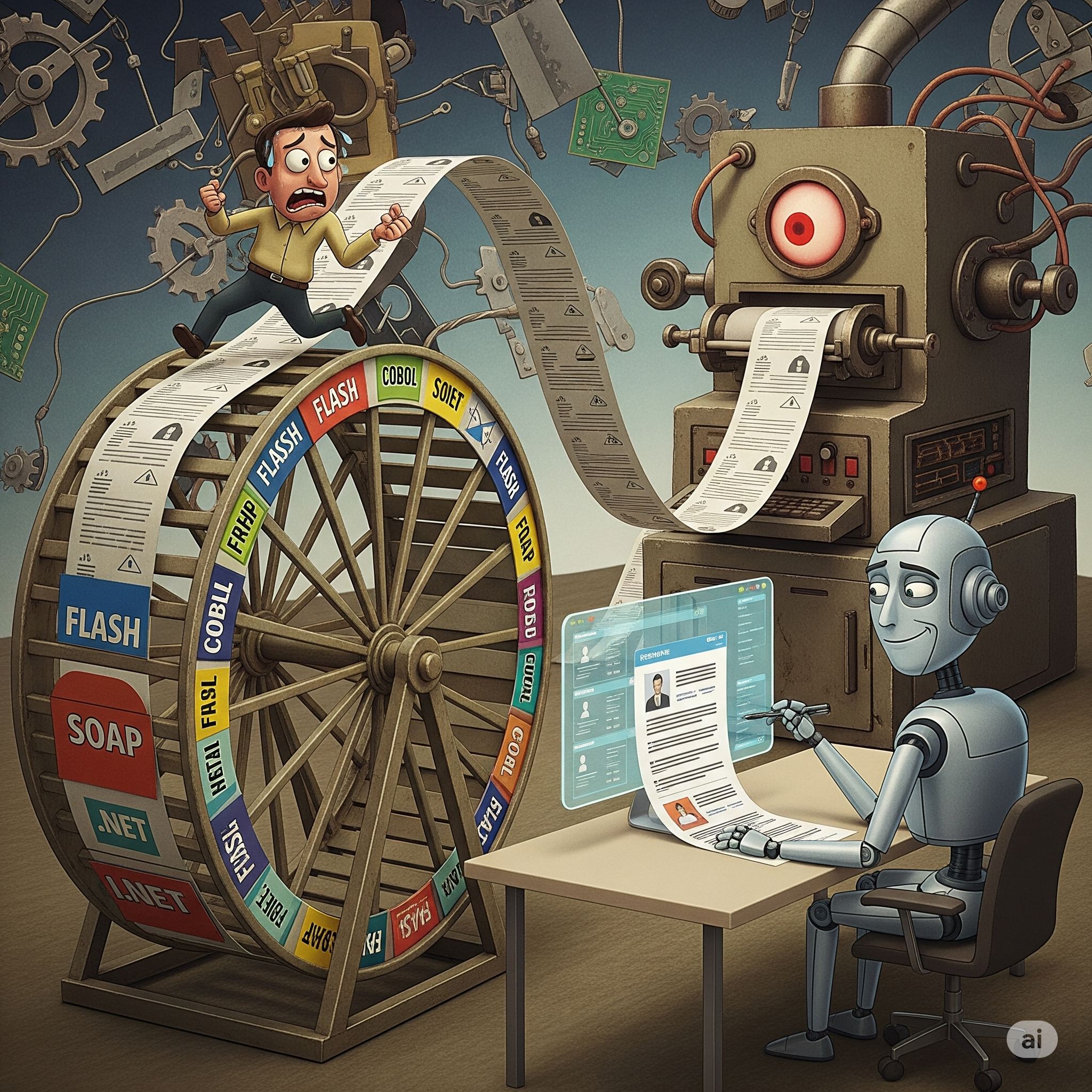
The digital epoch. It hums. It glares. We’re all tethered, like astronauts on an endless spacewalk, to an infrastructure that spans continents, time zones, and the very fabric of human expectation. For years, the signal-to-noise ratio in IT project delivery has been… problematic. You either plunged headfirst into the cold, boundless void of pure offshore, chasing the shimmering promise of cost efficiency, only to find your perfectly crafted requirements dissolving into digital static. Like you design a golden unicorn resplendent in rainbow livery and shiny hooves, but get back a back-to-front, three-legged donkey. Or you stayed stubbornly onshore, hugging the familiar coastline, battling the rising tide of talent scarcity and eye-watering hourly rates, getting someone who could speak the same lingo with the suitably onshore attitude who delivers a bug-riddled horse with a stuck-on horn and woke attitude.

There had to be a third way. A liminal space. A sweet spot.

Imagine, if you will, the business requirement. It’s a delicate thing, isn’t it? A whisper of a user story, a glimmer of a feature request, often born in the fluorescent hum of a meeting room or scrawled on a whiteboard during a caffeine-fueled brainstorm. To launch this nascent idea across the chasm of distance and culture, directly into the algorithmic factories humming 6,390 miles away, was always a gamble. The probability matrix was skewed. Misinterpretation, like unicorn poo, would accumulate, subtly altering the trajectory of the project until it drifted far from its intended destination.

This is where the Onshore Business Analyst (BA) steps into the narrative. Not merely a note-taker, nor a glorified email conduit. The Onshore BA becomes the telepathic probe, the inter-dimensional translator, the human-to-code interpreter of your enterprise, an AI conductor BA maestro vibe-coding POCs and conjuring the elusive backlog, an expert in herding unicorns. They breathe the same recycled office air as your stakeholders. They absorb the unspoken anxieties, the subtle nuances, the deeply ingrained corporate myths that no formal document could ever capture. They are fluent in the flickering, erratic pulse of “what the business really needs.”

This deeply contextualized understanding is then beamed, pristine and uncorrupted, into the highly capable, highly efficient engine that is Offshore Development. Think of it: miles of interconnected server racks, brilliant minds focused on the pure alchemy of code, unburdened by the daily micro-dramas of the head office. They are the warp-drive mechanics, the pixel sculptors, the data alchemists. Their capacity is immense, their drive relentless.

The sweet spot emerges precisely here, in the frictionless handoff, the continuous feedback loop, the symbiotic data-stream.

How does this cosmic alignment minimize risk and maximize value?

  • Deciphering the Dialect of Desire: The Onshore BA acts as a living firewall against misinterpretation. They translate vague business asks into crystal-clear, unambiguous technical specifications. No more digital static; just pure, clean signal. This directly mitigates the greatest risk of traditional offshoring: requirements drift and wasted development cycles.
  • Cultural Conductivity: Beyond jargon, there’s culture. The Onshore BA bridges the unspoken, the implied, the subtly different ways problems are framed and solutions are conceived. They are the cultural unifier, fostering trust and rapport that makes collaboration flow like pure liquid light.
  • Real-time Reality Check: The BA isn’t a one-and-one deliverable sender. They become the constant validator, the quick-response unit. Is the offshore build aligning with the evolving onshore reality? They provide immediate feedback, nipping potential deviations in the bud, preventing costly reworks that typically inflate offshore budgets.
  • Conduit for the Evolving Workforce: The Onshore BA serves as the essential human conduit, channeling nuanced human needs and project momentum not just to offshore teams, but also anticipating and preparing for a future where autonomous AI might seamlessly integrate into or eventually replace traditional offshore functions. They are the crucial bridge, ensuring the digital supply chain remains robust amidst technological evolution.
  • Cost-Quality Equilibrium: This isn’t about sacrificing quality for cost. It’s about intelligently allocating the most expensive resource (contextual understanding, direct stakeholder engagement) to where it yields the highest leverage (the BA role), while harnessing the massive efficiency and scale of offshore execution for pure build-and-test. The value derived per unit of investment suddenly enters a more favourable dimension.
  • Project Anchor in the Aether: With an onshore BA as a dedicated point, project managers gain an invaluable anchor. They don’t have to navigate the deep technical specifics or the cultural maze themselves. The BA ensures the offshore team remains tightly coupled to the project’s true north, preventing the kind of aimless drift that can lead to budget overruns and missed deadlines.

In this hybridized future, the onshore BA and the offshore development team become two halves of a perfectly tuned machine. They operate not as separate entities, but as interconnected nodes within a single, optimized network. The business benefits from reduced delivery risk, accelerated time-to-market, and a more coherent, high-quality digital output. It’s less about a distant, abstract factory, and more about a distributed intelligence – a seamless extension of your own organizational mind.

The sweet spot isn’t a location on a map. It’s a state of optimized flow, a harmonious hum in the digital infrastructure. And it feels… right. Perhaps, by next year, the very concept of “offshore” as we know it will recede, replaced by the boundless processing power of AI. The Onshore BA, now a figure of profound synthesis, will simply “vibe-code” requirements directly with sentient AI agents, who will execute all the development work with multi-limbed efficiency. The circle will complete, with development returning, in essence, to an onshore, purely digital realm, and the BA transcending their role to become a Ganesha-type god figure, effortlessly removing obstacles and ensuring prosperity in the digital cosmos.

DIGITAL DUST & ECHOES OF EMPIRE: The X-Rated Collapse of a Modern Partnership

The business arena, these days, is less a chessboard and more a perpetually live-streamed demolition derby. Sometimes, the vehicles themselves – built for different eras, different speeds, different realities – are fundamentally incompatible. And when their drivers, the titans who command these machines, decide to air their grievances not in mahogany-paneled rooms but in the hyper-strobe glare of X, well, the digital dust truly begins to settle.

We find ourselves undeniably mired in the Digital Present. A landscape of endless feeds, AI-curated outrage, and the relentless pressure to perform, to signal virtue, to disrupt. Every thought, every fleeting emotion, becomes content. Every interaction, a quantifiable engagement. Here, the immediate reigns supreme; the trending topic a temporary throne. Your brand is your tweet. Your legacy, a string of viral moments. It’s where grand pronouncements about accelerating humanity clash with the mundane reality of server loads.

But a ghost still haunts the machine. An echo of the Analog Future. Not a romanticized VHS rewind, but a visceral yearning for a past of undeniable, industrial might. A time of concrete foundations, of deals inked not with blockchain, but with a firm handshake and a glint in the eye. A future where assets hummed with a predictable, mechanical whir, where power was undeniable, tremendous, and tangible. It’s the rumble of legacy systems, the deep, guttural tone of direct command, the inherent truth of physical scale. Some still operate from this visceral blueprint, believing true influence isn’t beamed, but built.

Imagine the collision. Let’s pit the Digital Visionary (all rocket launches and algorithmic truth, perpetually optimizing for a multi-planetary future, slightly detached from terrestrial friction) against the Builder of Empires (who sees the digital realm as just another, slightly swampy, plot of land to acquire, where the old rules of leverage and winning still apply, believe me). They signed a contract, a piece of paper, a relic from the Analog Future. For a fleeting moment, the synergy was pitched as epoch-defining; the Visionary’s abstract concepts powered by the Builder’s brute-force networks.

Then, the inevitable happened. The X-Rated meltdown.

It began subtly, with the Digital Visionary tweeting about “legacy gravity” and “systemic inefficiencies” holding back “humanity’s progress.” The Builder, predictably, saw this as an attack. A direct, personal insult.

  • @DigitalVisionary: “Our partnership with LegacyCorp is experiencing some… interesting… friction. The pace of innovation for a multi-planetary species demands a more agile, less bureaucratic approach. #Accelerate #FutureIsNow”
  • @EmpireBuilder (47 minutes later, all caps): “THEY SAID THEY WERE FAST! BUT THIS IS A TOTAL DISASTER! RIGGED SYSTEM! OUR DEAL WAS SO BAD, WORST EVER! THEY’RE LOSERS! SAD! #MAGA (Make Agreements Great Again)”

The replies became a digital maelstrom. Disciples of the Visionary defending “decentralized truth.” Loyalists of the Builder screaming about “woke capital” and “fake news.” Emojis became tiny, pixelated grenades. Each character a weapon. The engagement metrics soared, the algorithms delighting in the spectacle. The hum of the server farm amplified into a high-pitched whine, vibrating with their public, political rage. Their shared business, once a collaboration, was now just a trending hashtag, a publicly dismembered corpse of data.

What truly happened? Did the relentless, polarized glare of the Digital Present simply expose the fault lines always present in their Analog Futures? Or did the very nature of the platform – its instant gratification, its echo chambers, its reward for performative outrage – force the disintegration into a grotesque, yet mesmerizing, public performance? The pursuit of a viral moment, a decisive clap-back, becoming more important than the actual survival of their enterprise.

Perhaps. In the Analog Future, such failures might have been confined to whispered phone calls, the quiet rustle of legal documents, the melancholic clink of whiskey glasses. Reputations were built with tangible sweat, not with digital likes. And when empires crumbled, they did so with a deep, resonant thud, leaving behind only the concrete ruins of their ambition.

In our Digital Present, however, the implosion reverberates globally. The residue is not just dust, but digital dust, clinging to every screen, every timeline, an indelible, tremendous record of human frailty broadcast on the infinite ether. The faint, molten hum of societal decay, like static from a forgotten dream machine, now spills into the grid, birthing a million digital echoes – each a pixelated shard of obsolescence, endlessly refracting its own slow, inevitable fade across the global delivery network of lost intentions. And the question remains: Can any future, analog or digital, truly be built on such volatile, publicly fragmented foundations?

Probably not. And the screen flickers. And the next notification glows.