Well, butter my biscuits and call me surprised! Apple, the company that practically invented the walled garden, has just invited Google, its long-standing frenemy, over for a playdate. And not just any playdate – an AI-powered, privacy-focused, game-changing kind of playdate.
Remember when Apple cozied up to OpenAI, and everyone assumed ChatGPT was going to be the belle of the Siri-ball? Turns out, Apple was playing the field, secretly testing both ChatGPT and Google’s Gemini AI. And guess who stole the show? Yep, Gemini. Apparently, it’s better at whispering sweet nothings into Siri’s ear, taking notes like a diligent personal assistant, and generally being the brains of the operation.
So, what’s in it for these tech titans?
Apple’s Angle:
Supercharged Siri: Let’s face it, Siri’s been needing a brain transplant for a while now. Gemini could be the upgrade that finally makes her a worthy contender against Alexa and Google Assistant.
Privacy Prowess: By keeping Gemini on-device, Apple reinforces its commitment to privacy, a major selling point for its users.
Strategic Power Play: This move gives Apple leverage in the AI game, potentially attracting developers eager to build for a platform with cutting-edge AI capabilities.
Google’s Gains:
iPhone Invasion: Millions of iPhones suddenly become potential Gemini playgrounds. That’s a massive user base for Google to tap into.
AI Dominance: This partnership solidifies Google’s position as a leader in the AI space, showing that even its rivals recognize the power of Gemini.
Data Goldmine (Maybe?): While Apple insists on on-device processing, Google might still glean valuable insights from anonymized usage patterns.
The Bigger Picture:
This unexpected alliance could shake up the entire tech landscape. Imagine a world where your iPhone understands your needs before you even ask, where your notes practically write themselves, and where privacy isn’t an afterthought but a core feature.
But let’s not get ahead of ourselves. There are still questions to be answered. How will this impact Apple’s relationship with OpenAI? Will Google play nice with Apple’s walled garden? And most importantly, will Siri finally stop misinterpreting our requests for pizza as a desire to hear the mating call of a Peruvian tree frog?
Only time will tell. But one thing’s for sure: this Apple-Google AI mashup is a plot twist no one saw coming. And it’s going to be a wild ride.
Remember those idyllic childhood road trips? Wind in your hair, singalongs to cheesy pop songs, the open road stretching before you like a promise of adventure? Yeah, me neither. Because family road trips were actually a special kind of hell, a purgatory on wheels where boredom, bickering, and the lingering scent of questionable snacks reigned supreme.
Imagine that road trip…but it’s your Agile project. And suddenly, those childhood traumas feel like a blissful picnic in comparison.
Mile 1: “Are We There Yet?” Begins the Chorus of Impatience. You’ve barely pulled out of the driveway, the engine still warming up, when the stakeholders start their incessant chirping. “What’s the ETA on that feature?” “Can we get a demo…like, now?” “Can you send me the roadmap…” It’s like being trapped in a car with a flock of over-eager pigeons, all vying for your attention.
Mile 5: Welcome to the Parking Lot of Broken Dreams. Ah, dependencies. Those delightful little roadblocks that bring your project to a screeching halt. You envisioned a smooth, streamlined workflow, a symphony of collaboration. Instead, you’re stuck in a standstill, waiting for that other team to deliver their API, which, by the way, is “almost ready.” Just like it was last week. And the week before that.
Mile 10: Granny’s Legacy Explodes (and she has been saving that since Mile 1). Remember that ancient, creaky legacy system you inherited? The one everyone swore was “stable”? Yeah, it just decided to take a nosedive into a digital ditch. Error messages flash like warning beacons, data bleeds out like a wounded animal, and suddenly, your carefully crafted sprint plan looks like a napkin a toddler used to wipe their grubby hands.
Mile 15: The Backseat Brawl for Supremacy. The developers are arguing with the testers about whose fault that bug really is. The designers are engaged in a silent war with the product owner over the placement of a button. And the project manager? They’re frantically juggling a dozen different communication channels, trying to appease stakeholders, mediate conflicts, and prevent the whole project from imploding. It’s like a scene out of Mad Max, but with more Jira tickets and less gasoline.
Mile 20: The Gas Tank of Fiscal Doom Runs Dry. Remember that carefully calculated budget? The one you presented with such confidence? Yeah, it’s evaporating faster than a puddle in the Sahara. Scope creep is a relentless monster, lurking in the shadows, ready to pounce on any unsuspecting feature. And every time a stakeholder utters the phrase “Wouldn’t it be nice if…”, another chunk of your budget goes up in smoke.
Mile 25: The Satnav Has a Meltdown (and Takes Your Sprint Goal with It). You set out with a clear sprint goal, a beacon of hope guiding your way. But somewhere between that impromptu stakeholder meeting and the emergency bug fix, it vanished. Poof. Gone. You’re left staring at a blank roadmap, wondering if you should just pull over and ask a farmer for directions.
Mile 30: The Pungent Aroma of Project Failure Pervades the Air. The team is running on fumes – coffee, Red Bull, and sheer willpower. Morale has plummeted faster than a lead balloon. Burnout is setting in, and even the office dog has started hiding under the desk. And just when you think it can’t get any worse, you realize you’re hopelessly lost. Not just in the project, but in the existential wasteland of Agile gone wrong.
So, are we there yet? Nope. But hey, at least you’re not alone. Misery loves company, right? Now, if you’ll excuse me, I need to find a service station and bathroom.
So, March 5th! You’d think it’d be just another Wednesday, right? Wrong. Like, imagine you’re planning your perfect agile sprint. Sticky notes, colour-coded tasks, the whole shebang. You’ve got your “definition of done” nailed down, your “user stories” are so crisp they could cut glass. You’re feeling good, maybe even a little smug. Then, BAM! Reality creeps up and shoves a branch in your front wheel.
It’s like that time Churchill, back in ’46, on this very day, March 5th, decided to drop the “Iron Curtain” bomb. In Fulton, Missouri, US of A, of all places. Pontificating, “Europe’s getting divided, folks!” Talk about a major pivot. Imagine trying to run an agile project with an iron curtain slicing your team in half. “Sprint review? Nah, we’re building a wall.”
That’s kind of how it feels in the office sometimes? You’re all about “iterative development,” then some global event, or a rogue email, or just the pure, unadulterated chaos of human interaction, throws a wrench into your perfectly planned sprint. Your carefully crafted roadmap becomes a discarded lottery ticket, hopes dashed.
Speaking of chaos, let’s not forget Stalin, bless his dictatorial soul. Died on March 5th, 1953. Cue the “thaw,” or at least, the “slightly less frozen” era. Like, “Hey, maybe we can have a meeting with the other side? Bring (cheesy) snacks and vodka?” You’d think that would be a good thing, right? A moment of peace. But just like with a good agile sprint, the goal posts keep moving. The project evolves, from open warfare to passive-aggressive diplomacy.
The Russian opera ends, the curtain closes, and a new act is being written, with China as the main player. It’s like history’s playing a remix of a bad 80s synth-pop song, and we’re all stuck in the mosh pit. “Agile transformation? More like global geopolitical anxiety transformation.”
But hey, at least it’s National Cheese Doodle Day. So, grab a handful of orange dust, try not to think about the looming global conflicts, and remember: even Stalin had to go eventually. As long as we have the sprint backlog groomed, acceptance criteria defined, and we’re ready for sprint execution! This time, we’re aiming for a zero-blocker sprint! …Unless the printer throws a merge conflict, the Wi-Fi goes into maintenance mode, or the coffee machine enters its ‘refactoring’ phase. But hey, that’s the sprint life! March 5th, we’re ready for your user stories…and your bugs!
Ah, March 3rd, 1876. A momentous date indeed, when Alexander Graham Bell first summoned Mr. Watson through the magic of the telephone. A groundbreaking invention that revolutionized communication and paved the way for countless innovations to come. But amidst our celebration of this technological milestone, let’s turn our attention to a more recent communication phenomenon: Agile.
Agile, that wondrous methodology that promised to streamline software development and banish the demons of waterfall projects, has become as ubiquitous as the telephone itself. Stand-up meetings, sprints, and scrum masters are now the lingua franca of the tech world, a symphony of buzzwords and acronyms that echo through the halls of countless software companies. But as we reflect on the legacy of the telephone and its evolution, perhaps it’s time to ask ourselves: Is Agile starting to sound a bit like a dial-up modem in an age of broadband?
Remember Skype? That once-beloved platform that connected us across continents, now destined for the digital graveyard on May 5th. Skype, like Agile, was once a revolutionary tool, but time and technology march on. Newer, shinier platforms have emerged, offering more features, better integration, and a smoother user experience. Could the same fate await Agile? With the rise of AI, machine learning, and automation, are we approaching a point where the Agile methodology, with its emphasis on human interaction and iterative development, becomes obsolete?
Perhaps the Agile zealots will scoff at such a notion, clinging to their scrum boards and burn-down charts like a security blanket. But the writing may be on the wall. As AI takes on more complex tasks and automation streamlines workflows, the need for constant human intervention and feedback loops might diminish. The Agile circus, with its daily stand-ups and endless retrospectives, could become a relic of a bygone era, a quaint reminder of a time when humans were still the dominant force in software development.
And speaking of communication, who could forget the ubiquitous “mute button” phenomenon? That awkward silence followed by a chorus of “You’re on mute!” has become a staple of virtual meetings, a testament to our collective struggle to adapt to the digital age. It’s a fitting metaphor for the challenges of communication in an Agile world, where information overload and constant interruptions can make it difficult to truly connect and collaborate.
So, as we raise a glass to Alexander Graham Bell and his telephonic triumph, let’s also take a moment to reflect on the future of Agile. Is it time to hang up on the old ways and embrace a new era of software development, one driven by AI, automation, and a more streamlined approach? Or can Agile adapt and evolve to remain relevant in this rapidly changing landscape? Only time will tell. But one thing is certain: the world of technology never stands still, and those who fail to keep pace risk being left behind, like a rotary phone in a smartphone world.
The ghost of the Minutemen stirs. Not the ragtag band of farmers who faced the redcoats at Lexington and Concord, but their namesake, the LGM-30 Minuteman III intercontinental ballistic missile. A weapon born of the Cold War, a child of the very neutron Chadwick discovered on this day in 1932, now tested amidst a different kind of chill. A chill not just of geopolitics, but of a society seemingly more concerned with the intricacies of gender identity and the ethics of anthropomorphic animal costumes than the looming shadow of nuclear annihilation.
Vandenberg Space Force Base, that gleaming monument to military might, recently played host to another Minuteman test launch. A spectacle of fire and fury, a demonstration of “readiness, precision, and professionalism,” as the Air Force assures us. But readiness for what, exactly? To defend against 21st-century threats, they say. Threats that apparently include TikTok dances, pronoun debates, and the ever-present danger of cancel culture.
Meanwhile, the Doomsday Clock, that grim timepiece of existential dread, was moved to 89 seconds to midnight. Closer than ever before, a hair’s breadth from the abyss. Yet, the collective consciousness seems oddly unfazed. We’re too busy arguing about pronouns and whether it’s culturally appropriate to wear a furry suit to the supermarket to notice the mushroom cloud gathering on the horizon.
It’s a strange paradox, this modern age. We have the technology to destroy ourselves a thousand times over, yet we’re consumed by debates that, in the grand scheme of things, seem utterly trivial. It’s as if Nero fiddled while Rome burned, only this time, the fiddle is replaced by a smartphone, and the flames are licking at the very fabric of our existence.
Perhaps it’s a coping mechanism, a way to distract ourselves from the harsh realities of a world teetering on the brink. Or perhaps it’s a symptom of a deeper malaise, a societal ADHD that prevents us from focusing on the truly important issues. Whatever the cause, the result is the same: a collective blindness to the existential threats that loom large, while we squabble over semantics and social media trends.
As the Minutemen soar through the skies, their trails of smoke a grim reminder of our capacity for self-destruction, let us take a moment to pause, to look beyond the manufactured outrage and the digital distractions, and to consider the bigger picture. For the Doomsday Clock is ticking, and while we may not be able to stop it, we can at least choose to face it with open eyes and a clear conscience. And maybe, if we can tear ourselves away from the endless scroll of social media and the manufactured outrage of the day, we can find a way to pull ourselves back from the brink. Or at least go down swinging with a bit more dignity than a Twitter troll.
The daily stand-up. That sacred ritual where we gather ’round the task board or dial into a Teams/Zoom/Slack/Hangout, pretending to be busy little bees while secretly plotting our escape to get more coffee. It’s a symphony of “yesterdays,” “todays,” and “blockers,” a chorus of mumbled updates and stifled yawns. But fear not, dear comrades, for I am here to guide you through this Agile labyrinth, to illuminate the path to stand-up enlightenment, or at least help you survive those 15 minutes without losing the will to live.
Now, the Agile Alliance, those wise gurus of the software development world, have defined the daily stand-up as a “vital coordination” meeting where we share “critical knowledge” and achieve “team cohesion.” Sounds rather grand, doesn’t it? Almost like a scene out of a Shakespearean play, with everyone waxing lyrical about their latest coding conquests. But let’s be honest, folks, the reality is often a tad less dramatic. More like a scene from a Monty Python sketch, with people repeating each other’s updates, forgetting what they did yesterday, and desperately hoping the nonsense spouted yesterday doesn’t come back on you as you cannot remember what you said.
But fear not, for I am here to unveil the true Zen of stand-ups, to reveal the secrets hidden beneath the surface of this Agile ceremony. So, without further ado, let us embark on this journey of discovery, this quest for stand-up enlightenment.
Three Questions – A Sacred Chant or a Mind-Numbing Mantra?
The Three Questions to start every day. Those hallowed words that echo through the halls of every Agile team:
What did you do yesterday?
What will you do today?
What’s blocking you?
Sounds simple enough, right? Just a quick update on your progress, a glimpse into your future plans, and a cry for help if you’re stuck in a coding quagmire. But oh, how those questions can morph into a mind-numbing mantra, a repetitive drone that saps the very life force from your soul.
“Yesterday, I… um… Well, I started that thing… you know, the one mentioned in ticket… Oh, what was it called again? Ah, never mind, I’ll figure it out later.”
“Today, I’ll… Well, I’ll try to do some stuff… Maybe finish that thing I was supposed to do yesterday… If I can remember what it was.”
“Blockers? Oh, you know, the usual – meetings, emails, Netflix, YouTube, existential dread…”
And so it goes, day after day, a symphony of vague pronouncements and half-hearted commitments. But fear not, for there is hope! With a bit of Zen-like focus, we can transform those Three Questions into a powerful tool for self-reflection and team alignment. So, let us delve deeper into the mysteries of these Agile inquiries, to discover their true potential and unlock the secrets of stand-up success.
The Timebox – A Race Against the Clock or a Moment of Mindfulness?
The timebox, that relentless tyrant of the stand-up meeting! 15 minutes, they say. A mere quarter of an hour to squeeze in the hopes, dreams, and despairs of 7 to 9 souls. Why, that’s a paltry 2 minutes and 14 seconds per person, at best! (And don’t even get me started on those overachieving teams with 10 or more members – they’d be lucky to get a grunt in edgewise!) It’s enough to make a fellow contemplate the merits of a career change, perhaps to a profession where time is measured in leisurely hours rather than frantic minutes. Clockmaking, perhaps? Or snail farming? Anything but this mad dash against the clock, this frantic scramble to cram a day’s worth of Agile wisdom into a timeframe better suited to boiling an egg. But alas, such is the life of an Agile warrior, forever bound to the tyranny of the timebox, forever racing against the clock, forever trying to answer those three infernal questions before the Scrum Master’s gavel falls and we’re all condemned to the “parking lot” of eternal silence. And heaven forbid we should stumble upon a particularly loquacious teammate – why, they could eat up half the timebox with a single rambling monologue about their latest bug fix!
But fear not, dear comrades, for even within this temporal straitjacket, there is hope for Zen-like calm. We must simply embrace the brevity, the succinctness, the haiku-like beauty of a well-crafted stand-up update. For in the words of the great poet, “Brevity is the soul of wit” – and, dare I say, the key to surviving the stand-up timebox with our sanity intact.
The Parking Lot – A Purgatory for Problems or a Crucible for Collaboration?
“OK let’s park that and we’ll come back to it”, that list of unresolved issues, that graveyard of forgotten tasks, that purgatory for problems that dare to raise their ugly heads during the sacred stand-up ceremony. It’s where good ideas go to die, where blockers fester and multiply, where team morale goes to wither and decay.
Ah, the parking lot was a very different concept when Agile was in its infancy. Once a haven for smokers, a place where the air was thick with nicotine and the clatter of brainstorming. A place where ideas were sparked, not by the sterile glow of a monitor, but by the shared embers of a real cigarette, the kind that left your fingers stained and your lungs yearning for a good scrub, before the advent of those newfangled vape contraptions, the ones that’ll probably turn out to be even more detrimental to our health, leaving us with glowing green lungs and a craving for unicorn tears. But I digress. The parking lot, you see, was more than just a place to indulge in a quick smoke; it was a crucible of creativity, a breeding ground for those “aha!” moments that often elude us in the confines of a stuffy meeting room. It was where the real magic happened, where those seemingly insurmountable blockers were wrestled into submission, where innovative solutions were hatched, and where the seeds of team camaraderie were sown. And let’s not forget the after-work gatherings, those impromptu pub crawls where the “parking lot” discussions continued, fuelled by pints of ale and a shared sense of purpose.
But alas, the modern parking lot has lost its luster. It’s become a digital wasteland, a dumping ground for unresolved issues and forgotten tasks. A place where good ideas go to languish, where blockers metastasize into monstrous beasts, and where team morale goes to die a slow and agonizing death. It’s a purgatory for problems, a black hole of despair, a testament to our collective inability to confront the challenges that stand in our way.
But what if, we could reclaim the spirit of the old parking lot? What if we could transform this digital graveyard into a vibrant hub of collaboration, a place where problems are embraced, explored, and ultimately conquered? Imagine a stand-up where, instead of shunting issues aside, we gather ’round the metaphorical parking lot, our minds ablaze with the fire of a thousand cigarettes (metaphorical ones, of course, we wouldn’t want to set off the smoke alarm), and collectively brainstorm solutions, our voices echoing with the camaraderie of a late-night pub session. Imagine a stand-up where the parking lot becomes a hotbed of innovation, a breeding ground for those brilliant, out-of-the-box ideas that only emerge when we dare to venture beyond the confines of our comfort zones.
Okay, okay, I might be getting a bit carried away here. But the point is, folks, the parking lot doesn’t have to be a symbol of defeat. With a bit of that old-school parking lot spirit, a dash of Zen-like optimism, and perhaps a pint or two of creative inspiration, we can transform it into a powerful engine for problem-solving, team building, and, dare I say, project completion.
The “No Problem” Meeting – A Sign of Success or a Symptom of Dysfunction?
Next we come to the “no problem” meeting. That blissful stand-up where everyone reports smooth sailing, where no one dares to utter the dreaded “b-word”, where the task board glows with the green light of effortless progress. It’s a manager’s dream, a Scrum Master’s paradise, a utopia of Agile efficiency.
But what if this “no problem” facade is merely a mask, a deceptive veneer hiding a festering undercurrent of dysfunction? What if those smiling faces and upbeat reports are merely a performance, a carefully choreographed act designed to conceal the truth? What if, beneath the surface of this seemingly perfect stand-up, lies a team riddled with fear, insecurity, and a deep-seated reluctance to admit weakness?
Maybe a little bit too cynical here. But the point is, folks, the absence of problems doesn’t always equate to success. Sometimes, it’s a sign that something is amiss, that there’s a communication breakdown, a lack of trust, or a culture of fear that prevents people from speaking up. So, let us be wary of the “no problem” meeting, and instead strive for a stand-up where honesty and transparency prevail, where problems are acknowledged and addressed, and where the team can work together to overcome challenges and achieve true Agile greatness.
And with that, dear readers, I shall conclude this rambling exploration of the Zen of stand-ups. May your daily gatherings be filled with laughter, enlightenment, and a healthy dose of absurdist humor. And remember, even if your stand-ups are more Python-esque than Shakespearean, there’s still hope for achieving Agile nirvana, or at least surviving those 15 minutes with your sanity intact.
Good morrow, dear readers, and welcome to this grand exploration of historical happenings on this momentous day, February 27th! Now, I know what you’re thinking: “What could possibly connect a burning building in 1930s Germany, a war in the Middle East, a subatomic particle, and a comedic genius?” Well, hold onto your hats, folks, because we’re about to embark on a whirlwind tour of history, with a dash of Agile wisdom sprinkled in for good measure.
1933: The Reichstag Fire – A Domino Effect and Echoes of Today
Ah, 1933. A year of flappers, jazz, and… the rise of a certain rather unpleasant political party in Germany. On this very day, the Reichstag building, home to the German parliament, went up in flames. Now, while the exact cause of the fire remains a bit of a mystery (was it an inside job? Was it a lone wolf with a penchant for pyrotechnics?), the consequences were anything but ambiguous. The Nazis, ever opportunistic, seized upon the chaos, using the fire as an excuse to consolidate their power and crack down on any opposition. It was a crucial tipping point, a domino effect that ultimately led to one of the darkest chapters in human history.
And here’s the kicker, folks: history has a funny way of repeating itself. Look around the world today, and you’ll see echoes of those same tactics – fearmongering, scapegoating, the erosion of democratic institutions. It’s a stark reminder that we must remain vigilant, that the price of freedom is eternal vigilance, as some wise chap once said. And perhaps, just perhaps, a bit of Agile thinking wouldn’t go amiss. After all, Agile is all about adapting to change, responding to uncertainty, and embracing transparency – qualities that could come in handy when navigating the choppy waters of political turmoil.
1932: The Neutron – A Tiny Particle with a Big Impact
But enough about war and politics, let’s delve into the fascinating world of science! On this day in 1932, James Chadwick discovered the neutron, a tiny little particle that resides at the heart of every atom (except hydrogen, which is a bit of a loner). Now, I know what you’re thinking: “What’s so special about a neutron?” Well, my friends, this unassuming particle revolutionised our understanding of atomic physics, paving the way for nuclear fission, the Manhattan Project, and, of course, the atomic bomb.
But let’s not dwell on the negative. The discovery of the neutron also opened up exciting possibilities for nuclear energy, a clean and sustainable source of power that could potentially solve our planet’s energy woes. So, while the atom bomb might be a bit of a downer, let’s not forget the positive side of nuclear science. And who knows, maybe with a bit of Agile thinking, we can finally crack the code on safe and efficient nuclear fusion, ushering in a new era of clean energy for all.
1991: “Victory” in the Gulf – A War Criminal’s Legacy
Fast forward to 1991, and we find ourselves in the midst of another historical event: the end of the Persian Gulf War. “Victory” was declared, flags were waved, and everyone went home happy, right? Well, not quite. Let’s not forget that this was an illegal war, a war built on lies and deception, a war that resulted in the deaths of countless innocent civilians. And who was the mastermind behind this grand charade? None other than our very own Tony Blair, a man who, despite his war crimes, has yet to face any real accountability. Ah, the joys of being on the winning side – your crimes are swept under the rug, your misdeeds forgotten. It’s enough to make you lose faith in humanity, isn’t it?
But fear not, dear readers, for Agile is here to save the day! (Well, maybe not save the day, but at least offer some helpful principles.) Agile, with its emphasis on collaboration, iterative progress, and continuous feedback, could perhaps have prevented such a disastrous conflict. Imagine if our leaders had adopted an Agile mindset, if they had prioritised open communication and transparency, if they had been willing to adapt their plans based on new information (like there were no WMDs and it was all a ruse). Perhaps then, countless lives could have been saved, and the world would be a slightly less messed up place.
2002: Farewell to a Goon
And finally, we come to the comedic genius himself, Spike Milligan. On this day in 2002, the world bid farewell to one of the greatest comedic minds of all time. Milligan, with his absurdist humor, his irreverent wit, and his penchant for the downright silly, left an indelible mark on the world of comedy. He was a true original, a Goon Show pioneer, a master of the unexpected.
So, in honour of Milligan’s legacy, let’s approach the rest of today with a healthy dose of silliness and irreverence. After all, laughter is the best medicine, as they say. And who knows, maybe by embracing our inner Goon, we can find new and creative solutions to the world’s problems, and boy does it feel like there are plenty of those bubbling up at the moment.
And there you have it, folks! A whirlwind tour of historical events on this glorious 27th of February. Remember, history is more than just dates and facts – it’s a tapestry of triumphs and tragedies, of discoveries and disasters, of laughter and tears. Let us learn from the past, embrace the present, and, with a bit of Agile thinking and a Goon-like spirit, build a better future for all.
(P.S. If you’re feeling particularly adventurous, why not try writing your next Agile project report in the style of a Goon Show script? Your stakeholders might be a bit confused, but at least it’ll liven up those boring meetings!)
Iteration. The word itself conjures up images of spinning wheels, cyclical patterns, and that hamster in its never-ending quest for… well, whatever a hamster sees in those wheels. But “iteration” is more than just a fancy word for “doing something again and again.” It’s a fundamental concept that permeates our lives, from the mundane to the profound.
Think about your morning routine. Wake up, stumble to the bathroom, brush your teeth (hopefully), make coffee (definitely). That’s an iteration, a daily ritual repeated with minor variations. Or consider the changing seasons, the ebb and flow of tides, the endless cycle of birth, growth, decay, and renewal. Iteration is the rhythm of existence, the heartbeat of the universe.
In the world of art and creativity, iteration takes center stage. Painters rework their canvases, musicians refine their melodies, writers revise their manuscripts – all in pursuit of that elusive perfect expression. Each iteration builds upon the last, refining, reimagining, and ultimately transforming the original concept into something new and hopefully improved.
But let’s not get all misty-eyed about iteration. It can be a cruel mistress, a source of frustration, a never-ending loop of “almost, but not quite.” Think about that DIY project that seemed so simple at first but has now become a Frankensteinian monster of mismatched parts and questionable design choices. Or that recipe you’ve tried a dozen times, each attempt yielding a slightly different (disastrous) result. Iteration, in these moments, feels less like progress and more like a punishment for our hubris.
And if we stretch it into the political arena, iteration takes on a particularly cynical flavor. The UK, with its revolving door of prime ministers, its endless Brexit debates, and its uncanny ability to elect leaders who promise change but deliver more of the same, is a prime example. Each election cycle feels like an iteration of the last, a Groundhog Day of broken promises, partisan squabbles, and that nagging sense that no matter who’s in charge, nothing really changes. Even the emergence of new parties, with their fresh faces and bold manifestos, often seems to get sucked into the same iterative loop, their initial idealism slowly eroded by the realities of power and the entrenched political system. Iteration, in this context, feels less like progress and more like a depressing reminder of our collective inability to break free from the past.
And then there’s Agile. Ah, Agile. The methodology that puts iteration on a pedestal, enshrining it as the holy grail of software development. Sprints, stand-ups, retrospectives – all designed to facilitate that relentless cycle of build, measure, learn. And while the Agile evangelists wax lyrical about the beauty of iterative development, those of us in the trenches know the truth: iteration can be a messy, chaotic, and often frustrating process.
We love iteration for its ability to adapt to change, to embrace uncertainty, to deliver value incrementally. We hate it for the endless meetings, the ever-growing backlog, the constant pressure to “fail fast” (which, let’s be honest, doesn’t always feel so fast). We love it for the sense of progress, the satisfaction of seeing a product evolve. We hate it for the scope creep, the shifting priorities, the nagging feeling that we’re building the plane as we fly it.
But love it or hate it, iteration is the heart of Agile. It’s the engine that drives innovation, the fuel that powers progress. And while it may not always be pretty, it’s undeniably effective. So, embrace the iteration, my friends. Embrace the chaos. Embrace the uncertainty. And maybe, just maybe, you’ll find yourself falling in love with the process, even if it’s a slightly dysfunctional, love-hate kind of love.
So Agile. It’s the buzzword du jour, the management mantra, the thing everyone’s been talking about for at least 10 years. Apparently, it is the antidote to all our project woes. Because, you know, Waterfall is so last century. And so, it seems, is cognitive function.
To be honest, Waterfall had a good run. Planning everything upfront, meticulously documenting every single detail, then… waiting. Waiting for the inevitable train wreck when reality collided with the perfectly crafted plan. It was like building a magnificent sandcastle, only to have the tide laugh maniacally and obliterate it. Ah fun times at Ridgemont High (aka RBS).
Agile, on the other hand, is all about embracing the chaos. Sprints, stand-ups, retrospectives – it’s a whirlwind of activity, a constant state of flux. Like trying to build that sandcastle while surfing the waves. Exhilarating? Maybe. Efficient? Debatable. Sane? No comment.
The Agile manifesto talks about “responding to change over following a plan.” Which is excellent advice, unless the change involves your entire development team suddenly deciding they’ve all become Scrum Masters or Product Owners. Then, your carefully crafted sprint plan goes out the window, and you’re left wondering if you accidentally wandered into a performance art piece.
And don’t even get me started on the stand-ups. “What did you do yesterday?” “What are you doing today?” “Are there any impediments?” It’s like a daily therapy session, except instead of delving into your inner demons, you’re discussing the finer points of code refactoring. And the “impediments”? Oh, the impediments. They range from “the coffee machine is broken” to “existential dread” (which is a constant in software development). It’s a rich tapestry of human experience, woven with threads of caffeine withdrawal and the gnawing fear that your code will spontaneously combust the moment you deploy it.
But the stand-up is just the tip of the iceberg, isn’t it? We’ve got the sprint planning, where we all gather around the backlog like it’s a mystical oracle, divining which user stories are worthy of our attention. It’s a delicate dance of estimation, negotiation, and the unspoken understanding that whatever we commit to now will inevitably be wildly inaccurate by the end of the sprint. We play “Planning Poker,” holding up cards with numbers that represent our best guesses at task complexity, secretly hoping that everyone else is as clueless as we are. It’s like a high-stakes poker game, except the only prize is more work.
Then there’s the sprint review, where we unveil our latest masterpiece to the stakeholders, praying that they won’t ask too many awkward questions. It’s a bit like showing your unfinished painting to an art critic, except the critic also controls your budget. We demonstrate the new features, carefully avoiding any mention of the bugs we haven’t fixed yet, and bask in the fleeting glow of (hopefully) positive feedback. It’s a moment of triumph, quickly followed by the realization that we have another sprint review looming in two weeks.
And let’s not forget the retrospective, the post-mortem of the sprint. We gather in a circle, armed with sticky notes and a burning desire to improve (or at least to vent our frustrations). We discuss what went well, what went wrong, and what we can do differently next time. It’s a valuable exercise in self-reflection, often culminating in the profound realization that we’re all just trying our best in a world of ever-changing requirements and impossible deadlines. It’s like group therapy, except instead of leaving feeling lighter, you leave with a list of action items and a renewed sense of impending doom. Because, you know, Agile.
But, amidst the chaos, the sprints, the stand-ups, there’s a glimmer of something… maybe… progress? Just maybe, Agile isn’t completely bonkers. Perhaps it’s a way to navigate the ever-changing landscape of software development, a way to build sandcastles that can withstand the occasional rogue wave. Or maybe it’s just a really elaborate way to procrastinate on actually finishing the project.
Either way, one thing’s for sure: it’s certainly more entertaining than Waterfall. And who knows, maybe in the process, we’ll all be forced to downgrade our cognitive functions to “basic operating level.” Who needs advanced cognitive functions when you have Agile and AI?
But amidst the gentle ribbing and self-deprecating humour, there is a serious point here. Agile, like any methodology, isn’t a magic bullet. It’s a tool, and like any tool, it can be used effectively or ineffectively. The key is understanding where Agile truly shines, where it needs to be adapted, and where – a touch of Waterfall might actually be the right approach.
That’s where I come in. With years of experience navigating the Agile landscape (and yes, even surviving a few Waterfall projects in my time), I can help your organisation cut through the jargon, identify the real pain points, and implement solutions that actually deliver results. Whether you’re struggling with sprint planning, drowning in a sea of sticky notes, or simply wondering if all this Agile stuff is worth the hassle, I can provide clarity, guidance, and a healthy dose of pragmatism. Because ultimately, it’s not about blindly following a methodology, it’s about finding the right approach to deliver value, achieve your goals, and maybe, just maybe, retain a little bit of your sanity in the process.
If you’re ready to move beyond the Agile buzzwords and build a truly effective development process, let’s talk.
Rewind to about 2010-11. Imagine a younger, more naive version of myself, sporting questionable fashion choices and an unwavering belief in the power of technology. I was working at this cool little agency called 55 Degrees, a melting pot of designers, developers, and video wizards. We were all about pushing the boundaries of digital storytelling, and we landed this epic project: the Riverside Museum in Glasgow.
Now, this wasn’t just any museum. It had just been built on the historic site of Clyde shipbuilding and was a cathedral of transport, a shrine to all things that moved, from steam locomotives to skateboards. With a loose brief, a band of eighteen of us were tasked with bringing these objects to life. Not with dusty labels and boring timelines, but with stories. Emotive, engaging, personality-packed stories.
So, we rolled up our sleeves and got to work. We churned out 34 documentary films, capturing the essence of Clyde-built ships, vintage cars, and even a penny-farthing or two. We crafted audio exhibits that transported you to bustling Victorian streets and roaring shipyards. We animated historical figures, giving them voices and quirks that would make a Disney character jealous.
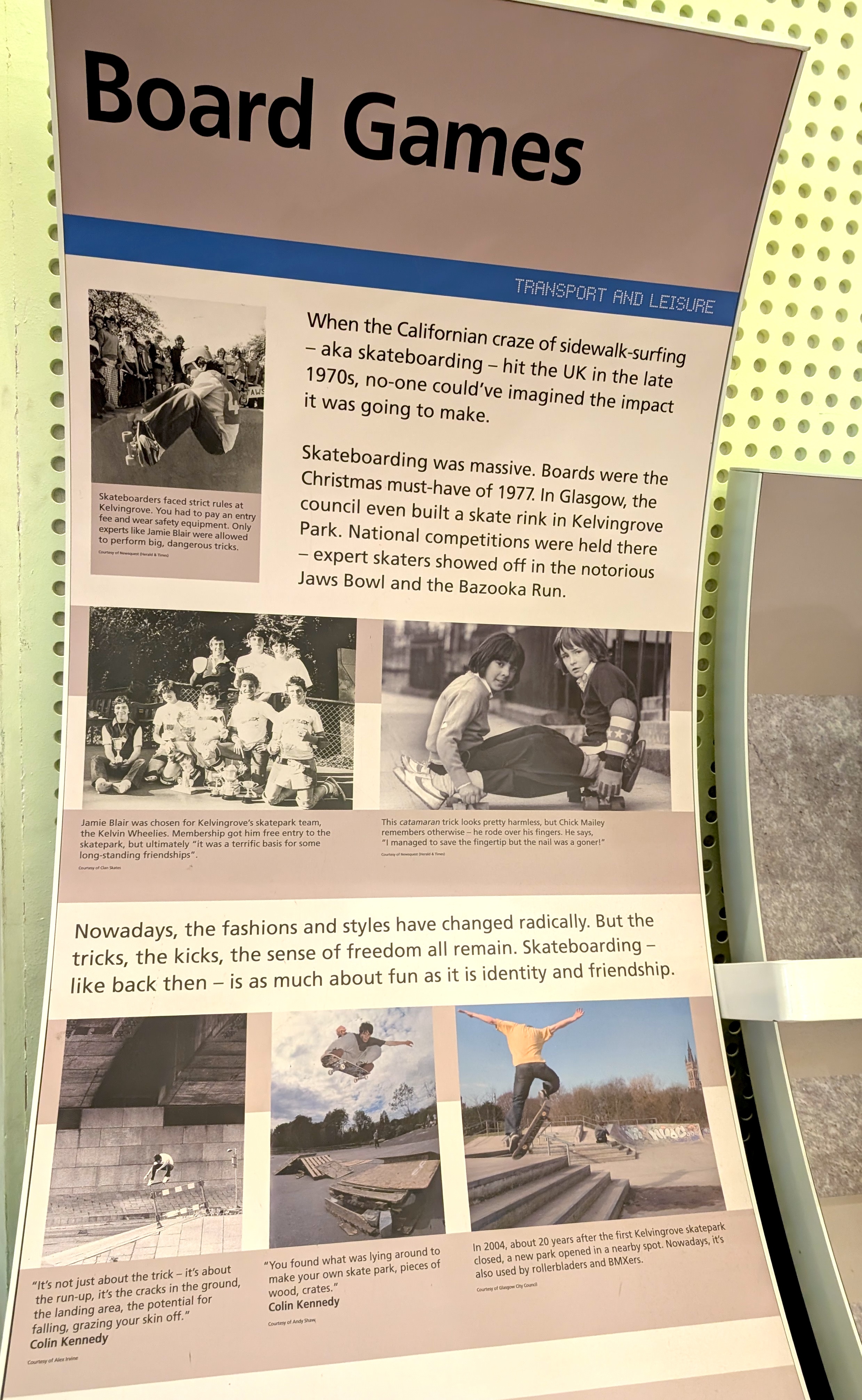
Amidst this whirlwind of maritime history and technological ambition, I had my own pet project: a celebration of Glasgow’s skateboarding scene. See, just the year before, I had launched Skateboard Scotland in Edinburgh and gotten involved in the burgeoning skatepark scene. So, naturally, I had to inject a bit of that rebellious spirit into the Riverside Museum. Thus, the “Board Games” exhibit was born. (And it was pretty darn satisfying to see it still going strong 15 years later, looking exactly the same, so much for progress.)
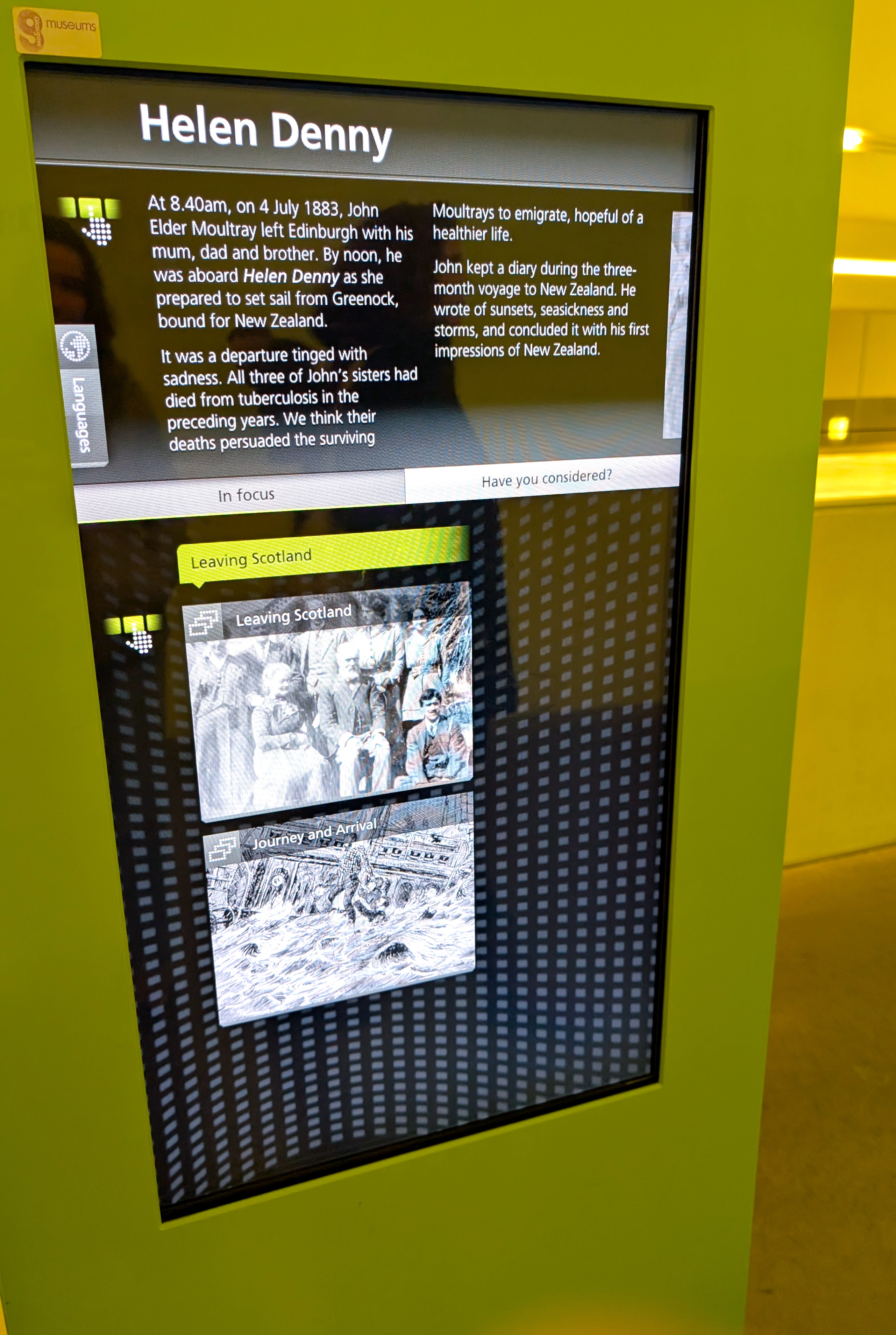
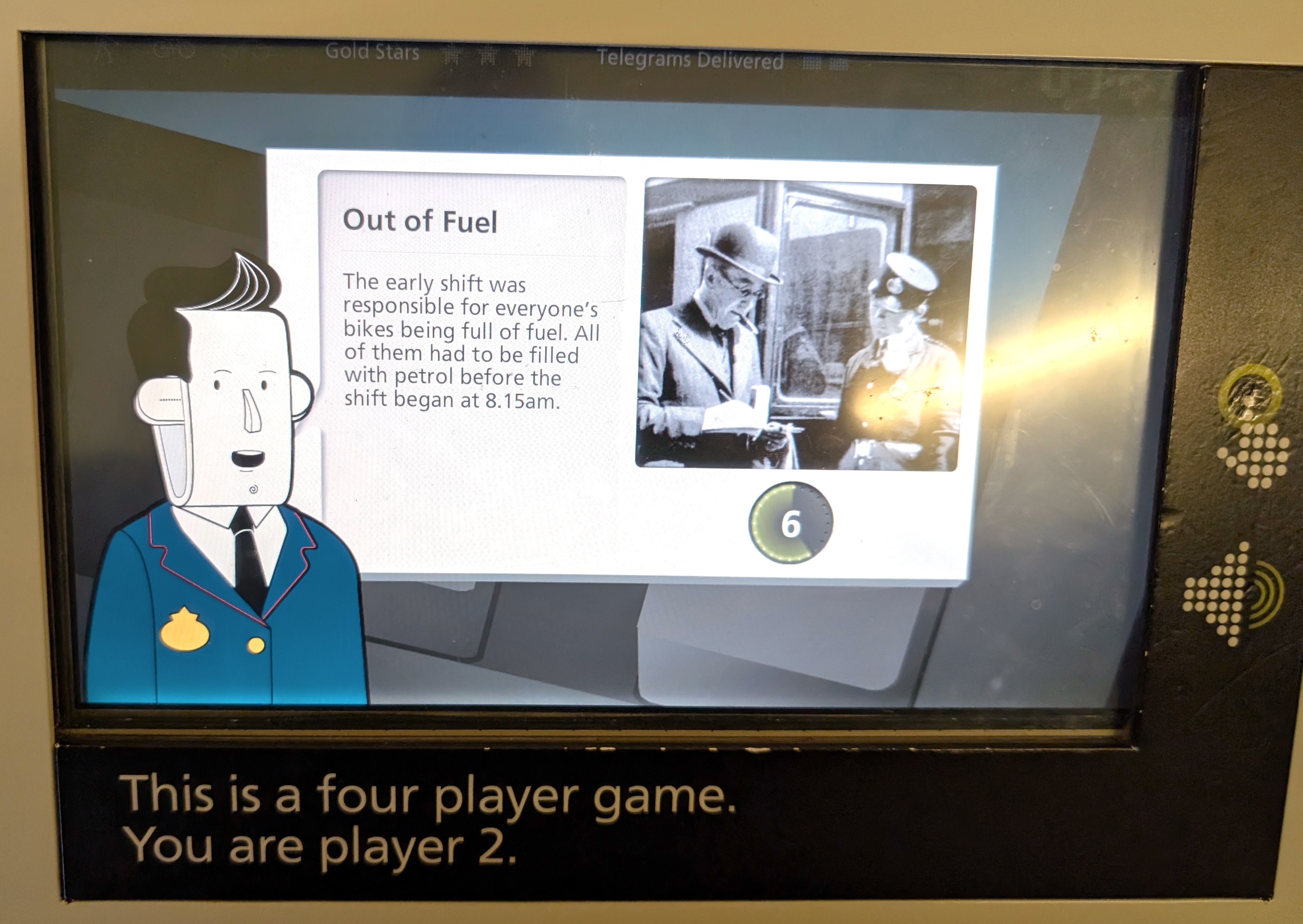
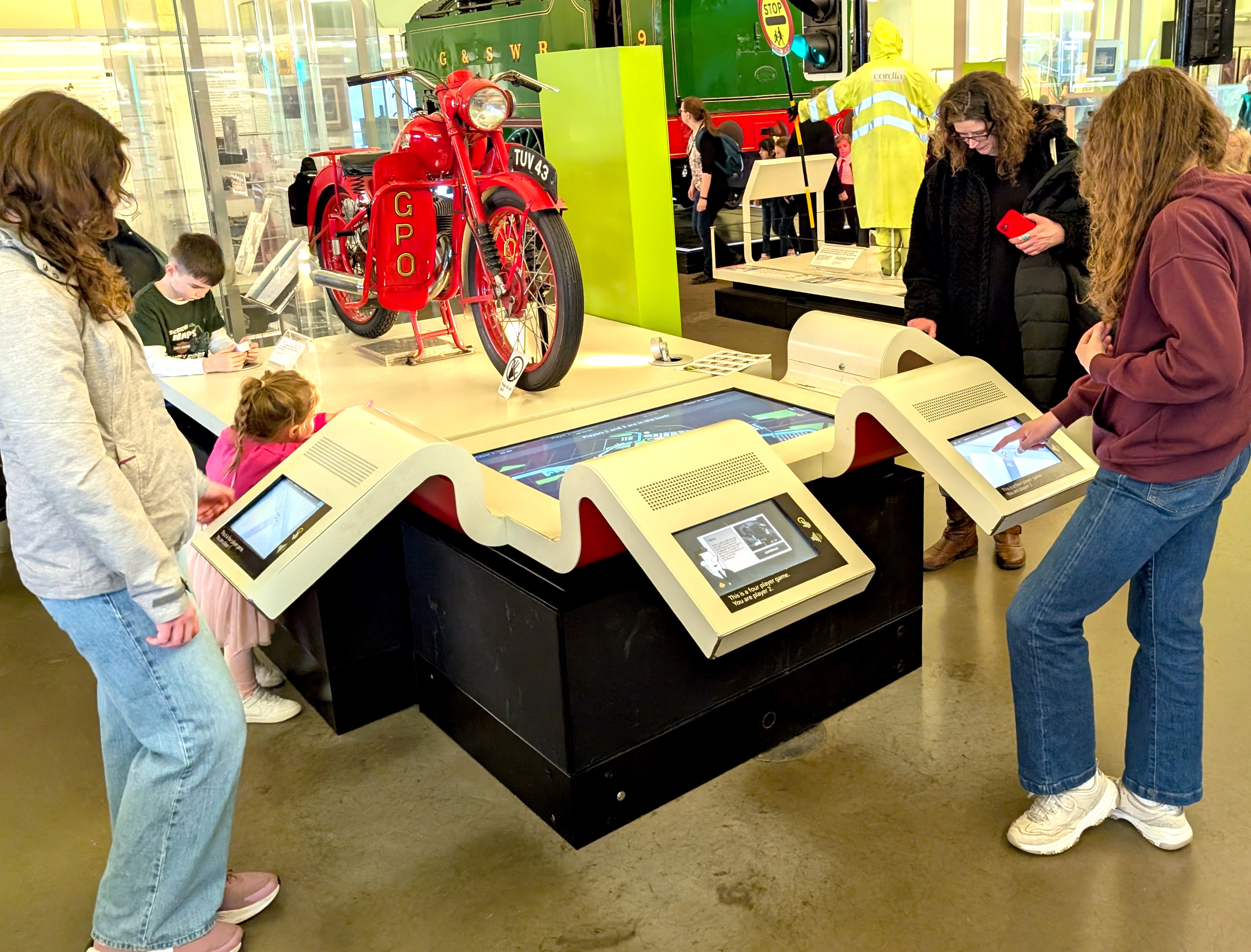
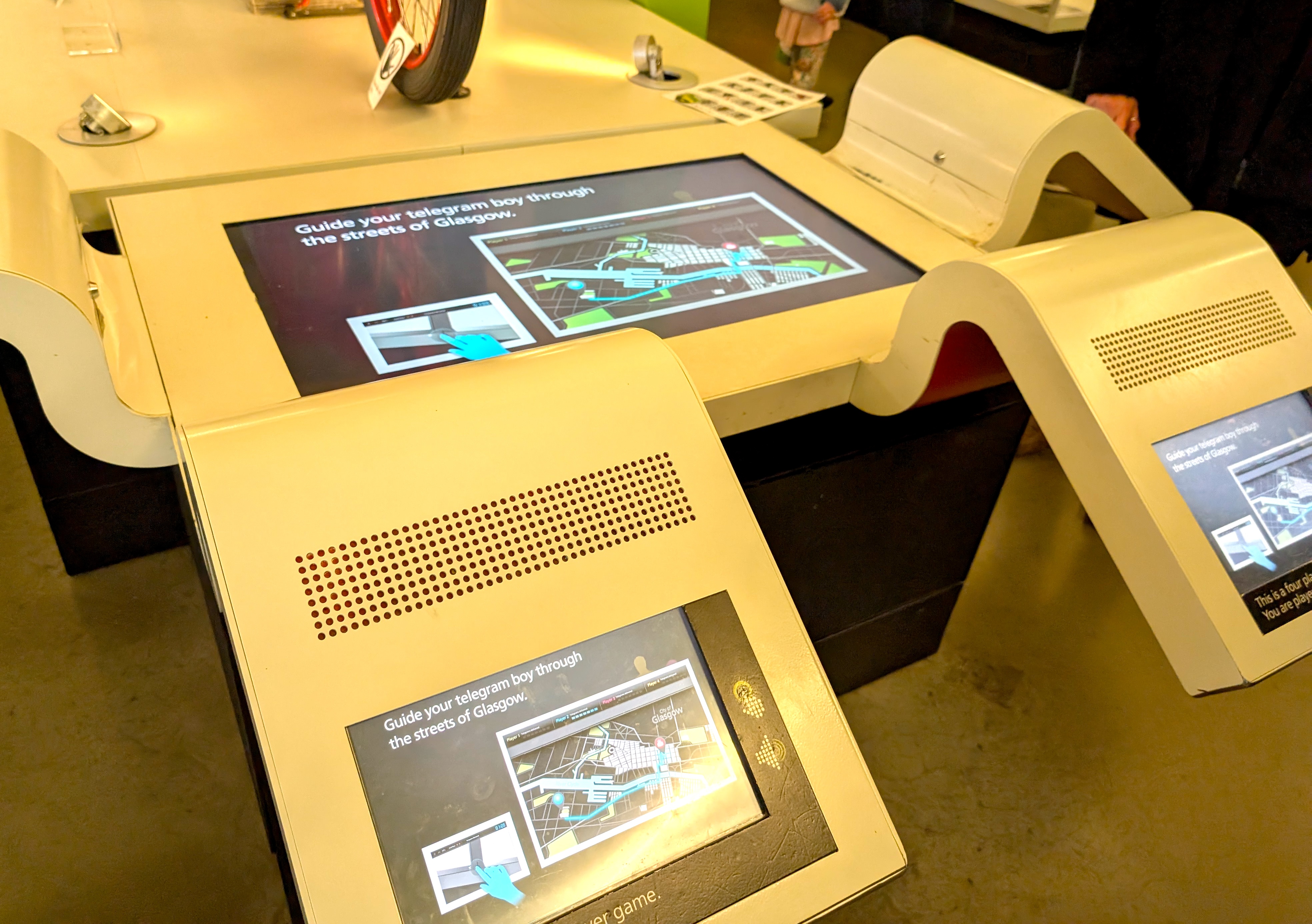
But the real challenge, the Everest of our digital ambition, was the interactive exhibits. Riverside wanted visitors to engage with the collection, to delve deeper, to become part of the story. And how did we achieve this, you ask? With an army of iPads, of course. Well, not actual iPads (they weren’t quite a thing back then), but these massive, portrait-oriented touchscreens we called “eIntros.” (Story Player)
These eIntros were our digital playground. We packed them with information, photos, videos, and interactive elements, all controlled by a central Content Management System (CMS). But here’s where our hubris kicked in. Did we use an existing CMS? Nope. We built our own. From scratch. With Ruby on Rails. Because, why not? (At this point, you might be picturing a montage of frantic coding, fuelled by caffeine and the unshakeable belief that we were reinventing the wheel. You would be right.)
This CMS, our Frankensteinian creation, was a beast. It managed everything. The eIntros, the games, the “What’s On” screens, even the museum lighting (because who needs a light switch when you have a CMS?). It could spit out HTML5, JSON, XML – you name it. We were like digital puppet masters, pulling the strings of the entire museum experience.
And because we had this perfectly controlled environment (a developer’s utopia), we went wild with the latest web technologies. CSS3 animations? Check. JavaScript wizardry? Double-check. HTML5 video? Oh, you better believe it. We even built our own full-screen browser, because Safari just couldn’t handle what we wanted it to do.
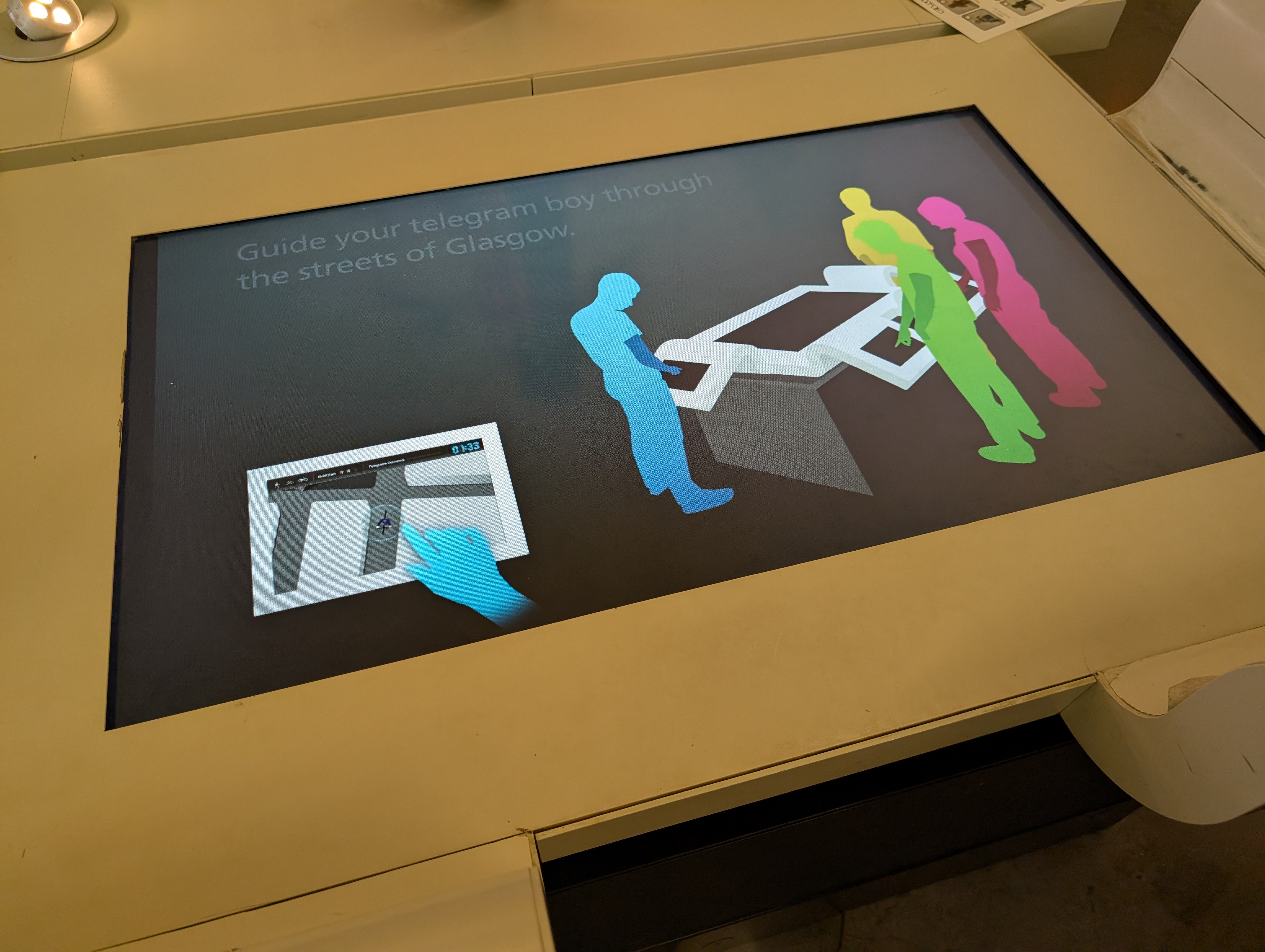
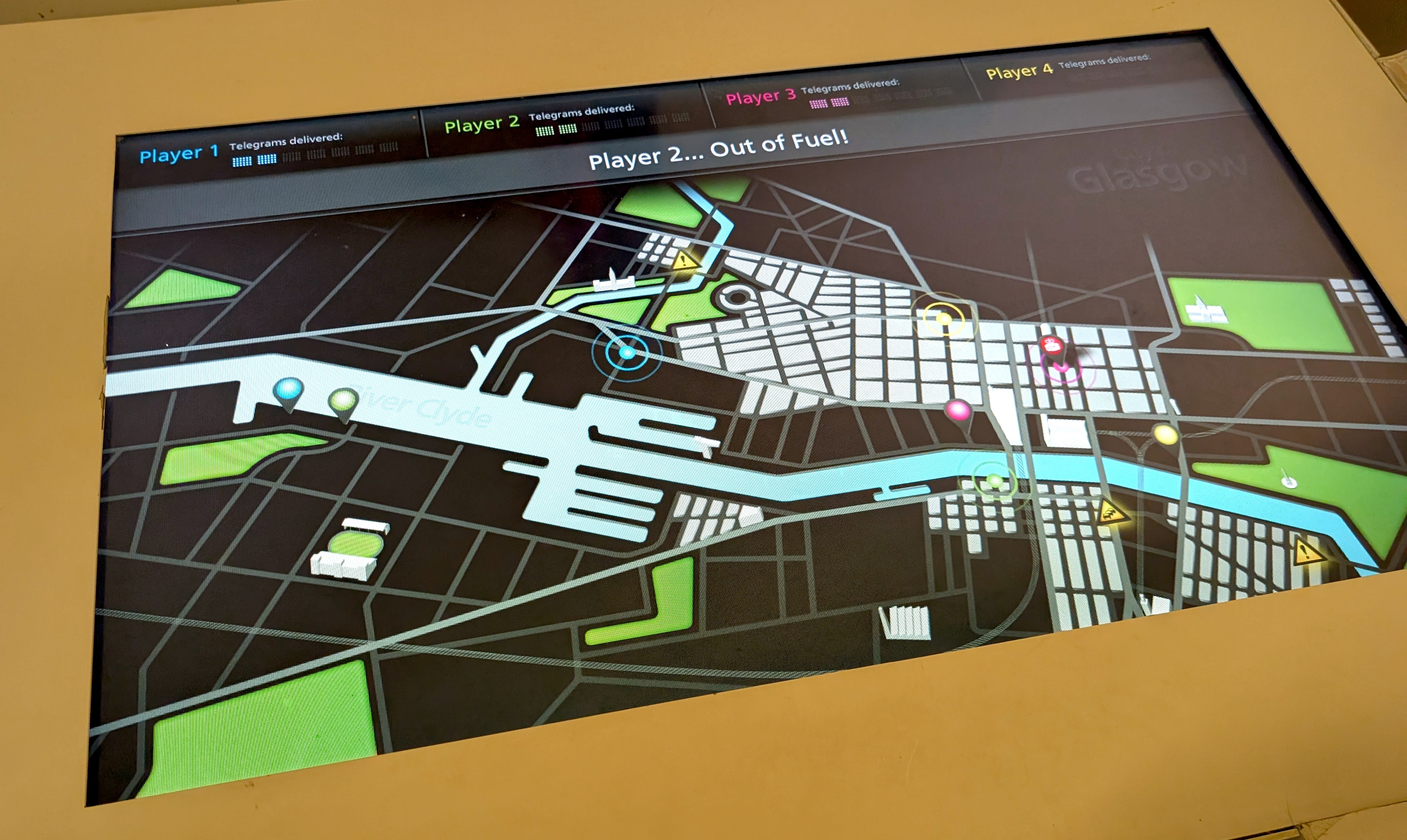
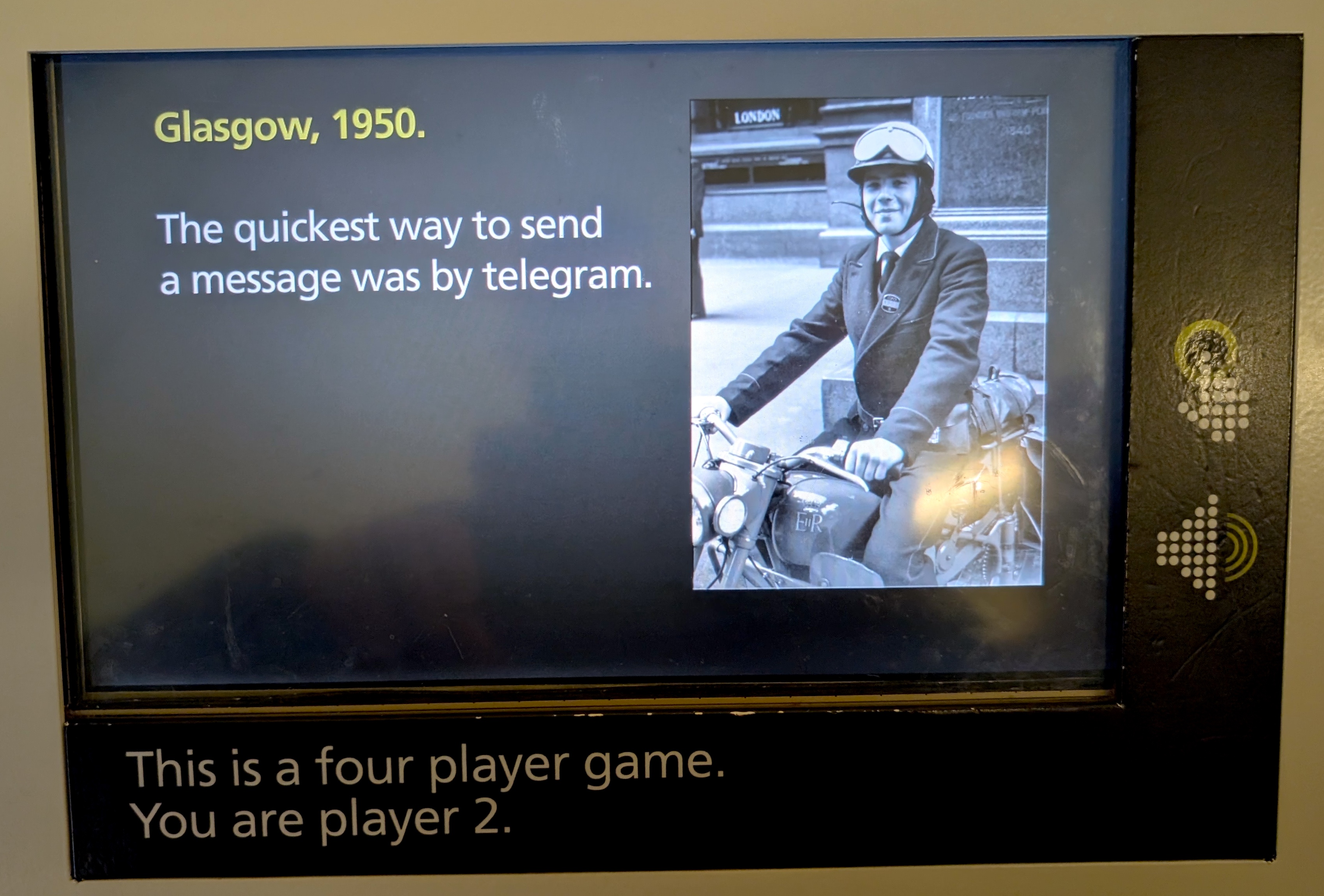
Then came the games. Multiplayer, interactive extravaganzas that had visitors racing trams, building bridges, and navigating historical maps. We built a custom framework, naturally, because off-the-shelf solutions are for the faint of heart.
And because we’re nothing if not extra, we threw in some generative graphics for good measure. Quartz Composer screensavers danced hypnotically on screens, and the Donor Wall became a mesmerising tapestry of names, brought to life with Processing.
The final pièce de résistance? A show control system baked right into the CMS. We could control projectors, media players, even the model ships sailing across a giant video projection, all from our custom-built command centre. It was a symphony of technology, a masterpiece of over-engineering.
Some of this digital wizardary has been lost to the sands of time (or, more accurately, the depths of the museum archives). But hey, we did manage to open-source one little gem: Makitzo, a Ruby deployment tool that saved our sanity during installation. Because, without it, we’d probably still be there, wrestling with cables and cursing Steve Jobs.
So, there you have it. The story of how a bunch of tech-obsessed creatives turned a museum into a giant, interactive playground. It was a wild ride, a testament to the power of passion, innovation, and a whole lot of caffeine. And while the technology might be outdated now, the memories (and the occasional nightmare about rogue CSS animations) live on.
The demise of 55 Degrees left a bunch of talented people out of work and some of us out-of-pocket but the museum is still going strong and the fact that most of the tech and content is still attracting visitors 14 years since it opened, to the tune of 1.3 million in 2023, is testimony to a talented team of creatives and techies, the names I can remember:








 Shiel Yule