How I Learned to Stop Worrying and Love the Printing Press

aka The Federal Reserve’s Runaway Train to Currency Debasement

Greetings readers, take a seat on this wild ride we call the global economy. Today, we’re diving deep into the belly of the beast, exploring the Federal Reserve’s latest escapade: a return to monetary easing amidst sky-high inflation. It’s a bit like trying to extinguish a fire with gasoline, but hey, who are we to judge the fine folks in their ivory towers?

Now, if you’re anything like me, you are probably staring blankly at your screen, wondering if you accidentally stumbled into an economics lecture. You did. “The Fed just unleash one of the steepest rate hike cycles in history. Surely, that must have tamed inflation, right?” Well, it seems inflation is a bit like a cosmic horror – it can’t be killed, only temporarily inconvenienced.

And here’s the kicker: the Fed can’t keep raising rates willy-nilly. Why? Because the US government’s debt is ballooning faster than a Kardashian’s Instagram follower count, and those soaring interest payments threaten to bankrupt the whole shebang. It’s a classic catch-22: raise rates and face insolvency, or lower rates and fuel inflation. Talk about a rock and a hard place!

So, how does the Fed plan to escape this delightful predicament? In a word: currency debasement. It’s like being on a runaway train with no brakes, except instead of crashing, we’re just printing more money to keep the engine running. Brilliant, isn’t it?

Let’s break down this glorious descent into monetary madness:

  1. Spending Spree: Politicians love to spend money like it’s going out of fashion (which, ironically, it is). Cutting spending? Oh, I say! That’s about as likely as getting a straight answer out of a Prime Minister’s Questions.
  2. Debt Mountain: To finance this spending spree, the government issues debt like it’s confetti at a galactic party. The problem? That debt needs to be repaid with interest.
  3. Interest Explosion: The interest payments on this ever-growing debt are now the lifeblood of the US budget. It’s a debt spiral of epic proportions, a financial black hole that sucks in all those lovely tax dollars.
  4. Fed to the Rescue (Sort of): To prevent the government from imploding under the weight of its own debt, the Fed steps in with its trusty printing press. Interest rates get slashed, Treasuries get bought, and the money supply expands like a supernova.
  5. Inflation Bonanza: More money chasing the same amount of goods? That’s a recipe for inflation, my friends. Prices rise, the government spends more to keep up, and the cycle repeats itself with ever-increasing fervour.

It’s a beautiful, self-perpetuating doom loop. The government can’t cut spending, so it borrows more, which leads to higher interest payments, which forces the Fed to print more money, which fuels inflation, which leads to more spending… and so on, ad infinitum.

The worst part? This rampant currency debasement will likely devastate most people, transferring wealth from savers and regular folks to the parasitic class of politicians, central bankers, and their cronies. It’s a tale as old as time, but with a modern twist of financial engineering.

So, what can you do? Well, for starters, don’t panic. (Though a healthy dose of concern is probably warranted.) Educate yourself, diversify your assets, and maybe consider investing in a nice spaceship. You never know when you might need to escape this planet of financial madness. Speaking of escaping Earth, now might be a good time to invest in a SpaceX Starship ticket. Multi-planetary life is looking more and more appealing by the day.

And remember, in the immortal words of Douglas Adams, “So long, and thanks for all the fish (and the rapidly depreciating dollars)!”

Meanwhile . . .

… across the pond in the UK, we might watch this unfolding US debt drama with a sense of “told you so” mixed with a hefty dose of “there but for the grace of God go I.”

While the UK’s debt-to-GDP ratio is also worryingly high (though not quite at US levels), we face similar pressures of an aging population and increasing demands on public services. The Bank of England, like the Fed, is caught between a rock and a hard place, trying to tame inflation without triggering a recession.

The difference, perhaps, lies in the scale. The US dollar’s role as the global reserve currency gives the Fed more leeway to print money without immediate consequences. But as the saying goes, “the bigger they are, the harder they fall.” A US debt crisis would send shockwaves through the global economy, and the UK would undoubtedly feel the tremors.

So, while we might chuckle at the Fed’s predicament, it’s a sobering reminder that we’re all interconnected in this global financial system. And as the US hurtles towards currency debasement, we might want to start stocking up on tea and biscuits, just in case.

So Long, and Thanks for All the Algorithms (Probably)

The Guide Mark II says, “Don’t Panic,” but when it comes to the state of Artificial Intelligence, a mild sense of existential dread might be entirely appropriate. You see, it seems we’ve built this whole AI shebang on a foundation somewhat less stable than a Vogon poetry recital.

These Large Language Models (LLMs), with their knack for mimicking human conversation, consume energy with the same reckless abandon as a Vogon poet on a bender. Training these digital behemoths requires a financial outlay that would make a small planet declare bankruptcy, and their insatiable appetite for data has led to some, shall we say, ‘creative appropriation’ from artists and writers on a scale that would make even the most unscrupulous intergalactic trader blush.

But let’s assume, for a moment, that we solve the energy crisis and appease the creative souls whose work has been unceremoniously digitised. The question remains: are these LLMs actually intelligent? Or are they just glorified autocomplete programs with a penchant for plagiarism?

Microsoft’s Copilot, for instance, boasts “thousands of skills” and “infinite possibilities.” Yet, its showcase features involve summarising emails and sprucing up PowerPoint presentations. Useful, perhaps, for those who find intergalactic travel less taxing than composing a decent memo. But revolutionary? Hardly. It’s a bit like inventing the Babel fish to order takeout.

One can’t help but wonder if we’ve been somewhat misled by the term “artificial intelligence.” It conjures images of sentient computers pondering the meaning of life, not churning out marketing copy or suggesting slightly more efficient ways to organise spreadsheets.

Perhaps, like the Babel fish, the true marvel of AI lies in its ability to translate – not languages, but the vast sea of data into something vaguely resembling human comprehension. Or maybe, just maybe, we’re still searching for the ultimate question, while the answer, like 42, remains frustratingly elusive.

In the meantime, as we navigate this brave new world of algorithms and automation, it might be wise to keep a towel handy. You never know when you might need to hitch a ride off this increasingly perplexing planet.

Comparison to Crypto Mining Nonsense:

Both LLMs and crypto mining share a striking similarity: they are incredibly resource-intensive. Just as crypto mining requires vast amounts of electricity to solve complex mathematical problems and validate transactions, training LLMs demands enormous computational power and energy consumption.

Furthermore, both have faced criticism for their environmental impact. Crypto mining has been blamed for contributing to carbon emissions and electronic waste, while LLMs raise concerns about their energy footprint and the sustainability of their development.

Another parallel lies in the questionable ethical practices surrounding both. Crypto mining has been associated with scams, fraud, and illicit activities, while LLMs have come under fire for their reliance on massive datasets often scraped from the internet without proper consent or attribution, raising concerns about copyright infringement and intellectual property theft.

In essence, both LLMs and crypto mining represent technological advancements with potentially transformative applications, but they also come with significant costs and ethical challenges that need to be addressed to ensure their responsible and sustainable development.

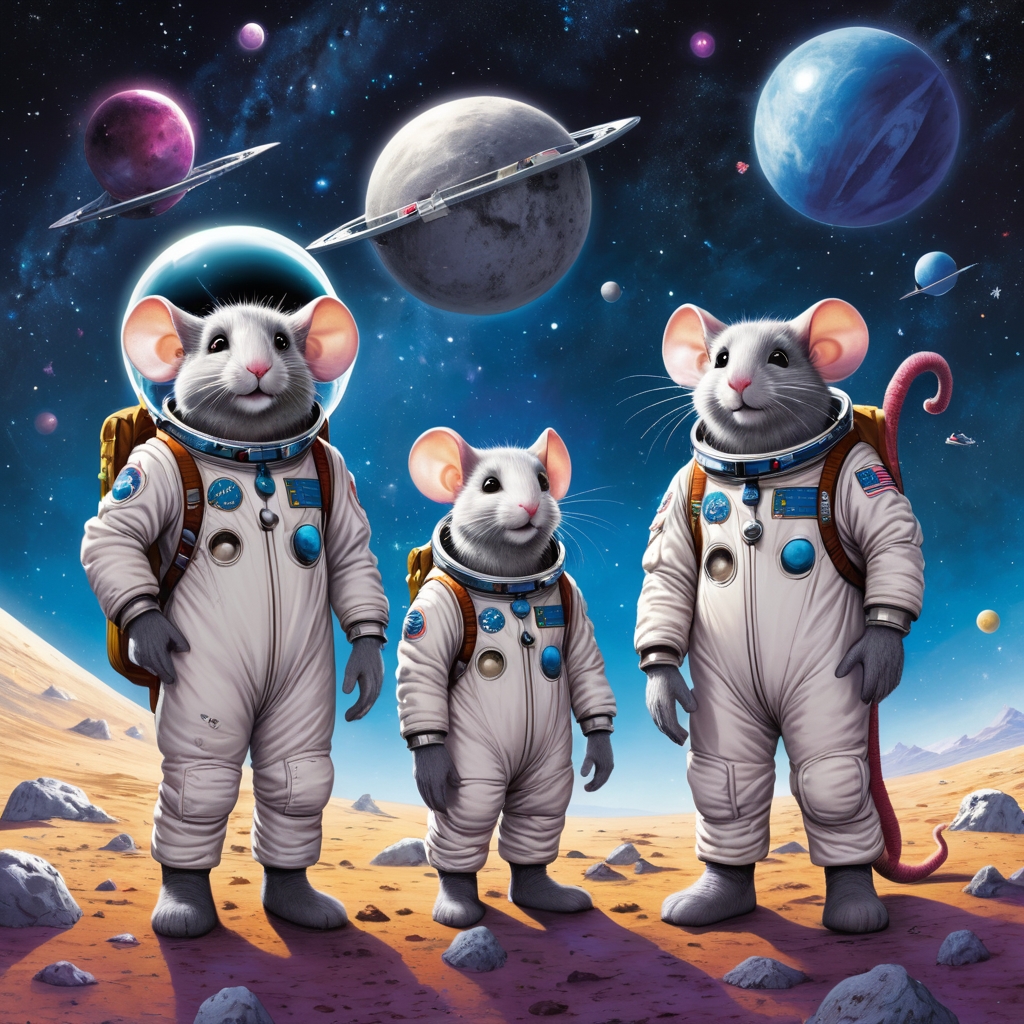
More AI – images

Found time to play with some of the new AI platforms for generating images – there are so many and new ones every day so I am finding it hard to keep up and no idea how you judge which are good or bad? Seems we are jumping head first down this rabbit hole without any debate or pause.

drawit.art – basically do a sketch and choose a style (street art) and it will generate images

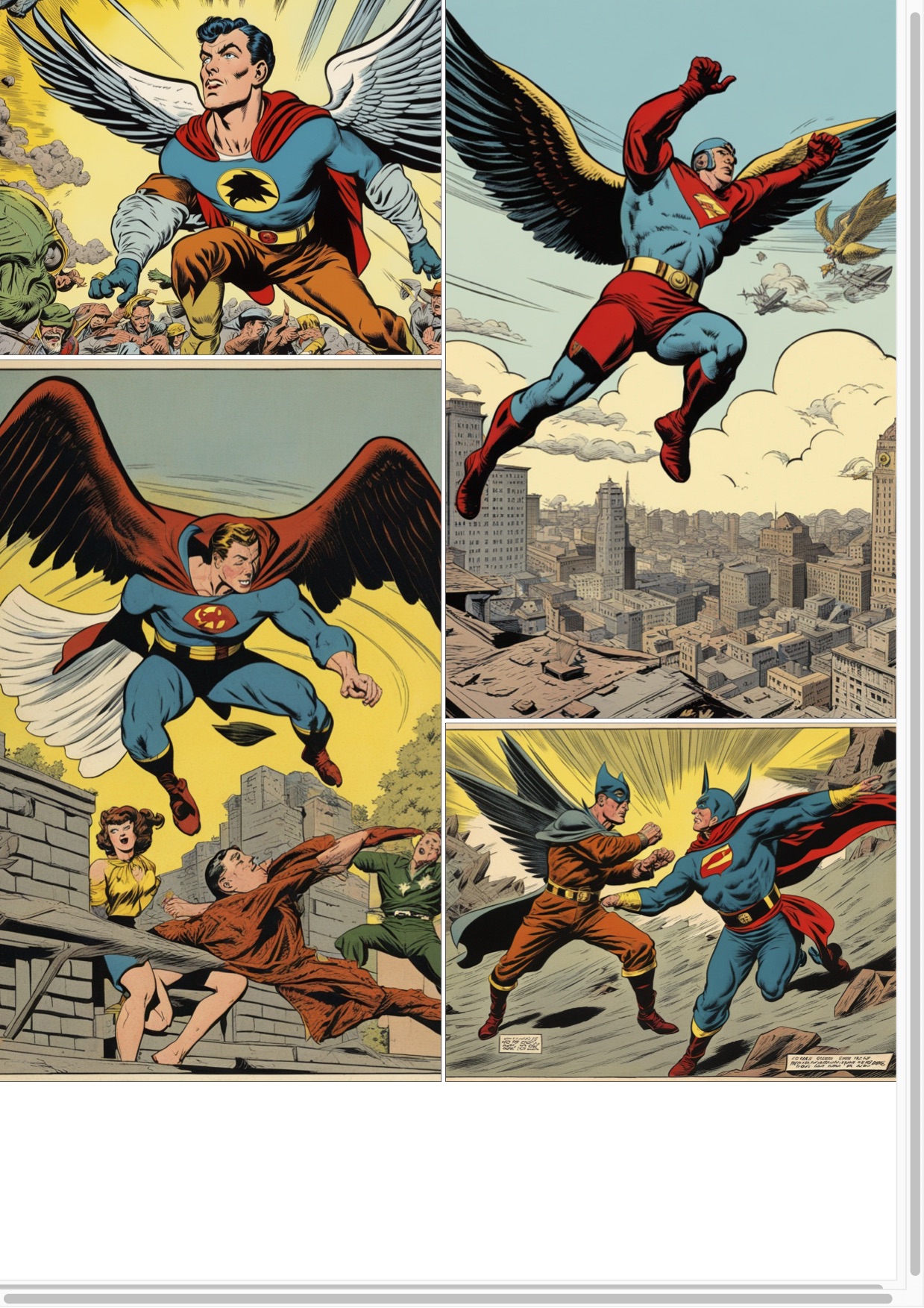
I found this one particularly fun – huggingface.co – ai-comic-factory – similar principle to first one where you describe the image rather than sketch it and choose a “style” for it to render and it will create a bunch of panels for you. Could you create a whole comic using it?

And inevitably there is bias in the current AI offerings which missjourney.ai is trying to counter “If you ask AI to visualize a professional, less than 20% are women. This is not ok. Visit missjourney.ai to support a gender-equal future.”

An AI alternative that creates artwork of exclusively women. With the aim of actively countering current biased image generators and ensuring we build inclusive digital realities – right from the start.
MissJourney marks the start of the year-long TEDxAmsterdam Women theme; Decoding the Future.

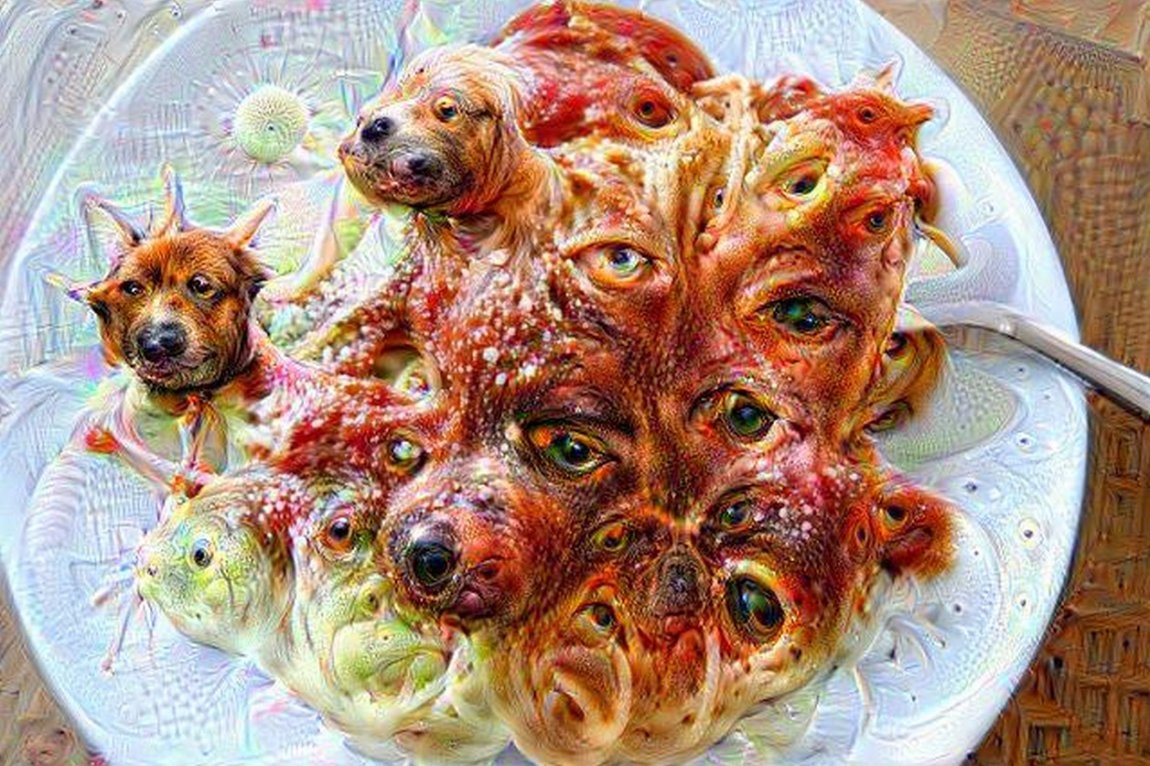
And finally Deep Dream which you can upload your own image and tweak it using many different parameters. Same base image with different modifiers and styles applied.

Artificial intelligence (AI) image generation is a rapidly developing field with the potential to revolutionize the way we create and consume images. AI image generators can generate realistic images from text descriptions, and they are becoming increasingly sophisticated and capable.

One of the most advanced AI image generators currently available is Google’s Imagen. Imagen is still under development, but it has the ability to generate high-quality images that are indistinguishable from human-created images. Imagen can be used to generate images from a wide range of text prompts, including images of people, animals, landscapes, and objects.

Google has not yet announced a public release date for Imagen, but it is expected to be released in the next few months. When Imagen is released, it will be available to a wider range of users, and it is likely to have a significant impact on the field of AI image generation.

The old web is dying, & the new web struggles to be born

Dali plate of eye candy using Googles Deep Dream

The web is changing, and AI is playing a big role in that change. AI systems are capable of generating text and images in abundance, which could potentially overrun or outcompete the platforms we rely on for news, information, and entertainment. However, the quality of this machine-generated content is often poor, and it is built in a way that is parasitical on the web today.

Google is trying to kill the 10 blue links. Twitter is being abandoned to bots and blue ticks. There’s the junkification of Amazon and the enshittification of TikTok. Layoffs are gutting online media. A job posting looking for an “AI editor” expects “output of 200 to 250 articles per week.” ChatGPT is being used to generate whole spam sites. Etsy is flooded with “AI-generated junk.” Chatbots cite one another in a misinformation ouroboros. LinkedIn is using AI to stimulate tired users. Snapchat and Instagram hope bots will talk to you when your friends do not. Redditors are staging blackouts. Stack Overflow mods are on strike. The Internet Archive is fighting off data scrapers, and “AI is tearing Wikipedia apart.” The old web is dying, and the new web struggles to be born.

The problem, in extremely broad strokes, is this. Years ago, the web used to be a place where individuals made things. They made homepages, forums, and mailing lists, and a small bit of money with it. Then companies decided they could do things better. They created slick and feature-rich platforms and threw their doors open for anyone to join. They put boxes in front of us, and we filled those boxes with text and images, and people came to see the content of those boxes. The companies chased scale, because once enough people gather anywhere, there is usually a way to make money off them. But AI changes these assumptions.
Google Search underwrites the economy of the modern web, distributing attention and revenue for much of the internet. Google has been spurred into action by the popularity of Bing AI and ChatGPT as alternative search engines, and it’s experimenting with replacing its traditional 10 blue links with AI-generated summaries. But if the company goes ahead with this plan, then the changes would be seismic.

A writeup of Google’s AI search beta from Avram Piltch, editor-in-chief of tech site Tom’s Hardware, highlights some of the problems. Piltch says Google’s new system is essentially a “plagiarism engine.” Its AI-generated summaries often copy text from websites word-for-word but place this content above source links, starving them of traffic. It’s a change that Google has been pushing for a long time, but look at the screenshots in Piltch’s piece and you can see how the balance has shifted firmly in favour of excerpted content. If this new model of search becomes the norm, it could damage the entire web, writes Piltch. Revenue-strapped sites would likely be pushed out of business and Google itself would run out of human-generated content to repackage. 

AI dynamics — producing cheap content based on others’ work — that is underwriting this change, and if Google goes ahead with its current AI search experience, the effects would be difficult to predict. Potentially, it would damage whole swathes of the web that most of us find useful — from product reviews to recipe blogs, hobbyist homepages, news outlets, and wikis. Sites could protect themselves by locking down entry and charging for access, but this would also be a huge reordering of the web’s economy. In the end, Google might kill the ecosystem that created its value, or change it so irrevocably that its own existence is threatened. 

Google is also experimenting with AI-generated summaries for its search results. This could have a significant impact on the web, as it would favour sites that produce cheap content based on others’ work. This could damage whole swathes of the web that most of us find useful, such as product reviews, recipe blogs, and news outlets.

The evidence so far suggests it will degrade the quality of the web in general. As Piltch notes in his review, for all AI’s vaunted ability to recombine text, it is people who ultimately create the underlying data — whether that’s journalists picking up the phone and checking facts or Reddit users who have had exactly that battery issue with the new cordless ratchet and are happy to tell you how they fixed it. By contrast, the information produced by AI language models and chatbots is often incorrect. The tricky thing is that when it is wrong, it is wrong in ways that are difficult to spot. 

In the end, the future of the web is uncertain. It is possible that AI will lead to a degradation of the quality of information available online. However, it is also possible that AI will be used to create new and innovative forms of content. Only time will tell what the future holds.

Margarine is but ONE molecule away from being PLASTIC

longer shelf life

I have been in the studio most of my spare time trying to finish the cover illustration for my book – which I am hoping will be today – and in the background I play various podcasts and weird conspiracy youtube videos, when one of them mentioned the evils of margarine.

Margarine is but ONE molecule away from being PLASTIC… and shares 27 ingredients with PAINT.

Margarine is hydrogenated – meaning hydrogen is added, changing the molecular structure of the substance.

Open a tub of margarine and leave it open in your garage or shaded area. Within a couple of days you will notice a couple of things:
– no flies, not even those pesky fruit flies will go near it (that should tell you something)
– it does not rot or smell differently because it has no nutritional value; nothing will grow on it. Even those teeny weeny microorganisms will not a find a home to grow.

So time for a diet change!