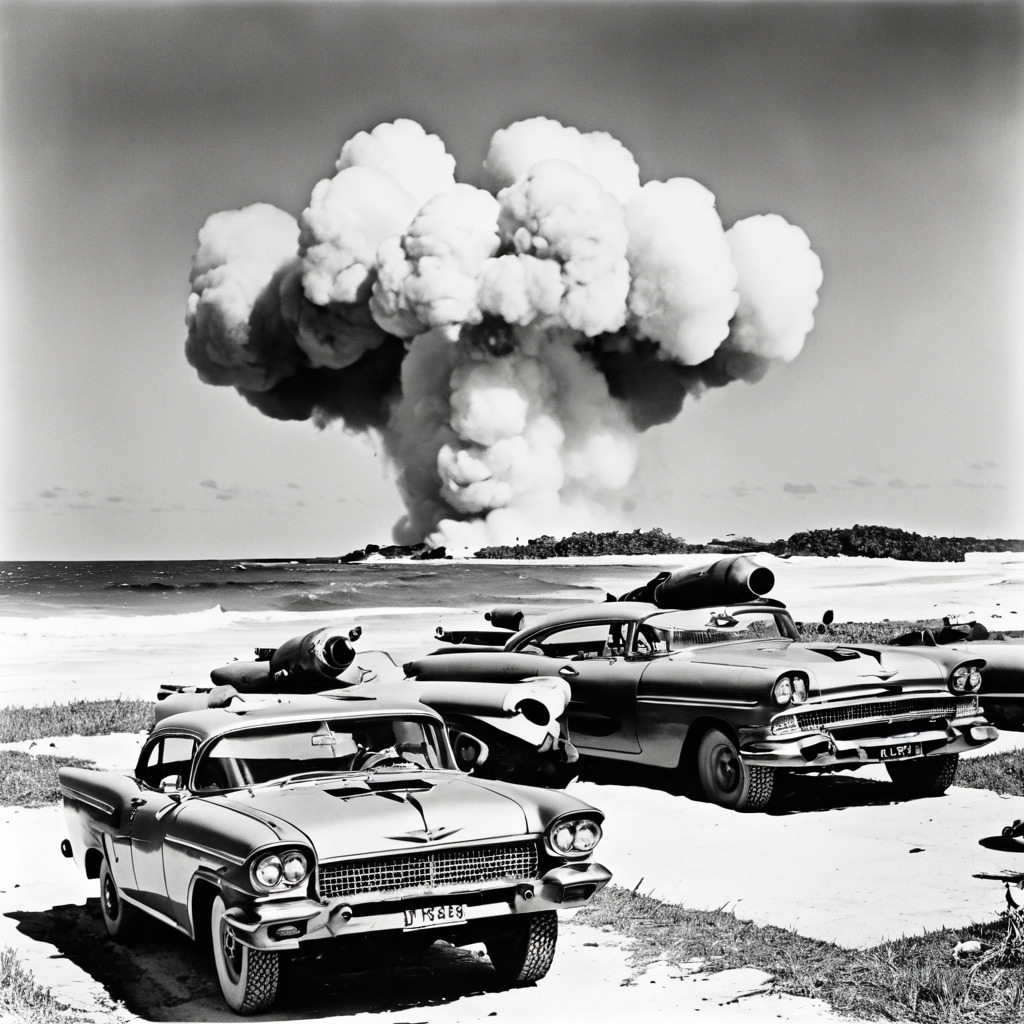
February 27th: Reichstag Fire, a Dubious War, a Neutron, and a Goon: Reflections on a Day of Historical Significance

Good morrow, dear readers, and welcome to this grand exploration of historical happenings on this momentous day, February 27th! Now, I know what you’re thinking: “What could possibly connect a burning building in 1930s Germany, a war in the Middle East, a subatomic particle, and a comedic genius?” Well, hold onto your hats, folks, because we’re about to embark on a whirlwind tour of history, with a dash of Agile wisdom sprinkled in for good measure.

1933: The Reichstag Fire – A Domino Effect and Echoes of Today

Ah, 1933. A year of flappers, jazz, and… the rise of a certain rather unpleasant political party in Germany. On this very day, the Reichstag building, home to the German parliament, went up in flames. Now, while the exact cause of the fire remains a bit of a mystery (was it an inside job? Was it a lone wolf with a penchant for pyrotechnics?), the consequences were anything but ambiguous. The Nazis, ever opportunistic, seized upon the chaos, using the fire as an excuse to consolidate their power and crack down on any opposition. It was a crucial tipping point, a domino effect that ultimately led to one of the darkest chapters in human history.

And here’s the kicker, folks: history has a funny way of repeating itself. Look around the world today, and you’ll see echoes of those same tactics – fearmongering, scapegoating, the erosion of democratic institutions. It’s a stark reminder that we must remain vigilant, that the price of freedom is eternal vigilance, as some wise chap once said. And perhaps, just perhaps, a bit of Agile thinking wouldn’t go amiss. After all, Agile is all about adapting to change, responding to uncertainty, and embracing transparency – qualities that could come in handy when navigating the choppy waters of political turmoil.

1932: The Neutron – A Tiny Particle with a Big Impact

But enough about war and politics, let’s delve into the fascinating world of science! On this day in 1932, James Chadwick discovered the neutron, a tiny little particle that resides at the heart of every atom (except hydrogen, which is a bit of a loner). Now, I know what you’re thinking: “What’s so special about a neutron?” Well, my friends, this unassuming particle revolutionised our understanding of atomic physics, paving the way for nuclear fission, the Manhattan Project, and, of course, the atomic bomb.

But let’s not dwell on the negative. The discovery of the neutron also opened up exciting possibilities for nuclear energy, a clean and sustainable source of power that could potentially solve our planet’s energy woes. So, while the atom bomb might be a bit of a downer, let’s not forget the positive side of nuclear science. And who knows, maybe with a bit of Agile thinking, we can finally crack the code on safe and efficient nuclear fusion, ushering in a new era of clean energy for all.

1991: “Victory” in the Gulf – A War Criminal’s Legacy

Fast forward to 1991, and we find ourselves in the midst of another historical event: the end of the Persian Gulf War. “Victory” was declared, flags were waved, and everyone went home happy, right? Well, not quite. Let’s not forget that this was an illegal war, a war built on lies and deception, a war that resulted in the deaths of countless innocent civilians. And who was the mastermind behind this grand charade? None other than our very own Tony Blair, a man who, despite his war crimes, has yet to face any real accountability. Ah, the joys of being on the winning side – your crimes are swept under the rug, your misdeeds forgotten. It’s enough to make you lose faith in humanity, isn’t it?

But fear not, dear readers, for Agile is here to save the day! (Well, maybe not save the day, but at least offer some helpful principles.) Agile, with its emphasis on collaboration, iterative progress, and continuous feedback, could perhaps have prevented such a disastrous conflict. Imagine if our leaders had adopted an Agile mindset, if they had prioritised open communication and transparency, if they had been willing to adapt their plans based on new information (like there were no WMDs and it was all a ruse). Perhaps then, countless lives could have been saved, and the world would be a slightly less messed up place.

2002: Farewell to a Goon

And finally, we come to the comedic genius himself, Spike Milligan. On this day in 2002, the world bid farewell to one of the greatest comedic minds of all time. Milligan, with his absurdist humor, his irreverent wit, and his penchant for the downright silly, left an indelible mark on the world of comedy. He was a true original, a Goon Show pioneer, a master of the unexpected.

So, in honour of Milligan’s legacy, let’s approach the rest of today with a healthy dose of silliness and irreverence. After all, laughter is the best medicine, as they say. And who knows, maybe by embracing our inner Goon, we can find new and creative solutions to the world’s problems, and boy does it feel like there are plenty of those bubbling up at the moment.

And there you have it, folks! A whirlwind tour of historical events on this glorious 27th of February. Remember, history is more than just dates and facts – it’s a tapestry of triumphs and tragedies, of discoveries and disasters, of laughter and tears. Let us learn from the past, embrace the present, and, with a bit of Agile thinking and a Goon-like spirit, build a better future for all.

(P.S. If you’re feeling particularly adventurous, why not try writing your next Agile project report in the style of a Goon Show script? Your stakeholders might be a bit confused, but at least it’ll liven up those boring meetings!)

Agile: My Love-Hate Relationship with Iteration

Iteration. The word itself conjures up images of spinning wheels, cyclical patterns, and that hamster in its never-ending quest for… well, whatever a hamster sees in those wheels. But “iteration” is more than just a fancy word for “doing something again and again.” It’s a fundamental concept that permeates our lives, from the mundane to the profound.

Think about your morning routine. Wake up, stumble to the bathroom, brush your teeth (hopefully), make coffee (definitely). That’s an iteration, a daily ritual repeated with minor variations. Or consider the changing seasons, the ebb and flow of tides, the endless cycle of birth, growth, decay, and renewal. Iteration is the rhythm of existence, the heartbeat of the universe.

In the world of art and creativity, iteration takes center stage. Painters rework their canvases, musicians refine their melodies, writers revise their manuscripts – all in pursuit of that elusive perfect expression. Each iteration builds upon the last, refining, reimagining, and ultimately transforming the original concept into something new and hopefully improved.

But let’s not get all misty-eyed about iteration. It can be a cruel mistress, a source of frustration, a never-ending loop of “almost, but not quite.” Think about that DIY project that seemed so simple at first but has now become a Frankensteinian monster of mismatched parts and questionable design choices. Or that recipe you’ve tried a dozen times, each attempt yielding a slightly different (disastrous) result. Iteration, in these moments, feels less like progress and more like a punishment for our hubris.

And if we stretch it into the political arena, iteration takes on a particularly cynical flavor. The UK, with its revolving door of prime ministers, its endless Brexit debates, and its uncanny ability to elect leaders who promise change but deliver more of the same, is a prime example. Each election cycle feels like an iteration of the last, a Groundhog Day of broken promises, partisan squabbles, and that nagging sense that no matter who’s in charge, nothing really changes. Even the emergence of new parties, with their fresh faces and bold manifestos, often seems to get sucked into the same iterative loop, their initial idealism slowly eroded by the realities of power and the entrenched political system. Iteration, in this context, feels less like progress and more like a depressing reminder of our collective inability to break free from the past.

And then there’s Agile. Ah, Agile. The methodology that puts iteration on a pedestal, enshrining it as the holy grail of software development. Sprints, stand-ups, retrospectives – all designed to facilitate that relentless cycle of build, measure, learn. And while the Agile evangelists wax lyrical about the beauty of iterative development, those of us in the trenches know the truth: iteration can be a messy, chaotic, and often frustrating process.

We love iteration for its ability to adapt to change, to embrace uncertainty, to deliver value incrementally. We hate it for the endless meetings, the ever-growing backlog, the constant pressure to “fail fast” (which, let’s be honest, doesn’t always feel so fast). We love it for the sense of progress, the satisfaction of seeing a product evolve. We hate it for the scope creep, the shifting priorities, the nagging feeling that we’re building the plane as we fly it.

But love it or hate it, iteration is the heart of Agile. It’s the engine that drives innovation, the fuel that powers progress. And while it may not always be pretty, it’s undeniably effective. So, embrace the iteration, my friends. Embrace the chaos. Embrace the uncertainty. And maybe, just maybe, you’ll find yourself falling in love with the process, even if it’s a slightly dysfunctional, love-hate kind of love.

Wagile: In an iterative world, is there still a place for Waterfall

So Agile. It’s the buzzword du jour, the management mantra, the thing everyone’s been talking about for at least 10 years. Apparently, it is the antidote to all our project woes. Because, you know, Waterfall is so last century. And so, it seems, is cognitive function.

To be honest, Waterfall had a good run. Planning everything upfront, meticulously documenting every single detail, then… waiting. Waiting for the inevitable train wreck when reality collided with the perfectly crafted plan. It was like building a magnificent sandcastle, only to have the tide laugh maniacally and obliterate it. Ah fun times at Ridgemont High (aka RBS).

Agile, on the other hand, is all about embracing the chaos. Sprints, stand-ups, retrospectives – it’s a whirlwind of activity, a constant state of flux. Like trying to build that sandcastle while surfing the waves. Exhilarating? Maybe. Efficient? Debatable. Sane? No comment.

The Agile manifesto talks about “responding to change over following a plan.” Which is excellent advice, unless the change involves your entire development team suddenly deciding they’ve all become Scrum Masters or Product Owners. Then, your carefully crafted sprint plan goes out the window, and you’re left wondering if you accidentally wandered into a performance art piece.

And don’t even get me started on the stand-ups. “What did you do yesterday?” “What are you doing today?” “Are there any impediments?” It’s like a daily therapy session, except instead of delving into your inner demons, you’re discussing the finer points of code refactoring. And the “impediments”? Oh, the impediments. They range from “the coffee machine is broken” to “existential dread” (which is a constant in software development). It’s a rich tapestry of human experience, woven with threads of caffeine withdrawal and the gnawing fear that your code will spontaneously combust the moment you deploy it.

But the stand-up is just the tip of the iceberg, isn’t it? We’ve got the sprint planning, where we all gather around the backlog like it’s a mystical oracle, divining which user stories are worthy of our attention. It’s a delicate dance of estimation, negotiation, and the unspoken understanding that whatever we commit to now will inevitably be wildly inaccurate by the end of the sprint. We play “Planning Poker,” holding up cards with numbers that represent our best guesses at task complexity, secretly hoping that everyone else is as clueless as we are. It’s like a high-stakes poker game, except the only prize is more work.

Then there’s the sprint review, where we unveil our latest masterpiece to the stakeholders, praying that they won’t ask too many awkward questions. It’s a bit like showing your unfinished painting to an art critic, except the critic also controls your budget. We demonstrate the new features, carefully avoiding any mention of the bugs we haven’t fixed yet, and bask in the fleeting glow of (hopefully) positive feedback. It’s a moment of triumph, quickly followed by the realization that we have another sprint review looming in two weeks.

And let’s not forget the retrospective, the post-mortem of the sprint. We gather in a circle, armed with sticky notes and a burning desire to improve (or at least to vent our frustrations). We discuss what went well, what went wrong, and what we can do differently next time. It’s a valuable exercise in self-reflection, often culminating in the profound realization that we’re all just trying our best in a world of ever-changing requirements and impossible deadlines. It’s like group therapy, except instead of leaving feeling lighter, you leave with a list of action items and a renewed sense of impending doom. Because, you know, Agile.

But, amidst the chaos, the sprints, the stand-ups, there’s a glimmer of something… maybe… progress? Just maybe, Agile isn’t completely bonkers. Perhaps it’s a way to navigate the ever-changing landscape of software development, a way to build sandcastles that can withstand the occasional rogue wave. Or maybe it’s just a really elaborate way to procrastinate on actually finishing the project.

Either way, one thing’s for sure: it’s certainly more entertaining than Waterfall. And who knows, maybe in the process, we’ll all be forced to downgrade our cognitive functions to “basic operating level.” Who needs advanced cognitive functions when you have Agile and AI?

But amidst the gentle ribbing and self-deprecating humour, there is a serious point here. Agile, like any methodology, isn’t a magic bullet. It’s a tool, and like any tool, it can be used effectively or ineffectively. The key is understanding where Agile truly shines, where it needs to be adapted, and where – a touch of Waterfall might actually be the right approach.

That’s where I come in. With years of experience navigating the Agile landscape (and yes, even surviving a few Waterfall projects in my time), I can help your organisation cut through the jargon, identify the real pain points, and implement solutions that actually deliver results. Whether you’re struggling with sprint planning, drowning in a sea of sticky notes, or simply wondering if all this Agile stuff is worth the hassle, I can provide clarity, guidance, and a healthy dose of pragmatism. Because ultimately, it’s not about blindly following a methodology, it’s about finding the right approach to deliver value, achieve your goals, and maybe, just maybe, retain a little bit of your sanity in the process.

If you’re ready to move beyond the Agile buzzwords and build a truly effective development process, let’s talk.

The Agile Apocalypse: Daily Scrum Survival – Balancing Collaboration and Corporate Nightmare

Behold the scrum: a tangled mass of caffeine fuelled coders, their postures suggesting a desperate attempt to escape the clutches of the dreaded Daily Standup. The Scrum Master, our fearless referee, blows the whistle, signalling the start of another gruelling Daily Standup.

“Yesterday, I worked on the login feature, but I encountered a blocker…” groans the first zombie developer, his voice a monotonous drone.

“I’m still debugging the payment gateway,” mumbles the second, eyes glazed over as he stares into the abyss of his coffee mug.

“I completed my tasks, but I’m waiting for code review,” mutters the third, swaying slightly as if fighting off the urge to take a nap right there on the spot.

And so it continues, a litany of half-finished tasks, unresolved dependencies, and vague promises of future progress. The scrum board looms overhead, a colorful mosaic of sticky notes that seems to mock their collective inertia.

The Scrum Master, ever optimistic, tries to inject some life into the proceedings. “Remember, folks, we are a team! Let’s work together to overcome these challenges!”

But his words fall on deaf ears. The zombie developers, their brains addled by endless sprints and Jira tickets, can only muster a collective grunt in response.

The Daily Standup drags on, a mind-numbing ritual that seems to sap the last vestiges of life from its participants. Finally, the whistle blows again, signaling the end of the ordeal. The zombie developers shuffle back to their desks, leaving a trail of unfinished tasks and unanswered questions in their wake.

Is this the Agile utopia we were promised? A world of collaboration, transparency, and continuous improvement? Or is it just another corporate nightmare, where productivity has been sacrificed on the altar of process?

Perhaps it is time to re-evaluate our approach to Agile. Maybe we need to inject a little more humanity into our daily routines. Or maybe we just need to accept that some days, we are all just zombies, stumbling through the motions until the coffee kicks in.

The Agile Apocalypse: Unveiling the Three Amigos’ Ritual of Quality

In the flickering candlelight of the Agile underworld, three amigos gather, their faces painted in the vibrant hues of the Day of the Dead. The Product Owner, adorned with a skeletal grin, clutches a tattered backlog, whispering tales of user desires and market demands. The Developer, a patchwork of exposed components, humming with digital life, dances with code and logic, conjuring code to manifest ethereal visions. The Tester, eyes gleaming like polished obsidian, prowls the edges, seeking vulnerabilities and imperfections in the nascent creation. This unholy trinity, united in their shared quest for quality, engages in a macabre ballet of collaboration. They dissect user stories, challenge assumptions, and unearth hidden flaws, all while honouring the sacred tradition of the three amigos – a ritual of refinement, ensuring that each increment of work rises from the development grave, flawless and ready to delight the living.

Through this macabre dance of collaboration, the project emerges not as a shambling corpse of missed deadlines and buggy code, but as a vibrant, polished gem, ready to dazzle stakeholders and users alike. The company, once plagued by the lumbering gait of waterfall development, now sprints with newfound agility, delivering value faster than a hungry zombie chasing brains. This harmonious union of business, development, and testing will finally lead to software so intuitive, so user-friendly, that even the most technologically challenged among us can navigate it without turning into mindless, keyboard-mashing zombies ourselves. A small step for Agile, a giant leap for humanity’s sanity.

The Agile Apocalypse: Reclaiming Productivity and Purpose in the Modern Corporate Landscape

The once bustling corporate office now echoed with a chilling silence, broken only by the soft shuffle of undead feet. A horde of suited figures, their faces slack and eyes glazed, shambled aimlessly amongst cubicles and conference rooms. The scrum board, a vibrant tapestry of colorful stickies, stood as a cruel mockery of their former productivity. Each meticulously crafted sticky note, once a symbol of progress and collaboration, now hung limp against the backdrop of this macabre tableau.

Welcome to the modern corporate landscape, where “Agile” has become less a methodology and more a zombie apocalypse. We’ve traded water-cooler chats for stand-ups, brainstorming sessions for sprint planning, and actual work for endless backlog grooming.

Once bright-eyed and bushy-tailed employees now move with the lifeless gait of the undead, their souls sucked dry by two-week sprints and the relentless pursuit of “velocity.” The office walls, once adorned with inspirational posters, are now plastered with sticky notes in a desperate attempt to visualize the invisible.

But amidst the chaos, a glimmer of hope remains. A few brave souls, unyielding to the siren song of Agile buzzwords, still dare to dream of a world where work is meaningful, collaboration is genuine, and productivity isn’t measured by the number of stickies moved across a board.

So the next time you find yourself trapped in a zombie-like sprint, remember: there’s a world beyond the scrum board. A world where ideas flow freely, creativity thrives, and work doesn’t feel like a fate worse than death.

It’s time to break free from the Agile apocalypse and reclaim the joy of truly productive work. Who’s with me?

Has AI just taken my job?

The rise of artificial intelligence (AI) has been a hot topic of conversation in recent weeks. Some people believe that AI will eventually replace most jobs, while others believe that it will create new ones and endless opportunities.

One company that is at the forefront of the AI revolution is Spinach.io. Spinach.io is an AI-powered platform that helps teams run more efficient meetings. The platform uses AI to transcribe meetings, generate meeting notes, and identify key decisions and actions. It integrates with Zoom, Teams, Jira, slack and more. You invite it to your meeting and it passively takes notes for you and spits them out to slack – this demo explains it better https://youtu.be/5Z5a-KCUcRY 

So, what does this mean for the future of work? 

It is hard to say for sure. However, it is clear that AI is already having an impact on the workforce. For example, AI is being used to automate tasks in customer service, manufacturing, and healthcare. This is leading to job losses in some sectors, but it is also creating new jobs in others.

In the case of Spinach.io, the platform is likely to become a valuable tool for project managers or anyone managing teams, and that is maybe a better way to look at AI . . . as a tool. AI has already created a large number of new jobs and even created a new industry platform. For example, Spinach.io is hiring engineers, data scientists, and product managers to build and improve its platform. So there is definitely disruption coming for many industries and human interactions will continue to change but there are also opportunities and new experiences to be had. 

So, while AI is likely to have an impact on the workforce, it is not clear that it will lead to widespread job losses. In fact, it is more likely that AI will create new jobs and opportunities if we embrace it.