Lunar Eclipse, Canadian Steel, and the Unbroken Database: An Agile Odyssey

If it ain’t broke, iterate it anyway. That’s the Agile mantra we chant while sipping lukewarm office coffee, right? Because, let’s face it, ‘perfect’ is just a pre-alpha version of ‘slightly less broken.’ Think of it as existential software development. We’re all just debugging the human condition, one sprint at a time.

Speaking of software development, let’s talk SQL, since I’ve just learnt it. Ah, SQL. The language of the gods, or at least the gods of data. Is it just for tables and joins? SQL is the existential poetry of the digital age. It’s how we ask the universe, “Why are there so many null values in my life?” and get back a neatly formatted table. It’s not just data; it’s the philosophical backbone of every e-commerce website selling artisanal beard oil.

Now, let’s pivot to the geopolitical theatre of the absurd. Canadian steel. Is it that good? Or is it just that everyone’s got a crush on the new PM, since the last one turned out to be a little weird? It’s like when a band gets a new drummer and suddenly their old songs sound amazing. Is it the drummer, or are we just experiencing a collective, temporary delusion? Maybe the steel is just really, really polite. ‘Excuse me, would you mind being a bridge girder?’ Or perhaps, it’s less politeness and more of a cosmic suggestion box situation. ‘Dear Universe, please make this bridge not wobble like a caffeinated chihuahua on roller skates. Sincerely, Commuters.’ And the steel, being a diligent employee of the cosmos, just shrugs and goes, ‘Fine, but I’m charging extra for the existential dread reduction.’ Because let’s face it, bridges built with polite steel are still bridges, and bridges are just a continuation of a road for cars, paved with the hopes and dreams of people who are late for work. And if that steel isn’t polite, who knows, maybe it’ll just decide to become a giant, sentient paperclip and hold the whole city together with sheer, metallic spite. You wouldn’t want that, would you? Think of the traffic. So, back to Canadian steel… is it that polite? Does it whisper sweet nothings to the architectural blueprints? Does it offer to hold your hand during particularly windy days? Because a 50% tariff suggests it’s either the most courteous metal on Earth, or someone’s having a very expensive, very shiny laugh.

And while we’re pondering the mysteries of the universe, there’s a lunar eclipse happening. You know, that cosmic event where the Earth decides to play shadow puppet with the moon. It’s like a celestial PowerPoint presentation on the fragility of existence. Where can you see it? Well, not from your office cubicle, or your computer screen. Get out there. Find a hill, a rooftop, a really tall stack of old sticky notes. Gaze up and ponder the infinite abyss. Is it just a shadow? Or a metaphor for the ever-growing backlog of life?

Maybe the lunar eclipse is just a giant, cosmic bug. Maybe it’s a feature, not a bug? Who knows? That’s the beauty of Agile, right? We’re all just figuring it out as we go, iterating our way through the darkness, hoping we don’t deploy a critical error to production at 4pm on a Friday.

So, next time you’re stuck in a sprint planning meeting, debating the merits of Canadian steel or wondering if SQL is secretly sentient, remember the lunar eclipse. We’re all just tiny specs in a vast, ever-changing universe. And if it ain’t broke, iterate it anyway. Because, in the grand scheme of things, what’s a few more bugs?
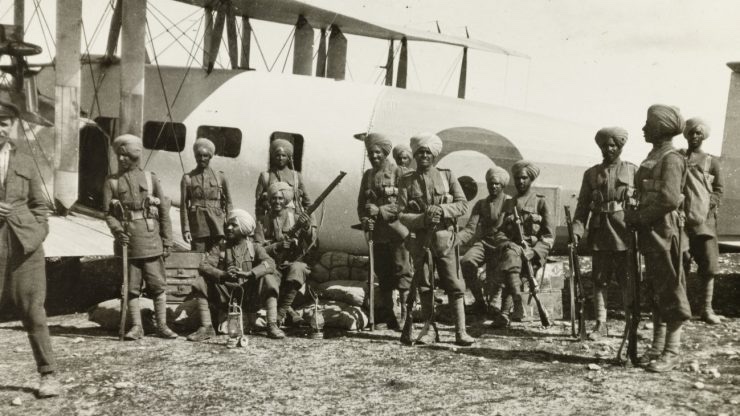
From Trenches to Terminus: A Century of Warfare’s Chilling Evolution

A century. The span of a modern human lifetime, yet in the realm of warfare, it’s a chasm of unimaginable transformation. From the mud-soaked trenches of World War I to the sterile, algorithm-driven battlefields of today, the face of conflict has been irrevocably altered. In February, I spent a morning immersed in John Akomfrah’s ‘Mimesis: African Soldier’ exhibition at Glasgow’s Gallery of Modern Art, confronted by the visceral realities of a war fought with flesh and bone, a war where the majority of stories remain untold. Now, we face a future where war is waged by machines, where the human cost is both diminished and amplified in terrifying new ways.

The Echoes of WWI and Akomfrah’s “Mimesis”:

Akomfrah’s multi-screen installation is a haunting reminder of war’s human toll, especially for those whose sacrifices were systematically erased from history. The archival footage, the flowing water over forgotten faces, the montage of fragmented narratives – it all speaks to the chaos, the brutality, and the enduring trauma of conflict. WWI, with its trenches, its mustard gas, its sheer, senseless slaughter, was a war fought with rudimentary technology and an almost medieval disregard for human life. The images of African soldiers within ‘Mimesis’ forces us to consider the colonial aspects of these wars, and the many who fought and died who were not given a voice. The experience left me with a profound sense of the weight of history, a history often obscured by the dominant narratives.

The Rise of the Machines:

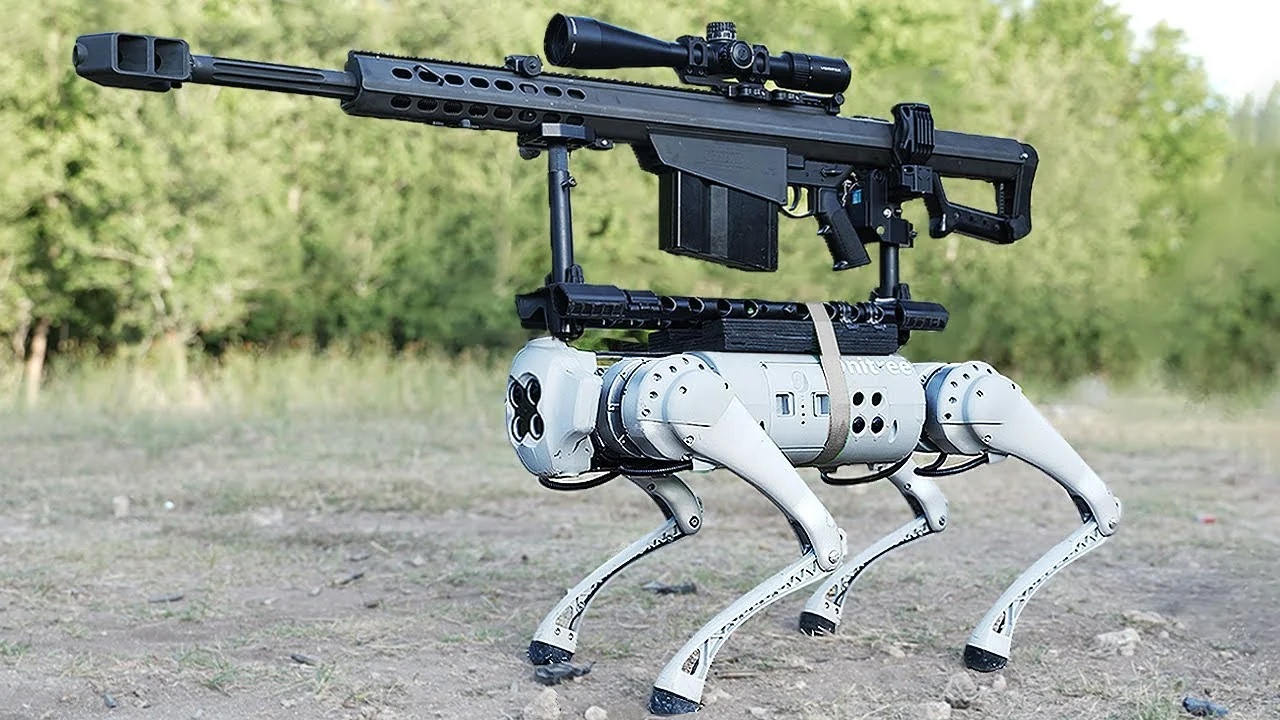
Fast forward to today, and the battlefield is a landscape of drones, AI, and robotic dogs armed with rocket launchers. The recent Ministry of Defence trials, showcasing robot dogs defusing bombs and drones autonomously detecting threats, paint a starkly different picture. We’re told these advancements ‘minimise human exposure to danger,’ that they ‘enhance Explosive Ordnance Disposal capability.’ But what about the ethical implications? What about the dehumanisation of conflict?

These robotic dogs, these AI-driven drones, they’re not just tools; they’re symbols of a profound shift in how we wage war. China’s deployment of advanced robotic dogs, designed to ‘change the approach to military operations,’ underscores this reality. The ‘precision movements’ and ‘remote classification of threats’ touted by defence officials mask a chilling truth: we’re entering an era where machines make life-or-death decisions.

Juxtaposition and Reflection:

The stark contrast between the human-centric horrors of WWI, as depicted in Akomfrah’s work, and the cold, calculated efficiency of modern robotic warfare is deeply unsettling. Where once soldiers faced each other across no man’s land, now machines engage in silent, unseen battles. The human element, once the defining feature of war, is being systematically removed.

This isn’t just about technological advancement; it’s about a fundamental, unsettling shift in our relationship with conflict. The distance created by these technologies—the drones, the remote-controlled robots, the AI-driven targeting systems—allows us to detach, to view war as a series of data points and algorithms, almost like a high-stakes video game. In fact, some of the footage we see now, with its crisp, digital clarity and detached perspective, bears an uncanny resemblance to scenes from ‘Call of Duty.’ But while the on-screen action might feel like entertainment, the consequences – the lives lost, the communities destroyed – remain as devastatingly real as ever. The danger lies in this blurred line, where the visceral horror of war is replaced by the sterile, almost gamified experience, potentially desensitizing us to the true cost of human conflict.

As we stand on the precipice of this new era, with growing global tensions, escalating trade conflicts, and the chilling specter of nuclear weapons being openly discussed, the threat of a third world war looms larger than ever. Yet, amidst this existential dread, we seem more preoccupied with petty snipes at Trump and the fleeting triumphs of social media one-upmanship. It’s a surreal disconnect. We must ask ourselves: what does it truly mean to wage war in the age of AI, when the very fabric of our reality is being reshaped by algorithms and automation? Are we genuinely safer, or are we merely constructing new and more insidious forms of peril, where the line between virtual and real becomes dangerously blurred? Akomfrah’s art compels us to confront the ghosts of past conflicts, the human stories buried beneath the rubble of history. The robotic dogs, with their cold, mechanical efficiency, force us to confront a future where human agency is increasingly questioned. Both past and future demand that we grapple with the human cost of conflict, in all its evolving forms, while simultaneously challenging our collective capacity for distraction and denial.

From the mud-soaked trenches of World War I to the sterile, digital battlefields of today, warfare has undergone a radical transformation, a transformation that now feels less like a distant future and more like a chilling present. For forty years, we’ve joked about the Terminator, about Skynet, about the rise of the machines, dismissing it as mere science fiction. But as we witness the deployment of AI-driven robotic dogs and the increasing gamification of conflict, that once-fantastical vision suddenly feels disturbingly real. The human capacity for both creation and destruction remains a constant, but the tools at our disposal have changed dramatically. As we embrace the technological advancements that promise to reshape our world, we can no longer afford to be detached observers, scrolling through social media while global tensions escalate. We must confront the ethical dilemmas that haunt us, the stories that have been silenced, and the very real possibility that the future we once laughed about is now upon us. The future of warfare is not just about machines; it’s about the choices we make as humans, choices that will determine whether we become the masters of our technology or its victims.

Your Morning Jolt Just Got Pricier: Coffee Costs Surge to Record Highs

“Hold onto your mugs, caffeine fiends, and maybe invest in a good cry towel. That beloved morning ritual is about to get a lot more expensive, and frankly, we’re all going to need a support group.

Arabica, the diva of roasted ground coffee lovers, has decided 2024 wasn’t dramatic enough, so it’s kicked things up a notch. We’re talking a staggering 70% increase in 2024 alone, followed by a nearly 20% jump this year, hitting an all-time high of over $4.30 per pound on February 11th. If your go-to brew is a smooth, aromatic blend, prepare for a potential dent in your wallet, and maybe a second mortgage.

And it’s not just Arabica throwing a tantrum. Robusta, the bean behind your instant coffee fix—the stuff that keeps you awake during those endless Agile stand-ups—surged a dramatic 72% in 2024, peaking at $5,847 per metric ton on February 12th. Whether you’re a drip coffee devotee or an instant enthusiast, the rising tide of bean prices is set to impact everyone.

So, what’s driving this caffeine crisis? Well, the ‘Apothoscene‘ is here, and it’s not bringing gifts. Climate change is throwing a full-blown hissy fit, turning key growing regions into something out of a Mad Max movie. Think scorched earth, bewildered farmers, and beans that taste faintly of existential dread. We’ll be diving deeper into the wonderful world of climate chaos in a separate blog post, because, let’s face it, we need to talk about the impending doom while we still have the jitters to do so.

And then there’s us, the consumers. We’re like a bunch of caffeine-addicted hamsters on a wheel, perpetually chasing that next hit. ‘Red Bull gives you wings,’ they said. ‘Coffee gives you focus,’ they said. Lies! All lies! We’re just fueling the fire, demanding more and more of the brown gold, even as the price skyrockets. It’s like we’re all participating in a global experiment to see how much we’re willing to pay for the privilege of not being functional humans.

Speaking of functional humans, maybe it’s time to re-evaluate our priorities. Are we going to let this caffeine crisis dictate our lives? Imagine a world where people can’t get their fix. Are we heading for a black market of coffee beans? Will legal weed be the new ‘soma’ of our Brave New World? Or, dare we suggest, maybe it’s time to ditch the dirty instant coffee and take the time to enjoy proper Arabica? Think of the joy and the time spent, like a true agile retrospective on your life.

Despite the soaring prices, it seems caffeine connoisseurs can’t kick the habit. In fact, they might be drinking more coffee than is produced globally in 2025 – a trend that has repeated itself for four out of the last six years. This insatiable demand, coupled with the rising costs, paints a challenging picture for both producers and consumers. It’s like we’re all stuck in an infinite sprint, with no end in sight.

Will we see a shift in consumer habits? Will the industry find ways to mitigate these price hikes? One thing’s for sure: the next cup of coffee might just be a little more precious, and maybe a little more expensive than your last sprint planning meeting. And if all else fails, start hoarding those beans. You never know, they might just become the new currency.”

Apple and Google: A Forbidden Love Story, with AI as the Matchmaker

Well, butter my biscuits and call me surprised! Apple, the company that practically invented the walled garden, has just invited Google, its long-standing frenemy, over for a playdate. And not just any playdate – an AI-powered, privacy-focused, game-changing kind of playdate.

Remember when Apple cozied up to OpenAI, and everyone assumed ChatGPT was going to be the belle of the Siri-ball? Turns out, Apple was playing the field, secretly testing both ChatGPT and Google’s Gemini AI. And guess who stole the show? Yep, Gemini. Apparently, it’s better at whispering sweet nothings into Siri’s ear, taking notes like a diligent personal assistant, and generally being the brains of the operation.

So, what’s in it for these tech titans?

Apple’s Angle:

  • Supercharged Siri: Let’s face it, Siri’s been needing a brain transplant for a while now. Gemini could be the upgrade that finally makes her a worthy contender against Alexa and Google Assistant.
  • Privacy Prowess: By keeping Gemini on-device, Apple reinforces its commitment to privacy, a major selling point for its users.
  • Strategic Power Play: This move gives Apple leverage in the AI game, potentially attracting developers eager to build for a platform with cutting-edge AI capabilities.

Google’s Gains:

  • iPhone Invasion: Millions of iPhones suddenly become potential Gemini playgrounds. That’s a massive user base for Google to tap into.
  • AI Dominance: This partnership solidifies Google’s position as a leader in the AI space, showing that even its rivals recognize the power of Gemini.
  • Data Goldmine (Maybe?): While Apple insists on on-device processing, Google might still glean valuable insights from anonymized usage patterns.

The Bigger Picture:

This unexpected alliance could shake up the entire tech landscape. Imagine a world where your iPhone understands your needs before you even ask, where your notes practically write themselves, and where privacy isn’t an afterthought but a core feature.

But let’s not get ahead of ourselves. There are still questions to be answered. How will this impact Apple’s relationship with OpenAI? Will Google play nice with Apple’s walled garden? And most importantly, will Siri finally stop misinterpreting our requests for pizza as a desire to hear the mating call of a Peruvian tree frog?

Only time will tell. But one thing’s for sure: this Apple-Google AI mashup is a plot twist no one saw coming. And it’s going to be a wild ride.

March 5th: Iron Curtains, Agile Fails, and the Ghost of Stalin (With Extra Cheese Doodles)

So, March 5th! You’d think it’d be just another Wednesday, right? Wrong. Like, imagine you’re planning your perfect agile sprint. Sticky notes, colour-coded tasks, the whole shebang. You’ve got your “definition of done” nailed down, your “user stories” are so crisp they could cut glass. You’re feeling good, maybe even a little smug. Then, BAM! Reality creeps up and shoves a branch in your front wheel.

It’s like that time Churchill, back in ’46, on this very day, March 5th, decided to drop the “Iron Curtain” bomb. In Fulton, Missouri, US of A, of all places. Pontificating, “Europe’s getting divided, folks!” Talk about a major pivot. Imagine trying to run an agile project with an iron curtain slicing your team in half. “Sprint review? Nah, we’re building a wall.”

That’s kind of how it feels in the office sometimes? You’re all about “iterative development,” then some global event, or a rogue email, or just the pure, unadulterated chaos of human interaction, throws a wrench into your perfectly planned sprint. Your carefully crafted roadmap becomes a discarded lottery ticket, hopes dashed.

Speaking of chaos, let’s not forget Stalin, bless his dictatorial soul. Died on March 5th, 1953. Cue the “thaw,” or at least, the “slightly less frozen” era. Like, “Hey, maybe we can have a meeting with the other side? Bring (cheesy) snacks and vodka?” You’d think that would be a good thing, right? A moment of peace. But just like with a good agile sprint, the goal posts keep moving. The project evolves, from open warfare to passive-aggressive diplomacy.

The Russian opera ends, the curtain closes, and a new act is being written, with China as the main player. It’s like history’s playing a remix of a bad 80s synth-pop song, and we’re all stuck in the mosh pit. “Agile transformation? More like global geopolitical anxiety transformation.”

But hey, at least it’s National Cheese Doodle Day. So, grab a handful of orange dust, try not to think about the looming global conflicts, and remember: even Stalin had to go eventually. As long as we have the sprint backlog groomed, acceptance criteria defined, and we’re ready for sprint execution! This time, we’re aiming for a zero-blocker sprint! …Unless the printer throws a merge conflict, the Wi-Fi goes into maintenance mode, or the coffee machine enters its ‘refactoring’ phase. But hey, that’s the sprint life! March 5th, we’re ready for your user stories…and your bugs!

The Agile Phone Line is Cracking Up: Is it Time to Hang Up?

Ah, March 3rd, 1876. A momentous date indeed, when Alexander Graham Bell first summoned Mr. Watson through the magic of the telephone. A groundbreaking invention that revolutionized communication and paved the way for countless innovations to come. But amidst our celebration of this technological milestone, let’s turn our attention to a more recent communication phenomenon: Agile.

Agile, that wondrous methodology that promised to streamline software development and banish the demons of waterfall projects, has become as ubiquitous as the telephone itself. Stand-up meetings, sprints, and scrum masters are now the lingua franca of the tech world, a symphony of buzzwords and acronyms that echo through the halls of countless software companies. But as we reflect on the legacy of the telephone and its evolution, perhaps it’s time to ask ourselves: Is Agile starting to sound a bit like a dial-up modem in an age of broadband?

Remember Skype? That once-beloved platform that connected us across continents, now destined for the digital graveyard on May 5th. Skype, like Agile, was once a revolutionary tool, but time and technology march on. Newer, shinier platforms have emerged, offering more features, better integration, and a smoother user experience. Could the same fate await Agile? With the rise of AI, machine learning, and automation, are we approaching a point where the Agile methodology, with its emphasis on human interaction and iterative development, becomes obsolete?

Perhaps the Agile zealots will scoff at such a notion, clinging to their scrum boards and burn-down charts like a security blanket. But the writing may be on the wall. As AI takes on more complex tasks and automation streamlines workflows, the need for constant human intervention and feedback loops might diminish. The Agile circus, with its daily stand-ups and endless retrospectives, could become a relic of a bygone era, a quaint reminder of a time when humans were still the dominant force in software development.

And speaking of communication, who could forget the ubiquitous “mute button” phenomenon? That awkward silence followed by a chorus of “You’re on mute!” has become a staple of virtual meetings, a testament to our collective struggle to adapt to the digital age. It’s a fitting metaphor for the challenges of communication in an Agile world, where information overload and constant interruptions can make it difficult to truly connect and collaborate.

So, as we raise a glass to Alexander Graham Bell and his telephonic triumph, let’s also take a moment to reflect on the future of Agile. Is it time to hang up on the old ways and embrace a new era of software development, one driven by AI, automation, and a more streamlined approach? Or can Agile adapt and evolve to remain relevant in this rapidly changing landscape? Only time will tell. But one thing is certain: the world of technology never stands still, and those who fail to keep pace risk being left behind, like a rotary phone in a smartphone world.

Tick-Tock, Goes the Doomsday Clock, While We Debate Furries and Pronouns

The ghost of the Minutemen stirs. Not the ragtag band of farmers who faced the redcoats at Lexington and Concord, but their namesake, the LGM-30 Minuteman III intercontinental ballistic missile. A weapon born of the Cold War, a child of the very neutron Chadwick discovered on this day in 1932, now tested amidst a different kind of chill. A chill not just of geopolitics, but of a society seemingly more concerned with the intricacies of gender identity and the ethics of anthropomorphic animal costumes than the looming shadow of nuclear annihilation.

Vandenberg Space Force Base, that gleaming monument to military might, recently played host to another Minuteman test launch. A spectacle of fire and fury, a demonstration of “readiness, precision, and professionalism,” as the Air Force assures us. But readiness for what, exactly? To defend against 21st-century threats, they say. Threats that apparently include TikTok dances, pronoun debates, and the ever-present danger of cancel culture.

Meanwhile, the Doomsday Clock, that grim timepiece of existential dread, was moved to 89 seconds to midnight. Closer than ever before, a hair’s breadth from the abyss. Yet, the collective consciousness seems oddly unfazed. We’re too busy arguing about pronouns and whether it’s culturally appropriate to wear a furry suit to the supermarket to notice the mushroom cloud gathering on the horizon.

It’s a strange paradox, this modern age. We have the technology to destroy ourselves a thousand times over, yet we’re consumed by debates that, in the grand scheme of things, seem utterly trivial. It’s as if Nero fiddled while Rome burned, only this time, the fiddle is replaced by a smartphone, and the flames are licking at the very fabric of our existence.

Perhaps it’s a coping mechanism, a way to distract ourselves from the harsh realities of a world teetering on the brink. Or perhaps it’s a symptom of a deeper malaise, a societal ADHD that prevents us from focusing on the truly important issues. Whatever the cause, the result is the same: a collective blindness to the existential threats that loom large, while we squabble over semantics and social media trends.

As the Minutemen soar through the skies, their trails of smoke a grim reminder of our capacity for self-destruction, let us take a moment to pause, to look beyond the manufactured outrage and the digital distractions, and to consider the bigger picture. For the Doomsday Clock is ticking, and while we may not be able to stop it, we can at least choose to face it with open eyes and a clear conscience. And maybe, if we can tear ourselves away from the endless scroll of social media and the manufactured outrage of the day, we can find a way to pull ourselves back from the brink. Or at least go down swinging with a bit more dignity than a Twitter troll.

Further reading :

United States Space Force https://www.spaceforce.mil/News/Article-Display/Article/4070872/minuteman-iii-test-launch-showcases-readiness-of-us-nuclear-forces-safe-effecti/

Doomsday clock https://thebulletin.org/doomsday-clock/

February 27th: Reichstag Fire, a Dubious War, a Neutron, and a Goon: Reflections on a Day of Historical Significance

Good morrow, dear readers, and welcome to this grand exploration of historical happenings on this momentous day, February 27th! Now, I know what you’re thinking: “What could possibly connect a burning building in 1930s Germany, a war in the Middle East, a subatomic particle, and a comedic genius?” Well, hold onto your hats, folks, because we’re about to embark on a whirlwind tour of history, with a dash of Agile wisdom sprinkled in for good measure.

1933: The Reichstag Fire – A Domino Effect and Echoes of Today

Ah, 1933. A year of flappers, jazz, and… the rise of a certain rather unpleasant political party in Germany. On this very day, the Reichstag building, home to the German parliament, went up in flames. Now, while the exact cause of the fire remains a bit of a mystery (was it an inside job? Was it a lone wolf with a penchant for pyrotechnics?), the consequences were anything but ambiguous. The Nazis, ever opportunistic, seized upon the chaos, using the fire as an excuse to consolidate their power and crack down on any opposition. It was a crucial tipping point, a domino effect that ultimately led to one of the darkest chapters in human history.

And here’s the kicker, folks: history has a funny way of repeating itself. Look around the world today, and you’ll see echoes of those same tactics – fearmongering, scapegoating, the erosion of democratic institutions. It’s a stark reminder that we must remain vigilant, that the price of freedom is eternal vigilance, as some wise chap once said. And perhaps, just perhaps, a bit of Agile thinking wouldn’t go amiss. After all, Agile is all about adapting to change, responding to uncertainty, and embracing transparency – qualities that could come in handy when navigating the choppy waters of political turmoil.

1932: The Neutron – A Tiny Particle with a Big Impact

But enough about war and politics, let’s delve into the fascinating world of science! On this day in 1932, James Chadwick discovered the neutron, a tiny little particle that resides at the heart of every atom (except hydrogen, which is a bit of a loner). Now, I know what you’re thinking: “What’s so special about a neutron?” Well, my friends, this unassuming particle revolutionised our understanding of atomic physics, paving the way for nuclear fission, the Manhattan Project, and, of course, the atomic bomb.

But let’s not dwell on the negative. The discovery of the neutron also opened up exciting possibilities for nuclear energy, a clean and sustainable source of power that could potentially solve our planet’s energy woes. So, while the atom bomb might be a bit of a downer, let’s not forget the positive side of nuclear science. And who knows, maybe with a bit of Agile thinking, we can finally crack the code on safe and efficient nuclear fusion, ushering in a new era of clean energy for all.

1991: “Victory” in the Gulf – A War Criminal’s Legacy

Fast forward to 1991, and we find ourselves in the midst of another historical event: the end of the Persian Gulf War. “Victory” was declared, flags were waved, and everyone went home happy, right? Well, not quite. Let’s not forget that this was an illegal war, a war built on lies and deception, a war that resulted in the deaths of countless innocent civilians. And who was the mastermind behind this grand charade? None other than our very own Tony Blair, a man who, despite his war crimes, has yet to face any real accountability. Ah, the joys of being on the winning side – your crimes are swept under the rug, your misdeeds forgotten. It’s enough to make you lose faith in humanity, isn’t it?

But fear not, dear readers, for Agile is here to save the day! (Well, maybe not save the day, but at least offer some helpful principles.) Agile, with its emphasis on collaboration, iterative progress, and continuous feedback, could perhaps have prevented such a disastrous conflict. Imagine if our leaders had adopted an Agile mindset, if they had prioritised open communication and transparency, if they had been willing to adapt their plans based on new information (like there were no WMDs and it was all a ruse). Perhaps then, countless lives could have been saved, and the world would be a slightly less messed up place.

2002: Farewell to a Goon

And finally, we come to the comedic genius himself, Spike Milligan. On this day in 2002, the world bid farewell to one of the greatest comedic minds of all time. Milligan, with his absurdist humor, his irreverent wit, and his penchant for the downright silly, left an indelible mark on the world of comedy. He was a true original, a Goon Show pioneer, a master of the unexpected.

So, in honour of Milligan’s legacy, let’s approach the rest of today with a healthy dose of silliness and irreverence. After all, laughter is the best medicine, as they say. And who knows, maybe by embracing our inner Goon, we can find new and creative solutions to the world’s problems, and boy does it feel like there are plenty of those bubbling up at the moment.

And there you have it, folks! A whirlwind tour of historical events on this glorious 27th of February. Remember, history is more than just dates and facts – it’s a tapestry of triumphs and tragedies, of discoveries and disasters, of laughter and tears. Let us learn from the past, embrace the present, and, with a bit of Agile thinking and a Goon-like spirit, build a better future for all.

(P.S. If you’re feeling particularly adventurous, why not try writing your next Agile project report in the style of a Goon Show script? Your stakeholders might be a bit confused, but at least it’ll liven up those boring meetings!)

The Ghost of October: Echoes of the Cuban Missile Crisis in Today’s World

Sixty-one years ago, the world held its breath. President John F. Kennedy, in a somber address on October 22nd, 1962, revealed the chilling discovery of Soviet nuclear missiles in Cuba. The Cuban Missile Crisis, a 13-day standoff, brought humanity closer to nuclear annihilation than ever before.

Kennedy’s resolute yet measured response, a naval blockade combined with back-channel diplomacy, ultimately averted catastrophe. The Soviets backed down, removing the missiles in exchange for a US pledge not to invade Cuba and the dismantling of US missile installations in Turkey.

But the ghost of October lingers. Today, a multitude of conflicts simmer across the globe, each with the potential to escalate into a wider conflagration. Gaza, Lebanon, Palestine, Iran, Israel – the Middle East remains a tinderbox of tensions. The war in Ukraine grinds on, with the spectre of nuclear escalation a constant worry. Sudan, Georgia, Mexico, Haiti, the Sahel, Myanmar – all face internal strife or external pressures that threaten to boil over.

A World on Edge, Lacking a Steady Hand

The Cuban Missile Crisis was defused through a combination of firmness and diplomatic finesse. Kennedy, despite facing immense pressure to launch a military strike, chose a path of calculated restraint. Crucially, he had a direct line of communication with Khrushchev, allowing for tense but ultimately successful negotiations.

Today, that kind of leadership seems absent from the world stage. The current geopolitical landscape is fractured, with mistrust and animosity running high. While diplomatic efforts are underway in various hotspots, the absence of a strong, universally respected leader capable of bridging divides and de-escalating tensions is deeply concerning.

What Can Be Done?

While the challenges are immense, there are steps that can be taken to mitigate the risks:

  • Strengthening international institutions: The UN and other multilateral organisations need to be empowered to play a more effective role in conflict prevention and resolution.
  • Investing in diplomacy: Sustained diplomatic efforts are crucial to address the root causes of conflicts and build trust between adversaries.
  • Promoting dialogue and understanding: Open communication channels and cultural exchanges can help to break down barriers and foster cooperation.
  • Exercising restraint: Leaders must resist the temptation to resort to military force and instead prioritise peaceful solutions.

The world cannot afford to sleepwalk into another October crisis. The echoes of 1962 should serve as a wake-up call, urging us to pursue a path of peace and diplomacy before it’s too late.

Che Guevara: The Enduring Symbol of Revolution

It is October 9th, a date etched in history as the day Che Guevara was executed in 1967. But Che’s death didn’t extinguish his flame; it ignited it. He transformed into a legend, a potent symbol of rebellion and anti-imperialism that continues to resonate with many, even today.

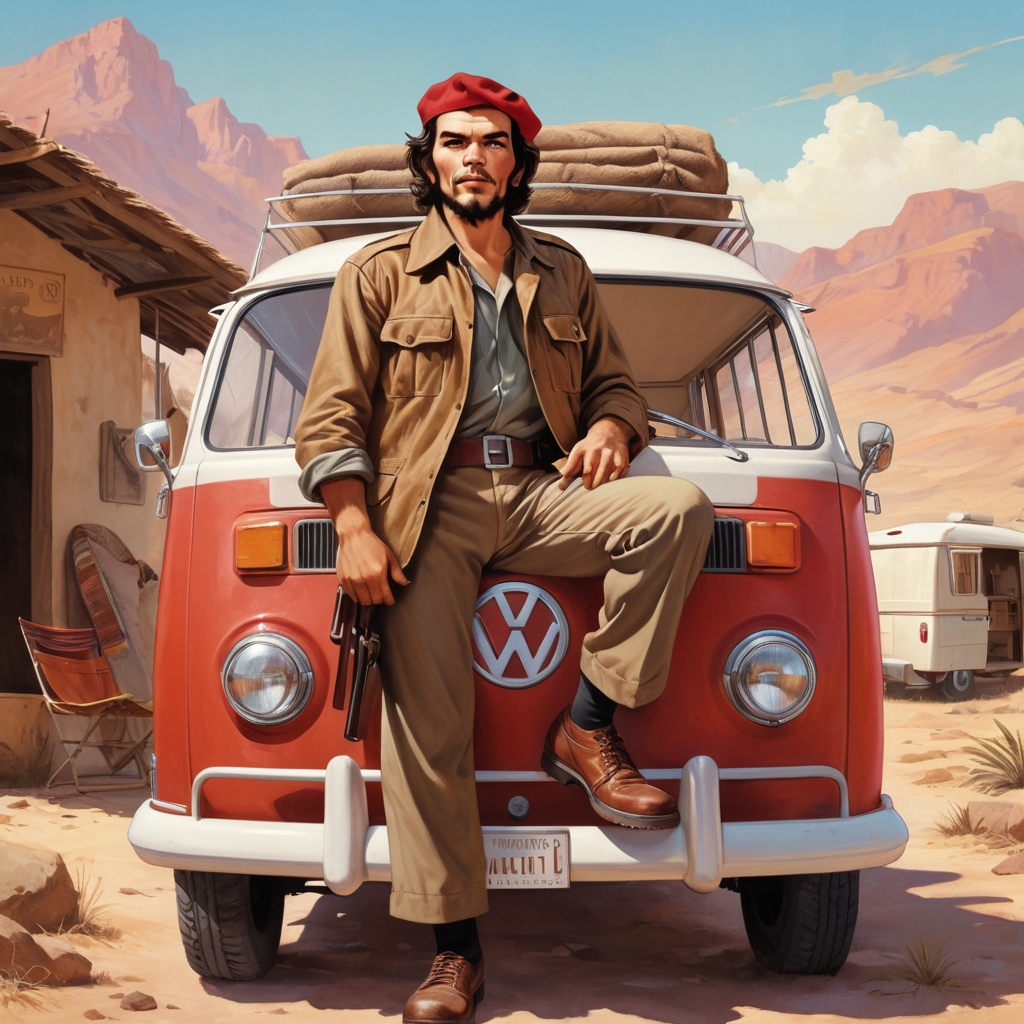
I remember vividly a cross-Europe trip in 1989, crammed into a VW camper van with a close friend. He was a fervent admirer of Che, and the journey became a rolling seminar on revolutionary ideals. My friend, would recount tales of Che’s guerrilla campaigns, his unwavering commitment to social justice, and his defiance of capitalist hegemony.

Che’s image, immortalised in that iconic beret-clad photograph, adorned our van like a talisman. It was a symbol of solidarity with the oppressed, a beacon of hope for a more equitable world.

But Che was more than just a charismatic figurehead. He was a complex individual, a doctor turned revolutionary, a man of action and intellectual curiosity. He was driven by a deep sense of empathy for the downtrodden and a burning desire to dismantle systems of oppression.

His legacy, however, is multifaceted and subject to varying interpretations. While some revere him as a champion of the people, others criticise his methods and ideology. It’s essential to engage with the full spectrum of his history, acknowledging both his contributions and the controversies surrounding his actions.

Regardless of one’s perspective, Che’s impact on the 20th century is undeniable. He remains a powerful reminder of the human capacity for idealism, sacrifice, and the pursuit of a better world. His story compels us to grapple with complex questions about power, justice, and the role of individuals in shaping history.