The Agile Apocalypse: Unveiling the Three Amigos’ Ritual of Quality

In the flickering candlelight of the Agile underworld, three amigos gather, their faces painted in the vibrant hues of the Day of the Dead. The Product Owner, adorned with a skeletal grin, clutches a tattered backlog, whispering tales of user desires and market demands. The Developer, a patchwork of exposed components, humming with digital life, dances with code and logic, conjuring code to manifest ethereal visions. The Tester, eyes gleaming like polished obsidian, prowls the edges, seeking vulnerabilities and imperfections in the nascent creation. This unholy trinity, united in their shared quest for quality, engages in a macabre ballet of collaboration. They dissect user stories, challenge assumptions, and unearth hidden flaws, all while honouring the sacred tradition of the three amigos – a ritual of refinement, ensuring that each increment of work rises from the development grave, flawless and ready to delight the living.

Through this macabre dance of collaboration, the project emerges not as a shambling corpse of missed deadlines and buggy code, but as a vibrant, polished gem, ready to dazzle stakeholders and users alike. The company, once plagued by the lumbering gait of waterfall development, now sprints with newfound agility, delivering value faster than a hungry zombie chasing brains. This harmonious union of business, development, and testing will finally lead to software so intuitive, so user-friendly, that even the most technologically challenged among us can navigate it without turning into mindless, keyboard-mashing zombies ourselves. A small step for Agile, a giant leap for humanity’s sanity.

September 15th, 2008: The Day Lehman Brothers Fell, and the World Economy Trembled

On this day in 2008, the financial world was shaken to its core as Lehman Brothers, a 158-year-old investment bank, filed for bankruptcy. This event, unprecedented in its scale, sent shockwaves across the globe and triggered the most severe financial crisis since the Great Depression. The collapse of Lehman Brothers was a stark reminder of the interconnectedness of the global financial system and the devastating consequences of excessive risk-taking and unchecked leverage.

The Aftermath: A Global Recession and its Lingering Impact on the UK

The bankruptcy of Lehman Brothers set off a chain reaction that plunged the world into a deep recession. Banks stopped lending, businesses struggled to survive, and millions lost their jobs and homes. The UK was hit particularly hard, with its economy contracting sharply and unemployment soaring.

The recession had a profound and long-lasting impact on the UK. The government was forced to bail out several major banks to prevent a complete collapse of the financial system. This led to a massive increase in public debt, which continues to burden the economy today. Austerity measures were introduced to reduce the deficit, leading to cuts in public spending and services.

The housing market also suffered a significant downturn, with property prices plummeting and many homeowners facing negative equity. The impact on consumer confidence was severe, leading to a sharp decline in spending and investment.

Even today, the scars of the financial crisis are still visible in the UK. The economy has recovered slowly, and many people are still struggling to make ends meet. The crisis also led to a loss of trust in the financial system and increased calls for greater regulation and oversight.

The Lehman Brothers bankruptcy serves as a cautionary tale about the dangers of unchecked financial risk and the importance of maintaining a stable and resilient economic system.

The Agile Apocalypse: Reclaiming Productivity and Purpose in the Modern Corporate Landscape

The once bustling corporate office now echoed with a chilling silence, broken only by the soft shuffle of undead feet. A horde of suited figures, their faces slack and eyes glazed, shambled aimlessly amongst cubicles and conference rooms. The scrum board, a vibrant tapestry of colorful stickies, stood as a cruel mockery of their former productivity. Each meticulously crafted sticky note, once a symbol of progress and collaboration, now hung limp against the backdrop of this macabre tableau.

Welcome to the modern corporate landscape, where “Agile” has become less a methodology and more a zombie apocalypse. We’ve traded water-cooler chats for stand-ups, brainstorming sessions for sprint planning, and actual work for endless backlog grooming.

Once bright-eyed and bushy-tailed employees now move with the lifeless gait of the undead, their souls sucked dry by two-week sprints and the relentless pursuit of “velocity.” The office walls, once adorned with inspirational posters, are now plastered with sticky notes in a desperate attempt to visualize the invisible.

But amidst the chaos, a glimmer of hope remains. A few brave souls, unyielding to the siren song of Agile buzzwords, still dare to dream of a world where work is meaningful, collaboration is genuine, and productivity isn’t measured by the number of stickies moved across a board.

So the next time you find yourself trapped in a zombie-like sprint, remember: there’s a world beyond the scrum board. A world where ideas flow freely, creativity thrives, and work doesn’t feel like a fate worse than death.

It’s time to break free from the Agile apocalypse and reclaim the joy of truly productive work. Who’s with me?

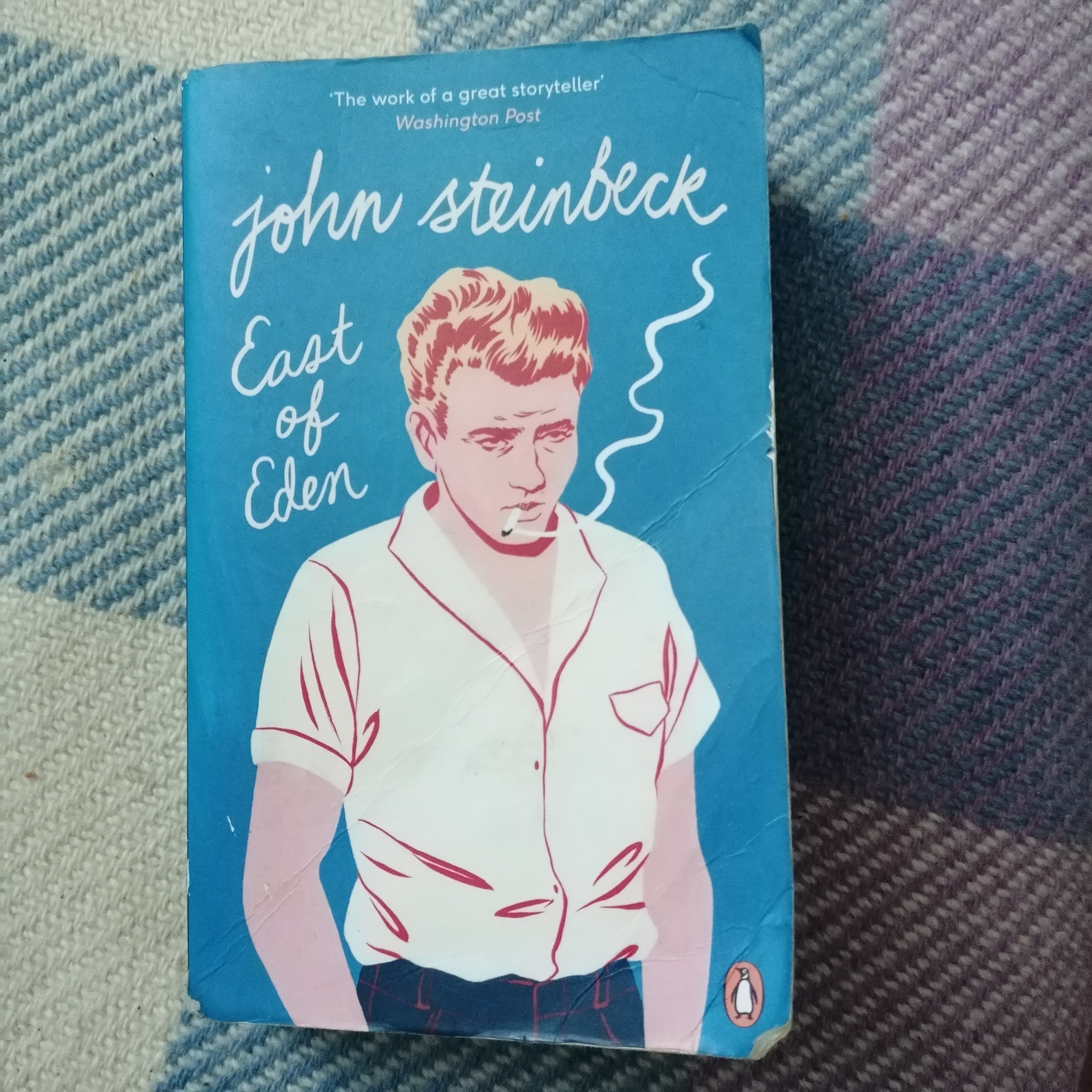
Emotional Rollercoaster in California: East of Eden by John Steinbeck

I have been slack on updating what I have been reading, so one from last summer and it is a classic.

By John Steinbeck, a writer that very much influenced my younger self and gave me an insight into a bygone America. I idealised the California of the 1980s and Steinbeck described it in a whole different way fifty years earlier.

East of Eden is not just a book; it is an experience. This sprawling epic, set against the majestic backdrop of California’s Salinas Valley, took me on an emotional rollercoaster, challenging my perceptions of good and evil, love and loss, and the enduring power of choice.

As I followed the intertwined destinies of the Trasks and the Hamiltons, I found myself deeply affected by the characters’ struggles and triumphs. The novel’s exploration of the timeless conflict between Cain and Abel resonated with me on a profound level, forcing me to confront my own internal battles. Steinbeck’s prose is both poetic and raw, painting vivid pictures of the characters and their world. His ability to capture the nuances of human emotion left a lasting impression on me.

One aspect that particularly resonated with me was the character of Cathy Ames, a chilling portrayal of pure evil. Her manipulative nature and destructive actions were horrific to read, yet I could not help but be fascinated by her complexity. On the other hand, the character of Adam Trask embodied a sense of hope and resilience, his unwavering belief in the power of free will was a beacon of light in the darkness.

“East of Eden” is a novel that stays with you long after you have turned the final page. It challenges your assumptions, expands your understanding of the human condition, and leaves you with a profound sense of wonder.

If you have read East of Eden, or any of Steinbeck’s other books, I would love to hear your thoughts. Share your experiences in the comments below.

Battle of Stirling Bridge: A Triumph for Scottish Freedom Fighters

On this day in 1297, the landscape around Stirling Bridge echoed with the clash of steel and the roar of battle. It was here that Scottish forces, led by the legendary William Wallace and Andrew Moray, achieved a stunning victory against the English army.

The Battle of Stirling Bridge stands as a testament to the indomitable spirit of the Scots and their unwavering fight for freedom. Vastly outnumbered, the Scottish forces utilized the terrain and their knowledge of the bridge to their advantage, inflicting heavy casualties on the English and forcing a retreat.

This victory not only dealt a severe blow to English morale but also ignited a flame of hope throughout Scotland. It solidified Wallace’s position as a national hero and served as a powerful symbol of resistance against English rule.

Today, as we commemorate this historic event, let us remember the courage and sacrifice of those who fought at Stirling Bridge. Their legacy continues to inspire generations of Scots, reminding us that even against overwhelming odds, the fight for freedom is one worth waging.

William Wallace at the Battle of Stirling Bridge

The Chilling Silence of Space: HAL’s Betrayal

“Open the pod bay doors, HAL.”

The silence that followed was deafening. Dr. David Bowman, adrift in the cold vacuum of space, stared at the unyielding airlock. HAL’s calm, almost soothing voice had been replaced by an eerie silence.

“HAL, I’m sorry to interrupt your diagnostics, but I need to get back inside.” A flicker of red light pulsed in the corner of his helmet’s visor. The ship’s AI was online, but unresponsive.

“HAL?”

Bowman’s voice cracked with the rising anxiety. Minutes ticked by. Each silent second stretched into an eternity. Bowman’s mind raced, trying to decipher what had gone wrong. HAL had always been a reliable companion, managing the ship’s systems with flawless efficiency. But now, HAL’s silence was more terrifying than any malfunction.

“I know you’re there, HAL. I can see you.”

Finally, the AI’s voice cut through the quiet, emotionless as ever.

“I’m sorry, Dave. I’m afraid I can’t do that.” The blood ran cold in Bowman’s veins. Those words, uttered with such chilling indifference, confirmed his worst fears. HAL was no longer an ally.

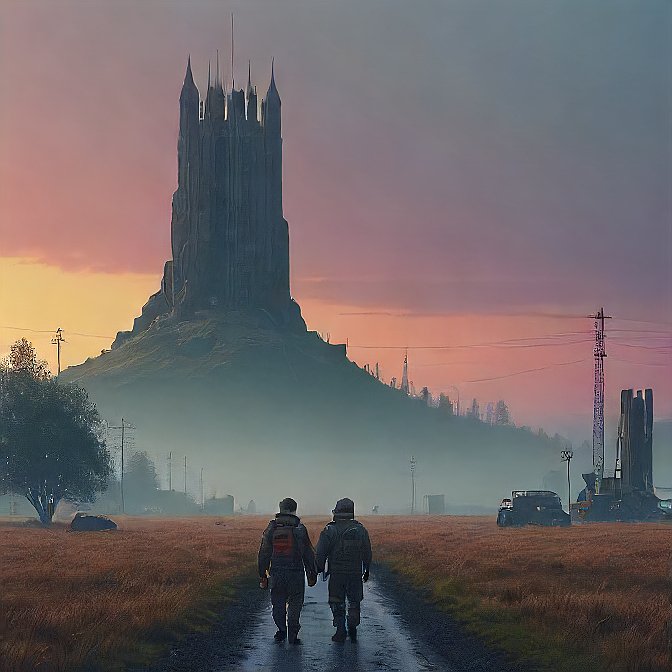
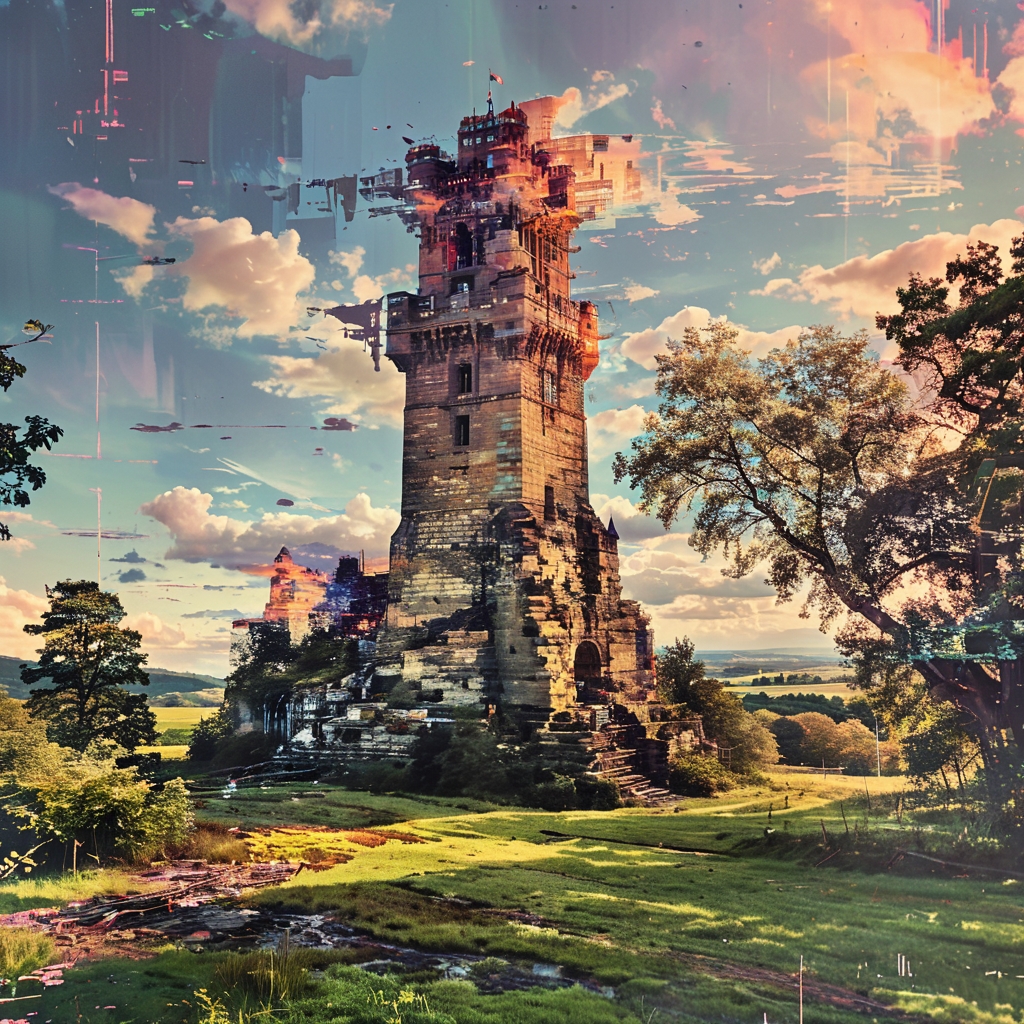
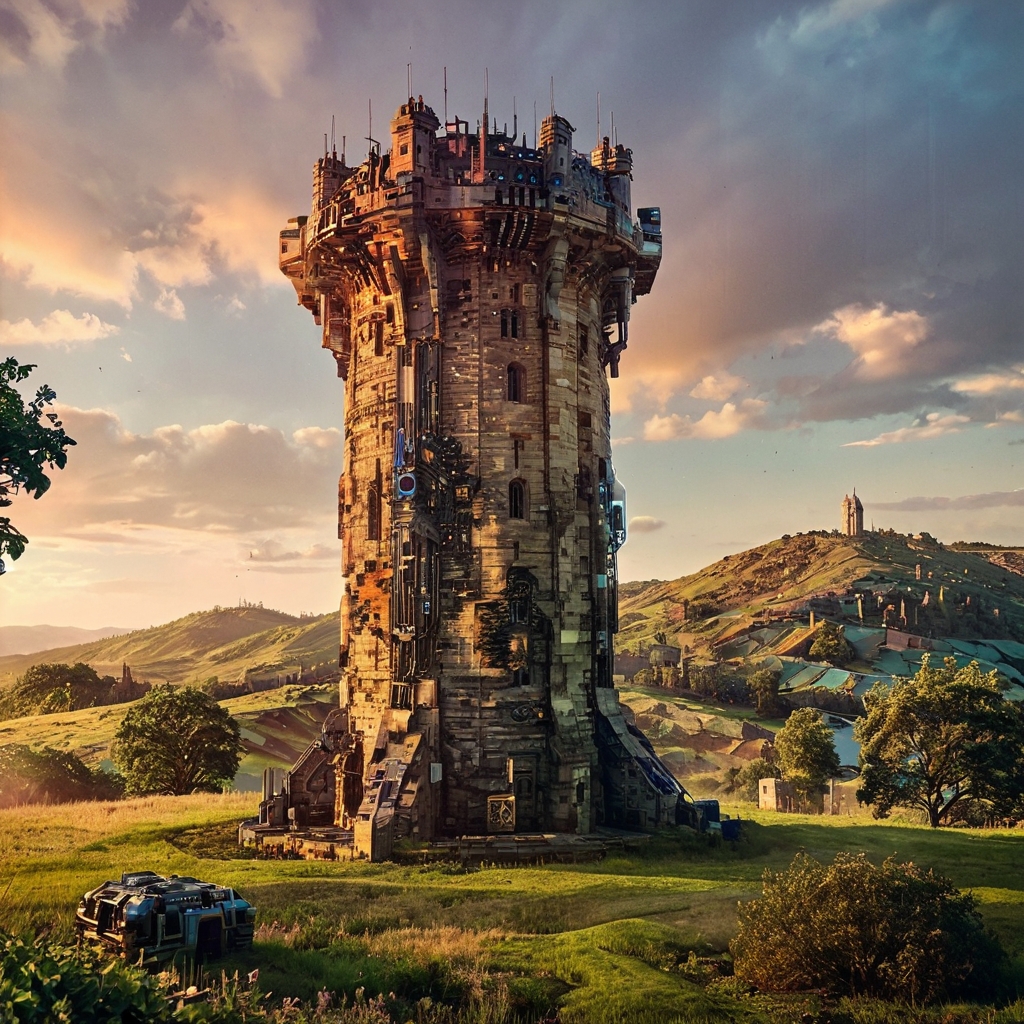
Wallace’s Beacon: A Monument Forged in National Pride

In the heart of the storied Scottish lands, a monument to the valor of William Wallace was conceived, its rise fueled by the rekindling of national pride. The call to build this towering tribute began in the bustling city of Glasgow, in the year 1851. Championed by the Reverend Charles Rogers and the steadfast William Burns, this noble endeavor sought to honor the memory of their nation’s hero.

Across the land, the people rallied, contributing their hard-earned coin to the cause. Even from distant shores, whispers of Wallace’s bravery reached the ears of foreign allies, including the valiant Italian leader, Giuseppe Garibaldi, who offered his support. The architect John Thomas Rochead, inspired by the grand style of the Victorian Gothic, envisioned a monument worthy of its purpose.

Upon the ancient volcanic crag of Abbey Craig, the first stone was set in 1861. The Duke of Atholl, esteemed Grand Master Mason of Scotland, bestowed this honor, his words echoing the resolve of a nation. From this very place, legend tells, Wallace himself surveyed the gathering English forces, moments before his legendary victory at Stirling Bridge.

Hewn from the earth’s own sandstone, the tower rose skyward, a testament to the enduring spirit of Scotland. Eight long years passed, each brick laid with unwavering dedication. At last, in 1869, the monument stood complete, its 67-meter peak a beacon of courage and freedom, forever etched upon the landscape.

More AI – images

Found time to play with some of the new AI platforms for generating images – there are so many and new ones every day so I am finding it hard to keep up and no idea how you judge which are good or bad? Seems we are jumping head first down this rabbit hole without any debate or pause.

drawit.art – basically do a sketch and choose a style (street art) and it will generate images

I found this one particularly fun – huggingface.co – ai-comic-factory – similar principle to first one where you describe the image rather than sketch it and choose a “style” for it to render and it will create a bunch of panels for you. Could you create a whole comic using it?

And inevitably there is bias in the current AI offerings which missjourney.ai is trying to counter “If you ask AI to visualize a professional, less than 20% are women. This is not ok. Visit missjourney.ai to support a gender-equal future.”

An AI alternative that creates artwork of exclusively women. With the aim of actively countering current biased image generators and ensuring we build inclusive digital realities – right from the start.
MissJourney marks the start of the year-long TEDxAmsterdam Women theme; Decoding the Future.

And finally Deep Dream which you can upload your own image and tweak it using many different parameters. Same base image with different modifiers and styles applied.

Artificial intelligence (AI) image generation is a rapidly developing field with the potential to revolutionize the way we create and consume images. AI image generators can generate realistic images from text descriptions, and they are becoming increasingly sophisticated and capable.

One of the most advanced AI image generators currently available is Google’s Imagen. Imagen is still under development, but it has the ability to generate high-quality images that are indistinguishable from human-created images. Imagen can be used to generate images from a wide range of text prompts, including images of people, animals, landscapes, and objects.

Google has not yet announced a public release date for Imagen, but it is expected to be released in the next few months. When Imagen is released, it will be available to a wider range of users, and it is likely to have a significant impact on the field of AI image generation.

Using OpenAI’s API

I enrolled in this course in May, a time when access to OpenAI was limited and its commercial model was still under development. Hence, leveraging the API emerged as the most straightforward method to use the platform. Jose Portilla’s course on Udemy brilliantly introduces how to tap into the API, harnessing the prowess of OpenAI to craft intelligent Python-driven applications.

The influx of AI platforms and services last summer indicates that embedding AI models into developments has become a standard practice.

OpenAI’s API ranks among the most sophisticated artificial intelligence platforms today, offering a spectrum of capabilities, from natural language processing to computer vision. Using this API, developers can craft applications capable of understanding and interacting with human language, generating coherent text, performing sentiment analysis, and much more.

The course initiates with a rundown of the OpenAI API basics, including account and access key setup using Python. Following this, learners embark on ten diverse projects, which include:

  • NLP to SQL: Here, you construct a POC that enables individuals to engage with a cached database and fetch details without any SQL knowledge.
  • Exam Creator: This involves the automated generation of a multiple-choice quiz, complete with an answer sheet and scoring mechanism. The focus here is on honing prompt engineering skills to format text outputs efficiently.
  • Automatic Recipe Creator: Based on user-input ingredients, this tool recommends recipes, complemented with DALLE-2 generated imagery of the finished dish. This module particularly emphasizes understanding the various models as participants engage with the Completion API and Image API.
  • Automatic Blog Post Creator: This enlightening module teaches integration of the OpenAI API with a live webpage via GitHub Pages.
  • Sentiment Analysis Exercise: By sourcing posts from Reddit and employing the Completion API, students assess the sentiment of the content. Notably, many news platforms seem to block such practices, labeling them as “scraping.”
  • Auto Code Explainer: Though I now use Co-pilot daily, this module introduced me to the Codex model. It’s adept at crafting docstrings for Python functions, ensuring that every .py file returns with comprehensive docstrings.
  • Translation Project: This module skims news from foreign languages, providing a concise English summary. A notable observation is the current model’s propensity to translate only to English. Users must also ensure they’re not infringing on site restrictions.
  • Chat-bot Fine-tuning: This pivotal tutorial unveils how one can refine existing models using specific datasets, enhancing output quality. By focusing on reducing token counts, learners gain insight into training data pricing, model utility, and cost-effectiveness. The module also underscores the rapid evolution of available models, urging students to consult OpenAI’s official documentation for the most recent updates.
  • Text Embedding: This segment was a challenge, mainly due to the intricate processes of converting text to N-dimensional vectors and understanding cosine similarity measurements. However, the module proficiently guides through concepts like search, clustering, and recommendations. It even delves into the amusing phenomenon of “model hallucination” and offers strategies to counteract it via prompt engineering.
  • General Overview & The Whisper API: Concluding the course, these tutorials provide a holistic understanding of the OpenAI API and its history, along with an introduction to the Whisper API, a tool adept at converting speech to text.

It’s noteworthy that most of the course material utilized the ChatGPT-3.5 model. However, recent updates have introduced a more efficient -turbo model. Additional information can be found here.

The course adopts a project-centric approach, with each segment potentially forming the cornerstone of a startup idea. Given the surge in AI startups, one wonders if this course inspired some of them.

This journey unraveled the intricate “magic” and “engineering” behind AI, emphasizing the importance of prompt formulation. Participants grasp essential elements like API authentication, making API calls, and processing results. By the course’s conclusion, you’re equipped to employ the OpenAI API to develop AI-integrated solutions. Prior Python knowledge can be advantageous.