Good morrow, dear readers, and welcome to this grand exploration of historical happenings on this momentous day, February 27th! Now, I know what you’re thinking: “What could possibly connect a burning building in 1930s Germany, a war in the Middle East, a subatomic particle, and a comedic genius?” Well, hold onto your hats, folks, because we’re about to embark on a whirlwind tour of history, with a dash of Agile wisdom sprinkled in for good measure.
1933: The Reichstag Fire – A Domino Effect and Echoes of Today
Ah, 1933. A year of flappers, jazz, and… the rise of a certain rather unpleasant political party in Germany. On this very day, the Reichstag building, home to the German parliament, went up in flames. Now, while the exact cause of the fire remains a bit of a mystery (was it an inside job? Was it a lone wolf with a penchant for pyrotechnics?), the consequences were anything but ambiguous. The Nazis, ever opportunistic, seized upon the chaos, using the fire as an excuse to consolidate their power and crack down on any opposition. It was a crucial tipping point, a domino effect that ultimately led to one of the darkest chapters in human history.
And here’s the kicker, folks: history has a funny way of repeating itself. Look around the world today, and you’ll see echoes of those same tactics – fearmongering, scapegoating, the erosion of democratic institutions. It’s a stark reminder that we must remain vigilant, that the price of freedom is eternal vigilance, as some wise chap once said. And perhaps, just perhaps, a bit of Agile thinking wouldn’t go amiss. After all, Agile is all about adapting to change, responding to uncertainty, and embracing transparency – qualities that could come in handy when navigating the choppy waters of political turmoil.

1932: The Neutron – A Tiny Particle with a Big Impact
But enough about war and politics, let’s delve into the fascinating world of science! On this day in 1932, James Chadwick discovered the neutron, a tiny little particle that resides at the heart of every atom (except hydrogen, which is a bit of a loner). Now, I know what you’re thinking: “What’s so special about a neutron?” Well, my friends, this unassuming particle revolutionised our understanding of atomic physics, paving the way for nuclear fission, the Manhattan Project, and, of course, the atomic bomb.
But let’s not dwell on the negative. The discovery of the neutron also opened up exciting possibilities for nuclear energy, a clean and sustainable source of power that could potentially solve our planet’s energy woes. So, while the atom bomb might be a bit of a downer, let’s not forget the positive side of nuclear science. And who knows, maybe with a bit of Agile thinking, we can finally crack the code on safe and efficient nuclear fusion, ushering in a new era of clean energy for all.
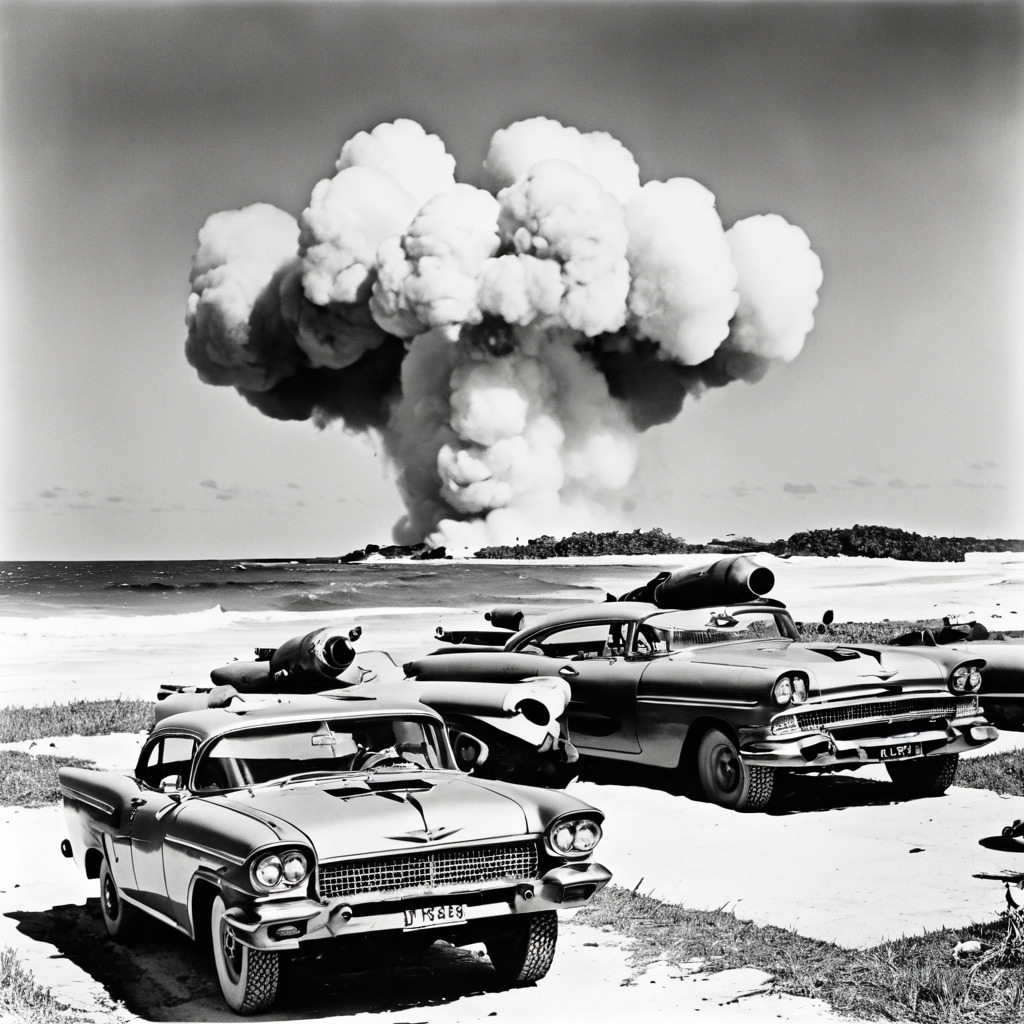
1991: “Victory” in the Gulf – A War Criminal’s Legacy
Fast forward to 1991, and we find ourselves in the midst of another historical event: the end of the Persian Gulf War. “Victory” was declared, flags were waved, and everyone went home happy, right? Well, not quite. Let’s not forget that this was an illegal war, a war built on lies and deception, a war that resulted in the deaths of countless innocent civilians. And who was the mastermind behind this grand charade? None other than our very own Tony Blair, a man who, despite his war crimes, has yet to face any real accountability. Ah, the joys of being on the winning side – your crimes are swept under the rug, your misdeeds forgotten. It’s enough to make you lose faith in humanity, isn’t it?
But fear not, dear readers, for Agile is here to save the day! (Well, maybe not save the day, but at least offer some helpful principles.) Agile, with its emphasis on collaboration, iterative progress, and continuous feedback, could perhaps have prevented such a disastrous conflict. Imagine if our leaders had adopted an Agile mindset, if they had prioritised open communication and transparency, if they had been willing to adapt their plans based on new information (like there were no WMDs and it was all a ruse). Perhaps then, countless lives could have been saved, and the world would be a slightly less messed up place.

2002: Farewell to a Goon
And finally, we come to the comedic genius himself, Spike Milligan. On this day in 2002, the world bid farewell to one of the greatest comedic minds of all time. Milligan, with his absurdist humor, his irreverent wit, and his penchant for the downright silly, left an indelible mark on the world of comedy. He was a true original, a Goon Show pioneer, a master of the unexpected.
So, in honour of Milligan’s legacy, let’s approach the rest of today with a healthy dose of silliness and irreverence. After all, laughter is the best medicine, as they say. And who knows, maybe by embracing our inner Goon, we can find new and creative solutions to the world’s problems, and boy does it feel like there are plenty of those bubbling up at the moment.

And there you have it, folks! A whirlwind tour of historical events on this glorious 27th of February. Remember, history is more than just dates and facts – it’s a tapestry of triumphs and tragedies, of discoveries and disasters, of laughter and tears. Let us learn from the past, embrace the present, and, with a bit of Agile thinking and a Goon-like spirit, build a better future for all.
(P.S. If you’re feeling particularly adventurous, why not try writing your next Agile project report in the style of a Goon Show script? Your stakeholders might be a bit confused, but at least it’ll liven up those boring meetings!)
 Shiel Yule