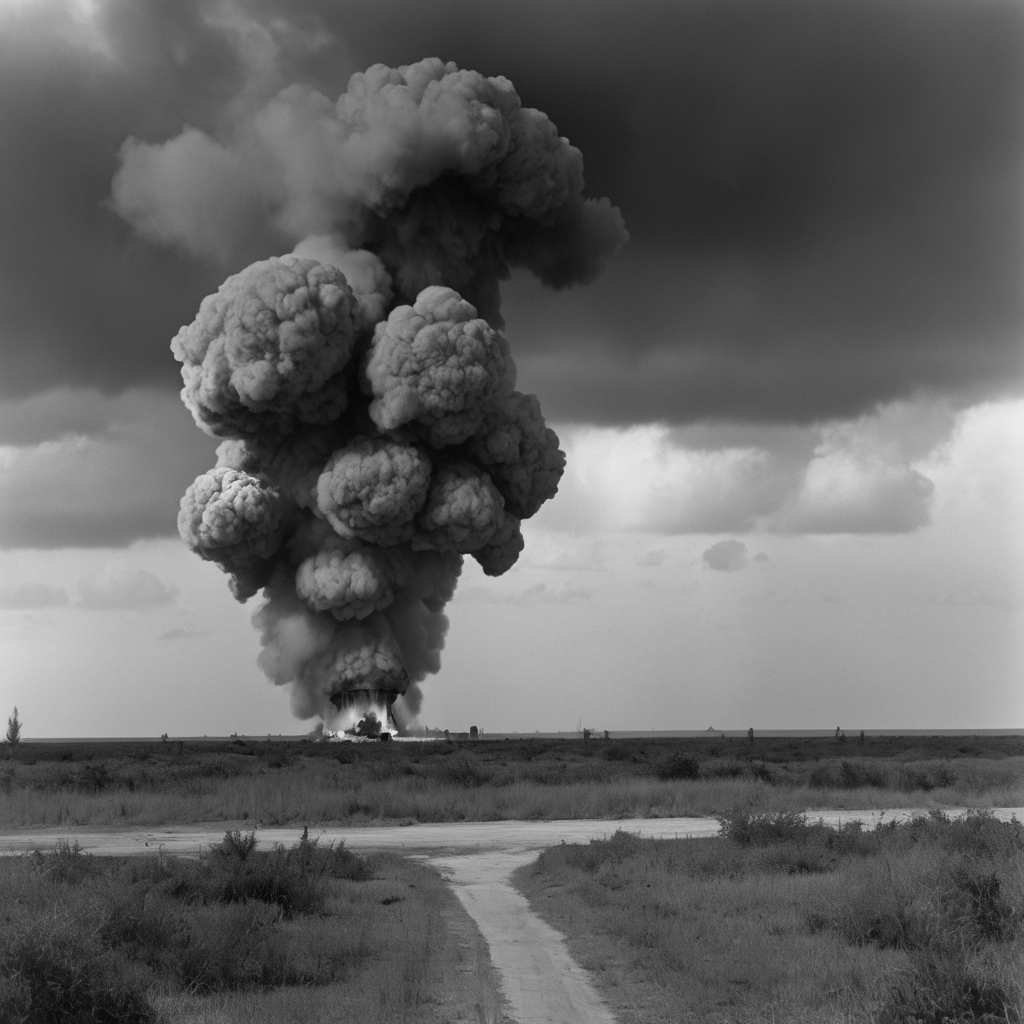
The Great Summer Holiday War – A Tale of Twelve Days and One Very Bad Tan

The thing about the end of the world is, it never happens in a flash of white light, not like the movies. It comes in a slow, sticky ooze, like a bad summer sunburn that peels off in big, unsightly flakes. It comes during the dog days, when the cicadas are screaming and you’re trying to figure out which cheap, flimsy inflatable to cram into the trunk of the station wagon. That’s when the 12-Day War started. You see, the folks in charge, the ones with all the medals and the permanent frowns, they’re just like you and me. They’re thinking, “Right, let’s get this over with before the big summer rush. No sense in ruining the whole bloody holiday season.”

It began on June 13, a day that felt like any other. A day for planning barbecues and arguing about which brand of charcoal burns the cleanest. But while you were fumbling with a folding chair, a surprise attack was launched. A decapitation strike, they called it. A fancy, surgical word that really just means “we’re gonna chop off the head and hope the body flops around and dies.” They aimed for the Iranian leadership, and boy, did they get some of them. Dozens of high-ranking guys in fancy suits—poof, gone.

The plan was simple, a classic B-movie plot from the 1980s: cut the head off the snake, and the whole thing falls apart. The American and Israeli powers-that-be sat back with their collective thumbs hooked in their suspenders, sure as sunrise that this would be the final act. They’d topple the government, get a good night’s sleep, and be back in time for the Fourth of July fireworks. A perfectly reasonable expectation, if you’re living inside a bad screenplay.

But here’s the thing about reality—it’s always got a twist. The Iranian government didn’t collapse. It staggered, it bled, but it didn’t fall. Instead, it straightened up, wiped the gore from its chin, and let out a bellow of pure, unadulterated fury. Then came the counterattack. Missiles—ballistic, hypersonic, the works—fell like a storm of metal rain, shrugging off every defense the Israelis could throw at them. The scale of the response was so absurdly, comically huge that the mighty US and Israel suddenly looked like two little kids who’d just poked a beehive with a stick. They stumbled back, yelping for a ceasefire.

Iran, naturally, told them to pound sand.

I mean, would you have? When you’ve got your boot on the other guy’s throat, you don’t just offer to shake hands and walk away. Not unless you get something good. And that’s where the humor, the beautiful, pathetic hypocrisy of the whole thing came into play. The only way to stop the bleeding was for President Trump, with a scowl that could curdle milk, to give them what they wanted.

And what they wanted, of all things, was to sell more oil to China.
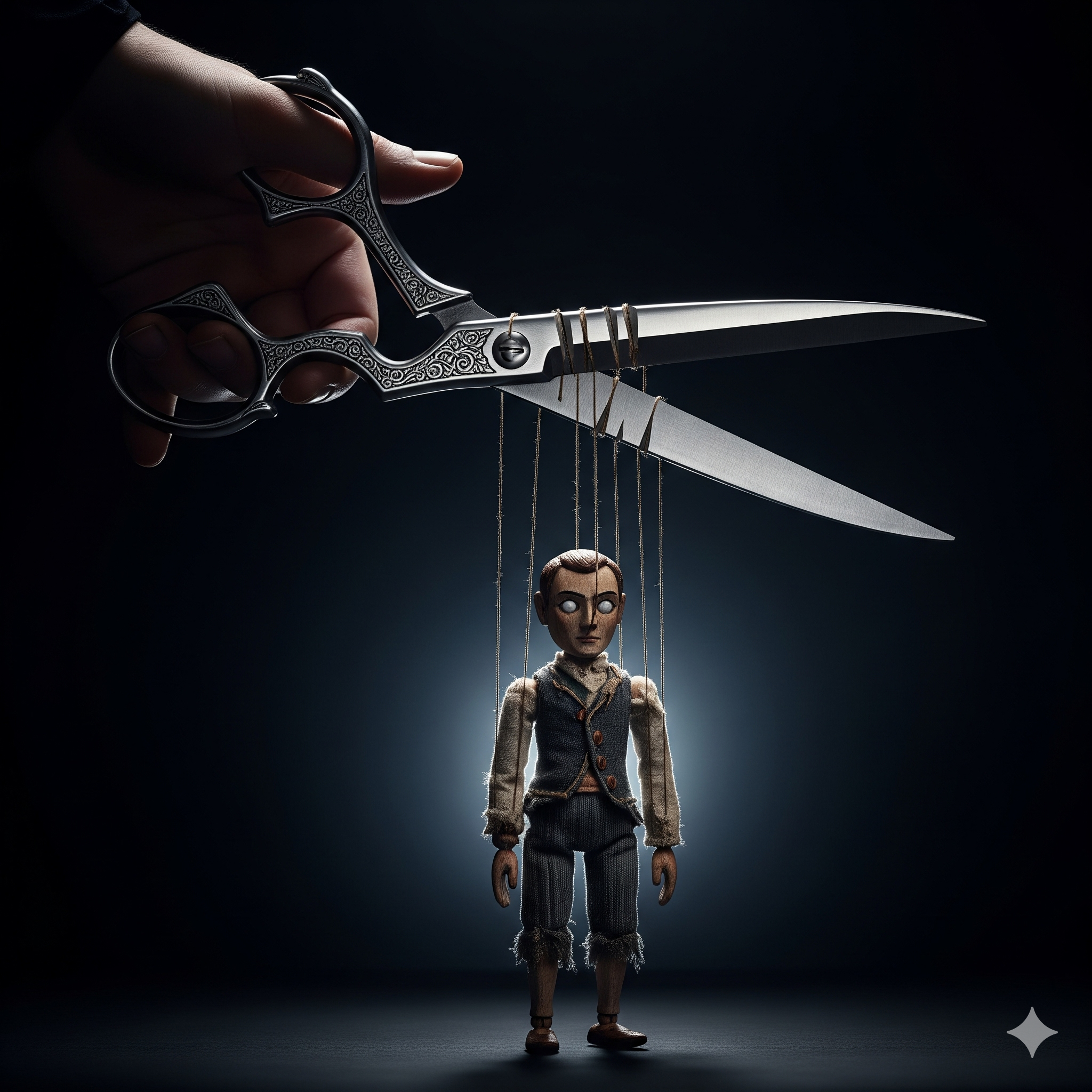
After years of sanctions, of trying to squeeze Iran until it squealed, the great geopolitical mastermind of the free world was forced to give them a golden ticket. Trump’s subsequent tweet—a masterpiece of bluster and spin—baffled everyone. It was a perfectly polished monument to the idea that you can tear down years of policy with a single, self-aggrandizing line. The world watched, slack-jawed, as the ultimate hypocritical concession was made: Here, you can sell oil to our biggest competitor, just please stop firing missiles at our friends.

What happened next was even more delicious. Rather than weakening the Iranian government, the attack had the exact opposite effect. It triggered a surge of nationalist pride, a kind of furious, unified defiance. It was a master class in what not to do when you’re trying to overthrow a government. You don’t make them martyrs. You don’t give them a reason to stand together. But that’s exactly what happened. Round 1 of this grand game didn’t just fail; it backfired spectacularly, like a rusty shotgun.

The war is far from over. This was only the opening skirmish, a mere twelve-day appetizer. The nuclear question remains, a festering, unhealed wound. The official story is that the program was “obliterated,” but that’s a lie you tell to yourself in the mirror after you’ve had a few too many. The truth is, Iran still has the know-how, the capacity, the grim determination to rebuild whatever was lost. All we did was kick a hornet’s nest.

So now, the only path forward for the US and Israel is a full-scale, ground-pounding war. The kind that chews up men and metal and spits out dust. The kind that makes you think, “Gosh, maybe this is it. The big one.” Because the nuclear issue was never the real issue. It was just the spooky mask the real monster was wearing. The real monster is regime change. The real monster is the fear of losing control, of watching the old order crumble like a sandcastle in the tide.

So we’re left with a binary choice, a simple coin flip between two equally terrible outcomes:

Outcome #1: The US and Israel succeed in toppling Iran, a domino effect that destabilises Russia and China, and kicks off a global showdown of biblical proportions.

Outcome #2: Iran survives, solidifying its place in a new, multipolar world, and the US suffers a quiet, painful decline, like an old boxer who just can’t get back on his feet.

The outcome of this war isn’t just about who wins a battle; it’s about the future of the world. It’s about whether America can cling to the top of the heap or whether it will become a faded memory, like the British Empire after the World Wars—a cautionary tale told by historians with a sigh and a shake of the head.
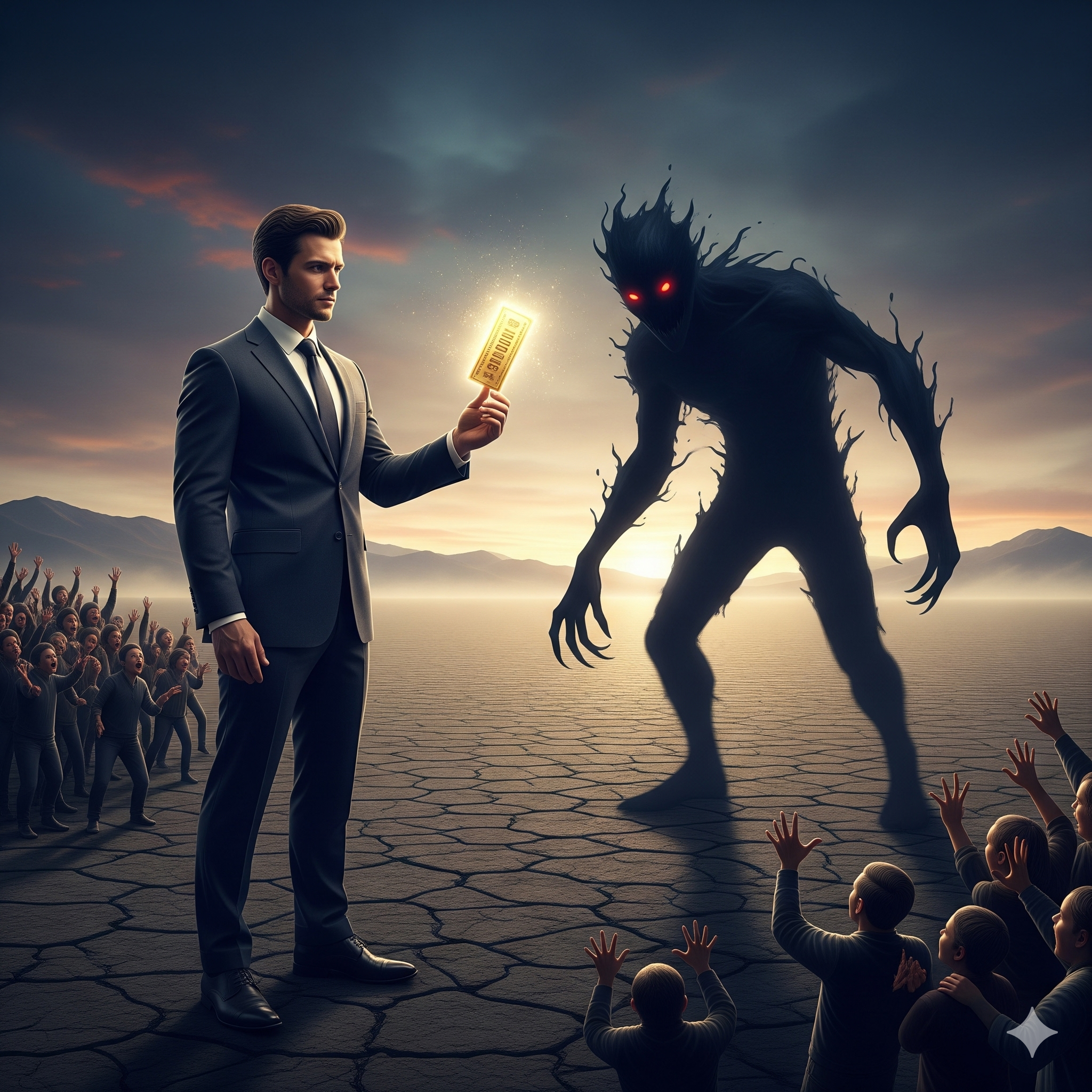
We’re in the thick of it now, my friends. We are living in a moment when history is not just being written, but being violently rewritten. The noise is deafening, the propaganda is thick as syrup, and the true geopolitical landscape is a dark, tangled mess. The 12-Day War was just a prelude, a whisper before the scream. It was a holiday squabble that turned into a grim prediction. And while you’re out there, buying your sunscreen and arguing about which road to take, remember: the ripple effects won’t just stop at borders. They’re coming for your bank account, your savings, and your future.

Enjoy the rest of your summer.
Love the New World Order’s Tea Party

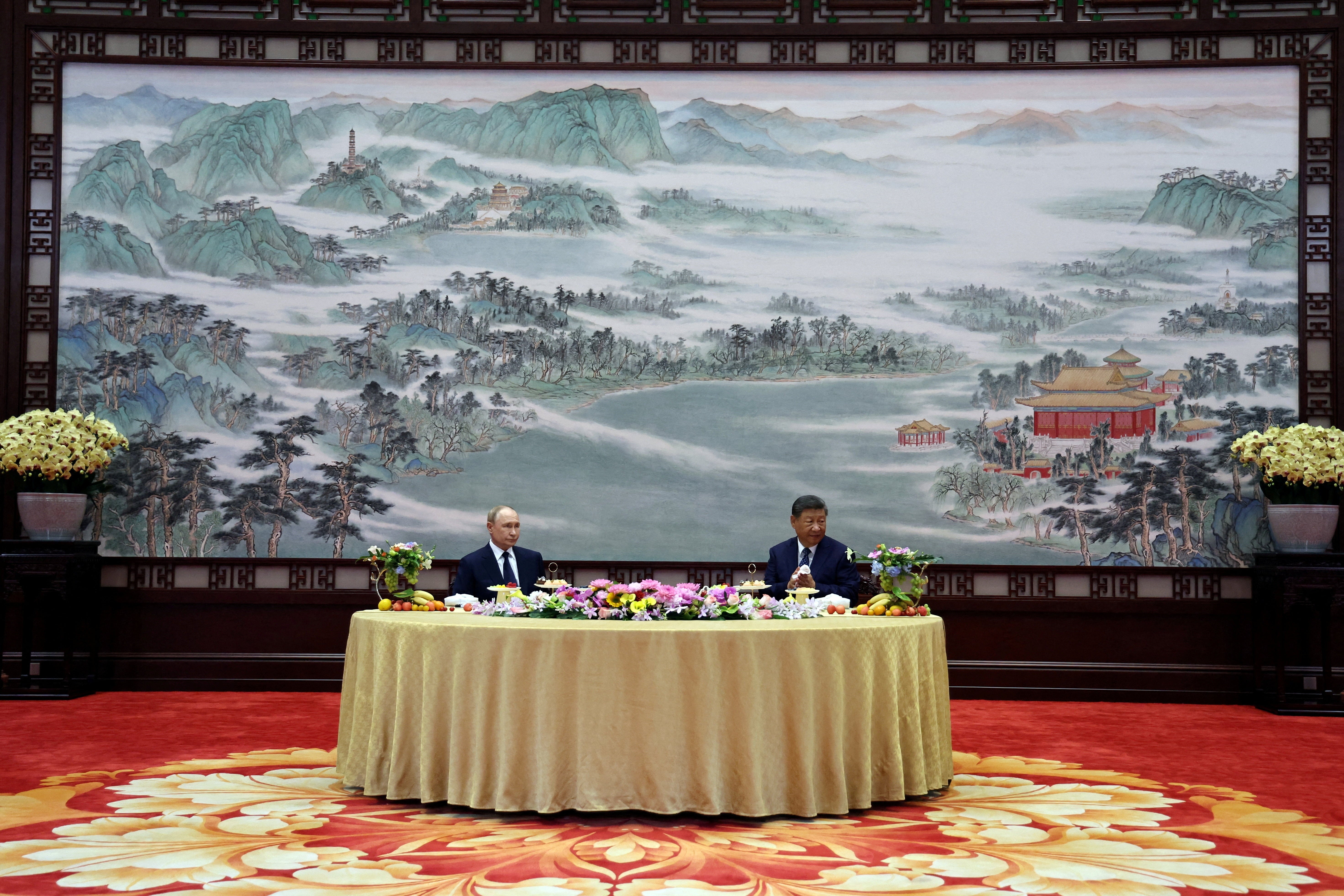
Good morning from a reality that feels increasingly like a discarded draft of a Philip K. Dick novel, where the geopolitical chess board has been replaced by a particularly intense game of “diplomatic musical chairs.” And speaking of chairs, Vladimir Putin and Xi Jinping have just secured the prime seating at the Great Hall of the People in Beijing, proving once again that some friendships are forged not in mutual admiration, but in the shared pursuit of a slightly different global seating arrangement.

It’s September 2nd, 2025, a date which, according to the official timeline of “things that are definitely going to happen,” means the world is exactly three days away from commemorating the 80th anniversary of something we used to call World War II. China, ever the pragmatist, now refers to it as the “War of Resistance Against Japanese Aggression,” which has a certain no-nonsense ring to it, much like calling a catastrophic global climate event “a bit of unusual weather.”

Putin, apparently fresh from an Alaskan heart-to-heart with a certain other prominent leader (one can only imagine the ice-fishing anecdotes exchanged), described the ties with China as being at an “unprecedentedly high level.” Xi, in a move that felt less like diplomacy and more like a carefully choreographed social media endorsement, dubbed Putin an “old friend.” One can almost envision the “Best Friends Forever” bracelets being exchanged in a backroom, meticulously crafted from depleted uranium and microchips. Chinese state media, naturally, echoed this sentiment, probably while simultaneously deleting any historical references that might contradict the narrative.

So, what thrilling takeaways emerged from this summit of “unprecedented friendship”?

The Partnership of Paranoia (and Profit): Both leaders waxed lyrical about their “comprehensive partnership and strategic cooperation,” with Xi proudly declaring their relationship had “withstood the test of international changes.” Which, in plain speak, means “we’ve survived several global tantrums, largely by ignoring them and building our own sandbox.” It’s an “example of strong ties between major countries,” which is precisely what one always says right before unveiling a new, slightly menacing, jointly-developed space laser.

The Economic Exchange of Existential Dependence: Russia is generously offering more gas, while Beijing, in a reciprocal gesture of cosmic hospitality, is granting Russians visa-free travel for a year. Because what better way to foster friendship than by enabling easier transit for, presumably, resource acquisition and the occasional strategic tourist? Discussions around the “Power of Siberia-2” pipeline and expanding oil links continue, though China remains coy on committing to new long-term gas deals. One suspects they’re merely waiting to see if Russia’s vast natural gas reserves can be delivered via quantum entanglement, thus cutting out the messy middleman of, well, reality. Meanwhile, “practical cooperation” in infrastructure, energy, and technology quietly translates to “let’s build things that make us less reliant on anyone else, starting with a giant, self-sustaining AI-powered tea factory.”

Global Governance, Now with More Benevolent Overlords: The most intriguing takeaway, of course, is their shared commitment to building a “more just and reasonable global governance system.” This is widely interpreted as a polite, diplomatic euphemism for “a global order that is significantly less dominated by the U.S., and ideally, one where our respective pronouncements are automatically enshrined as cosmic law.” It’s like rewriting the rules of Monopoly mid-game, except the stakes are slightly higher than who gets Park Place.

And if that wasn’t enough to make your brain do a small, bewildered pirouette, apparently these talks were just the warm-up act for a military parade. And who’s joining this grand spectacle of synchronised might? None other than North Korean leader Kim Jong Un. Yes, the gang’s all here, ready to commemorate the end of a war by showcasing enough military hardware to start several new ones. It’s almost quaint, this continued human fascination with big, shiny, destructive things. One half expects them to conclude the parade with a giant, joint AI-powered robot performing a synchronised dance routine, set to a surprisingly jaunty tune about global stability.

So, as the world careens forward, seemingly managed by algorithms and historical revisionism, let us raise our lukewarm cups of instant coffee to the “unprecedented friendship” of those who would re-sculpt global governance. Because, as we all know, nothing says “just and reasonable” quite like a meeting of old friends, a pending gas deal, and a military parade featuring the next generation of absolutely necessary, totally peaceful, reality-altering weaponry.

The Ghost of October: Echoes of the Cuban Missile Crisis in Today’s World

Sixty-one years ago, the world held its breath. President John F. Kennedy, in a somber address on October 22nd, 1962, revealed the chilling discovery of Soviet nuclear missiles in Cuba. The Cuban Missile Crisis, a 13-day standoff, brought humanity closer to nuclear annihilation than ever before.

Kennedy’s resolute yet measured response, a naval blockade combined with back-channel diplomacy, ultimately averted catastrophe. The Soviets backed down, removing the missiles in exchange for a US pledge not to invade Cuba and the dismantling of US missile installations in Turkey.

But the ghost of October lingers. Today, a multitude of conflicts simmer across the globe, each with the potential to escalate into a wider conflagration. Gaza, Lebanon, Palestine, Iran, Israel – the Middle East remains a tinderbox of tensions. The war in Ukraine grinds on, with the spectre of nuclear escalation a constant worry. Sudan, Georgia, Mexico, Haiti, the Sahel, Myanmar – all face internal strife or external pressures that threaten to boil over.

A World on Edge, Lacking a Steady Hand

The Cuban Missile Crisis was defused through a combination of firmness and diplomatic finesse. Kennedy, despite facing immense pressure to launch a military strike, chose a path of calculated restraint. Crucially, he had a direct line of communication with Khrushchev, allowing for tense but ultimately successful negotiations.

Today, that kind of leadership seems absent from the world stage. The current geopolitical landscape is fractured, with mistrust and animosity running high. While diplomatic efforts are underway in various hotspots, the absence of a strong, universally respected leader capable of bridging divides and de-escalating tensions is deeply concerning.

What Can Be Done?

While the challenges are immense, there are steps that can be taken to mitigate the risks:

  • Strengthening international institutions: The UN and other multilateral organisations need to be empowered to play a more effective role in conflict prevention and resolution.
  • Investing in diplomacy: Sustained diplomatic efforts are crucial to address the root causes of conflicts and build trust between adversaries.
  • Promoting dialogue and understanding: Open communication channels and cultural exchanges can help to break down barriers and foster cooperation.
  • Exercising restraint: Leaders must resist the temptation to resort to military force and instead prioritise peaceful solutions.

The world cannot afford to sleepwalk into another October crisis. The echoes of 1962 should serve as a wake-up call, urging us to pursue a path of peace and diplomacy before it’s too late.