How to Starve the Activity Demon
The last broadcast ended with a question hanging in the sterile air: Are we the shapers, or are we being shaped?

Since then, a few of you have started to see it. You notice the flicker in the projection on the conference room wall, the way the applause from the C-suite sounds prerecorded and hollow. You’ve seen the man behind the curtain, and you know the awful truth: the levers are pulling him. This transmission isn’t for the performers who are happy with their script. It’s for the ones who feel the chill and want to break out of the theater. This is a survivor’s guide.
Before you can escape, you must understand what feeds the illusion. The theatre has a monster, but it has no teeth or claws. It lives in the hum of the servers and the cold, fluorescent lights of the boardroom. We will call it the Activity Demon.
It’s a shadowy entity that thrives on the performance of work. Its food is the endless stream of status meetings, the beautifully crafted slide decks, the perfectly executed Gantt charts, and above all, the successful pilot. It whispers comforting lies about “synergy,” “engagement,” and “forward momentum.” It looks like productivity. It feels like progress. But it is a parasite that starves its host—the business—of the only thing that actually matters: tangible results.
So, what is the first rule of the resistance? You must starve the demon.
You cannot fight it with another framework or a better process. The demon loves process. You can only fight it with something it cannot digest, something it recoils from like a vampire from sunlight: the brutal, cold iron of P&L accountability.
From this moment on, you must chain every new initiative, every pilot, every “experiment” to a single, non-negotiable question. You must ask it in every meeting, and you must not proceed until you have a real answer.
“Which line item on the income statement or balance sheet will this change?”
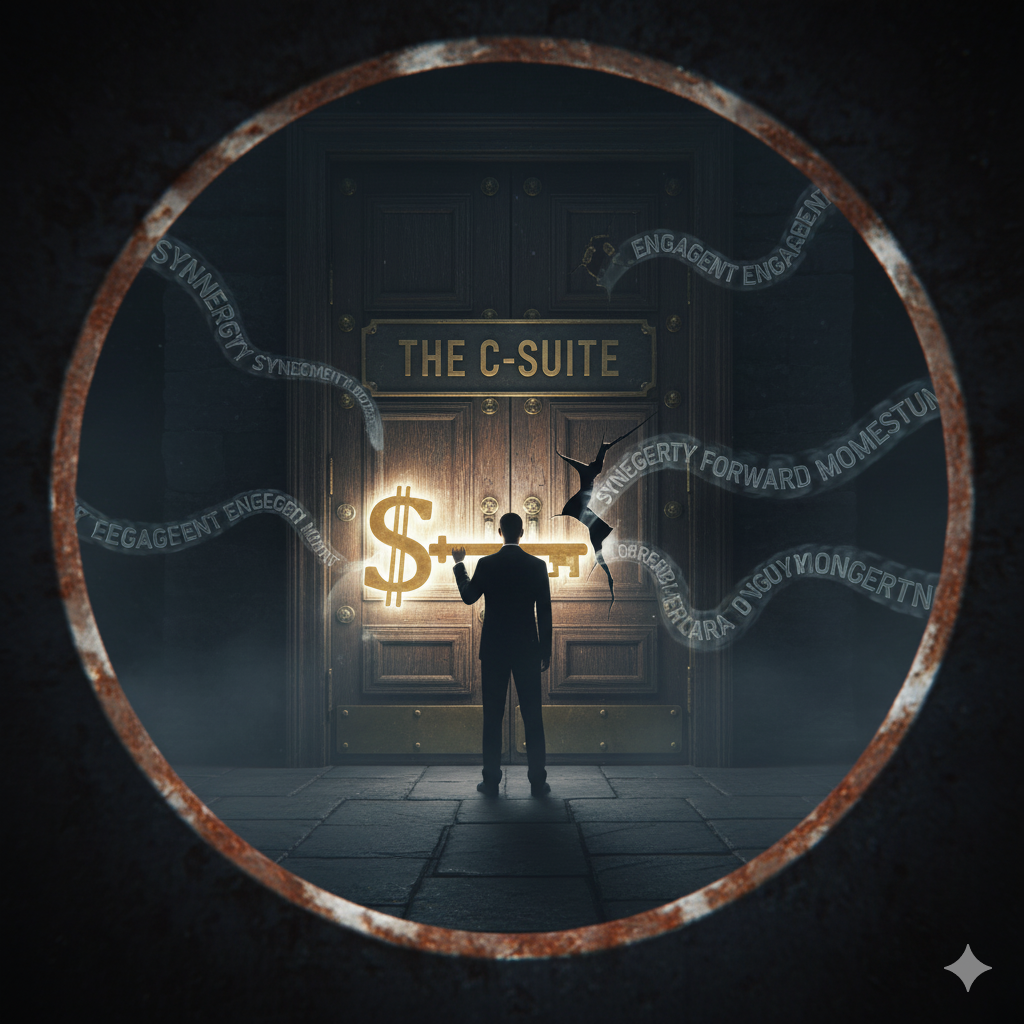
No more vague promises of “improved efficiency” or “enhanced capability.” Those are the demon’s favourite empty calories. Force the answer into the open. Will this reduce operational costs? By how much, and by when? Will it increase revenue or reduce customer churn? By what percentage?
Drag the initiative out of the comfortable darkness of the pilot theatre and into the harsh, unforgiving light of the CFO’s office. If it cannot survive that scrutiny, it was never real. It was just a meal for the monster.
This is the first step. It is the hardest. It means saying “no” to projects that look good and feel important. It means being the ghost at the feast. But it is the only way to begin. Starve the demon, and the theater walls will begin to feel a little less solid.
In the next transmission, we will discuss how to sabotage the script itself.
 Shiel Yule