US Government Shutdown: A Dystopian Comedy of Errors

Don’t Worry, They’ll Just Print More

Ladies and gentlemen, boys and girls, and all you paranoid preppers stocking up on canned beans and Bitcoin: Gather ’round. It’s time for the annual, highly-anticipated US Government Shutdown.

Forget your summer blockbuster. This is Washington’s version of a Christmas pantomime—a yearly tradition where the world’s supposed superpower locks itself in the basement, forgets where it left the spare key, and then starts shouting about its crippling debt. It’s the ultimate reality TV show, featuring the most dysfunctional cast of characters ever assembled, all arguing over who left the national credit card maxed out this time.
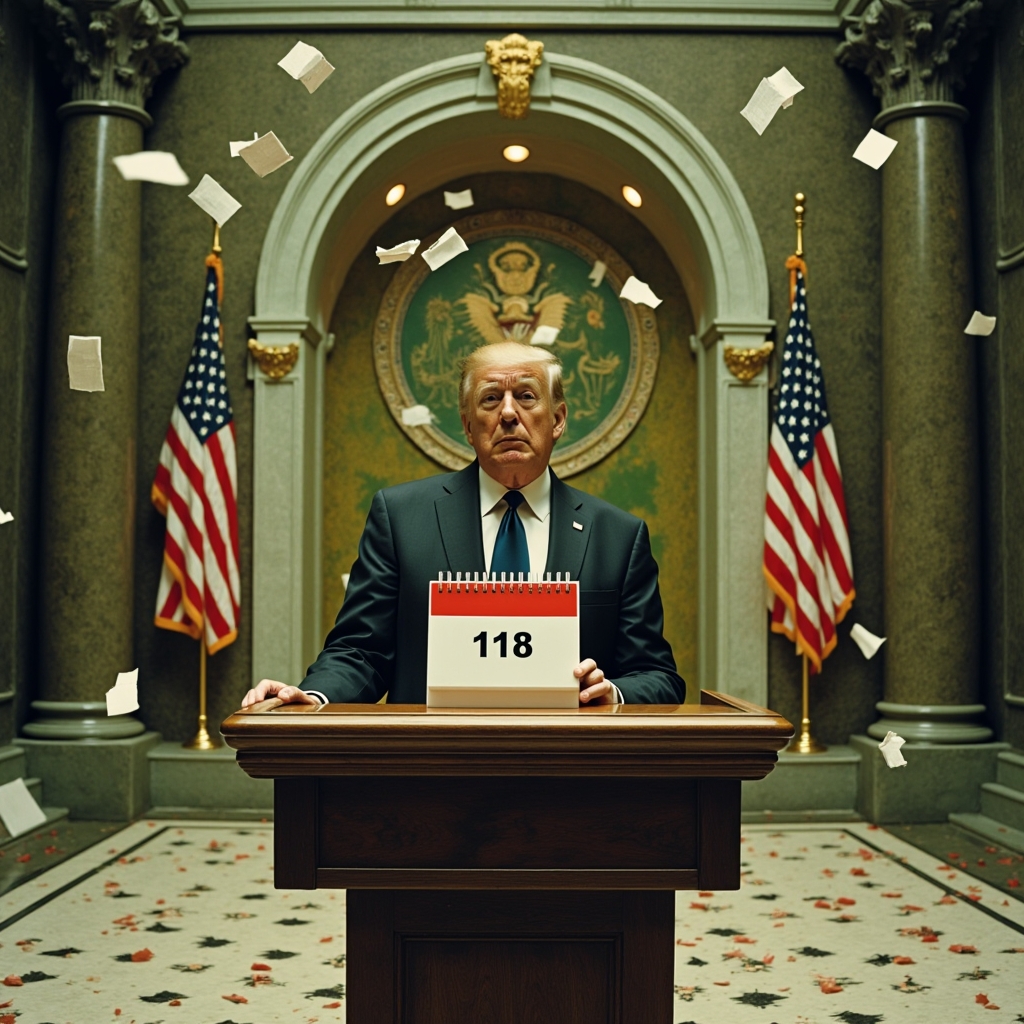
And the best part? The rest of the globe is sitting there, collective jaw dropped, thinking, “Wait, you can’t even manage the household bills, but you’re telling us how to run our nuclear programs?” The sheer, glorious, apocalyptic audacity of it all is almost beautiful.

The Great American Financial Meltdown: A History of ‘Oopsies!’

You might be under the quaint, old-fashioned impression that the US government actually honours its debts. Bless your heart. That’s like believing your flat-earther uncle is going to win a Nobel Prize for physics.

As your scattered notes so delightfully point out, Washington has a history of defaulting that would make a dodgy loan shark blush. They don’t just miss payments; they rewrite the entire concept of currency. From the War of 1812’s “whoops, no cash” moment to Lincoln’s Greenbacks, Roosevelt’s gold-clause voiding, and Nixon slamming the ‘Gold Window’ shut in ’71, the US has executed a magnificent series of financial disappearing acts.

It’s all just a sophisticated version of what Darth Vader said to Lando Calrissian (who, let’s be honest, probably knows a thing or two about dodgy deals): “I am altering the deal. Pray I don’t alter it any further.”

Today’s alteration? It’s not gold or silver—that would be too tangible. No, today’s crisis is a beautiful, digital, unmanageable tidal wave of debt that has already zoomed past a cool $1 trillion a year in interest alone. Soon, that interest payment—the money paid just to keep the lights vaguely flickering—will be bigger than Social Security.

Let that sink in. The nation will be spending more on its overdue credit card bill than it does on feeding and housing its ageing population. It’s the fiscal equivalent of ordering caviar when you can’t afford the rent, and it’s pure, unadulterated dystopia.

The Untouchables: A Budget That’s Pure Political Lead

So why not just cut spending? Oh, darling, you sweet, naïve soul. You’re forgetting the cardinal rule of American politics: The most expensive stuff is politically untouchable.

  1. Entitlements (Social Security, Medicare): Cutting these is political suicide. You simply do not mess with Grandma’s bridge club money. She votes. She’s watching you.
  2. Defense Spending: With the current geopolitical environment (which we can only assume is being dictated by a committee of angry teenagers playing Risk), the military budget is less of a budget and more of a ceremonial gold-plated trough. It only goes up.
  3. Welfare Programs: Likewise, a third rail of American governance.

Your fantasy solution—a leader who restores a “limited Constitutional Republic”—is frankly adorable. It’s about as likely as me dating a billionaire who doesn’t use his jet for a vanity-fueled space race. Washington cannot slow the spending growth rate, let alone cut it.

You could take 100% of the wealth from every single US billionaire (all 806 of them, worth a combined $5.8 trillion, according to Forbes), and you’d barely fund one single year of federal spending. That’s right. Steal all the super-yachts, the private islands, the silly hats—and it still wouldn’t be enough to plug the hole. The ship is taking on water faster than Congress can invent new accounting tricks.

The Sixth Default: Slow-Motion Poisoning

The biggest joke of all? The inevitable sixth default won’t be a dramatic, movie-worthy event. There’s no gold to leave, no contracts to dramatically rip up. The new default is a slow-motion, financial poisoning via the Federal Reserve.

The US government needs to issue more and more debt, but it also needs to keep interest rates low so the cost of that debt doesn’t literally bankrupt them tomorrow. This is where the Fed comes in, and the beautiful illusion of its “independence” shatters into a million gold-dust fragments.

The Fed, that supposedly wise, apolitical body, is about to be forced to slash rates, buy Treasuries, and launch wave after wave of digital money printing. Why? Because the alternative is admitting they are broke, and who wants to do that when you have a perfectly good printing press?

The whole charade is collapsing, best summed up by a Morgan Stanley CIO who was recently heard saying, “The Fed does have an obligation to help the government fund itself.” Translation: The supposedly independent financial guardian is now just the government’s highly-paid, slightly embarrassed personal ATM.

This is the true, black-hearted humour of the current shutdown and debt crisis. The world is watching the US government play a game of chicken with a cliff, secure in the knowledge that when they inevitably drive off, they’ll just print themselves a parachute.

The resulting currency debasement—the slow, quiet act of stiffing creditors with dollars worth less than the paper they were promised—won’t make a big headline. It’ll be a bleed-out. And as the rest of the world (including central banks now frantically moving back toward gold) quietly takes their chips and walks away from the table, we’re left with one certainty:

The US government can’t agree on how to fund itself, but they’re absolutely united on one thing: they will keep borrowing, keep spending, and keep debasing the dollar until the final, ridiculous curtain falls.

So, the question is not if the world’s most powerful nation will collapse its own currency, but whether you’ll be on the losing end of their inevitable, entirely predictable, and deeply unserious economic punchline.


Do you think the US should just start accepting payment in “Zimbabwe dollars” for a good laugh, or should they switch to an entirely new, blockchain-based currency called ‘DebtCoin’?

How I Learned to Stop Worrying and Love the Printing Press

aka The Federal Reserve’s Runaway Train to Currency Debasement

Greetings readers, take a seat on this wild ride we call the global economy. Today, we’re diving deep into the belly of the beast, exploring the Federal Reserve’s latest escapade: a return to monetary easing amidst sky-high inflation. It’s a bit like trying to extinguish a fire with gasoline, but hey, who are we to judge the fine folks in their ivory towers?

Now, if you’re anything like me, you are probably staring blankly at your screen, wondering if you accidentally stumbled into an economics lecture. You did. “The Fed just unleash one of the steepest rate hike cycles in history. Surely, that must have tamed inflation, right?” Well, it seems inflation is a bit like a cosmic horror – it can’t be killed, only temporarily inconvenienced.

And here’s the kicker: the Fed can’t keep raising rates willy-nilly. Why? Because the US government’s debt is ballooning faster than a Kardashian’s Instagram follower count, and those soaring interest payments threaten to bankrupt the whole shebang. It’s a classic catch-22: raise rates and face insolvency, or lower rates and fuel inflation. Talk about a rock and a hard place!

So, how does the Fed plan to escape this delightful predicament? In a word: currency debasement. It’s like being on a runaway train with no brakes, except instead of crashing, we’re just printing more money to keep the engine running. Brilliant, isn’t it?

Let’s break down this glorious descent into monetary madness:

  1. Spending Spree: Politicians love to spend money like it’s going out of fashion (which, ironically, it is). Cutting spending? Oh, I say! That’s about as likely as getting a straight answer out of a Prime Minister’s Questions.
  2. Debt Mountain: To finance this spending spree, the government issues debt like it’s confetti at a galactic party. The problem? That debt needs to be repaid with interest.
  3. Interest Explosion: The interest payments on this ever-growing debt are now the lifeblood of the US budget. It’s a debt spiral of epic proportions, a financial black hole that sucks in all those lovely tax dollars.
  4. Fed to the Rescue (Sort of): To prevent the government from imploding under the weight of its own debt, the Fed steps in with its trusty printing press. Interest rates get slashed, Treasuries get bought, and the money supply expands like a supernova.
  5. Inflation Bonanza: More money chasing the same amount of goods? That’s a recipe for inflation, my friends. Prices rise, the government spends more to keep up, and the cycle repeats itself with ever-increasing fervour.

It’s a beautiful, self-perpetuating doom loop. The government can’t cut spending, so it borrows more, which leads to higher interest payments, which forces the Fed to print more money, which fuels inflation, which leads to more spending… and so on, ad infinitum.

The worst part? This rampant currency debasement will likely devastate most people, transferring wealth from savers and regular folks to the parasitic class of politicians, central bankers, and their cronies. It’s a tale as old as time, but with a modern twist of financial engineering.

So, what can you do? Well, for starters, don’t panic. (Though a healthy dose of concern is probably warranted.) Educate yourself, diversify your assets, and maybe consider investing in a nice spaceship. You never know when you might need to escape this planet of financial madness. Speaking of escaping Earth, now might be a good time to invest in a SpaceX Starship ticket. Multi-planetary life is looking more and more appealing by the day.

And remember, in the immortal words of Douglas Adams, “So long, and thanks for all the fish (and the rapidly depreciating dollars)!”

Meanwhile . . .

… across the pond in the UK, we might watch this unfolding US debt drama with a sense of “told you so” mixed with a hefty dose of “there but for the grace of God go I.”

While the UK’s debt-to-GDP ratio is also worryingly high (though not quite at US levels), we face similar pressures of an aging population and increasing demands on public services. The Bank of England, like the Fed, is caught between a rock and a hard place, trying to tame inflation without triggering a recession.

The difference, perhaps, lies in the scale. The US dollar’s role as the global reserve currency gives the Fed more leeway to print money without immediate consequences. But as the saying goes, “the bigger they are, the harder they fall.” A US debt crisis would send shockwaves through the global economy, and the UK would undoubtedly feel the tremors.

So, while we might chuckle at the Fed’s predicament, it’s a sobering reminder that we’re all interconnected in this global financial system. And as the US hurtles towards currency debasement, we might want to start stocking up on tea and biscuits, just in case.

September 15th, 2008: The Day Lehman Brothers Fell, and the World Economy Trembled

On this day in 2008, the financial world was shaken to its core as Lehman Brothers, a 158-year-old investment bank, filed for bankruptcy. This event, unprecedented in its scale, sent shockwaves across the globe and triggered the most severe financial crisis since the Great Depression. The collapse of Lehman Brothers was a stark reminder of the interconnectedness of the global financial system and the devastating consequences of excessive risk-taking and unchecked leverage.

The Aftermath: A Global Recession and its Lingering Impact on the UK

The bankruptcy of Lehman Brothers set off a chain reaction that plunged the world into a deep recession. Banks stopped lending, businesses struggled to survive, and millions lost their jobs and homes. The UK was hit particularly hard, with its economy contracting sharply and unemployment soaring.

The recession had a profound and long-lasting impact on the UK. The government was forced to bail out several major banks to prevent a complete collapse of the financial system. This led to a massive increase in public debt, which continues to burden the economy today. Austerity measures were introduced to reduce the deficit, leading to cuts in public spending and services.

The housing market also suffered a significant downturn, with property prices plummeting and many homeowners facing negative equity. The impact on consumer confidence was severe, leading to a sharp decline in spending and investment.

Even today, the scars of the financial crisis are still visible in the UK. The economy has recovered slowly, and many people are still struggling to make ends meet. The crisis also led to a loss of trust in the financial system and increased calls for greater regulation and oversight.

The Lehman Brothers bankruptcy serves as a cautionary tale about the dangers of unchecked financial risk and the importance of maintaining a stable and resilient economic system.