Well, butter my biscuits and call me surprised! Apple, the company that practically invented the walled garden, has just invited Google, its long-standing frenemy, over for a playdate. And not just any playdate – an AI-powered, privacy-focused, game-changing kind of playdate.
Remember when Apple cozied up to OpenAI, and everyone assumed ChatGPT was going to be the belle of the Siri-ball? Turns out, Apple was playing the field, secretly testing both ChatGPT and Google’s Gemini AI. And guess who stole the show? Yep, Gemini. Apparently, it’s better at whispering sweet nothings into Siri’s ear, taking notes like a diligent personal assistant, and generally being the brains of the operation.
So, what’s in it for these tech titans?
Apple’s Angle:
Supercharged Siri: Let’s face it, Siri’s been needing a brain transplant for a while now. Gemini could be the upgrade that finally makes her a worthy contender against Alexa and Google Assistant.
Privacy Prowess: By keeping Gemini on-device, Apple reinforces its commitment to privacy, a major selling point for its users.
Strategic Power Play: This move gives Apple leverage in the AI game, potentially attracting developers eager to build for a platform with cutting-edge AI capabilities.
Google’s Gains:
iPhone Invasion: Millions of iPhones suddenly become potential Gemini playgrounds. That’s a massive user base for Google to tap into.
AI Dominance: This partnership solidifies Google’s position as a leader in the AI space, showing that even its rivals recognize the power of Gemini.
Data Goldmine (Maybe?): While Apple insists on on-device processing, Google might still glean valuable insights from anonymized usage patterns.
The Bigger Picture:
This unexpected alliance could shake up the entire tech landscape. Imagine a world where your iPhone understands your needs before you even ask, where your notes practically write themselves, and where privacy isn’t an afterthought but a core feature.
But let’s not get ahead of ourselves. There are still questions to be answered. How will this impact Apple’s relationship with OpenAI? Will Google play nice with Apple’s walled garden? And most importantly, will Siri finally stop misinterpreting our requests for pizza as a desire to hear the mating call of a Peruvian tree frog?
Only time will tell. But one thing’s for sure: this Apple-Google AI mashup is a plot twist no one saw coming. And it’s going to be a wild ride.
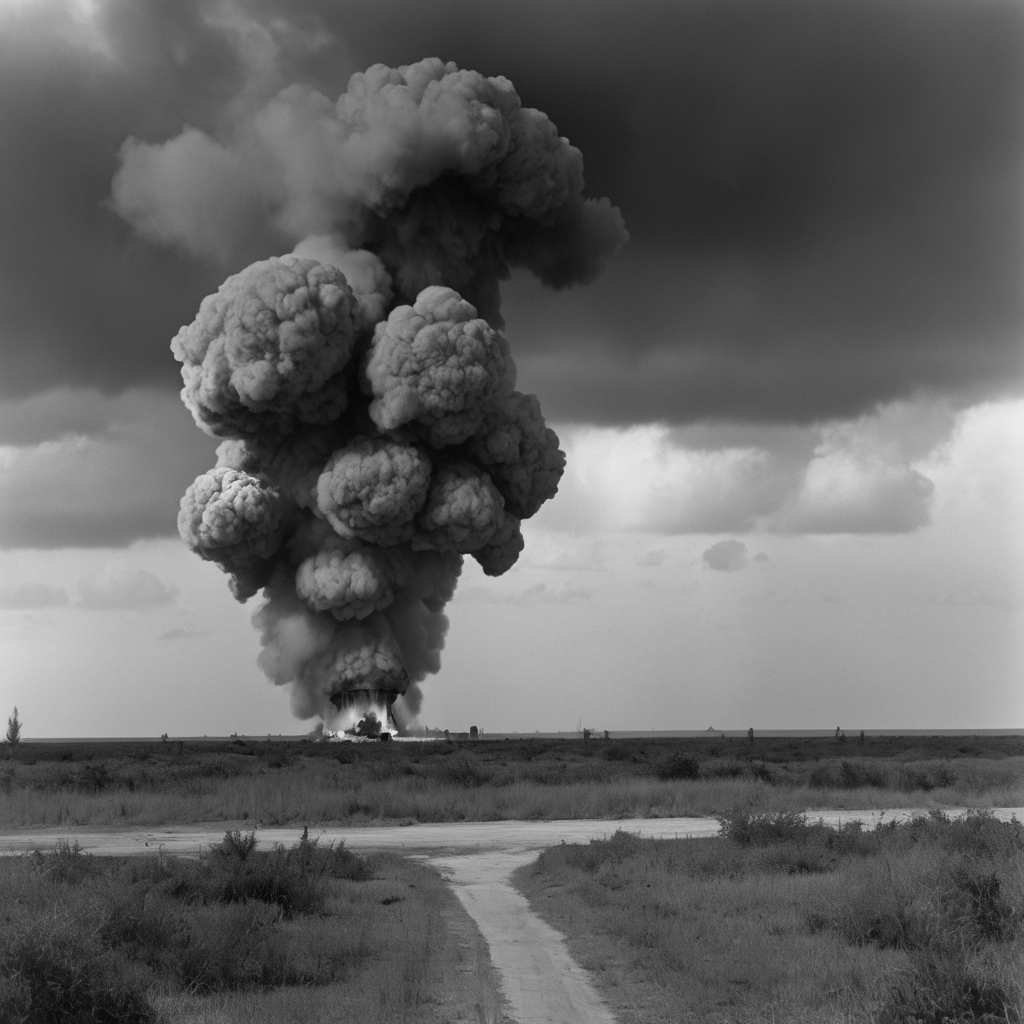
The ghost of the Minutemen stirs. Not the ragtag band of farmers who faced the redcoats at Lexington and Concord, but their namesake, the LGM-30 Minuteman III intercontinental ballistic missile. A weapon born of the Cold War, a child of the very neutron Chadwick discovered on this day in 1932, now tested amidst a different kind of chill. A chill not just of geopolitics, but of a society seemingly more concerned with the intricacies of gender identity and the ethics of anthropomorphic animal costumes than the looming shadow of nuclear annihilation.
Vandenberg Space Force Base, that gleaming monument to military might, recently played host to another Minuteman test launch. A spectacle of fire and fury, a demonstration of “readiness, precision, and professionalism,” as the Air Force assures us. But readiness for what, exactly? To defend against 21st-century threats, they say. Threats that apparently include TikTok dances, pronoun debates, and the ever-present danger of cancel culture.
Meanwhile, the Doomsday Clock, that grim timepiece of existential dread, was moved to 89 seconds to midnight. Closer than ever before, a hair’s breadth from the abyss. Yet, the collective consciousness seems oddly unfazed. We’re too busy arguing about pronouns and whether it’s culturally appropriate to wear a furry suit to the supermarket to notice the mushroom cloud gathering on the horizon.
It’s a strange paradox, this modern age. We have the technology to destroy ourselves a thousand times over, yet we’re consumed by debates that, in the grand scheme of things, seem utterly trivial. It’s as if Nero fiddled while Rome burned, only this time, the fiddle is replaced by a smartphone, and the flames are licking at the very fabric of our existence.
Perhaps it’s a coping mechanism, a way to distract ourselves from the harsh realities of a world teetering on the brink. Or perhaps it’s a symptom of a deeper malaise, a societal ADHD that prevents us from focusing on the truly important issues. Whatever the cause, the result is the same: a collective blindness to the existential threats that loom large, while we squabble over semantics and social media trends.
As the Minutemen soar through the skies, their trails of smoke a grim reminder of our capacity for self-destruction, let us take a moment to pause, to look beyond the manufactured outrage and the digital distractions, and to consider the bigger picture. For the Doomsday Clock is ticking, and while we may not be able to stop it, we can at least choose to face it with open eyes and a clear conscience. And maybe, if we can tear ourselves away from the endless scroll of social media and the manufactured outrage of the day, we can find a way to pull ourselves back from the brink. Or at least go down swinging with a bit more dignity than a Twitter troll.
Good morrow, dear readers, and welcome to this grand exploration of historical happenings on this momentous day, February 27th! Now, I know what you’re thinking: “What could possibly connect a burning building in 1930s Germany, a war in the Middle East, a subatomic particle, and a comedic genius?” Well, hold onto your hats, folks, because we’re about to embark on a whirlwind tour of history, with a dash of Agile wisdom sprinkled in for good measure.
1933: The Reichstag Fire – A Domino Effect and Echoes of Today
Ah, 1933. A year of flappers, jazz, and… the rise of a certain rather unpleasant political party in Germany. On this very day, the Reichstag building, home to the German parliament, went up in flames. Now, while the exact cause of the fire remains a bit of a mystery (was it an inside job? Was it a lone wolf with a penchant for pyrotechnics?), the consequences were anything but ambiguous. The Nazis, ever opportunistic, seized upon the chaos, using the fire as an excuse to consolidate their power and crack down on any opposition. It was a crucial tipping point, a domino effect that ultimately led to one of the darkest chapters in human history.
And here’s the kicker, folks: history has a funny way of repeating itself. Look around the world today, and you’ll see echoes of those same tactics – fearmongering, scapegoating, the erosion of democratic institutions. It’s a stark reminder that we must remain vigilant, that the price of freedom is eternal vigilance, as some wise chap once said. And perhaps, just perhaps, a bit of Agile thinking wouldn’t go amiss. After all, Agile is all about adapting to change, responding to uncertainty, and embracing transparency – qualities that could come in handy when navigating the choppy waters of political turmoil.
1932: The Neutron – A Tiny Particle with a Big Impact
But enough about war and politics, let’s delve into the fascinating world of science! On this day in 1932, James Chadwick discovered the neutron, a tiny little particle that resides at the heart of every atom (except hydrogen, which is a bit of a loner). Now, I know what you’re thinking: “What’s so special about a neutron?” Well, my friends, this unassuming particle revolutionised our understanding of atomic physics, paving the way for nuclear fission, the Manhattan Project, and, of course, the atomic bomb.
But let’s not dwell on the negative. The discovery of the neutron also opened up exciting possibilities for nuclear energy, a clean and sustainable source of power that could potentially solve our planet’s energy woes. So, while the atom bomb might be a bit of a downer, let’s not forget the positive side of nuclear science. And who knows, maybe with a bit of Agile thinking, we can finally crack the code on safe and efficient nuclear fusion, ushering in a new era of clean energy for all.
1991: “Victory” in the Gulf – A War Criminal’s Legacy
Fast forward to 1991, and we find ourselves in the midst of another historical event: the end of the Persian Gulf War. “Victory” was declared, flags were waved, and everyone went home happy, right? Well, not quite. Let’s not forget that this was an illegal war, a war built on lies and deception, a war that resulted in the deaths of countless innocent civilians. And who was the mastermind behind this grand charade? None other than our very own Tony Blair, a man who, despite his war crimes, has yet to face any real accountability. Ah, the joys of being on the winning side – your crimes are swept under the rug, your misdeeds forgotten. It’s enough to make you lose faith in humanity, isn’t it?
But fear not, dear readers, for Agile is here to save the day! (Well, maybe not save the day, but at least offer some helpful principles.) Agile, with its emphasis on collaboration, iterative progress, and continuous feedback, could perhaps have prevented such a disastrous conflict. Imagine if our leaders had adopted an Agile mindset, if they had prioritised open communication and transparency, if they had been willing to adapt their plans based on new information (like there were no WMDs and it was all a ruse). Perhaps then, countless lives could have been saved, and the world would be a slightly less messed up place.
2002: Farewell to a Goon
And finally, we come to the comedic genius himself, Spike Milligan. On this day in 2002, the world bid farewell to one of the greatest comedic minds of all time. Milligan, with his absurdist humor, his irreverent wit, and his penchant for the downright silly, left an indelible mark on the world of comedy. He was a true original, a Goon Show pioneer, a master of the unexpected.
So, in honour of Milligan’s legacy, let’s approach the rest of today with a healthy dose of silliness and irreverence. After all, laughter is the best medicine, as they say. And who knows, maybe by embracing our inner Goon, we can find new and creative solutions to the world’s problems, and boy does it feel like there are plenty of those bubbling up at the moment.
And there you have it, folks! A whirlwind tour of historical events on this glorious 27th of February. Remember, history is more than just dates and facts – it’s a tapestry of triumphs and tragedies, of discoveries and disasters, of laughter and tears. Let us learn from the past, embrace the present, and, with a bit of Agile thinking and a Goon-like spirit, build a better future for all.
(P.S. If you’re feeling particularly adventurous, why not try writing your next Agile project report in the style of a Goon Show script? Your stakeholders might be a bit confused, but at least it’ll liven up those boring meetings!)
Rewind to about 2010-11. Imagine a younger, more naive version of myself, sporting questionable fashion choices and an unwavering belief in the power of technology. I was working at this cool little agency called 55 Degrees, a melting pot of designers, developers, and video wizards. We were all about pushing the boundaries of digital storytelling, and we landed this epic project: the Riverside Museum in Glasgow.
Now, this wasn’t just any museum. It had just been built on the historic site of Clyde shipbuilding and was a cathedral of transport, a shrine to all things that moved, from steam locomotives to skateboards. With a loose brief, a band of eighteen of us were tasked with bringing these objects to life. Not with dusty labels and boring timelines, but with stories. Emotive, engaging, personality-packed stories.
So, we rolled up our sleeves and got to work. We churned out 34 documentary films, capturing the essence of Clyde-built ships, vintage cars, and even a penny-farthing or two. We crafted audio exhibits that transported you to bustling Victorian streets and roaring shipyards. We animated historical figures, giving them voices and quirks that would make a Disney character jealous.
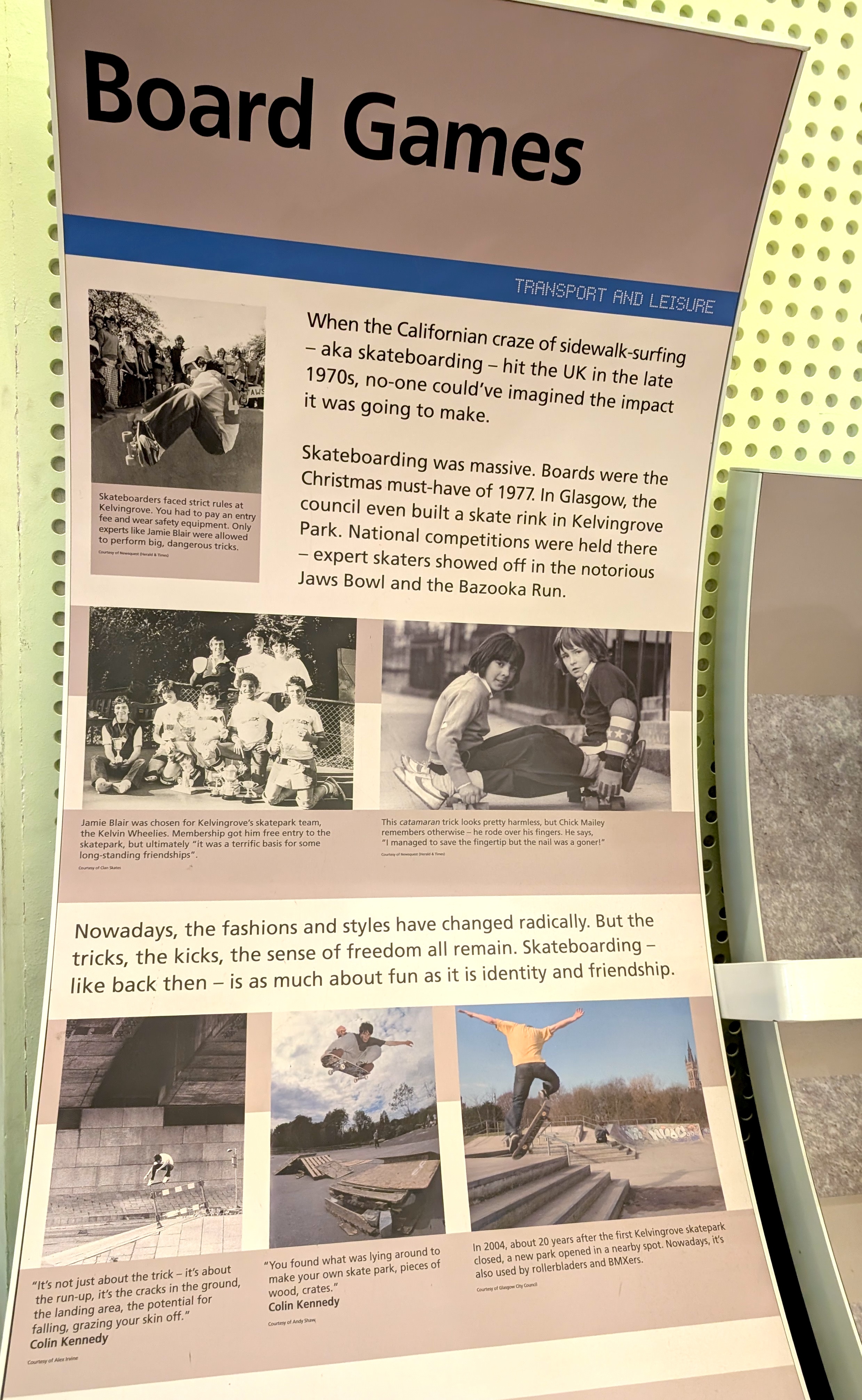
Amidst this whirlwind of maritime history and technological ambition, I had my own pet project: a celebration of Glasgow’s skateboarding scene. See, just the year before, I had launched Skateboard Scotland in Edinburgh and gotten involved in the burgeoning skatepark scene. So, naturally, I had to inject a bit of that rebellious spirit into the Riverside Museum. Thus, the “Board Games” exhibit was born. (And it was pretty darn satisfying to see it still going strong 15 years later, looking exactly the same, so much for progress.)
But the real challenge, the Everest of our digital ambition, was the interactive exhibits. Riverside wanted visitors to engage with the collection, to delve deeper, to become part of the story. And how did we achieve this, you ask? With an army of iPads, of course. Well, not actual iPads (they weren’t quite a thing back then), but these massive, portrait-oriented touchscreens we called “eIntros.” (Story Player)
These eIntros were our digital playground. We packed them with information, photos, videos, and interactive elements, all controlled by a central Content Management System (CMS). But here’s where our hubris kicked in. Did we use an existing CMS? Nope. We built our own. From scratch. With Ruby on Rails. Because, why not? (At this point, you might be picturing a montage of frantic coding, fuelled by caffeine and the unshakeable belief that we were reinventing the wheel. You would be right.)
This CMS, our Frankensteinian creation, was a beast. It managed everything. The eIntros, the games, the “What’s On” screens, even the museum lighting (because who needs a light switch when you have a CMS?). It could spit out HTML5, JSON, XML – you name it. We were like digital puppet masters, pulling the strings of the entire museum experience.
And because we had this perfectly controlled environment (a developer’s utopia), we went wild with the latest web technologies. CSS3 animations? Check. JavaScript wizardry? Double-check. HTML5 video? Oh, you better believe it. We even built our own full-screen browser, because Safari just couldn’t handle what we wanted it to do.
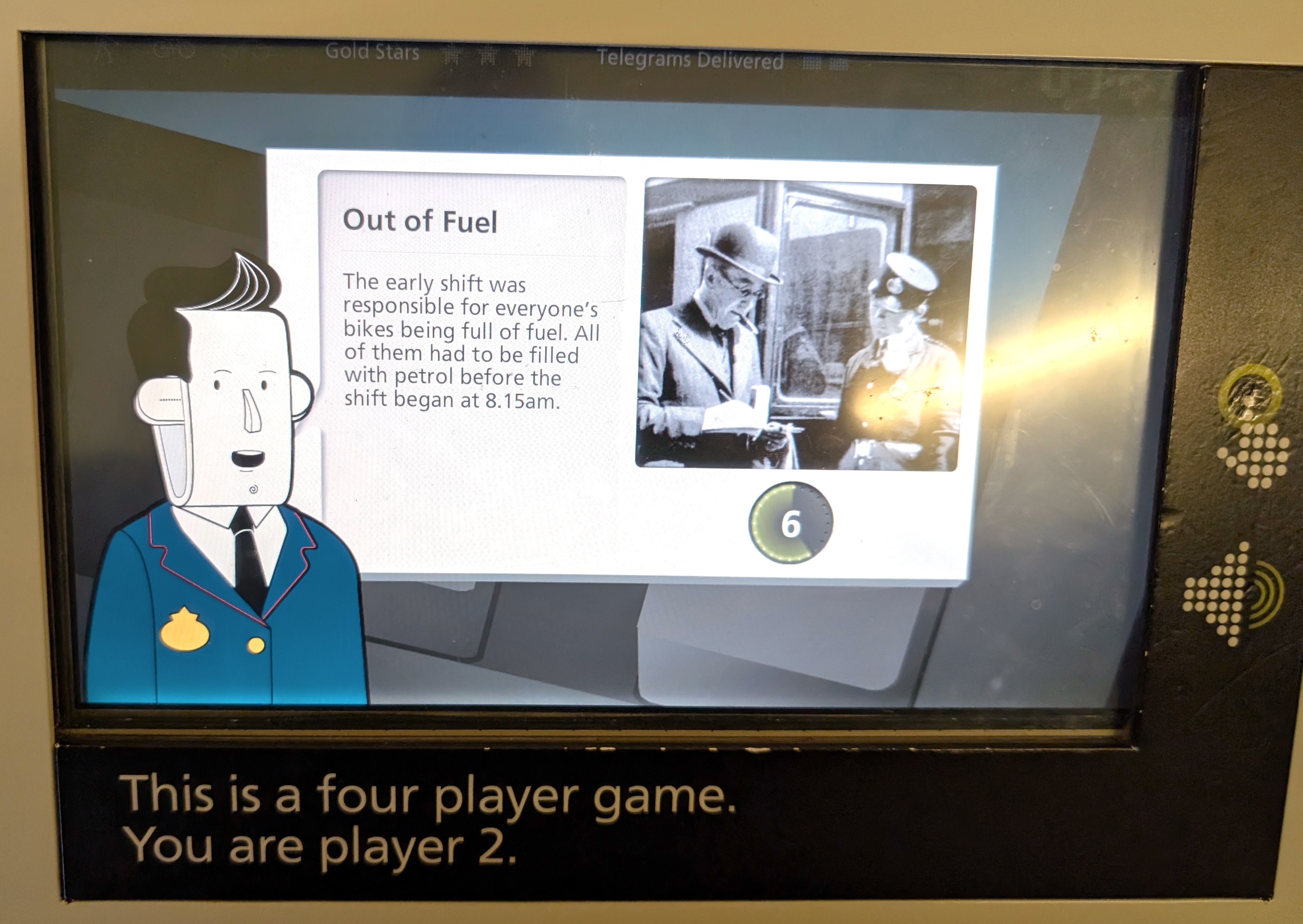
Then came the games. Multiplayer, interactive extravaganzas that had visitors racing trams, building bridges, and navigating historical maps. We built a custom framework, naturally, because off-the-shelf solutions are for the faint of heart.
And because we’re nothing if not extra, we threw in some generative graphics for good measure. Quartz Composer screensavers danced hypnotically on screens, and the Donor Wall became a mesmerising tapestry of names, brought to life with Processing.
The final pièce de résistance? A show control system baked right into the CMS. We could control projectors, media players, even the model ships sailing across a giant video projection, all from our custom-built command centre. It was a symphony of technology, a masterpiece of over-engineering.
Some of this digital wizardary has been lost to the sands of time (or, more accurately, the depths of the museum archives). But hey, we did manage to open-source one little gem: Makitzo, a Ruby deployment tool that saved our sanity during installation. Because, without it, we’d probably still be there, wrestling with cables and cursing Steve Jobs.
So, there you have it. The story of how a bunch of tech-obsessed creatives turned a museum into a giant, interactive playground. It was a wild ride, a testament to the power of passion, innovation, and a whole lot of caffeine. And while the technology might be outdated now, the memories (and the occasional nightmare about rogue CSS animations) live on.
The demise of 55 Degrees left a bunch of talented people out of work and some of us out-of-pocket but the museum is still going strong and the fact that most of the tech and content is still attracting visitors 14 years since it opened, to the tune of 1.3 million in 2023, is testimony to a talented team of creatives and techies, the names I can remember:
Sixty-one years ago, the world held its breath. President John F. Kennedy, in a somber address on October 22nd, 1962, revealed the chilling discovery of Soviet nuclear missiles in Cuba. The Cuban Missile Crisis, a 13-day standoff, brought humanity closer to nuclear annihilation than ever before.
Kennedy’s resolute yet measured response, a naval blockade combined with back-channel diplomacy, ultimately averted catastrophe. The Soviets backed down, removing the missiles in exchange for a US pledge not to invade Cuba and the dismantling of US missile installations in Turkey.
But the ghost of October lingers. Today, a multitude of conflicts simmer across the globe, each with the potential to escalate into a wider conflagration. Gaza, Lebanon, Palestine, Iran, Israel – the Middle East remains a tinderbox of tensions. The war in Ukraine grinds on, with the spectre of nuclear escalation a constant worry. Sudan, Georgia, Mexico, Haiti, the Sahel, Myanmar – all face internal strife or external pressures that threaten to boil over.
A World on Edge, Lacking a Steady Hand
The Cuban Missile Crisis was defused through a combination of firmness and diplomatic finesse. Kennedy, despite facing immense pressure to launch a military strike, chose a path of calculated restraint. Crucially, he had a direct line of communication with Khrushchev, allowing for tense but ultimately successful negotiations.
Today, that kind of leadership seems absent from the world stage. The current geopolitical landscape is fractured, with mistrust and animosity running high. While diplomatic efforts are underway in various hotspots, the absence of a strong, universally respected leader capable of bridging divides and de-escalating tensions is deeply concerning.
What Can Be Done?
While the challenges are immense, there are steps that can be taken to mitigate the risks:
Strengthening international institutions: The UN and other multilateral organisations need to be empowered to play a more effective role in conflict prevention and resolution.
Investing in diplomacy: Sustained diplomatic efforts are crucial to address the root causes of conflicts and build trust between adversaries.
Promoting dialogue and understanding: Open communication channels and cultural exchanges can help to break down barriers and foster cooperation.
Exercising restraint: Leaders must resist the temptation to resort to military force and instead prioritise peaceful solutions.
The world cannot afford to sleepwalk into another October crisis. The echoes of 1962 should serve as a wake-up call, urging us to pursue a path of peace and diplomacy before it’s too late.
Forget the Illuminati, move over lizard people – the real conspiracy is hiding in plain sight. The Deep State: it’s the whisper in the corridors of power, the unseen hand guiding global events, and it’s about to get a whole lot more interesting. This isn’t your average tinfoil-hat rant; we’re diving headfirst into the murky world of shadowy figures and clandestine agendas, where paranoia meets reality and the line between truth and fiction blurs beyond recognition. Buckle up, because things are about to get weird.
The “Deep State” refers to the entrenched elements within a government bureaucracy that wield significant influence and power, often operating independently of elected officials. It represents the established order and resists changes that threaten its power.
While the term is often associated with the US, many countries have their own version of a Deep State. Examining how these entrenched forces react to outsider leaders – those who challenge the status quo – can provide valuable insights.
When an outsider gains power, three potential outcomes typically emerge:
Elimination: The Deep State takes measures to remove the outsider, potentially through assassination or orchestrated removal from office.
Subversion: The Deep State successfully co-opts the outsider, neutralising their reform agenda and maintaining its own power.
Overcoming: The outsider successfully dismantles or significantly weakens the Deep State, allowing for the implementation of independent policies.
History provides numerous examples of these scenarios playing out across different nations. Some outsiders who challenged the Deep State met with fatal consequences, while others managed to neutralise its influence, often through drastic measures. Yet others, despite initial intentions, find themselves absorbed into the existing power structure.
By studying these historical cases, we can better understand the complex dynamics between outsider leaders and the Deep State, and the potential consequences of their interactions.
History offers several examples of outsiders who challenged the Deep State and met with grim fates. The assassination of JFK remains a prominent example, with many believing he was eliminated for threatening powerful interests. In Egypt, Mohamed Morsi of the Muslim Brotherhood was swiftly overthrown and later died in prison under suspicious circumstances after failing to dismantle the entrenched power structure. Similarly, author John Perkins, who claims to have been an “economic hit man,” alleges that the Deep State assassinated Jaime Roldos and Omar Torrijos, leaders of Ecuador and Panama respectively, when they resisted its influence.
Conversely, some outsiders have successfully challenged and weakened the Deep State. Fidel Castro’s revolution in Cuba prevailed because he crippled the existing power structure, recognizing that it would have otherwise overthrown him. Similarly, the 1979 Islamic Revolution in Iran succeeded due to Khomeini’s dismantling of the previous regime’s Deep State through purges of the military and security agencies. In Russia, Putin appears to have tamed the entrenched bureaucracy by asserting control over the oligarchs, exemplified by his treatment of Mikhail Khodorkovsky. Turkey’s Erdogan, once an outsider, survived a coup attempt in 2016 and subsequently consolidated power by restructuring the military and intelligence agencies. Finally, El Salvador’s Bukele neutralized the influence of violent gangs, effectively breaking the grip of the Deep State, which he believed was controlled by US interests.
These examples highlight the inherent danger outsiders face when challenging the Deep State. Successfully implementing an independent agenda requires confronting and overcoming this entrenched power structure, a risky endeavour that could lead to elimination. This explains why many outsiders ultimately choose to “play ball” with the Deep State, prioritising their own safety and political survival over radical change. The recent assassination attempts against Donald Trump, should he return to the White House, underscore this dynamic. These attempts suggest a belief within certain factions that a second Trump term would pose a significant threat to their interests, prompting them to take drastic measures to prevent it. This raises serious questions about the future stability of American politics and the potential for further conflict between outsider leaders and the Deep State.
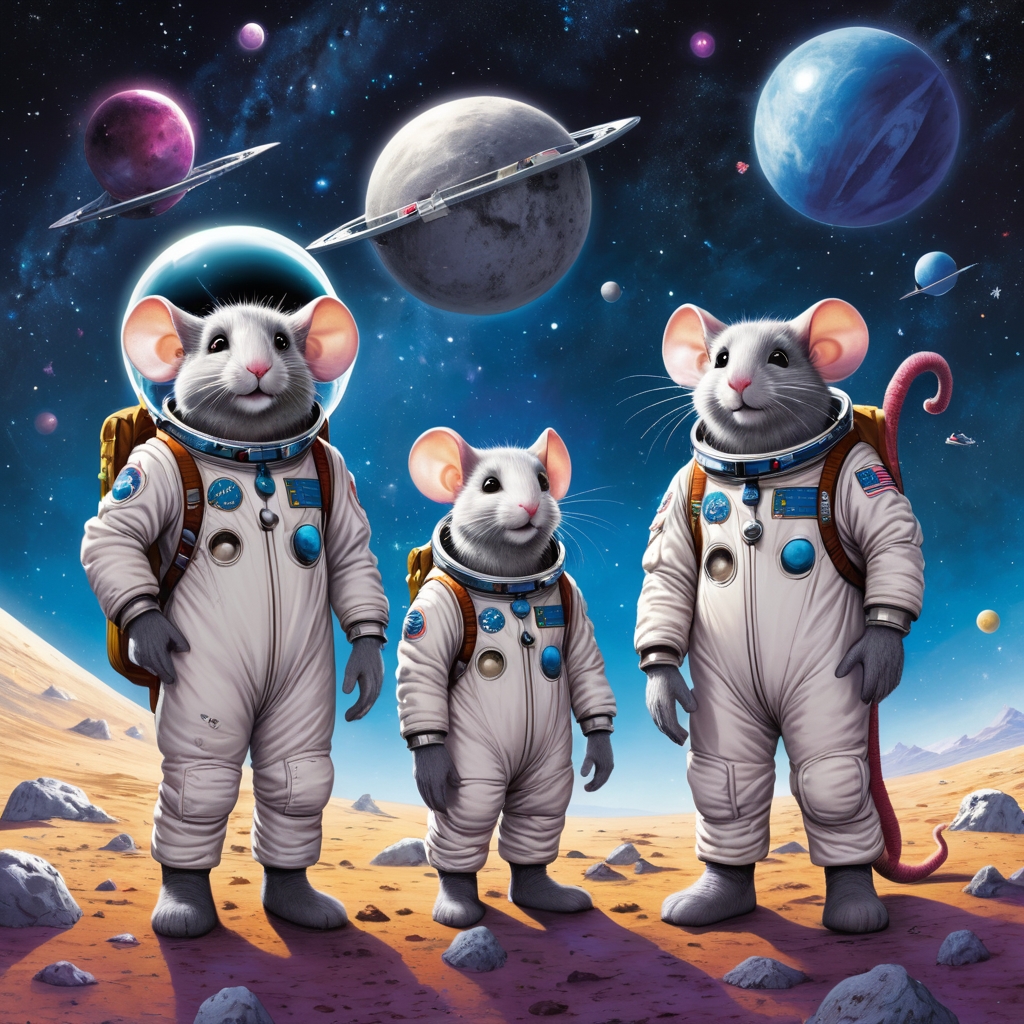
Well, readers, it seems the line between science fiction and reality has become blurrier than a Vogon’s poetry recital after a few Pan Galactic Gargle Blasters. Yes, you read that right: Prada is designing spacesuits.
Apparently, those intrepid astronauts bouncing around the lunar surface in 2026 will be doing so in high-fashion, courtesy of the Italian luxury brand. One can only imagine the design meetings:
“Darling, the spacesuit simply must have a more streamlined silhouette. Perhaps a cinched waist and some strategically placed pockets for moon rocks?”
“But sir, what about the thermal insulation and radiation shielding?”
“Details, details! We can’t have astronauts compromising on style just because they’re venturing into the unforgiving vacuum of space, can we?”
I must admit, I’m rather curious to see the final product. Will it be a sleek, minimalist number in Prada’s signature black nylon? Or perhaps a more avant-garde creation with oversized pockets and a detachable cape for dramatic lunar entrances?
And what about the accessories? A matching moon boot with a chunky heel? A lunar-dust-resistant handbag for carrying those essential extraterrestrial survival items (lipstick, a compact mirror, and a spare oxygen tank)?
Of course, this begs the question: what happens when fashion clashes with functionality? Will the astronauts be forced to choose between a perfectly tailored spacesuit and, you know, not suffocating!
Perhaps we will see a new breed of lunar explorer emerge, one who can navigate treacherous craters in stilettos and analyse rock samples while sporting a chic visor.
One thing’s for sure: this is a giant leap for mankind… and a fashionable strut for the fashion industry. Who knows, maybe one day we’ll all be sipping cosmic lattes in our Prada spacesuits, contemplating the meaning of life amidst the stars. Just try not to spill any on the lunar rover, okay!
The Guide Mark II says, “Don’t Panic,” but when it comes to the state of Artificial Intelligence, a mild sense of existential dread might be entirely appropriate. You see, it seems we’ve built this whole AI shebang on a foundation somewhat less stable than a Vogon poetry recital.
These Large Language Models (LLMs), with their knack for mimicking human conversation, consume energy with the same reckless abandon as a Vogon poet on a bender. Training these digital behemoths requires a financial outlay that would make a small planet declare bankruptcy, and their insatiable appetite for data has led to some, shall we say, ‘creative appropriation’ from artists and writers on a scale that would make even the most unscrupulous intergalactic trader blush.
But let’s assume, for a moment, that we solve the energy crisis and appease the creative souls whose work has been unceremoniously digitised. The question remains: are these LLMs actually intelligent? Or are they just glorified autocomplete programs with a penchant for plagiarism?
Microsoft’s Copilot, for instance, boasts “thousands of skills” and “infinite possibilities.” Yet, its showcase features involve summarising emails and sprucing up PowerPoint presentations. Useful, perhaps, for those who find intergalactic travel less taxing than composing a decent memo. But revolutionary? Hardly. It’s a bit like inventing the Babel fish to order takeout.
One can’t help but wonder if we’ve been somewhat misled by the term “artificial intelligence.” It conjures images of sentient computers pondering the meaning of life, not churning out marketing copy or suggesting slightly more efficient ways to organise spreadsheets.
Perhaps, like the Babel fish, the true marvel of AI lies in its ability to translate – not languages, but the vast sea of data into something vaguely resembling human comprehension. Or maybe, just maybe, we’re still searching for the ultimate question, while the answer, like 42, remains frustratingly elusive.
In the meantime, as we navigate this brave new world of algorithms and automation, it might be wise to keep a towel handy. You never know when you might need to hitch a ride off this increasingly perplexing planet.
Comparison to Crypto Mining Nonsense:
Both LLMs and crypto mining share a striking similarity: they are incredibly resource-intensive. Just as crypto mining requires vast amounts of electricity to solve complex mathematical problems and validate transactions, training LLMs demands enormous computational power and energy consumption.
Furthermore, both have faced criticism for their environmental impact. Crypto mining has been blamed for contributing to carbon emissions and electronic waste, while LLMs raise concerns about their energy footprint and the sustainability of their development.
Another parallel lies in the questionable ethical practices surrounding both. Crypto mining has been associated with scams, fraud, and illicit activities, while LLMs have come under fire for their reliance on massive datasets often scraped from the internet without proper consent or attribution, raising concerns about copyright infringement and intellectual property theft.
In essence, both LLMs and crypto mining represent technological advancements with potentially transformative applications, but they also come with significant costs and ethical challenges that need to be addressed to ensure their responsible and sustainable development.
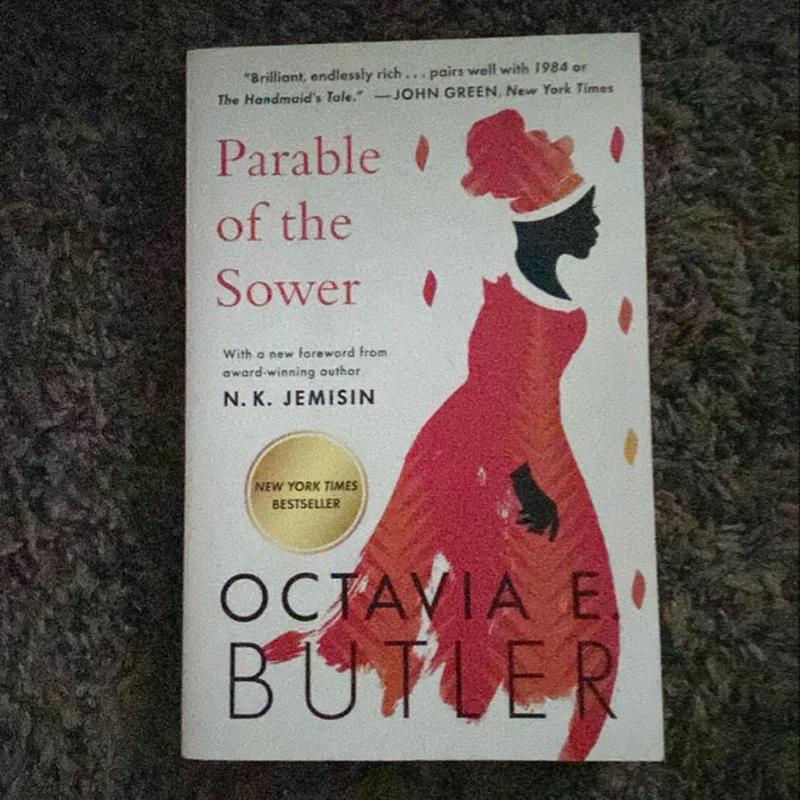
In January, nestled in the quietude of the post-holiday season, I found myself immersed in a book that was as unsettling as it was captivating. It was a Christmas gift from my daughter, a copy of Octavia Butler’s Parable of the Sower. Little did I know that this dystopian novel, penned in 1993, would resonate with an eerie familiarity in the year 2024.
Butler paints a grim picture of America in the 2020s, ravaged by climate change, economic collapse, and social disintegration. Walled communities offer a semblance of safety from the chaos that reigns outside, but even these fragile havens are not immune to the encroaching darkness.
At the heart of the story is Lauren Olamina, a young woman with hyperempathy, a condition that allows her to feel the pain of others as her own. This heightened sensitivity becomes both a burden and a source of strength as she navigates a world teetering on the brink of collapse.
When her community is brutally attacked, Lauren is forced to flee, embarking on a perilous journey north. Along the way, she gathers a ragtag group of survivors, each grappling with their own demons and seeking a glimmer of hope in a world gone mad.
What struck me most about Parable of the Sower was its prescience. Written over three decades ago, it eerily foreshadows many of the challenges we face today – the widening gap between rich and poor, the rise of extremism, the devastating impact of climate change. It’s a stark reminder that the seeds of dystopia are often sown in the present.
But amidst the darkness, there is also a flicker of hope. Lauren’s journey is not just one of survival; it’s a quest for meaning and purpose in a world that seems to have lost its way. She develops a new philosophy, Earthseed, which emphasises the power of change and the interconnectedness of all things.
Parable of the Sower is not an easy read. It’s a harrowing story that forces us to confront the uncomfortable realities of our time. But it’s also a deeply thought-provoking and ultimately hopeful book that reminds us of the resilience of the human spirit and the possibility of creating a better future, even in the face of overwhelming odds.
Have you read Parable of the Sower or any other works by Octavia Butler? What are your thoughts on the book’s relevance to our current times? Share your reflections in the comments below.


















 Shiel Yule