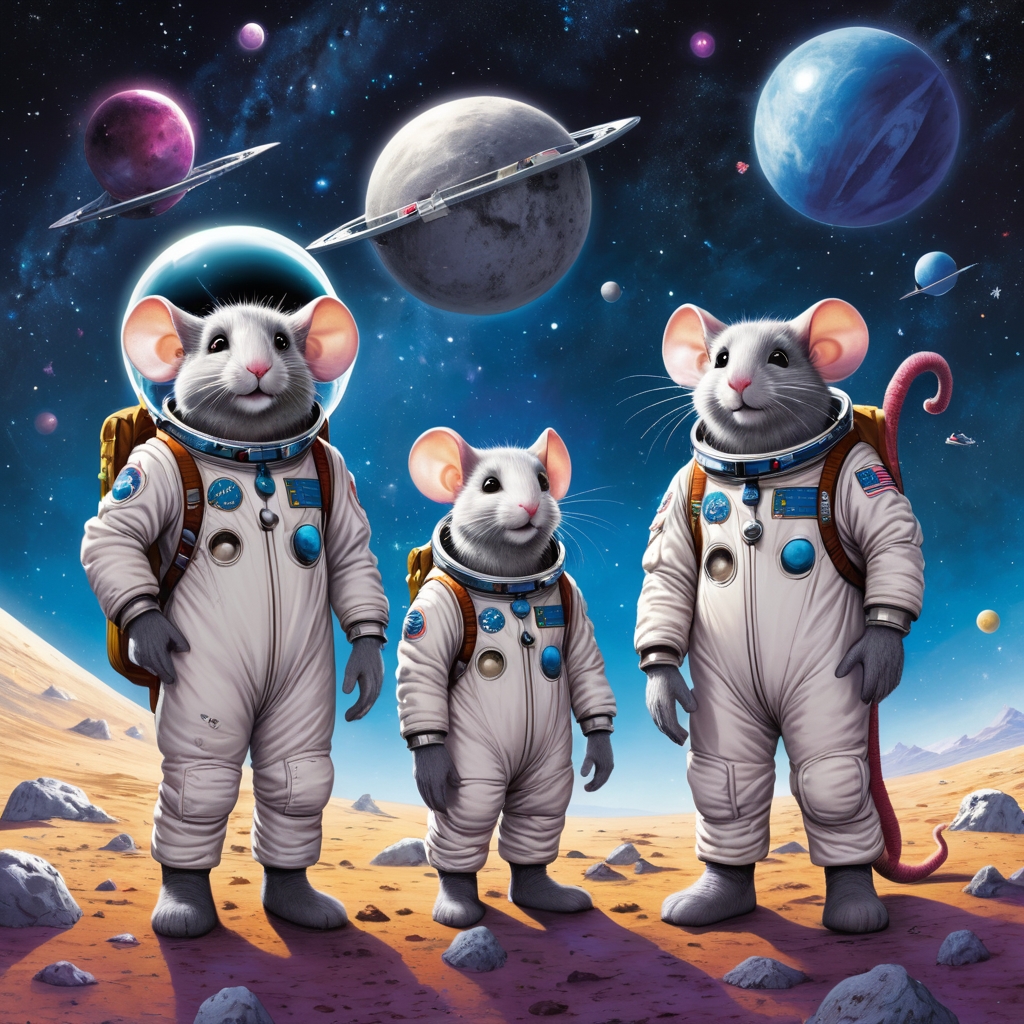
So Long, and Thanks for All the Algorithms (Probably)

The Guide Mark II says, “Don’t Panic,” but when it comes to the state of Artificial Intelligence, a mild sense of existential dread might be entirely appropriate. You see, it seems we’ve built this whole AI shebang on a foundation somewhat less stable than a Vogon poetry recital.

These Large Language Models (LLMs), with their knack for mimicking human conversation, consume energy with the same reckless abandon as a Vogon poet on a bender. Training these digital behemoths requires a financial outlay that would make a small planet declare bankruptcy, and their insatiable appetite for data has led to some, shall we say, ‘creative appropriation’ from artists and writers on a scale that would make even the most unscrupulous intergalactic trader blush.

But let’s assume, for a moment, that we solve the energy crisis and appease the creative souls whose work has been unceremoniously digitised. The question remains: are these LLMs actually intelligent? Or are they just glorified autocomplete programs with a penchant for plagiarism?

Microsoft’s Copilot, for instance, boasts “thousands of skills” and “infinite possibilities.” Yet, its showcase features involve summarising emails and sprucing up PowerPoint presentations. Useful, perhaps, for those who find intergalactic travel less taxing than composing a decent memo. But revolutionary? Hardly. It’s a bit like inventing the Babel fish to order takeout.

One can’t help but wonder if we’ve been somewhat misled by the term “artificial intelligence.” It conjures images of sentient computers pondering the meaning of life, not churning out marketing copy or suggesting slightly more efficient ways to organise spreadsheets.

Perhaps, like the Babel fish, the true marvel of AI lies in its ability to translate – not languages, but the vast sea of data into something vaguely resembling human comprehension. Or maybe, just maybe, we’re still searching for the ultimate question, while the answer, like 42, remains frustratingly elusive.

In the meantime, as we navigate this brave new world of algorithms and automation, it might be wise to keep a towel handy. You never know when you might need to hitch a ride off this increasingly perplexing planet.

Comparison to Crypto Mining Nonsense:

Both LLMs and crypto mining share a striking similarity: they are incredibly resource-intensive. Just as crypto mining requires vast amounts of electricity to solve complex mathematical problems and validate transactions, training LLMs demands enormous computational power and energy consumption.

Furthermore, both have faced criticism for their environmental impact. Crypto mining has been blamed for contributing to carbon emissions and electronic waste, while LLMs raise concerns about their energy footprint and the sustainability of their development.

Another parallel lies in the questionable ethical practices surrounding both. Crypto mining has been associated with scams, fraud, and illicit activities, while LLMs have come under fire for their reliance on massive datasets often scraped from the internet without proper consent or attribution, raising concerns about copyright infringement and intellectual property theft.

In essence, both LLMs and crypto mining represent technological advancements with potentially transformative applications, but they also come with significant costs and ethical challenges that need to be addressed to ensure their responsible and sustainable development.
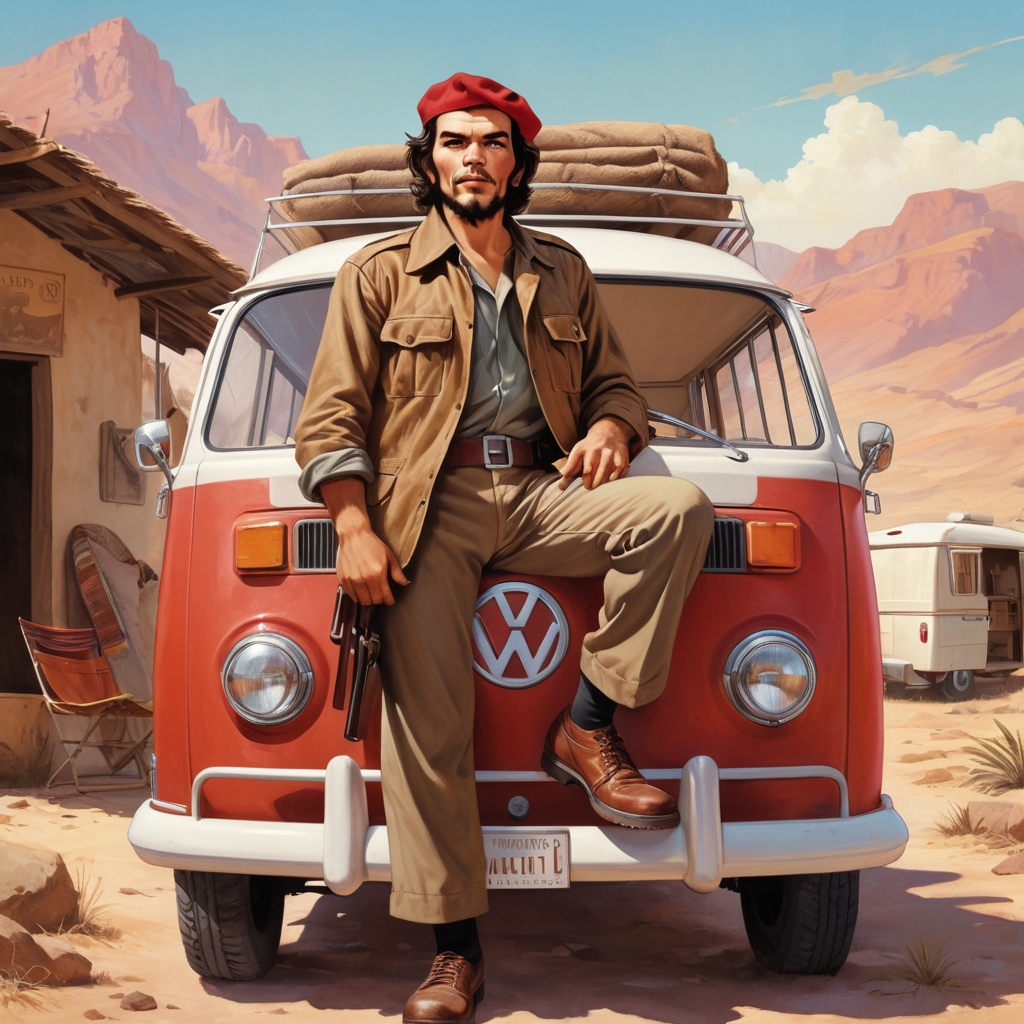
Che Guevara: The Enduring Symbol of Revolution

It is October 9th, a date etched in history as the day Che Guevara was executed in 1967. But Che’s death didn’t extinguish his flame; it ignited it. He transformed into a legend, a potent symbol of rebellion and anti-imperialism that continues to resonate with many, even today.

I remember vividly a cross-Europe trip in 1989, crammed into a VW camper van with a close friend. He was a fervent admirer of Che, and the journey became a rolling seminar on revolutionary ideals. My friend, would recount tales of Che’s guerrilla campaigns, his unwavering commitment to social justice, and his defiance of capitalist hegemony.

Che’s image, immortalised in that iconic beret-clad photograph, adorned our van like a talisman. It was a symbol of solidarity with the oppressed, a beacon of hope for a more equitable world.

But Che was more than just a charismatic figurehead. He was a complex individual, a doctor turned revolutionary, a man of action and intellectual curiosity. He was driven by a deep sense of empathy for the downtrodden and a burning desire to dismantle systems of oppression.

His legacy, however, is multifaceted and subject to varying interpretations. While some revere him as a champion of the people, others criticise his methods and ideology. It’s essential to engage with the full spectrum of his history, acknowledging both his contributions and the controversies surrounding his actions.

Regardless of one’s perspective, Che’s impact on the 20th century is undeniable. He remains a powerful reminder of the human capacity for idealism, sacrifice, and the pursuit of a better world. His story compels us to grapple with complex questions about power, justice, and the role of individuals in shaping history.

On this day in 1998 Two Dudes in a Garage Accidentally Invented the Future – Happy Birthday Google

Evening, fellow humans and AI bots! Today we journey back to the prehistoric digital age of 1998. Remember dial-up modems? Blocky websites with flashing GIFs? The agonising wait for a single image to load? Ah, simpler times. Yet, amidst this technological wilderness, a momentous event occurred: two Stanford PhD students, Larry Page and Sergey Brin, unleashed Google upon the world.

Picture this: two dudes, fuelled by ramen noodles and an insatiable thirst for knowledge, tinkering away in a cluttered garage (classic startup origin story, right?). The mission? To organise the world’s information. Their weapon? A revolutionary algorithm called PageRank. The impact? Well, let’s just say they kinda changed everything.

Before Google, searching the internet was like navigating a labyrinth blindfolded. You would stumble upon irrelevant websites, encounter countless dead ends, and emerge feeling more confused than when you started. But then Google arrived, like a digital Gandalf, illuminating the path with its magical search bar. Suddenly, we could find answers to our burning questions in milliseconds.

Want to know the capital of Bhutan? Boom! Google it. Need a recipe for vegan lasagna? Bam! Google it. Curious about the mating habits of the Peruvian mountain tapir? Don’t ask me why, but sure, Google it!

But Google’s impact goes beyond mere information retrieval. It has reshaped our lives in ways we never imagined. Remember those dusty encyclopaedias gathering dust on our shelves? Thanks to Google, they’re now relics of a bygone era. Remember memorising phone numbers? Google remembers them for us (and probably knows our favourite fetish too, but let’s not dwell on that).

Google has also become our digital confidante, the silent witness to our deepest desires and darkest fears. We confess our anxieties to the search bar, seek solace in its vast knowledge base, and trust it to guide us through life’s uncertainties.

But with great power comes great responsibility, right? Google’s dominance has raised concerns about privacy, misinformation, and the very nature of knowledge itself. Are we becoming too reliant on this digital oracle? Are we sacrificing our critical thinking skills at the altar of instant answers? These are questions we must grapple with as we navigate the ever-evolving digital landscape.

So, as we celebrate Google’s birthday, let’s take a moment to appreciate its profound impact on our lives. It has democratised information, connected us globally, and empowered us with knowledge. But let’s also remember to use it wisely, critically, and responsibly. After all, even the most sophisticated search engine can’t replace the power of human curiosity and critical thinking.

Until next time, keep searching, keep questioning, and keep your browser history clean!

Exploring Tim Marshall’s Insights on Geography

Today, we embark on a chilling journey through the pages of two books that have shaken me to my core: Tim Marshall’s “Prisoners of Geography” and its sequel, “The Power of Geography.” These works offer a stark, unflinching look at how the physical world shapes – and often constrains – human destiny.

Marshall’s books are a wake-up call, exposing the naïveté many of us harbour about how the world truly operates. Forget the rosy picture of global cooperation and progress. The truth, as laid bare in these pages, is far more brutal. It’s a world of competing nations, clashing ambitions, and enduring conflicts – all played out on the vast chessboard of geography.

“Prisoners of Geography” highlights how mountains, rivers, and coastlines can act as both barriers and gateways, influencing everything from trade routes to military strategies. It’s a world where access to warm-water ports can make or break a nation, and where vast plains can become battlefields for empires.

“The Power of Geography,” meanwhile, zooms in on specific regions, revealing how their unique geographic features have shaped their history and continue to influence their present-day struggles. We see how Russia’s sprawling expanse fuels its sense of insecurity, how China’s control of the South China Sea is a strategic power play, and how the Sahel’s harsh climate breeds instability.

These books left me feeling both enlightened and deeply unsettled. It’s terrifying to realise how vulnerable we all are to the whims of geography. But even more disturbing is the realisation that human greed, racial hatred, and religious zealotry often exacerbate these geopolitical tensions.

I must admit, I’m grateful to be living in what many might consider the “back end” of the UK, far removed from the hotspots of conflict and geopolitical manoeuvring. It’s a place where I can enjoy relative peace and security, away from the shadow of looming threats.

But even in my tranquil corner of the world, I can’t escape the knowledge that we are all interconnected. The ripple effects of conflict and instability can reach even the most remote corners of the globe. And the reality is, no one is truly safe in a world where geography and human folly collide.

I yearn for a world where we transcend these limitations, where we recognise our shared humanity and work towards a future of peace and prosperity. A world where greed and prejudice give way to compassion and understanding. A world where we break free from the chains of geography and embrace a brighter, more hopeful future.

Until that day arrives, we must remain vigilant, informed, and engaged. We must challenge those who seek to exploit our fears and divisions. And we must strive to create a world where the power of geography is harnessed for the betterment of all, not just the privileged few.

Thank you for joining me on this unsettling but essential journey. Until next time, stay curious, stay informed, and never lose hope for a better world.

From New Amsterdam to New York: The 1664 Transformation

Hey everyone, and welcome to another episode of “History with a Twist”! Today, we are diving deep into a pivotal moment that shaped the destiny of one of the world’s most iconic cities. We are talking about the “surrender” of New Amsterdam to the English in 1664, an event that led to its renaming as New York.

Now, as someone who has had the pleasure of living amongst the charming canals of old Amsterdam and exploring the bustling streets of New York, I can’t help but be fascinated by this historical turning point. It is like two of my favourite cities are connected by a thread woven in 1664.

So, what exactly went down back then? Simply put, it was not exactly a bloody battle. New Amsterdam, established in 1624 by the Dutch West India Company on the southern tip of Manhattan Island, flourished as a bustling entrepôt for the fur trade. However, its vulnerable position at the mouth of the Hudson River made it a tempting prize for the expanding English empire, which coveted control of this vital waterway.

In the late summer of 1664, a formidable English armada, comprising four warships and several hundred soldiers under the command of the audacious Colonel Richard Nicolls, materialised off the shores of New Amsterdam. The city, its defences dilapidated and its garrison undermanned, was ill-prepared for a siege. Peter Stuyvesant, the irascible yet stalwart Director-General of New Netherland, found himself in a dire predicament. His appeals for reinforcements from the Dutch West India Company had gone unheeded, leaving him with a meagre force to confront the overwhelming English might. The prospect of a protracted and bloody conflict against a superior adversary loomed ominously, casting a pall of despair over the once-thriving colony.

After some negotiations, and perhaps a bit of pragmatic thinking, Stuyvesant decided to surrender the city without a shot being fired. It was a strategic move to avoid bloodshed and protect the inhabitants.

And so it was, with a stroke of a quill and the lowering of a flag, that New Amsterdam, the once-proud bastion of Dutch enterprise in the New World, was unceremoniously rechristened New York, in honour of the Duke of York, the future King James II. No cannon fire rent the air, no blood stained the cobblestones; the transition was as swift and quiet as the turning of an autumn leaf. Peter Stuyvesant, his face etched with a mixture of defiance and resignation, surrendered the city without a fight, his pragmatism prevailing over any lingering hopes of resistance.

Now, some might label this a capitulation, a meek submission to a superior force. But history, as ever, offers a more nuanced perspective. The Dutch, though outnumbered and outgunned, had secured favourable terms in the handover, safeguarding their property rights and religious freedoms. This “strategic transition”, as we might call it, paved the way for New York’s astonishing metamorphosis. The seeds of its future greatness, its cosmopolitan spirit and its unyielding ambition, were already sown in the fertile soil of Manhattan Island. The Dutch legacy, though overshadowed by the Union Jack, continued to pulse beneath the surface, shaping the city’s unique character and contributing to the vibrant tapestry of its identity. New York, the phoenix rising from the ashes of New Amsterdam, was poised to embark on its extraordinary journey towards becoming the global powerhouse we know today.

The Dutch influence, much like the intricate network of canals that crisscross their homeland, remains deeply ingrained in the fabric of New York. It’s there in the street grid, the place names like Brooklyn (once the charming village of “Breukelen”), and even in the city’s spirit of tolerance and entrepreneurial zeal.

Beyond the well-known example of Harlem, originally named Nieuw Haarlem, the Dutch imprint on New York’s map is surprisingly widespread. Brooklyn, the bustling borough across the East River, echoes the Dutch town of “Breukelen.” The Bronx, pays homage to Jonas Bronck, a settler who established a farm there during the Dutch era. Staten Island, once known as “Staaten Eylandt,” translates to “States’ Island,” a nod to the governing body of the Netherlands. Even Coney Island, famed for its amusement parks and boardwalk, likely derives its name from the Dutch word “konijn,” meaning rabbit, due to the abundance of these creatures once found there.

Delving deeper into the city’s street grid, particularly in Lower Manhattan, further reveals the Dutch legacy. Broadway, the iconic thoroughfare, was once the “Breede weg,” or “broad way.” The Bowery, now a bustling hub, stems from “bouwerij,” meaning “farm” or “plantation.” Beaver Street serves as a reminder of the lucrative fur trade that underpinned New Amsterdam’s economy. These linguistic echoes, along with architectural remnants and the enduring presence of the Dutch Reformed Church, paint a picture of a city whose roots run deep into Dutch soil, a testament to the enduring impact of those early settlers.

So, next time you are strolling through Central Park or gazing at the skyscrapers, remember that 1664 moment. It was a “surrender” that paved the way for something truly extraordinary.

Thats all for today, folks. Stay tuned for more historical deep dives and unexpected connections. Until next time, keep exploring, keep questioning, and keep embracing the twists and turns of history!i