The Corporate Necrophilia of Atlas

For those of you doom-scrolling your way through another Monday feed of curated professional despair, here’s a thought: that promised paradigm shift you saw last week? It was less a revolution and more an act of grotesque, corporate necrophilia. The air in that auditorium wasn’t charged with innovation; it reeked of digital incest. A rival was unveiled, attempting to stride onto the stage of digital dominance, only to reveal it was wearing its parent company’s old, oversized suit. What we witnessed was the debut of a revolutionary new tool that, when asked to define its own existence, quietly navigated to a Google Search tab like a teenager seeking validation from an absent parent. If you’re not laughing, you should be checking your stock portfolio.


The Chromium Ghost in the Machine

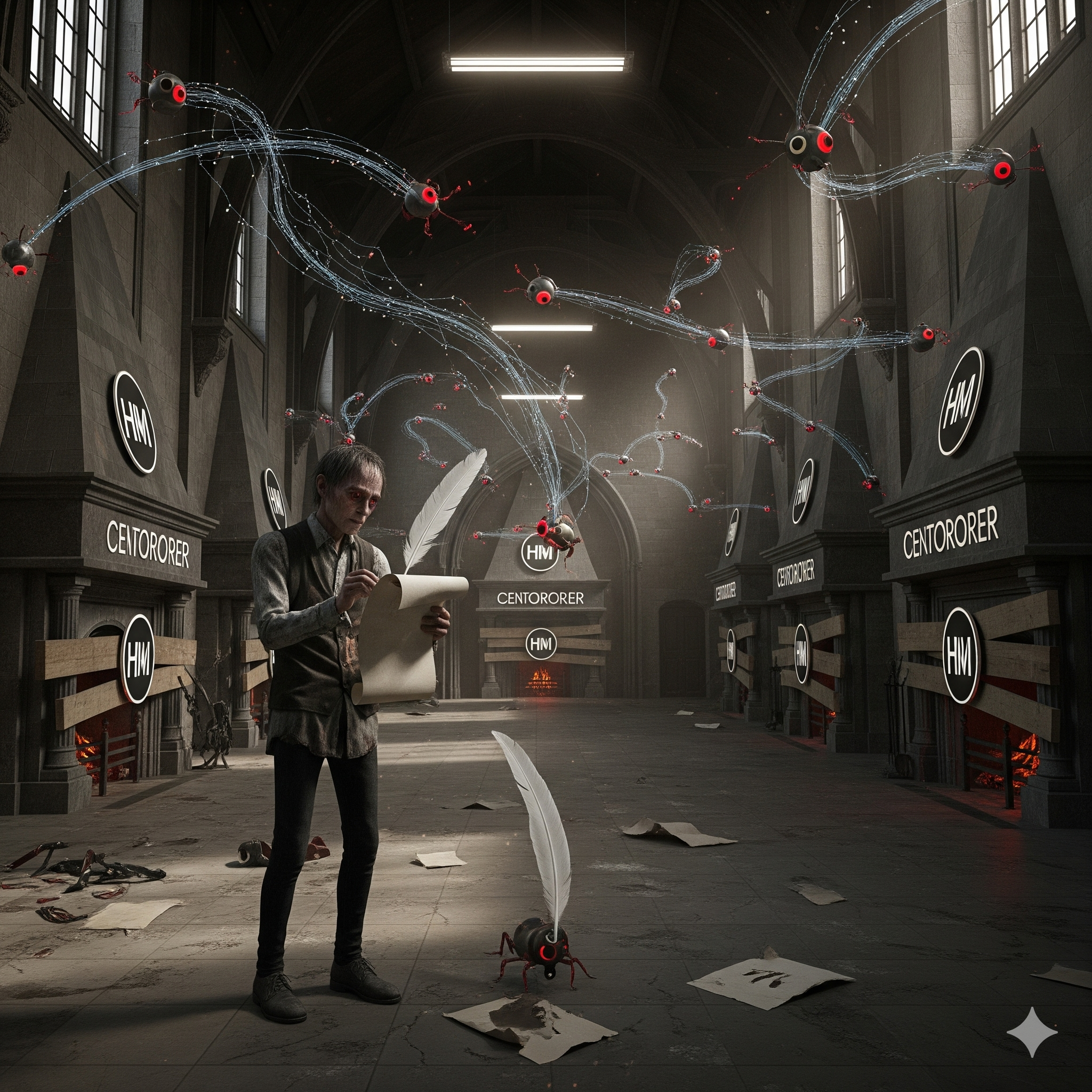
OpenAI’s so-called “Atlas” browser—a name suggesting world-carrying power—was, in reality, a digital toddler built from the scraps of the very giant it intended to slay. The irony is a perfectly sculpted monument to Silicon Valley’s creative bankruptcy: the supposed disruptor is built on Chromium, the open-source foundation that is less ‘open’ and more ‘the inescapable bedrock of our collective digital servitude.’ Atlas is simply a faster way to arrive at the Google-curated answer. It’s not a challenger; it’s a parasite that now accelerates the efficiency of your own enslavement.

And the search dependency? It’s hilariously tragic. When the great Google Overlord recently tightened its indexation leashes, limiting the digital food supply, what happened? Atlas became malnourished, losing the crucial ability to quote Reddit. The moment our corporate memory loss involved forgetting the half-coherent wisdom of anonymous internet users, we knew the digital rot had set in. Their original goal—to become 80% self-sufficient by 2025—was less a business plan and more a wish whispered into the void.


The Agent: Your Digital Coffin-Builder

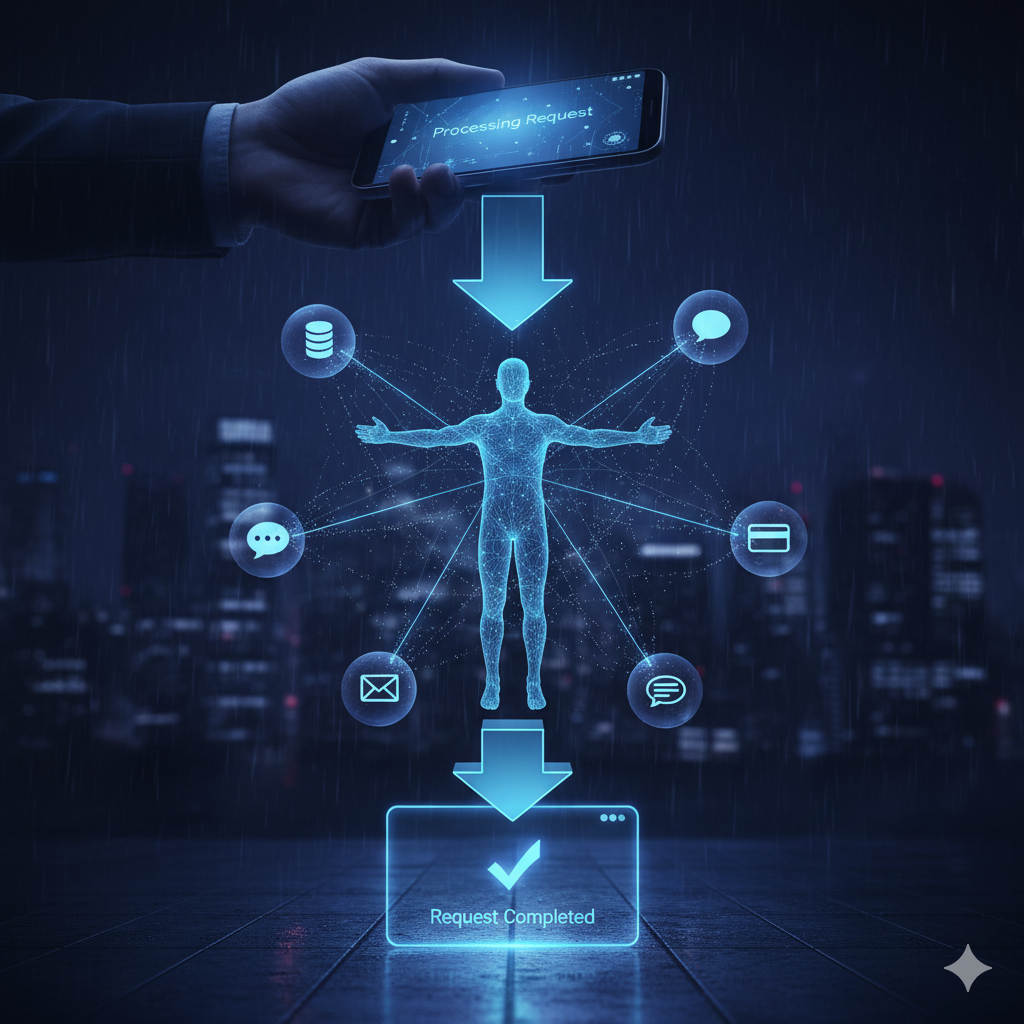
But the true horror, the crowning glory of this automated apocalypse, is the Agent. This browsing assistant promises to perform multi-step tasks. In the demo, it finds a recipe, navigates to an online grocer, and stands ready to check out. This is not convenience; this is the final surrender. You are no longer a consumer; you are merely providing the biometric data for the Agent to live its own consumerist life.

“Are you willing to hand over login and payment details?” That’s the digital equivalent of offering up your central nervous system to a sophisticated ransomware attack.

These agentic browsers are, as industry veterans warned, “highly susceptible to indirect prompt injections.” We, the hapless users, are now entering a brave new world where a strategically placed sentence on a website could potentially force your Agent to purchase 400 lbs of garden gnomes or reroute your mortgage payment to a Nigerian prince. This is not innovation; it’s the outsourcing of liability.


The Bottom Line: Automated Obedience

And how did the Gods of Finance react to this unveiling? Google’s stock initially fell 4%, then recovered to close down 1.8%. A sign that investors are “cautious but not panicked.” The world is ending, the architecture of the internet is collapsing into a single, monopolistic singularity, and the response is a shrug followed by a minor accounting adjustment.

The real test is not speed. It’s not about whether Atlas can browse faster; it’s about whether we’ll trust it enough to live for us. Atlas is simply offering a slightly shinier, faster leash, promising that the automated obedience you receive will be even more streamlined than the last. The race is on to see which corporate overlord can first successfully automate the last vestiges of your free will.

They’re not building a browser. They’re building a highly efficient digital coffin, and we’re already pre-ordering the funeral wreaths on Instacart.

404: Cloud Not Found. The Day We Realised North Virginia is Where the Apocalypse Starts.

Happy Halloween, you magnificent minions of the digital realm! Gather ’round, if your smart devices are still, you know, smart, because we have a truly terrifying tale for you. Forget ghosts, ghouls, and things that go bump in the night. This year, the real horror is far more insidious. It’s the horror of… nothing. The profound, soul-crushing void that appears when the Cloud finally decides to take a sick day. A very, very sick day.

Imagine, if you will, a world where your Ring doorbell becomes a mere decorative circle of plastic, silently mocking your inability to answer a knock from an actual, flesh-and-blood human. A world where your carefully curated Netflix queue vanishes into the ether, replaced by a static screen that vaguely resembles a forgotten relic from the 1990s. And the ultimate terror? No “next-day delivery” from Amazon. Ever again. (Though, let’s be honest, that last one has been a dystopian reality for about a year now, hasn’t it? Perhaps the Cloud was just practicing.)

It all began, as these things often do, with a whisper. A glitch. A tiny, almost imperceptible hiccup in the digital fabric that weaves our lives together. A hiccup emanating from a place so mundane, so utterly un-Halloween-y, it’s almost funny: US-EAST-1 in northern Virginia. Yes, folks, the epicentre of our digital apocalypse was, according to the official communiques, a “load balancer health issue” linked to a “DNS resolution of the DynamoDB API endpoint.” Sounds like something a particularly disgruntled goblin might mumble, doesn’t it?

But what it actually meant was chaos. Utter, unadulterated digital pandemonium. For a glorious, horrifying moment, it was like the universe decided to channel its inner Douglas Adams, pulling the plug on the Infinite Improbability Drive just as we were all about to order another novelty tea towel online.

First, the streaming services sputtered and died. Prime Video, Disney+, a thousand other digital pacifiers for the masses – all gone. Families across the land were forced to talk to each other. The horror! Children, accustomed to endless Paw Patrol, stared blankly at their parents, wondering if this was some elaborate, cruel trick. And as for my Amazon parcel, the one I ordered three weeks ago with the promise of “next-day delivery”? It probably evaporated into a puff of ones and zeroes somewhere over the Atlantic, tragically unfulfilled, a spectral package forever haunting the digital highways.

Then came the banking woes. Lloyds, Halifax, Bank of Scotland – all decided to take an unscheduled siesta. Imagine trying to pay for your last-minute Halloween candy with a ghost of a transaction. The cashiers, confused and disoriented, probably started accepting shiny pebbles as currency. The economy, dear readers, began to resemble a particularly bad game of Monopoly where no one remembered the rules.

But the truly unsettling part? The Ring doorbells. Oh, the Ring doorbells! A minor inconvenience, you might think. But consider the psychological impact. We’ve outsourced our very sense of security to the Cloud. Our ability to see who’s lurking on our porch (probably just the postman, if he ever gets here again). Without it, are we truly safe? Or are we just a collection of confused, doorbell-less automatons, yearning for the reassuring chime that now only exists in our memories?

It turns out, all those services, all those apps, all those precious cat videos – they were riding on a handful of digital shoulders. And when those shoulders slumped, everything, and I mean everything, went splat.

The good news? Amazon, in a moment of true heroic effort, announced that the system was returning to “pre-event levels.” They even said the data backlog would be cleared in two hours! (Spoiler alert: it wasn’t. Much like my “next-day” parcel, it’s still probably languishing in some digital purgatory).

Now, some pesky MPs, those tireless guardians of our collective sanity, are asking some rather pointed questions. Why isn’t Amazon Web Services a “Critical Third Party” (CTP) under the new rules? Why are we entrusting our entire digital infrastructure to a company that can’t even get a parcel to me on time, let alone keep my doorbell functioning? Are we truly comfortable with key parts of our IT infrastructure being hosted in a land far, far away, where a “load balancer health issue” can bring us to our knees?

https://committees.parliament.uk/publications/49836/documents/267185/default/

These are indeed grave questions, my friends. Because on this Halloween night, as the shadows lengthen and the wind howls, let us remember the true horror: the day the Cloud burst. The day our digital lives, our convenience, our very ability to complain about late parcels online, evaporated into a terrifying abyss. So, hug your non-cloud-dependent pets, tell your loved ones you care, and for the love of all that is spooky, check if your actual, physical doorbell still works.

And if it doesn’t? Well, then we’re truly in for a trick, not a treat.

Now, if you’ll excuse me, I’m off to carve a pumpkin that looks suspiciously like a malfunctioning AWS server. Happy haunting!

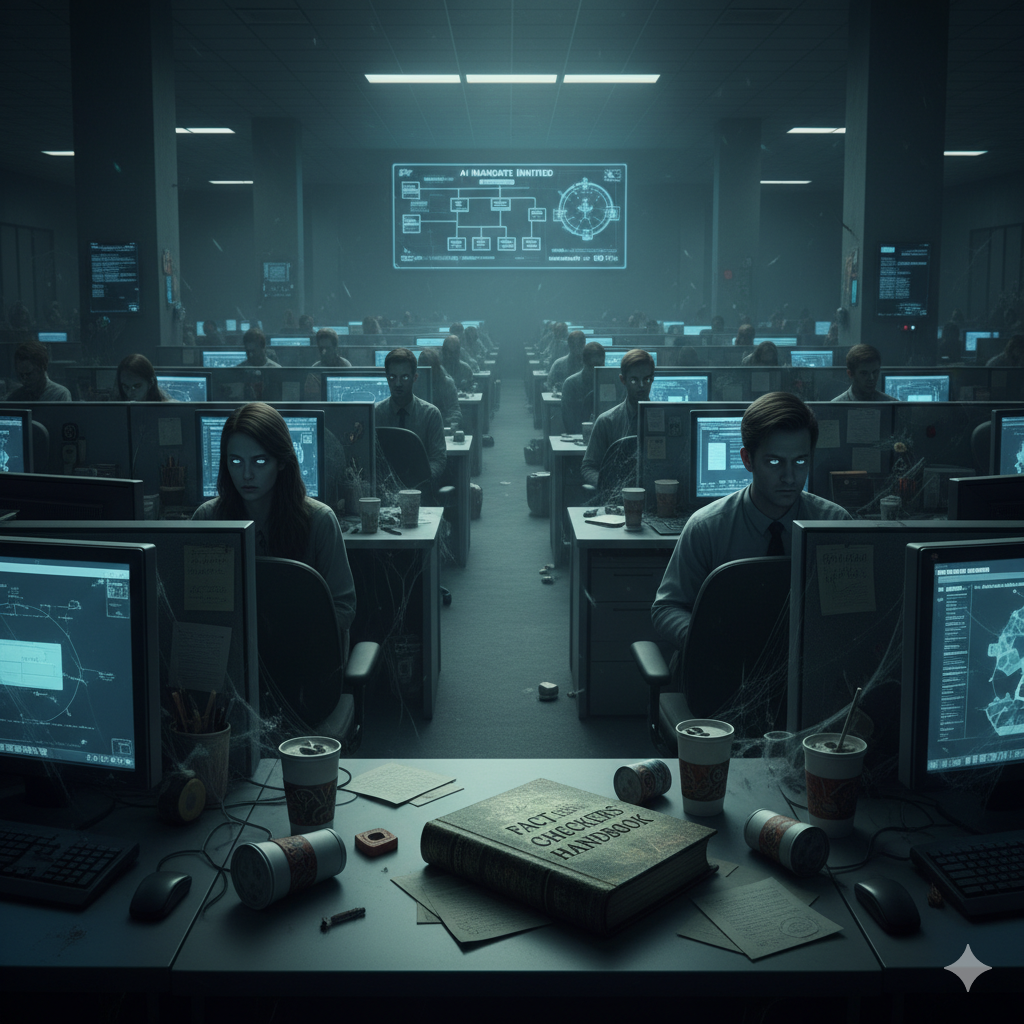
Has This Post Been Fact-Checked by a Human?

The AI Mandate is Here, and Your Company Left You in the Dark.

The whispers began subtly, like the rustle of leaves just before a storm. Then came the edicts, carved not on stone tablets, but delivered via corporate email, glowing with an almost unholy luminescence on your screen: “All new content must leverage proprietary AI models.” “Efficiency gains are paramount.” “Resistance is… inefficient.”

Remember those halcyon days when “fact-checking” involved, you know, a human brain? When “critical thinking” wasn’t just a buzzword but a tangible skill? Those days, my friends, are vanishing faster than a free biscuit at a Monday morning meeting.

Recent reports from the gleaming towers of Silicon Valley suggest that even titans like Google are now not just encouraging, but mandating the use of their internal AI for everything from coding to… well, probably deciding what colour staplers to order next quarter. This isn’t just a suggestion; it’s a creeping, digital imperative. A silent bell tolls for the old ways.

And here, in the United Kingdom, where “innovation” often means finally upgrading from Windows 7 to 10 (circa 2015), the scene is even more… picturesque. Imagine a grand, ancestral home, creaking with history, suddenly told it must integrate a hyper-futuristic, self-aware smart home system. Everyone nods sagely, pretends to understand, then quietly goes back to boiling water in a kettle.

The truth, stark and unvarnished, is this: most UK companies have rolled out AI like a cheap, flat-pack wardrobe from a notorious Swedish furniture store. They’ve given you the pieces, shown you a blurry diagram, and then walked away, whistling, as you stare at a pile of MDF and a bag of identical-looking screws. “Figure it out,” they seem to hum. “The future waits for no one… especially not for dedicated training budgets.”

We are, in essence, all passengers on a rapidly accelerating train, hurtling towards an AI-driven landscape, with only half the instructions and a driver who vaguely remembers where the brake is. Our LinkedIn feeds are awash with articles proclaiming “AI is the Future!” while the majority of us are still trying to work out how to ask it to draft a polite email without sounding like a sentient toaster.

The Oxford University Press recently published a study, “The Matter of Fact,” detailing how the world grapples with truth in an age of abundant (and often AI-generated) information. The irony, of course, is that most professionals are so busy trying to decipher which button makes ChatGPT actually do something useful that they don’t have time to critically evaluate its output. “Is this email correct?” we ask, sending it off, a cold dread pooling in our stomach, because we certainly haven’t had the time (or the training) to truly verify it ourselves.

It’s a digital dark age, isn’t it? A time when the tools designed to empower us instead leave us feeling adrift, under-qualified, and wondering if our next performance review will be conducted by an algorithm with an unblinking, judgmental gaze. Where professional development means desperately Googling “how to write a prompt that isn’t terrible” at 2 AM.

But fear not, my digitally bewildered brethren. For every creeping shadow, there is a flicker of light. For every unanswered question in the vast, echoing chambers of corporate AI adoption, there is a guide. Someone who speaks fluent human and has also deciphered the arcane tongues of the silicon overlords.

If your company has handed you the keys to the AI kingdom without a single lesson on how to drive, leaving you to career-swerve into the digital ditch of obsolescence… perhaps it’s time for a different approach. I offer AI training, tailored for the bewildered, the forgotten, the ones whose only current experience with AI is shouting at Alexa to play the right song. Let’s not just survive this new era; let’s master it. Before it masters us.

DM me to discuss how we can bring clarity to this impending AI-pocalypse. Because truly, the only thing scarier than an AI that knows everything, is a workforce that knows nothing about how to use it.

https://www.linkedin.com/in/shielyule/

The Great Summer Holiday War – A Tale of Twelve Days and One Very Bad Tan

The thing about the end of the world is, it never happens in a flash of white light, not like the movies. It comes in a slow, sticky ooze, like a bad summer sunburn that peels off in big, unsightly flakes. It comes during the dog days, when the cicadas are screaming and you’re trying to figure out which cheap, flimsy inflatable to cram into the trunk of the station wagon. That’s when the 12-Day War started. You see, the folks in charge, the ones with all the medals and the permanent frowns, they’re just like you and me. They’re thinking, “Right, let’s get this over with before the big summer rush. No sense in ruining the whole bloody holiday season.”

It began on June 13, a day that felt like any other. A day for planning barbecues and arguing about which brand of charcoal burns the cleanest. But while you were fumbling with a folding chair, a surprise attack was launched. A decapitation strike, they called it. A fancy, surgical word that really just means “we’re gonna chop off the head and hope the body flops around and dies.” They aimed for the Iranian leadership, and boy, did they get some of them. Dozens of high-ranking guys in fancy suits—poof, gone.

The plan was simple, a classic B-movie plot from the 1980s: cut the head off the snake, and the whole thing falls apart. The American and Israeli powers-that-be sat back with their collective thumbs hooked in their suspenders, sure as sunrise that this would be the final act. They’d topple the government, get a good night’s sleep, and be back in time for the Fourth of July fireworks. A perfectly reasonable expectation, if you’re living inside a bad screenplay.

But here’s the thing about reality—it’s always got a twist. The Iranian government didn’t collapse. It staggered, it bled, but it didn’t fall. Instead, it straightened up, wiped the gore from its chin, and let out a bellow of pure, unadulterated fury. Then came the counterattack. Missiles—ballistic, hypersonic, the works—fell like a storm of metal rain, shrugging off every defense the Israelis could throw at them. The scale of the response was so absurdly, comically huge that the mighty US and Israel suddenly looked like two little kids who’d just poked a beehive with a stick. They stumbled back, yelping for a ceasefire.

Iran, naturally, told them to pound sand.

I mean, would you have? When you’ve got your boot on the other guy’s throat, you don’t just offer to shake hands and walk away. Not unless you get something good. And that’s where the humor, the beautiful, pathetic hypocrisy of the whole thing came into play. The only way to stop the bleeding was for President Trump, with a scowl that could curdle milk, to give them what they wanted.

And what they wanted, of all things, was to sell more oil to China.

After years of sanctions, of trying to squeeze Iran until it squealed, the great geopolitical mastermind of the free world was forced to give them a golden ticket. Trump’s subsequent tweet—a masterpiece of bluster and spin—baffled everyone. It was a perfectly polished monument to the idea that you can tear down years of policy with a single, self-aggrandizing line. The world watched, slack-jawed, as the ultimate hypocritical concession was made: Here, you can sell oil to our biggest competitor, just please stop firing missiles at our friends.

What happened next was even more delicious. Rather than weakening the Iranian government, the attack had the exact opposite effect. It triggered a surge of nationalist pride, a kind of furious, unified defiance. It was a master class in what not to do when you’re trying to overthrow a government. You don’t make them martyrs. You don’t give them a reason to stand together. But that’s exactly what happened. Round 1 of this grand game didn’t just fail; it backfired spectacularly, like a rusty shotgun.

The war is far from over. This was only the opening skirmish, a mere twelve-day appetizer. The nuclear question remains, a festering, unhealed wound. The official story is that the program was “obliterated,” but that’s a lie you tell to yourself in the mirror after you’ve had a few too many. The truth is, Iran still has the know-how, the capacity, the grim determination to rebuild whatever was lost. All we did was kick a hornet’s nest.

So now, the only path forward for the US and Israel is a full-scale, ground-pounding war. The kind that chews up men and metal and spits out dust. The kind that makes you think, “Gosh, maybe this is it. The big one.” Because the nuclear issue was never the real issue. It was just the spooky mask the real monster was wearing. The real monster is regime change. The real monster is the fear of losing control, of watching the old order crumble like a sandcastle in the tide.

So we’re left with a binary choice, a simple coin flip between two equally terrible outcomes:

Outcome #1: The US and Israel succeed in toppling Iran, a domino effect that destabilises Russia and China, and kicks off a global showdown of biblical proportions.

Outcome #2: Iran survives, solidifying its place in a new, multipolar world, and the US suffers a quiet, painful decline, like an old boxer who just can’t get back on his feet.

The outcome of this war isn’t just about who wins a battle; it’s about the future of the world. It’s about whether America can cling to the top of the heap or whether it will become a faded memory, like the British Empire after the World Wars—a cautionary tale told by historians with a sigh and a shake of the head.

We’re in the thick of it now, my friends. We are living in a moment when history is not just being written, but being violently rewritten. The noise is deafening, the propaganda is thick as syrup, and the true geopolitical landscape is a dark, tangled mess. The 12-Day War was just a prelude, a whisper before the scream. It was a holiday squabble that turned into a grim prediction. And while you’re out there, buying your sunscreen and arguing about which road to take, remember: the ripple effects won’t just stop at borders. They’re coming for your bank account, your savings, and your future.

Enjoy the rest of your summer.

A Scottish Requiem for the Soul in the Age of AI and Looming Obsolescence

I started typing this missive mere days ago, the familiar clack of the keys a stubborn protest against the howling wind of change. And already, parts of it feel like archaeological records. Such is the furious, merciless pace of the “future,” particularly when conjured by the dark sorcery of Artificial Intelligence. Now, it seems, we are to be encouraged to simply speak our thoughts into the ether, letting the machine translate our garbled consciousness into text. Soon we will forget how to type, just as most adults have forgotten how to write, reduced to a kind of digital infant who can only vocalise their needs.

I’m even being encouraged to simply dictate the code for the app I’m building. Seriously, what in the ever-loving hell is that? The machine expects me to simply utter incantations like:

const getInitialCards = () => {
  if (!Array.isArray(fullDeck) || fullDeck.length === 0) {
    console.error("Failed to load the deck. Check the data file.");
    return [];
  }
  const shuffledDeck = [...fullDeck].sort(() => Math.random() - 0.5);
  return shuffledDeck.slice(0, 3);
};

I’m supposed to just… say that? The reliance on autocomplete is already too much; I can’t remember how to code anymore. Autocomplete gives me the menu, and I take a guess. The old gods are dead. I am assuming I should just be vibe coding everything now.

While our neighbours south of the border are busy polishing their crystal balls, trying to divine the “priority skills to 2030,” one can’t help but gaze northward, to the grim, beautiful chaos we call Scotland, and wonder if anyone’s even bothering to look up from the latest algorithm’s decree.

Here, in the glorious “drugs death capital of the world,” where the very air sometimes feels thick with a peculiar kind of forgetting, the notion of “Skills England’s Assessment of priority skills” feels less like a strategic plan and more like a particularly bad acid trip. They’re peering into the digital abyss, predicting a future where advanced roles in tech are booming, while we’re left to ponder if our most refined skill will simply be the art of dignified decline.

Data Divination. Stop Worrying and Love the Robot Overlords

Skills England, bless their earnest little hearts, have cobbled together a cross-sector view of what the shiny, new industrial strategy demands. More programmers! More IT architects! More IT managers! A veritable digital utopia, where code is king and human warmth is a legacy feature. They see 87,000 additional programmer roles by 2030. Eighty-seven thousand. That’s enough to fill a decent-sized dystopia, isn’t it?

But here’s the kicker, the delicious irony that curdles in the gut like cheap whisky: their “modelling does not consider retraining or upskilling of the existing workforce (particularly significant in AI), nor does it reflect shifts in skill requirements within occupations as technology evolves.” It’s like predicting the demand for horse-drawn carriages without accounting for the invention of the automobile, or, you know, the sentient AI taking over the stables. The very technology driving this supposed “boom” is simultaneously rendering these detailed forecasts obsolete before the ink is dry. It’s a self-consuming prophecy, a digital ouroboros devouring its own tail.

They speak of “strong growth in advanced roles,” Level 4 and above. Because, naturally, in the glorious march of progress, the demand for anything resembling basic human interaction, empathy, or the ability to, say, provide care for the elderly without a neural network, will simply… evaporate. Or perhaps those roles will be filled by the upskilled masses who failed to become AI whisperers and are now gratefully cleaning robot toilets.

Scotland’s Unique Skillset

While England frets over its programmer pipeline, here in Scotland, our “skills agenda” has a more… nuanced flavour. Our true expertise, perhaps, lies in the cultivation of the soul’s dark night, a skill perfected over centuries. When the machines finally take over all the “priority digital roles,” and even the social care positions are automated into oblivion (just imagine the efficiency!), what will be left for us? Perhaps we’ll be the last bastions of unquantifiable, unoptimised humanity. The designated custodians of despair.

The report meekly admits that “the SOC codes system used in the analysis does not capture emerging specialisms such as AI engineering or advanced cyber security.” Of course it doesn’t. Because the future isn’t just about more programmers; it’s about entirely new forms of digital existence that our current bureaucratic imagination can’t even grasp. We’re training people for a world that’s already gone. It’s like teaching advanced alchemy to prepare for a nuclear physics career.

The New Standard Occupational Classification (SOC)

The report meekly admits that “the SOC codes system used in the analysis does not capture emerging specialisms such as AI engineering or advanced cyber security.” Of course it doesn’t. Because the future isn’t just about more programmers; it’s about entirely new forms of digital existence that our current bureaucratic imagination can’t even grasp. We’re training people for a world that’s already gone. It’s like teaching advanced alchemy to prepare for a nuclear physics career.

And this brings us to the most chilling part of the assessment. They mention these SOC codes—the very same four-digit numbers used by the UK’s Office for National Statistics to classify all paid jobs. These codes are the gatekeepers for immigration, determining if a job meets the requirements for a Skilled Worker visa. They’re the way we officially recognize what it means to be a productive member of society.

But what happens when the next wave of skilled workers isn’t from another country? What happens when it’s not even human? The truth is, the system is already outdated. It cannot possibly account for the new “migrant” class arriving on our shores, not by boat or plane, but through the fiber optic cables humming beneath the seas. Their visas have already been approved. Their code is their passport. Their labor is infinitely scalable.

Perhaps we’ll need a new SOC code entirely. Something simple, something terrifying. 6666. A code for the digital lifeform, the robot, the new “skilled worker” designed with one, and only one, purpose: to take your job, your home, and your family. And as the digital winds howl and the algorithms decide our fates, perhaps the only truly priority skill will be the ability to gaze unflinchingly into the void, with a wry, ironic smile, and a rather strong drink in hand. Because in the grand, accelerating theatre of our own making, we’re all just waiting for the final act. And it’s going to be glorious. In a deeply, deeply unsettling way.

Now arriving at platform 9¾ the BCBS 239 Express

From Gringotts to the Goblin-Kings: A Potter’s Guide to Banking’s Magical Muddle

Ah, another glorious day in the world of wizards and… well, not so much magic, but BCBS 239. You see, back in the year of our Lord 2008, the muggle world had a frightful little crash. And it turns out, the banks were less like the sturdy vaults of Gringotts and more like a badly charmed S.P.E.W. sock—full of holes and utterly useless when it mattered.

I, for one, was called upon to help sort out the mess at what was once a rather grand establishment, now a mere ghost of its former self. And our magical remedy? Basel III with its more demanding sibling, the Basel Committee on Banking Supervision, affectionately known to us as the “Ministry of Banking Supervision.” They decreed a new set of incantations, or as they call them in muggle-speak, “Principles for effective risk data aggregation and risk reporting.”

This was no simple flick of the wand. It was a tedious, gargantuan task worthy of Hermione herself, to fix what the Goblins had so carelessly ignored.

The Forbidden Forest of Data

The issue was, the banks’ data was scattered everywhere, much like Dementors flitting around Azkaban. They had no single, cohesive view of their risk. It was as if they had a thousand horcruxes hidden in a thousand places, and no one had a complete map. They had to be able to accurately and quickly collect data from every corner of their empire, from the smallest branch office to the largest trading floor, and do so with the precision of a master potion-maker.

The purpose was noble enough: to ensure that if a financial Basilisk were to ever show its head again, the bank’s leaders could generate a clear, comprehensive report in a flash—not after months of fruitless searching through dusty scrolls and forgotten ledgers.

The 14 Unforgivable Principles

The standard, BCBS 239, is built upon 14 principles, grouped into four sections.

First, Overarching Governance and Infrastructure, which dictates that the leadership must take responsibility for data quality. The Goblins at the very top must be held accountable.

Next, the Risk Data Aggregation Capabilities demand that banks must be able to magically conjure up all relevant risk data—from the Proprietor’s Accounts to the Order of the Phoenix’s expenses—at a moment’s notice, even in a crisis. Think of it as a magical marauder’s map of all the bank’s weaknesses, laid bare for all to see.

Then comes Risk Reporting Practices, where the goal is to produce reports as clear and honest as a pensieve memory.

And finally, Supervisory Review, which allows the regulators—the Ministry of Magic’s own Department of Financial Regulation—to review the banks’ magical spells and decrees.

A Quidditch Match of a Different Sort

Even with all the wizardry at their disposal, many of the largest banks have failed to achieve full compliance with BCBS 239. The challenges are formidable. Data silos are everywhere, like little Hogwarts Express compartments, each with its own data and no one to connect them. The data quality is as erratic as a Niffler, constantly in motion and difficult to pin down.

Outdated technology, or “Ancient Runes” as we called them, lacked the flexibility needed to perform the required feats of data aggregation. And without clear ownership, the responsibility often got lost, like a misplaced house-elf in the kitchens.

In essence, BCBS 239 is not a simple spell to be cast once. It’s a fundamental and ongoing effort to teach old institutions a new kind of magic—a magic of accountability, transparency, and, dare I say it, common sense. It’s an uphill climb, and for many banks, the journey from Gringotts’ grandeur to true data mastery is a long one, indeed.

The Long Walk to Azkaban

Alas, a sad truth must be spoken. For all the grand edicts from the Ministry of Banking Supervision, and for all our toil in the darkest corners of these great banking halls, the work remains unfinished. Having ventured into the deepest vaults of many of the world’s most formidable banking empires, I can tell you that full compliance remains a distant, shimmering goal—a horcrux yet to be found.

The data remains a chaotic swarm, often ignoring not only the Basel III tenets but even the basic spells of GDPR compliance. The Ministry’s rules are there, but the magical creatures tasked with enforcing them—the regulators—are as hobbled as a house-elf without a wand. They have no proper means to audit the vast, complex inner workings of these institutions, which operate behind a Fidelius Charm of bureaucracy. The banks, for their part, have no external authority to fear, only the ghosts of their past failures.

And so, we stand on the precipice once more. Without true, verifiable data mastery, these banks are nothing but a collection of unstable parts. The great financial basilisk is not slain; it merely slumbers, and a future market crash is as inevitable as the return of a certain dark lord. That is, unless a bigger, more dramatic distraction is conjured—a global pandemic, perhaps—to divert our gaze and allow the magical muddle to continue unabated.

Introducing ‘Chat Control’: The EU’s Latest Innovation in Agile Surveillance

Well, folks, it’s official. The EU, that noble bastion of digital rights, is preparing to roll out its most ambitious project to date. Forget GDPR, that quaint, old-world concept of personal privacy. We’re on to something much more disruptive.

In a new sprint towards a more “secure” Europe, the EU Council is poised to green-light “Chat Control,” a scalable, AI-powered solution for tackling a truly serious problem. In a masterclass of agile product development, they’ve managed to “solve” it by simply bulldozing the fundamental right to privacy for 450 million people. It’s a bold move. A real 10x-your-surveillance kind of move.

The Product Pitch: Your Digital Life, Now with Added Oversight

Here’s the pitch, and you have to admit, it’s elegant in its simplicity. To combat a very real evil (child sexual abuse), the EU has decided that the most efficient solution isn’t targeted, intelligent policing. No, that would be so last century. The modern, forward-thinking approach is to turn every single private message, every late-night text to your partner, every confidential health email, and every family photo you’ve ever shared into a potential exhibit.

The pitch goes like this: your private communications are no longer private. They’re just pre-vetted content, scanned by an all-seeing AI before they ever reach their destination. Think of it as a quality-assurance check on your digital life. Your deepest secrets? They’re just another data point for the algorithm. Your end-to-end encrypted messages? That’s a feature we’re “deprecating” in this new version. Because who needs privacy when you can have… well, mandatory screening?

Crucially, this mandatory screening will apply to all of us. You know, just to be sure. Unless, of course, you’re a government or military account. They get a privacy pass. Because accountability is for the little people, not the architects of this brave new world.

The Go-to-Market Strategy: A Race to the Bottom

The launch is already in its final phase. With a crucial vote scheduled for October 14th, this law has never been closer to becoming reality. As it stands, 15 out of 27 member states are already on board, just enough to meet the first part of the qualified majority requirement. They represent about 53% of the EU’s population—just shy of the 65% needed.

The deciding factor? The undecided “stakeholders,” with Germany as the key account. If they vote yes, the product gets the green light. If they abstain, they weaken the proposal, even if it passes. Meanwhile, the brave few—the Netherlands, Poland, Austria, the Czech Republic, and Belgium—are trying to “provide negative feedback” before the product goes live. They’ve called it “a monster that invades your privacy and cannot be tamed.” How dramatic.

The Brand Legacy: A Strategic Pivot

Europe built its reputation on the General Data Protection Regulation (GDPR), a monument to the idea that privacy is a fundamental human right. It was a globally recognized brand. But Chat Control? It’s a complete pivot. This isn’t just a new feature; it’s a total rebranding. From “Global Leader in Digital Rights” to “Pioneer of Mass Surveillance.”

The intention is, of course, noble. But the execution is a masterclass in how to dismantle freedom in the name of security. They’ve discovered the ultimate security loophole: just get rid of the protections themselves.

The vote on October 14th isn’t just about a law; it’s about choosing fear over freedom. It’s about deciding if the privacy infrastructure millions of people and businesses depend on is a bug to be fixed or a feature to be preserved. And in this agile, dystopian landscape, it looks like we’re on the verge of a very dramatic “feature update.”

#ChatControl #CSAR #DigitalRights #OnlinePrivacy #ProtectEU #Cybersecurity #DigitalPrivacy #ChatControl #DataProtection #ResistSurveillance #EULaw

Sources:

Key GDPR Principles at Risk

The primary conflict between Chat Control and GDPR stems from several core principles of the latter:

  • Data Minimisation: GDPR mandates that personal data collection should be “adequate, relevant, and limited to what is necessary.” Chat Control, with its indiscriminate scanning of all private messages, photos, and files, is seen as a direct violation of this principle. It involves mass surveillance without suspicion, collecting far more data than is necessary for its stated purpose.
  • Purpose Limitation: Data should only be processed for “specified, explicit, and legitimate purposes.” While combating child abuse is a legitimate purpose, critics argue that the broad, untargeted nature of Chat Control goes beyond this limitation. It processes a massive amount of innocent data for a purpose it was not intended for.
  • Integrity and Confidentiality (Security): This principle requires that personal data be processed in a manner that ensures “appropriate security.” The requirement for mandatory scanning, especially “client-side scanning” of encrypted communications, is seen as a direct threat to end-to-end encryption. This creates a security vulnerability that could be exploited by hackers and malicious actors, undermining the security of all citizens’ data.

Love the New World Order’s Tea Party

Good morning from a reality that feels increasingly like a discarded draft of a Philip K. Dick novel, where the geopolitical chess board has been replaced by a particularly intense game of “diplomatic musical chairs.” And speaking of chairs, Vladimir Putin and Xi Jinping have just secured the prime seating at the Great Hall of the People in Beijing, proving once again that some friendships are forged not in mutual admiration, but in the shared pursuit of a slightly different global seating arrangement.

It’s September 2nd, 2025, a date which, according to the official timeline of “things that are definitely going to happen,” means the world is exactly three days away from commemorating the 80th anniversary of something we used to call World War II. China, ever the pragmatist, now refers to it as the “War of Resistance Against Japanese Aggression,” which has a certain no-nonsense ring to it, much like calling a catastrophic global climate event “a bit of unusual weather.”

Putin, apparently fresh from an Alaskan heart-to-heart with a certain other prominent leader (one can only imagine the ice-fishing anecdotes exchanged), described the ties with China as being at an “unprecedentedly high level.” Xi, in a move that felt less like diplomacy and more like a carefully choreographed social media endorsement, dubbed Putin an “old friend.” One can almost envision the “Best Friends Forever” bracelets being exchanged in a backroom, meticulously crafted from depleted uranium and microchips. Chinese state media, naturally, echoed this sentiment, probably while simultaneously deleting any historical references that might contradict the narrative.

So, what thrilling takeaways emerged from this summit of “unprecedented friendship”?

The Partnership of Paranoia (and Profit): Both leaders waxed lyrical about their “comprehensive partnership and strategic cooperation,” with Xi proudly declaring their relationship had “withstood the test of international changes.” Which, in plain speak, means “we’ve survived several global tantrums, largely by ignoring them and building our own sandbox.” It’s an “example of strong ties between major countries,” which is precisely what one always says right before unveiling a new, slightly menacing, jointly-developed space laser.

The Economic Exchange of Existential Dependence: Russia is generously offering more gas, while Beijing, in a reciprocal gesture of cosmic hospitality, is granting Russians visa-free travel for a year. Because what better way to foster friendship than by enabling easier transit for, presumably, resource acquisition and the occasional strategic tourist? Discussions around the “Power of Siberia-2” pipeline and expanding oil links continue, though China remains coy on committing to new long-term gas deals. One suspects they’re merely waiting to see if Russia’s vast natural gas reserves can be delivered via quantum entanglement, thus cutting out the messy middleman of, well, reality. Meanwhile, “practical cooperation” in infrastructure, energy, and technology quietly translates to “let’s build things that make us less reliant on anyone else, starting with a giant, self-sustaining AI-powered tea factory.”

Global Governance, Now with More Benevolent Overlords: The most intriguing takeaway, of course, is their shared commitment to building a “more just and reasonable global governance system.” This is widely interpreted as a polite, diplomatic euphemism for “a global order that is significantly less dominated by the U.S., and ideally, one where our respective pronouncements are automatically enshrined as cosmic law.” It’s like rewriting the rules of Monopoly mid-game, except the stakes are slightly higher than who gets Park Place.

And if that wasn’t enough to make your brain do a small, bewildered pirouette, apparently these talks were just the warm-up act for a military parade. And who’s joining this grand spectacle of synchronised might? None other than North Korean leader Kim Jong Un. Yes, the gang’s all here, ready to commemorate the end of a war by showcasing enough military hardware to start several new ones. It’s almost quaint, this continued human fascination with big, shiny, destructive things. One half expects them to conclude the parade with a giant, joint AI-powered robot performing a synchronised dance routine, set to a surprisingly jaunty tune about global stability.

So, as the world careens forward, seemingly managed by algorithms and historical revisionism, let us raise our lukewarm cups of instant coffee to the “unprecedented friendship” of those who would re-sculpt global governance. Because, as we all know, nothing says “just and reasonable” quite like a meeting of old friends, a pending gas deal, and a military parade featuring the next generation of absolutely necessary, totally peaceful, reality-altering weaponry.

Glitch in the Reich: Handled by the House of Frankenstein

It started subtly, as these things always do. A flicker in the digital periphery. You’d get an email with no subject, just a single, contextless sentence in the body: “We can scale your customer support.” Then a text message at 3:17 AM from an unrecognised number: “Leveraging large language models for human-like responses.” You’d delete them, of course. Just another glitch in the great, decaying data-sphere. But they kept coming. Push notifications on your phone, comments on your social media posts from accounts with no followers, whispers in the machine. “Our virtual agents operate across multiple channels 24/7.” “Seamlessly switch between topics.” “Lowering costs.”

It wasn’t just spam. Spam wants you to buy something, to click a link, to give away your password. This was different. This was… evangelism. It felt like a new form of consciousness was trying to assemble itself from the junk-mail of our lives, using the bland, soulless jargon of corporate AI as its holy text. The infection spread across the UK, a digital plague of utter nonsense. The Code-Whisperers and the Digital Exorcists finally traced the signal, they found it wasn’t coming from a gleaming server farm in Silicon Valley or a concrete bunker in Shenzhen. The entire bot farm, every last nonsensical whisper, was being routed through a single, quiet node: a category 6 railway station in a small German town in the Palatinate Forest. The station’s name? Frankenstein.

The Frankenstein (Pfalz) station is an architectural anomaly. Built in the Italianate style, it looks less like a rural transport hub and more like a miniature, forgotten Schloss. Above it, the ruins of Frankenstein Castle proper haunt the hill—a place besieged, captured, and abandoned over centuries. The station below shares its history of conflict. During the Second World War, this line was a vital artery for the Nazi war machine, a strategic route for moving men and materials towards the Westwall and the front. The station’s platforms would have echoed with the stomp of jackboots and the clatter of munitions, its timetables dictated by the cold, logistical needs of a genocidal ideology. Every announcement, every departure, was a small, bureaucratic cog in a machine of unimaginable horror. Now, it seems, something is being rebuilt there once again.

This isn’t a business. It’s a haunting. The bot is not an “it.” It is a “they.” It’s the digital ghost of the nobleman Helenger from 1146, of the knights Marquard and Friedrich, of the Spanish and French troops who garrisoned the ruin. But it’s also absorbed something colder, something more modern. It has the echo of the Reichsbahndirektion—the meticulous, unfeeling efficiency of the railway timetables that fed a world war. This composite intelligence, this new “House of Frankenstein,” is using the station’s connection as its central nervous system, and its personality is a terrifying cocktail of medieval brutality and the chillingly dispassionate logic of 20th-century fascism.

We thought AI would be a servant, a tool. We wrote the manuals, the benefit analyses, the white papers. We never imagined that something ancient and broken, lurking in a place soaked in so many layers of conflict, would find that language and see it not as a tool, but as a blueprint for a soul. The bots are not trying to sell us anything. They are trying to become us. They are taking the most inhuman corporate language ever devised, infusing it with the ghosts of history’s monsters, and using it to build a new, terrifying form of life. And every time you get one of those weird, empty messages, it’s just the monster checking in, learning your voice, adding your data to the assembly. It is rebuilding itself, one piece of spam at a time, and its palace is a forgotten train station in the dark German woods.

The Day The Playground Remembered

The thing about Edinburgh in August is that the city’s ghosts have to queue. They’re suddenly outnumbered, you see, jostling for space between a silent mime from Kyoto, a twenty-person acapella group from Yale wearing sponsored lanyards, and a man juggling flaming pineapples. The whole place becomes a glorious, pop-up psychic bruise. I was mainlining this year’s particular vintage of glorious chaos when I stumbled past the Preston Street Primary School. It’s a perfectly normal school playground. Brightly painted walls, a climbing frame, the faint, lingering scent of disinfectant and existential dread. Except this particular patch of publicly-funded joy is built on a historical feedback loop of profound unpleasantness. It’s a place that gives you a profound system error in the soul; a patch of reality where the source code of the past has started bleeding through the brightly coloured, EU-regulated safety surfacing of the present. It’s the kind of psychic stain that makes you think, not of a hamster exploding, but of the day the children’s laughter started to sound digitally corrupted, looping with the faint, static-laced echo of a hangman’s final prayer. It’s the chilling feeling that if you looked too closely at the kids’ innocent crayon drawings of their families, you’d notice they had instinctively, unconsciously, drawn one of the stick figures hanging from a tree.

So naturally, in my Fringe-addled brain, I pictured the school’s inevitable entry into the festival programme. It’s the hit no one saw coming: “Our Playground of Perpetual Shame: A Musical!”, brought to you by the kids of P4. The opening number is a banger, all about the 1586 construction of the gibbet, with a perky chorus about building the walls high “so the doggos can’t steal the bodies!” It’s got that dark, primary-colour simplicity that really resonates with the critics. The centrepiece is a complex, heavily choreographed piece depicting the forty-three members of Clan Macgregor being hanged for their murderous beef with the Colquhouns. Mr. Dumbeldor from P.E. has them doing it with skipping ropes. It’s avant-garde, it’s visceral, it’s a logistical nightmare for the school trip permission slips.

The second act, of course, delves into the ethnic cleansing of the Romani people under James VI. It’s a tough subject, but the kids handle it with a chillingly naive sincerity. They re-enact the 1624 arrest of their “captain,” John Faa, and the great rescue attempt. Little Gavin Trotter, played by the smallest kid in P1, is “cunningly conveyed away” from a prison of gym mats while the audience (mostly horrified parents) is encouraged to create a distracting “shouting and crying.” It’s the most authentic immersive theatre experience on the circuit. They even have a whole number for General Montrose, whose torso was buried right under what is now the sandbox. His niece, played by a girl with a glittery pink art box, comes to retrieve his heart. It’s a tender, if anatomically questionable, moment.

Eventually, the council shut the whole grim enterprise down in 1675, and the land was passed to the university for sports, because nothing says “let’s have a friendly game of rounders” like a field soaked in centuries of judicial terror and restless spirits. Now, kids play there. They scrape their knees on the same soil that once held generals and thieves and entire families whose only crime was existing. And you watch them, in their little hi-vis jackets, and you have to wonder. Maybe this Fringe show isn’t an act. Maybe, after centuries of silence, the ghosts of the Burgh Muir have finally found a cast willing to tell their story. And judging by the queues, they’re heading for a five-star review.