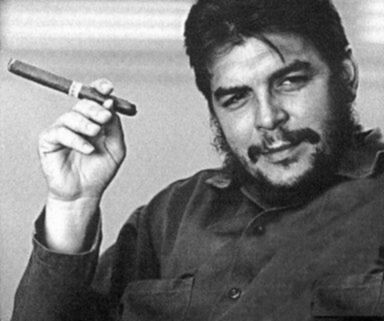
It is October 9th, a date etched in history as the day Che Guevara was executed in 1967. But Che’s death didn’t extinguish his flame; it ignited it. He transformed into a legend, a potent symbol of rebellion and anti-imperialism that continues to resonate with many, even today.
I remember vividly a cross-Europe trip in 1989, crammed into a VW camper van with a close friend. He was a fervent admirer of Che, and the journey became a rolling seminar on revolutionary ideals. My friend, would recount tales of Che’s guerrilla campaigns, his unwavering commitment to social justice, and his defiance of capitalist hegemony.

Che’s image, immortalised in that iconic beret-clad photograph, adorned our van like a talisman. It was a symbol of solidarity with the oppressed, a beacon of hope for a more equitable world.
But Che was more than just a charismatic figurehead. He was a complex individual, a doctor turned revolutionary, a man of action and intellectual curiosity. He was driven by a deep sense of empathy for the downtrodden and a burning desire to dismantle systems of oppression.
His legacy, however, is multifaceted and subject to varying interpretations. While some revere him as a champion of the people, others criticise his methods and ideology. It’s essential to engage with the full spectrum of his history, acknowledging both his contributions and the controversies surrounding his actions.
Regardless of one’s perspective, Che’s impact on the 20th century is undeniable. He remains a powerful reminder of the human capacity for idealism, sacrifice, and the pursuit of a better world. His story compels us to grapple with complex questions about power, justice, and the role of individuals in shaping history.
 Shiel Yule